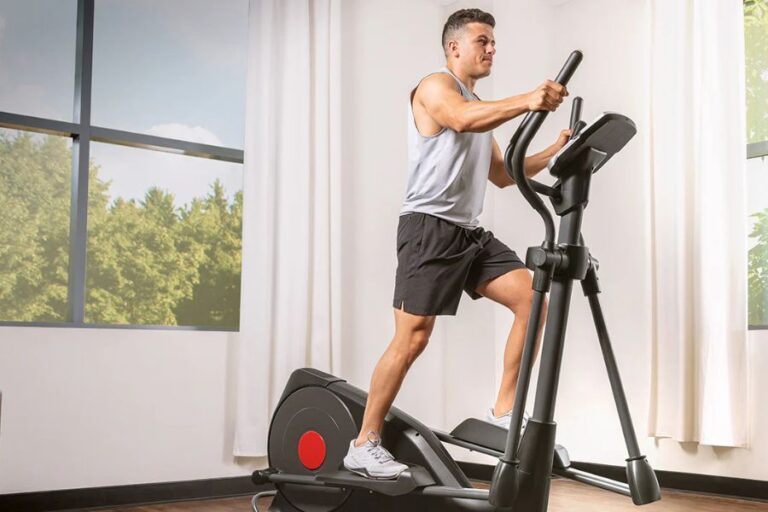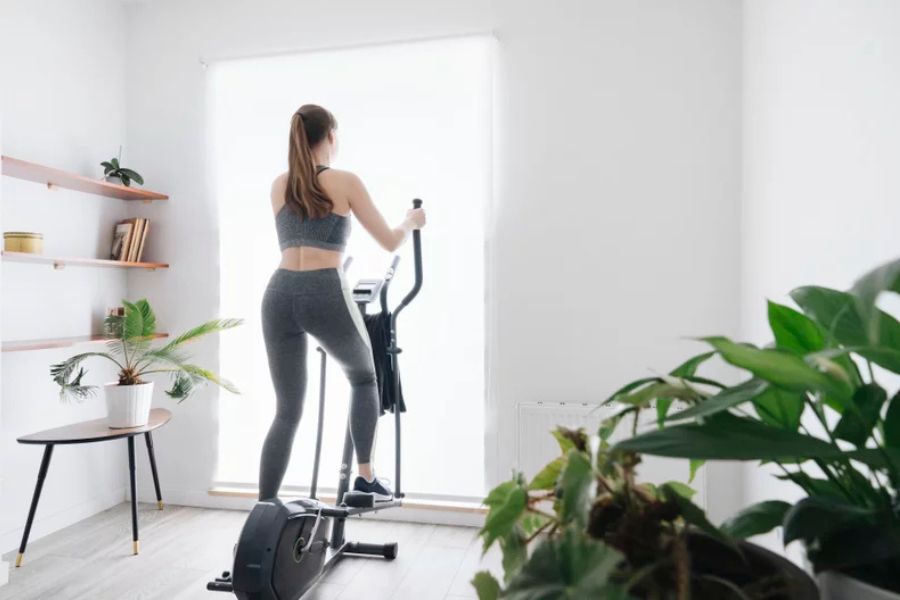
Elliptical workout for muscle toning can be a smart way to reshape your body, especially if you want low impact on your joints without sacrificing results. With the right settings and technique, you can turn your usual “easy cardio” session into a targeted, full body toning workout.
Below, you will learn exactly which muscles the elliptical works, how to adjust resistance and incline for definition, and how to structure simple routines that help you look and feel stronger.
Understand how the elliptical tones muscle
When you step on an elliptical, you are doing more than burning calories. You are combining weight bearing exercise with resistance and steady motion, which is ideal for muscle endurance and toning.
According to Healthline, using an elliptical with moving handles can engage your glutes, hamstrings, quadriceps, chest, back, biceps, triceps, and core at the same time when you use proper form (Healthline). That is a large portion of your body working together in one workout.
Because the movement is low impact, it is easier on your knees, hips, and ankles than running, while still challenging your muscles and cardiovascular system (Healthline). This makes it a good option if you are getting back into exercise, managing joint pain, or simply prefer smoother motion.
You will not build bodybuilder size on an elliptical, but you can absolutely improve muscle tone, definition, and endurance with the right approach.
Learn which muscles you are working
When you know what each part of your body is doing on the machine, you can focus your effort and get more toning benefit from every minute.
Lower body muscles
Most of the work happens from the hips down. Research from Garage Gym Reviews notes that the primary muscles you use are your:
- Glutes
- Hamstrings
- Quadriceps
- Calves
- Small stabilizing muscles in your feet
You hit these muscles through a continuous cycle of pushing down and back, then pulling up and forward. The Hospital for Special Surgery explains that actively driving your legs through that full pattern helps you keep your quadriceps engaged instead of just letting the pedals carry you along (Hospital for Special Surgery).
Upper body muscles
If your machine has moving arms, you can also tone your upper body. When you push and pull the handles, you work:
- Chest
- Back (including rhomboids and trapezius)
- Shoulders
- Biceps and triceps
Ellipticals with moving arms are specifically mentioned as a way to strengthen upper body muscles and turn the workout into a truly full body option (Hospital for Special Surgery).
Core muscles
Your core works the entire time to keep you stable. Studies highlight that muscles like the rectus abdominis, obliques, and transverse abdominals fire isometrically to support your spine and transfer power between upper and lower body (Garage Gym Reviews).
If you occasionally let go of the handles while maintaining good posture, you challenge your balance and increase core activation even more (Healthline).
Adjust your settings for better toning
The same machine can feel like light cardio or a real strength challenge, depending on how you set it up. For muscle toning, your goal is moderate to high muscular effort with good control.
Use resistance to make muscles work
Resistance is the main way you turn a gentle glide into serious work. Increasing resistance forces your legs, glutes, and core to push and pull harder, which builds strength and definition over time (Tousains).
Experts at the Hospital for Special Surgery advise starting with a moderate resistance that challenges your muscles, but still allows you to maintain control and proper technique (Hospital for Special Surgery). Many machines offer up to 20 levels, so you can gradually nudge resistance higher as you get stronger (ACE Fitness Equipment Blog).
A good check: you should feel your muscles working and breathing deepen, but you should still be able to keep solid posture and complete the range of motion without bouncing.
Use incline to target specific areas
Incline changes which muscles pick up more of the load. Healthline notes that adjusting incline can help you emphasize quads, glutes, hamstrings, or calves (Healthline).
- Higher incline: more glutes and hamstrings
- Lower or flat incline: more quads and calves
Hone Health cites data showing that a 9 degree incline can increase hamstring activation by 635 percent and glute contraction by 345 percent compared with no incline, which is a big difference in lower body toning potential (Hone Health).
Start with a low incline and raise it gradually as your strength and comfort improve (ACE Fitness Equipment Blog).
Try forward and backward pedaling
You can change the direction you pedal to wake up different muscles. Pedaling backward tends to bring your hamstrings and calves into the spotlight, while forward motion emphasizes quads and glutes.
Mr. Treadmill highlights reverse pedaling as a way to activate additional lower body muscles and create a more balanced workout (Mr. Treadmill). You can alternate direction every few minutes to share the work around your legs and avoid overusing one area.
Master form for safe and effective toning
Form matters as much on the elliptical as it does when you lift weights. Good technique ensures the right muscles work and reduces the risk of joint aches.
According to ACE Fitness, key points of solid elliptical form include (ACE Fitness Equipment Blog):
- Stand tall with shoulders back, chest open, and eyes forward
- Keep your feet flat on the pedals, no tiptoeing or lifting heels
- Engage your core gently, as if you are bracing before a light cough
- Hold the handles lightly, with elbows bent about 90 degrees
- Use the full range of motion without locking your knees
- Avoid bouncing or leaning heavily on the handles
The Hospital for Special Surgery also emphasizes actively pushing your legs down and back, then pulling them up and forward in a smooth cycle to maintain muscle activation instead of letting momentum take over (Hospital for Special Surgery).
If you feel strain in your lower back, neck, or knees, lower the resistance and check your posture. It is better to dial it back and move well, then add challenge as your technique improves.
Use interval training to boost definition
You can dramatically increase the toning effect of your elliptical workout by adding intervals. High intensity interval training, or HIIT, alternates short bursts of hard effort with easier recovery periods.
Healthline notes that performing HIIT on an elliptical can increase fat burning and muscle engagement in less time, which helps reveal muscle definition as you lose body fat (Healthline). Planet Fitness also highlights elliptical intervals as a time efficient way to combine cardio and full body toning (Planet Fitness).
A simple interval structure you can try:
- Warm up for 5 minutes at low resistance
- Work for 30 seconds at higher resistance and faster pace
- Recover for 60 to 90 seconds at a comfortable pace
- Repeat steps 2 and 3 for 10 to 15 minutes
- Cool down for 5 minutes at easy effort
ACE Fitness suggests that short intervals like this are effective for increasing workout challenge and muscle toning without needing an hour on the machine (ACE Fitness Equipment Blog).
You can adjust how many rounds you complete based on your current fitness level. The key is to keep your form solid even when the work gets harder.
Quick reminder: the elliptical is excellent for endurance, fat loss, and toning, but it is not a complete replacement for strength training if your main goal is maximum muscle size. Combining elliptical workouts with bodyweight or weight lifting sessions gives you the best of both worlds (Hone Health).
Sample routines for muscle toning
You do not need a complicated plan to get results. Here are two straightforward elliptical workouts you can rotate through the week to support muscle toning and overall fitness.
30 minute beginner toning workout
This routine is based on beginner friendly guidance from Planet Fitness and ACE Fitness, with a focus on gradually challenging your muscles while keeping everything joint friendly (Planet Fitness, ACE Fitness Equipment Blog).
- 5 minutes: Warm up, low resistance, no incline or very slight incline
- 5 minutes: Moderate resistance, flat to low incline, steady comfortable pace
- 2 minutes: Slightly higher resistance, focus on pushing through your heels
- 3 minutes: Return to moderate resistance, easy pace
- 5 minutes: Introduce small incline to wake up glutes and hamstrings
- 5 minutes: Alternate 1 minute forward pedaling, 1 minute backward pedaling
- 5 minutes: Cool down, low resistance, flat incline
You can do this 2 to 3 times per week, leaving at least one rest or light movement day between sessions.
40 minute intermediate HIIT and incline workout
Once you feel confident with your form and base fitness, this workout adds more intervals and incline to speed up toning, especially in your lower body.
- 5 minutes: Warm up at low resistance
- 5 minutes: Moderate resistance, flat incline
- 10 minutes: Interval block
- 30 seconds high resistance and faster pace
- 90 seconds easy pace, moderate resistance
- 10 minutes: Incline block
- Set incline to a challenging, but controlled level
- Alternate 2 minutes forward pedaling and 2 minutes backward
- 5 minutes: Easy resistance, flat incline cool down
- 5 minutes: Gentle stretching off the machine
Elliptical workouts like this can be done 2 to 4 times per week, depending on what else you do for exercise. Because they are low impact, they work well alongside walking, strength training, or sports.
Connect your elliptical workouts to your bigger goals
Elliptical workout for muscle toning can fit neatly into a broader plan for better health and body composition. These workouts:
- Burn calories and support fat loss, especially when combined with a calorie deficit and adequate protein intake (Garage Gym Reviews)
- Build muscular endurance and lean mass so you feel stronger in daily life (Hone Health)
- Strengthen bones through weight bearing movement, which is important as you age (Hospital for Special Surgery)
- Reduce impact stress on joints, which keeps your routine more sustainable long term (Planet Fitness)
To see noticeable changes in muscle tone, aim for consistent workouts, progressive resistance, and a balanced routine that also includes strength exercises like squats, lunges, and core work (Tousains).
You can start as soon as your next gym visit. Pick one workout above, set your elliptical to a moderate resistance, and focus on smooth, controlled motion. Over the next few weeks, gradually increase resistance or incline, and you will feel your muscles working harder and your stamina improving.
About the Author