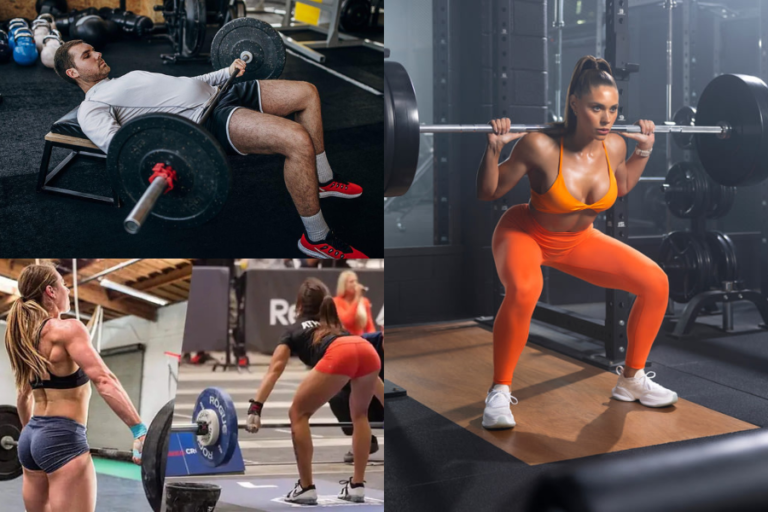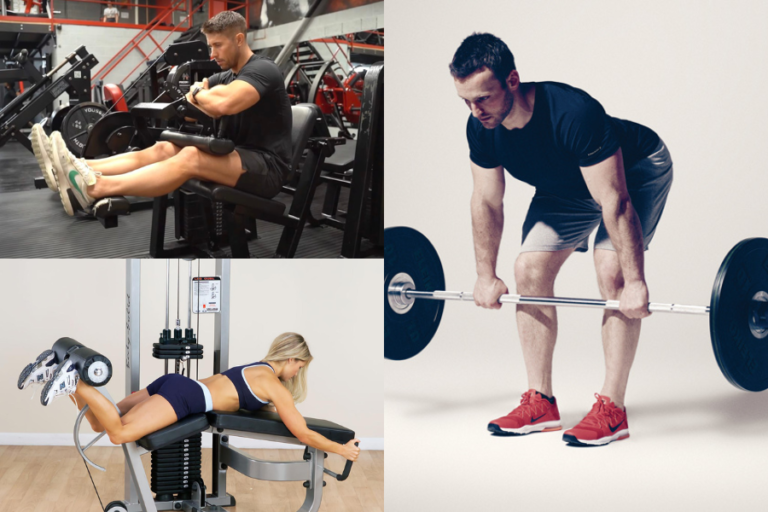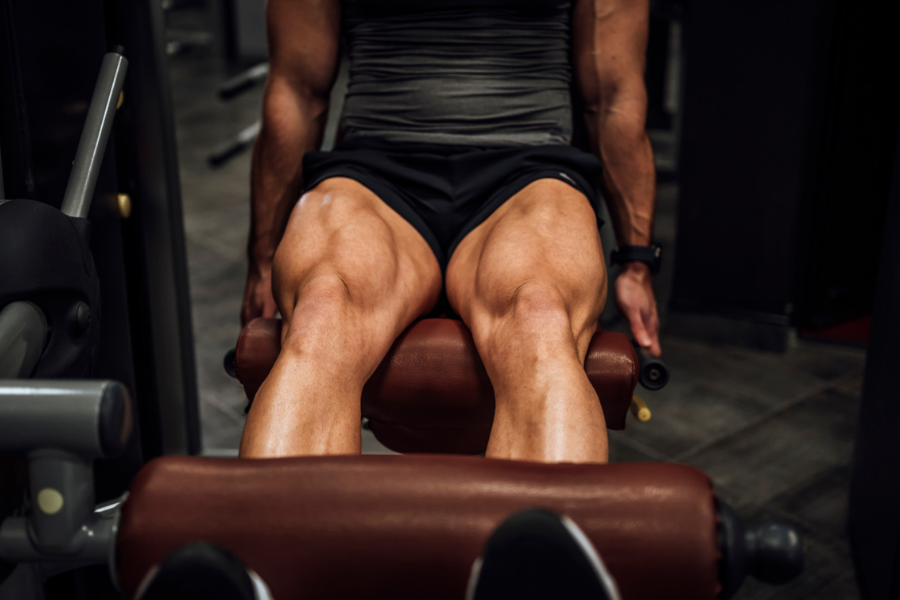
Quad training is often skipped or rushed, especially on busy days. If you want stronger legs, better numbers on your squat and deadlift, and more defined thighs, a focused quad workout for men can change your lower body dramatically.
Below, you will learn how your quads work, what a smart training week looks like, and exactly which exercises and rep schemes to use so you feel your legs working from the first set to the last.
Understand your quad muscles
Your quadriceps are the four large muscles on the front of your thighs. Together they straighten your knees and help flex your hips every time you walk, squat, stand up, or climb stairs.
Those four muscles are:
- Rectus femoris
- Vastus lateralis
- Vastus medialis
- Vastus intermedius
They work as a team to extend your knee and stabilize it when you move. When you build all four, you create the full, rounded look across the front of your thighs and improve how you move through daily life.
Research in the Journal of Physical Therapy Science and The Journal of Rheumatology links strong quads to better knee stability and a lower risk of knee osteoarthritis and injury as you age. Training your quads is not just about looks. It is about keeping your knees and hips healthy enough to support you long term.
Common quad training mistakes
Many men work hard on chest, shoulders, and arms, then either shorten leg workouts or skip them entirely. When you do train quads, a few common habits hold you back from seeing real growth.
Partial reps instead of full range
Heavy weight can tempt you to cut your range of motion short. Half squats, shallow leg presses, and partial hack squats may make the weight move, but they do not challenge the entire muscle.
Using a full range of motion, where your knees bend deeply and then fully extend, improves muscle fiber recruitment and leads to better quad development. That is especially true on squats, leg presses, hack squats, and leg extensions.
Going too heavy too soon
Loading up the leg press or squat bar encourages you to use momentum and quarter reps. This often shifts work away from your quads and onto your hips and lower back.
You will get more growth from slightly lighter weight that you can control through a deep, stable movement, taken close to failure. Quality reps, done with focus, almost always outperform ego lifting.
Neglecting unilateral work
Your dominant leg often takes over on bilateral exercises like squats and leg press. Over time, this can create strength imbalances that show up as knee pain, hip shifts, or uneven quad size.
Single leg exercises such as lunges, Bulgarian split squats, and split squats help you correct these imbalances. Guidance from Gymshark highlights how unilateral quad exercises with elevated heels and upright torso positioning can significantly improve balance and increase quad engagement on each leg.
Key principles of an effective quad workout
Before you jump into sets and reps, it helps to understand a few basic training principles that make a quad workout for men effective and sustainable.
Train quads twice per week
Evidence based guidelines suggest training a muscle group at least twice weekly for best hypertrophy. For quads, that means:
- 2 focused quad sessions per week
- At least 2 quad exercises per session
- A minimum of about 10 total working sets per week, spread across those sessions
The Gymshark workout guide for June 2024 recommends 3 to 4 sets per exercise in the 8 to 12 rep range, with roughly 10 or more quality sets per week for optimal growth, while allowing 48 hours recovery between sessions.
Aim for 5 to 10 sets per muscle group
You do not need endless sets. In fact, pushing beyond 12 to 20 sets per week usually brings diminishing returns. The research you have read shows:
- 5 to 10 sets per muscle group per week is effective for growth
- Above 12 to 20 sets, additional volume helps less and can be harder to recover from
The sweet spot is a moderate number of high quality sets that you perform close to failure, usually within 0 to 3 reps of technical failure.
Use full range and controlled tempo
Proper squat form and full extension at the top of each movement ensure your quads do most of the work. Focus on:
- Deep knee flexion where it feels comfortable for your joints
- Controlled lowering, then a strong but smooth drive up
- Fully straightening your knees at the top without snapping or locking them aggressively
This approach is more demanding, so you may need to lower the weight from what you are used to, but your quads will feel the difference.
Best quad focused exercises for men
An effective quad workout for men targets knee extension more than hip extension and allows you to feel your quads doing the heavy lifting. These exercises fit that profile well.
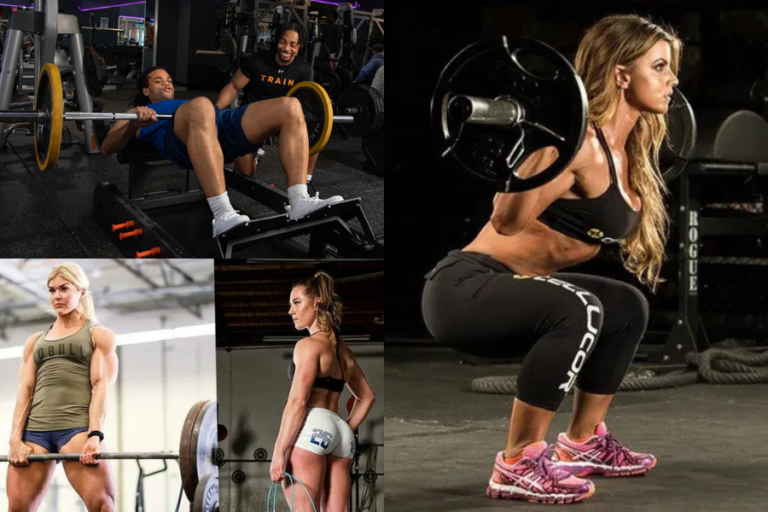
Barbell front squat
Front squats shift the bar to the front of your shoulders, which naturally keeps your torso more upright and increases quad involvement compared to back squats. Muscle & Fitness and Gymshark both highlight front squats as a primary tool for quad growth.
Key cues:
- Keep elbows high and chest proud
- Sit down between your hips rather than pushing them far back
- Drive your knees forward over your toes as you descend, within your comfort range
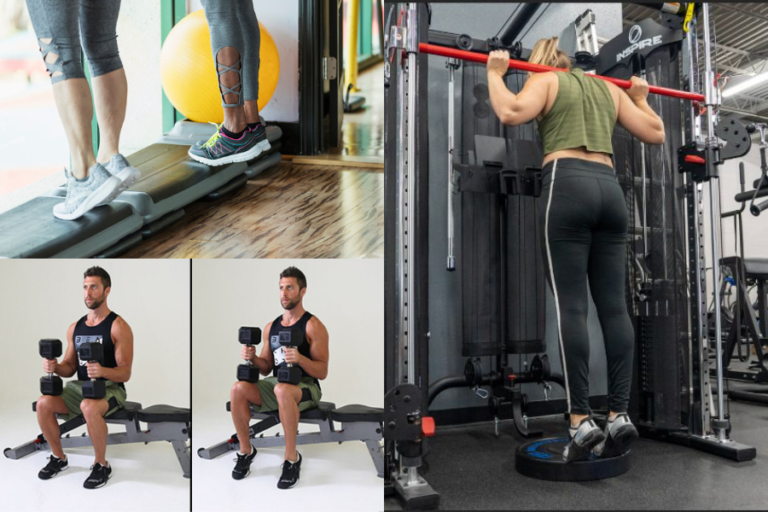
Heel elevated goblet squat
Holding a kettlebell or dumbbell at your chest while elevating your heels on plates or a wedge lets you sit deeper and keeps your torso tall. Research and coaching experience suggest this increases range of motion and recruits more quad fibers, especially the vastus medialis, the teardrop muscle near your knee.
For beginners, a simple prescription is 2 sets of 10 reps with about 60 seconds rest. Focus on feeling your quads, not your lower back.
Hack squat or leg press with low foot placement
Machine based options can overload your quads in a supported environment. To emphasize quads:
- Place your feet lower on the platform
- Keep your hips from drifting too far back
- Let your knees travel forward, staying in line with toes
Gymshark notes that leg press with a low foot placement increases knee flexion and reduces hip flexion, which shifts the load onto your quads while still allowing heavy weights.
Lunges and Bulgarian split squats
Unilateral work is essential for balanced quads. You can use:
- Front foot elevated reverse lunges
- Split squats
- Bulgarian split squats with a shorter stance and more upright torso
Elevating your front foot and keeping your torso vertical increases knee flexion and quad activation. This is why both Muscle & Fitness and Gymshark strongly recommend them for comprehensive quad growth.
Leg extensions
Leg extensions isolate the quadriceps and create strong tension at the top of the movement. Since the exercise is supported, it creates less systemic fatigue than heavy barbell work, so it is ideal at the end of a workout.
According to Gymshark, leg extensions help you focus directly on the quads for extra size and definition without overloading your lower back or hips.
Sample quad dominant workouts for men
Use these templates as a starting point. Adjust sets and weights based on your experience level, but try to stay in the 8 to 12 rep range for hypertrophy most of the time.
Workout A: Strength focused quad session
This session uses heavy compounds first, then finishes with isolation.
- Front squat
- 4 sets of 6 to 8 reps
- Rest 2 to 3 minutes between sets
- Heel elevated goblet squat
- 3 sets of 8 to 10 reps
- Rest 90 seconds
- Leg press, low foot placement
- 3 sets of 10 to 12 reps
- Rest 90 seconds
- Leg extension
- 3 sets of 12 to 15 reps
- Pause for one second at full extension each rep
Push each set close to failure while keeping form tight. If your reps drop dramatically, lower the weight slightly and focus on depth and control.
Workout B: Volume and unilateral focus
This session emphasizes single leg work and metabolic stress for growth.
- Dumbbell front squat or front loaded goblet squat
- 3 sets of 8 to 10 reps
- Rest 2 minutes
- Bulgarian split squat (short stance, upright torso)
- 3 sets of 10 reps each leg
- Rest 60 to 90 seconds between legs
- Front foot elevated reverse lunge
- 3 sets of 10 reps each leg
- Rest 60 to 90 seconds
- Leg extensions
- 2 to 3 sets of 15 reps
- Last set, use a slow 3 second lowering phase
A quad dominant workout demonstrated by Muscle & Fitness uses five rounds of 10 dumbbell front squats, 20 front foot elevated reverse lunges, and 30 heel elevated goblet squats, with 2 minute rests, to recruit a large number of muscle fibers and drive growth. You can build toward that style of conditioning after you are comfortable with the basics.
Beginner friendly quad routine
If you are new to lifting or returning after a break, start with simple movements that teach you to feel your quads without overwhelming your joints.
Try this twice per week:
- Goblet squat
- 2 sets of 10 reps
- 60 seconds rest
- Split squat
- 2 sets of 10 reps per side
- 30 seconds rest between legs
- Squat jumps
- 2 sets of 10 reps
- 30 seconds rest
- Wall sit
- 2 sets of 30 seconds, or as long as you can hold
- 30 seconds rest
These bodyweight and light load moves build strength, coordination, and endurance. As you get more comfortable, you can increase sets, add weight, and then move into the intermediate workouts above. All of these exercises are recommended as effective quad builders in practical guides for men, including those referenced in Gymshark and Muscle & Fitness content.
How to progress your quad training
Progress is what keeps your quads growing over weeks and months. You do not need to overhaul your program every time you stall. Instead, adjust gradually.
You can progress by:
- Adding a small amount of weight to one or two exercises each week
- Adding one extra rep to your sets with the same weight
- Adding a set to one key exercise, such as front squats or Bulgarian split squats
- Reducing rest times slightly while keeping your total reps the same
Aim to stay within 0 to 3 reps of failure on most working sets. That means you finish a set knowing you might have managed one or two more good reps, but no more. Combined with 48 hours of rest between quad sessions, this helps you train hard without overdoing it.
Putting it all together
A well designed quad workout for men does not have to be complicated. When you:
- Hit your quads twice a week with focused sessions
- Use a mix of front squats, heel elevated squats, leg press, unilateral work, and leg extensions
- Train mostly in the 8 to 12 rep range, 0 to 3 reps from failure
- Move through a full, controlled range of motion
you build stronger, larger quads that carry over into better squats and deadlifts, smoother everyday movement, and more stable knees.
Choose one of the sample workouts, schedule it two days apart in your week, and commit to running it consistently for at least 6 to 8 weeks. As the weights and reps go up, your quads will follow.
About the Author