Why focus on a calisthenics tricep workout
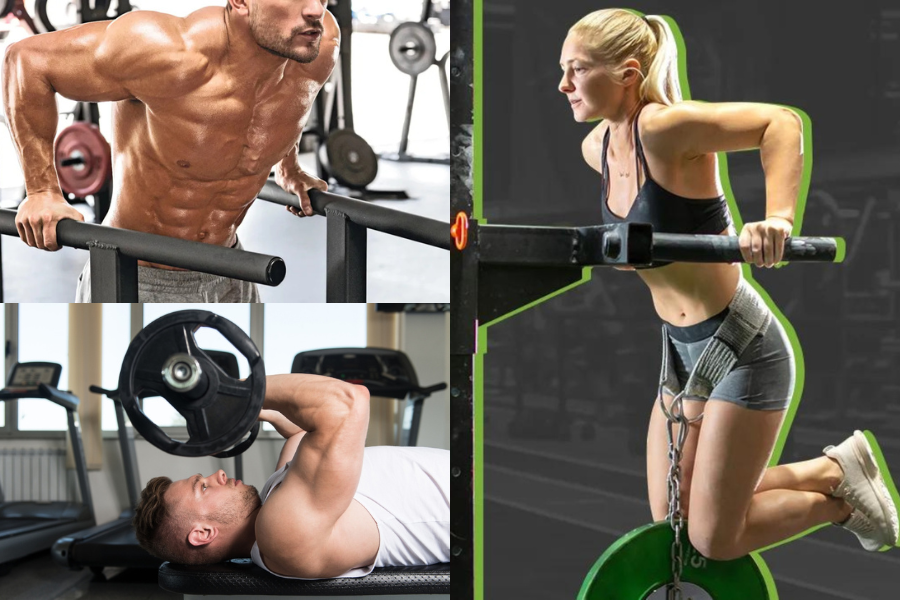
If you want stronger, more defined arms without relying on machines or heavy weights, a calisthenics tricep workout is one of your best tools. Calisthenics tricep exercises use your body weight as resistance, so you can train almost anywhere and still build serious strength and muscle.
Your triceps are the muscles on the back of your upper arm. They have three heads, long, medial, and lateral, and together they handle elbow extension, help stabilize your shoulders, and make up a large portion of your overall arm size. In fact, your triceps account for roughly two thirds of your upper arm mass, which makes them essential if you want bigger, stronger arms according to guidance from Caliathletics in 2024.
By focusing on tricep calisthenics like dips, close grip pushups, and diamond pushups, you improve upper body pushing strength, support your elbow joints, and add definition to your arms, all with minimal equipment.
Understand your tricep muscles
Before you start any calisthenics tricep workout, it helps to know what you are actually training. That way, you can choose exercises that cover every part of the muscle instead of overworking only one area.
The three heads of the triceps
Your triceps brachii has three distinct heads that work together:
-
Long head
-
Originates from your shoulder blade
-
Assists with shoulder stability
-
Responds well to overhead and deep range movements
-
Lateral head
-
Sits on the outer side of your upper arm
-
Contributes to that “horseshoe” shape
-
Highly active during pressing exercises like close grip or diamond pushups
-
Medial head
-
Lies underneath the lateral head
-
Stabilizes the elbow during pressing
-
Works throughout almost the full range of motion in most tricep exercises
For balanced growth you want your calisthenics tricep workout to change hand position, elbow angle, and body angle so all three heads get enough tension.
Why calisthenics works so well for triceps
Calisthenics tricep exercises are effective because they:
- Use multi joint pressing patterns like pushups and dips that heavily activate the triceps
- Allow a full range of motion that stretches and contracts the muscle under load
- Scale easily by adjusting leverage, body angle, or tempo, so you can keep progressing
- Improve joint stability, especially around the elbow and shoulder, by strengthening the supporting muscles
Pressing movements like pushups have been shown to activate the triceps more than many isolation moves, so including several pushup variations is a smart move in any bodyweight tricep routine.
Warm up before you train
A quick, focused warm up prepares your elbows and shoulders and helps you practice good form, which is critical for any calisthenics tricep workout.
Simple tricep warm up (5 to 8 minutes)
Work through the following before each session:
- Arm circles
- 20 small circles forward, 20 backward
- 10 large circles forward, 10 backward
- Elbow extensions
- Stand tall, bend your elbows to 90 degrees, then extend and squeeze your triceps
- 2 sets of 15 smooth reps
- Wall pushups
- Hands on a wall at chest height, body straight
- 2 sets of 10 to 15 reps to wake up your pressing muscles
- Light tricep stretch
- Overhead tricep stretch on each side, 15 to 20 seconds
- Keep it gentle, this is just to loosen up
Once your joints feel warm and your pushups feel snappy, you are ready to move into your main calisthenics tricep workout.
Core calisthenics tricep exercises
These are the foundation of your routine. You can do them at home using the floor, a sturdy chair, or parallel bars if you have access to them.
1. Diamond pushups
Diamond pushups place your hands close together under your chest, which increases tension on the triceps, especially the lateral head.
How to do it
- Get into a high plank position, body in a straight line from head to heels.
- Place your hands under your chest, thumbs and index fingers forming a diamond shape.
- Keep your elbows close to your body as you bend your arms and lower your chest toward your hands.
- Pause briefly, then press the floor away and return to the start.
Tips
- Keep your core tight so your hips do not sag.
- If full plank is too hard, drop to your knees and maintain the same hand position.
2. Close grip pushups
Close grip pushups are similar to regular pushups, but with your hands closer together. This emphasizes your triceps and the inner chest.
How to do it
- Start in a plank with hands under your shoulders or slightly inside shoulder width.
- Engage your core and squeeze your glutes.
- Lower your chest, keeping elbows close to your sides rather than flared out.
- Press back up, focusing on driving through the palms and locking out your elbows.
Tips
- Imagine trying to “push the floor away” using the back of your arms.
- If needed, place your hands on a bench or countertop to make the movement easier.
3. Bench or chair dips
Tricep dips are a classic calisthenics tricep exercise because they load your arms through a big range of motion using your bodyweight. You can use a sturdy chair, couch edge, or bench if you do not have parallel bars.
How to do it
- Sit on the edge of a chair or bench with your hands next to your hips, fingers pointing forward.
- Walk your feet out and slide your hips off the edge, supporting yourself with your arms.
- Bend your elbows to lower your body in front of the chair until your upper arms are roughly parallel to the floor.
- Press through your palms to extend your elbows and lift your body back up.
Tips
- Keep your shoulders away from your ears.
- To make it harder, straighten your legs or place your feet on another chair.
4. Straight bar dips
If you have a straight bar, such as a low bar at a park, you can use straight bar dips to hit your triceps and chest while building skills for advanced moves like the muscle up.
How to do it
- Grip the bar with your hands slightly wider than shoulder width and support your weight above it with straight arms.
- Lean slightly forward, but keep your elbows tracking back, not flaring wide.
- Lower your body until your shoulders are below your elbows, or as low as is comfortable for your joints.
- Press back up to full elbow extension.
Tips
- Avoid bouncing at the bottom, control each rep.
- If this is too difficult, build a base with bench dips first.
5. Pike pushups
Pike pushups shift more of your bodyweight toward your arms and shoulders while keeping strong tricep involvement.
How to do it
- Start in a high plank.
- Walk your feet toward your hands until your hips are raised into a pike position, forming an inverted V.
- Bend your elbows, lowering the top of your head toward the floor in front of your hands.
- Push the floor away and return to the pike.
Tips
- Keep your elbows at about a 45 degree angle.
- For more tricep emphasis, think about driving hard through the lockout.
6. Plank to pushup
Plank to pushup, sometimes called a plank up down, challenges your triceps through repeated elbow extensions while also training core stability.
How to do it
- Start in a forearm plank with elbows under your shoulders.
- Place your right hand on the floor, then your left, and press into a high plank.
- Lower back down to your right forearm, then left, returning to the forearm plank.
- Alternate which arm leads each rep.
Tips
- Move slowly to keep everything controlled.
- Minimize hip sway by keeping your core braced.
7. Isometric holds for tricep endurance
Isometric holds, such as holding the top of a pushup or the bottom of a dip, keep your triceps under constant tension without movement. This type of work can improve endurance and joint stability.
Ideas to try
- High plank hold at the top of a pushup
- Halfway pushup hold, elbows bent around 90 degrees
- Dip support hold at the top of parallel bar or straight bar dips
Start with 10 to 20 seconds per hold and gradually increase the duration as your strength improves.
A sample calisthenics tricep workout routine
You can organize your calisthenics tricep workout into simple circuits. The routine below is suitable for most fitness levels because you can scale each exercise.
Beginner friendly routine
Do this 2 to 3 times per week, with at least one rest day between sessions.
- Incline close grip pushups
- 3 sets of 8 to 12 reps
- Hands on a countertop or bench
- Bench or chair dips (knees bent)
- 3 sets of 8 to 10 reps
- Knee diamond pushups
- 3 sets of 6 to 10 reps
- Plank to pushup (from knees if needed)
- 3 sets of 8 to 12 total transitions
Rest 60 to 90 seconds between sets. When you can hit the top end of each rep range with solid form, make the exercise slightly harder, for example by lowering the bench height or straightening your legs.
Intermediate routine
Once regular pushups feel solid and you are comfortable with chair dips, move to this setup.
- Diamond pushups
- 3 sets of 10 to 15 reps
- Bench or chair dips (legs straight)
- 3 sets of 10 to 15 reps
- Close grip pushups on the floor
- 3 sets of 10 to 15 reps
- Plank to pushup
- 3 sets of 10 to 15 total transitions
Rest 60 seconds between sets. Aim to reach the higher rep ranges before progressing to more advanced moves like straight bar dips or feet elevated variations.
Advanced routine
For more experienced trainees, this calisthenics tricep workout adds intensity and unilateral focus.
- Straight bar dips
- 4 sets of 8 to 12 reps
- Feet elevated diamond pushups
- 3 sets of 10 to 15 reps
- Bench or chair dips with added load
- 3 sets of 12 to 15 reps, add a backpack or weight on your lap if safe
- Pike pushups
- 3 sets of 8 to 12 reps
- Isometric hold finisher
- 2 rounds of a 20 to 30 second halfway pushup hold
Rest 60 to 90 seconds between sets, and 2 minutes before the finisher if needed.
Use progressive overload for better results
To keep making progress from your calisthenics tricep workout, you need progressive overload. That means you gradually increase the challenge placed on your muscles over time.
Here are simple ways to apply it:
-
Increase reps
-
Work toward the upper range of reps for each exercise.
-
Add sets
-
Move from 3 sets up to 4 or 5 if your recovery allows.
-
Change leverage
-
Move from incline to floor pushups.
-
Elevate your feet to place more of your weight on your arms.
-
Slow your tempo
-
Take 3 seconds to lower, pause briefly at the bottom, then press up.
-
Add isometric holds
-
Pause for 2 to 3 seconds halfway down or halfway up during each rep.
A three month plan might start with basic dips and pushups three times per week, then build up to more sets and advanced variations like pike pushups and archer style pushups as your strength increases. The key is to change only one variable at a time and to give your muscles enough rest between challenging sessions.
Form tips to protect your elbows and shoulders
Good technique is essential for getting the most out of your calisthenics tricep workout while keeping your joints happy.
Keep elbows close, not flared
For most tricep focused exercises you want your elbows tucked closer to your body rather than pointing straight out to the sides. This:
- Increases tricep involvement
- Reduces stress on your shoulders
- Promotes better control through the movement
Use a full but comfortable range of motion
A full range of motion, especially in dips and pushups, helps you build strength through the entire movement and encourages muscle hypertrophy. That said, your joints matter more than hitting a specific depth.
- Lower until your elbows reach roughly a right angle or a bit deeper if it feels good.
- If you feel pinching or sharp pain, reduce depth and focus on control.
Prioritize smooth reps over big numbers
Rushed, sloppy reps heavily reduce the benefit of your calisthenics tricep workout. Aim for:
- 2 to 3 seconds down
- A brief pause
- A strong but controlled press up
When your form starts to break down, end the set instead of chasing extra repetitions.
How to combine calisthenics with weights
If you also train in the gym you can combine your calisthenics tricep workout with traditional weightlifting for even better results. For example:
- Use heavy presses and skull crushers on one upper body day.
- Use bodyweight dips, pushups, and isometric holds on another day.
This mix lets you benefit from both higher external loads and the joint friendly patterns of calisthenics, as long as you get enough rest to avoid overtraining.
Putting it all together
If you want bigger, stronger arms that actually support your daily movements, a focused calisthenics tricep workout is an effective and accessible path. You work all three heads of the triceps, long, medial, and lateral, you improve elbow and shoulder stability, and you push your upper body strength forward without needing a full gym setup.
Start with one routine from this guide, pay attention to your form, and track your reps and sets. Over the next few weeks, gradually increase the difficulty and notice how much stronger your pressing movements feel.
About the Author