A beginner treadmill workout can be one of the easiest and most enjoyable ways to start losing weight and improving your health. You are in control of the speed, incline, and time, which makes treadmill workouts for beginners less intimidating than jumping straight into outdoor running or group fitness classes. With a few simple routines and some smart habits, you can turn your treadmill time into something you actually look forward to.
Understand why treadmills are great for beginners
Treadmills remove many of the barriers that often stop you from exercising. You do not have to worry about bad weather, uneven sidewalks, or running in the dark. Experts note that treadmills provide a smooth and consistent surface and a controlled environment, which makes them especially helpful if you are new or returning to exercise (One Peloton, Fit&Well).
Treadmills also make it easy to track your progress. You can see your speed, distance, time, and incline right on the console. Being able to measure and control these settings helps you set clear goals, increase intensity gradually, and add variety to your routine over time (Fit&Well).
Set up safely before you start
Before you step onto the belt, a few small choices can make your workout safer and more comfortable.
Choose supportive shoes with good cushioning and stability so your feet and joints are protected as you walk or run. Proper footwear becomes even more important as you start increasing speed or incline (NordicTrack). Keep a water bottle within easy reach so you can sip regularly before, during, and after your workout.
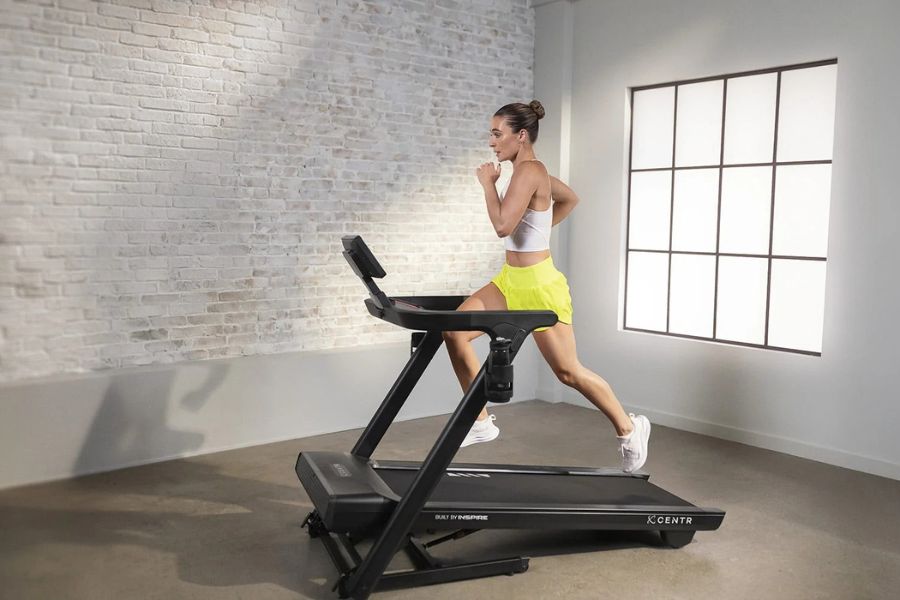
When you get on the treadmill, start with your feet on the side rails, attach the safety clip to your clothing, and begin at a very low speed. Once the belt is moving slowly, step on and find your balance. Stand tall, look forward instead of down, and relax your shoulders. Try to avoid leaning on the handrails once you feel steady, so your posture and muscles can work naturally.
Warm up your muscles the right way
Your warm up is where you teach your body what is coming next. It should feel easy, but not pointless. Most beginners do well starting with a flat walk at an easy pace for at least five minutes, around 2.5 to 3 miles per hour. This helps prepare your muscles and joints for more effort and reduces your risk of injury (Planet Fitness).
If your goal is to jog or run, extend your warm up with a few extra minutes at a slightly faster walk or a gentle jog. One guideline is to walk at about 3 miles per hour for five minutes, then add an easy jog for another five minutes before you begin the main part of your workout (One Peloton). You can also pause after your warm up for quick hamstring stretches to keep your legs feeling comfortable when you start using an incline (Planet Fitness).
Try simple walking workouts for weight loss
If you are just getting started, steady walking workouts are one of the best ways to build consistency and support weight loss. You do not have to run to see results. Walking at a moderate pace still burns calories, strengthens your heart, and gently challenges your muscles.
A good first goal is to walk at about 3 to 4 miles per hour with a 0 to 2 percent incline. This pace is enough to make you feel like you are working, without leaving you gasping for air (One Peloton). You can aim for something like 20 to 30 minutes, including your warm up and cool down. If that feels long at first, break it into shorter chunks and build over time.
Planning your workout length ahead of time also helps you manage your pace. If you know you only have 15 or 20 minutes, you might choose a slightly faster pace. For a 40 minute session, you will likely want to keep things more moderate so you can finish feeling strong, not wiped out (Planet Fitness).
Use intervals to keep things fun
Once you are comfortable with basic walking, adding intervals is a simple way to burn more calories and keep boredom away. Interval workouts for beginners alternate between slightly harder efforts and easier recovery periods.
For example, you might walk at 3 miles per hour for three minutes, then walk at 3.5 or 4 miles per hour for one minute, and repeat this pattern several times. NordicTrack suggests that guided interval sessions with small changes in speed and incline can gradually build your endurance without feeling overwhelming (NordicTrack).
You can also use a simple “three minute test” to discover your current comfort levels. Walk for one minute, jog for one minute, and then run for one minute. Pay attention to how your breathing and legs feel. If you struggle to finish, slow things down next time. If it feels easier than you expected, you can slightly increase your speed the next time you train (Planet Fitness).
Play with incline for extra challenge
Incline adds a new dimension to treadmill workouts for beginners. Walking uphill engages your calves, glutes, and hamstrings more, which helps build strength and boosts calorie burn. It also gives you a way to increase intensity without having to run.
Start with small changes, for example 1 to 2 percent incline, and always warm up on a flat surface first. As you feel more comfortable, you can add short incline intervals. One popular option is the 12-3-30 workout, which is 30 minutes at 3 miles per hour and a 12 percent incline. This routine is trainer approved and targets your leg muscles as long as you keep good form (One Peloton).
For beginners, it is important not to overdo incline work. Fitness experts suggest limiting incline running or brisk incline walking to short periods, no longer than about five minutes at a time, and alternating with flat walking. This pattern keeps your joints happier and makes your workout feel more like rolling outdoor terrain instead of an endless steep hill (Planet Fitness).
As you build confidence, experimenting with different incline settings helps you discover what feels challenging but still manageable for your body.
Explore fun movement variations
Treadmill workouts do not have to be just straight walking in one direction. Once you have good balance and control, you can add simple variations that improve your coordination and make sessions more interesting.
Physical therapist Lindy Royer recommends trying four walking variations for three to five minutes each after a warm up (Fit&Well):
- Incline walk at 5 to 10 percent
- Backward walk at 0 percent incline
- Side step walk
- Grapevine walk
Side stepping helps strengthen the sides of your hips and legs and improves your balance. The grapevine walk adds a twist and cross step that boosts coordination and hip mobility (Fit&Well). Keep the speed slow when you first try these so you always feel safe.
Add variety with guided or HIIT sessions
If you like structure or coaching, guided workouts can take the guesswork out of your treadmill time. The NordicTrack Commercial 2450, for example, offers a wide range of speeds from 0 to 12 miles per hour and a large incline range from a 3 percent decline up to a 15 percent incline. It is also fully compatible with iFIT, which provides coached beginner workouts that guide your speed, incline, and form in real time (NordicTrack).
You can also experiment with very simple HIIT style treadmill sessions. These involve alternating short bursts of higher intensity with longer periods of easier walking. Even beginner friendly HIIT treadmill routines can improve your cardiovascular fitness and keep workouts more engaging and time efficient (NordicTrack). Start conservatively, for example 20 to 30 seconds of faster walking, followed by 90 seconds of easy walking, and build up as it feels right.
Progress gradually for lasting results
Your body responds best to steady, realistic changes. You can increase the challenge of your treadmill workouts in several ways over time. One option is to add more days per week, for example from two or three days to every other day. Another is to extend your session length, such as going from 30 minutes to 35 minutes. You can also adjust the intensity by walking a little faster or adding new intervals of jogging or incline (One Peloton).
Many trainers suggest focusing on only one type of increase at a time, so your body can adapt without feeling overwhelmed. Recovery days are just as important as harder days. After a demanding workout, you might use the treadmill gently at a slower pace the next day, or even rest completely. This balance keeps you moving forward without burning out (Planet Fitness).
Turn your routine into a habit you enjoy
The best treadmill workouts for beginners are the ones you can stick with. To make your routine feel more like a habit and less like a chore, choose a regular time of day that works with your schedule, and treat that block like an appointment with yourself. Put on a favorite show or podcast, create a playlist that matches your walking pace, or follow along with a virtual class.
Give yourself small, clear goals, like “Walk for 20 minutes three times this week” or “Add one new incline interval.” Each time you meet a goal, you reinforce the idea that you are someone who shows up for your health.
Most importantly, listen to your body. If a speed or incline feels too intense, scale it back. If you feel strong and energized, you can gently increase your challenge. Over time, those short, consistent treadmill sessions can add up to meaningful weight loss, better fitness, and more confidence in what your body can do.
About the Author