Why single arm dumbbell moves work
Single arm dumbbell chest exercises are one of the fastest ways to build muscle and fix strength imbalances in your upper body. Instead of letting your stronger side take over during presses or push ups, you work one side at a time, which forces both halves of your chest to pull their own weight.
When you press with one arm, your body also has to fight rotation. That means your core, hips, and shoulder stabilizers work harder than they do in most two arm chest moves. Over time this improves:
- Chest size and strength
- Shoulder stability
- Core strength and control
- Muscle balance between left and right sides
You can do most of these exercises with a single dumbbell at home, in a small gym, or while traveling. All you need is enough space to lie on the floor or a bench.
Get set up safely
Before you start adding new single arm dumbbell chest exercises to your routine, take a minute to dial in the basics.
Pick the right weight
Choose a dumbbell that feels light to moderate at first. You want to control every rep without wobbling or arching your back excessively.
As a rough guide:
- You should be able to complete your target reps with 1 or 2 reps left in the tank
- If your form breaks down early, drop the weight
- If you can do many more reps than planned, increase slightly next time
Fitness guidance on one dumbbell chest training emphasizes gradually increasing weight as you get stronger so you avoid injury and keep making progress as of March 13, 2024.
Use joint friendly form
Most of the research you have here points to the same form cues:
- Pull your shoulder blades back and gently down into the bench or floor
- Keep a slight natural arch in your back, not a dramatic curve
- Tuck your elbows about 45 to 60 degrees from your sides instead of flaring them straight out
- Keep your forearms vertical over your elbows during presses so your chest does most of the work
These details help you avoid shifting work into your shoulders and triceps and they reduce strain on the shoulder joint.
Warm up your chest and shoulders
Before your working sets, spend 5 to 10 minutes on:
- Light cardio
- Arm circles and band pull aparts
- A few sets of push ups
- Very light dumbbell presses or floor presses
Pre activation work like this helps open your chest and reduce shoulder rounding, which fitness coach Jeremy Ethier also recommends for better dumbbell pressing mechanics as of 2023.
Try the single arm dumbbell chest press
The single arm chest press is the foundation of most unilateral chest work. You can do it on a bench or the floor.
Flat bench single arm dumbbell press
This version builds overall chest size and strength while forcing your core to stabilize against the one sided load.
- Lie on a flat bench with your feet planted firmly on the floor.
- Hold a dumbbell in one hand at chest level with your palm facing slightly inward.
- Pull your shoulder blades together and keep your chest up.
- Press the dumbbell up until your arm is straight and the weight is stacked over your shoulder.
- Lower slowly until the dumbbell reaches mid chest level.
- Repeat for all reps, then switch sides.
A common recommendation is 3 sets of 8 to 12 reps per arm with controlled movement as of November 22, 2023.
Floor press variation
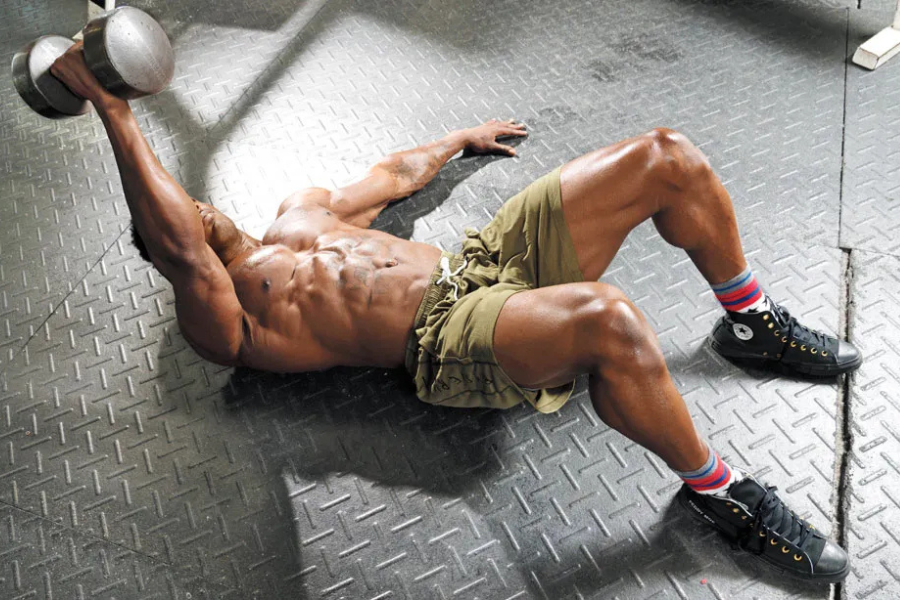
If you do not have a bench, lie on the floor with your knees bent.
- Everything above stays the same
- Stop when your upper arm lightly touches the floor
- This shorter range is easier on your shoulders but still hits your chest hard
Key form tips
- Do not let the dumbbell drift toward your head or hips, keep it above mid chest on the way down
- Do not touch the dumbbells together at the top if you are using two, stopping when your arm is straight over your shoulder keeps more tension on your chest
- If you feel your shoulders more than your chest, try tucking your elbow slightly closer to your side and reduce the weight
Guidance on dumbbell bench press mechanics notes that pressing straight up and down with a wide arm path lowers chest activation and can increase injury risk. Aligning your arm path with the chest fibers and keeping the forearm vertical improves chest stimulus and safety.
Progress to incline and decline presses
Changing the bench angle helps you target different parts of your chest while still using one dumbbell at a time.
Incline single arm dumbbell press
Incline presses emphasize the upper chest.
- Set your bench to a low incline, about 15 to 30 degrees.
- Lie back with your feet on the floor and your shoulder blades pulled into the bench.
- Press the dumbbell up over your upper chest, not your face.
- Lower to mid chest level and repeat.
Adding an incline dumbbell press once a week alongside flat work is recommended for better upper chest development according to Jeremy Ethier in 2023.
Decline or feet elevated variation
You can also create a decline effect by:
- Using a decline bench, or
- Elevating your feet on a low box while lying on the floor with your upper back supported
Keep the same pressing path, but you will feel the work shift slightly toward the lower chest.
Challenge stability with offset presses
Once you are comfortable with a standard single arm press, offset positions increase the stability challenge and deepen the range of motion.
Offset single arm chest press
This variation is listed as a chest exercise in the ACE Fitness library and is designed to train your chest while your core and hips fight rotation.
- Lie face up on a flat bench.
- Position your upper back diagonally across the bench so the shoulder of your working arm is off the bench edge.
- Plant your feet flat on the floor and press your hips up so your body forms a straight line from shoulders to knees.
- Hold the bench near your head with your non working hand for support.
- Hold the dumbbell in your working hand directly above your chest.
- Slowly bend your elbow and lower the dumbbell below the level of the bench.
- Press back up until your arm is straight and the weight is centered over your chest.
Because the shoulder is off the bench, you gain a deeper stretch at the bottom while your hips and core work to keep you stable. This makes the exercise an effective way to increase chest activation and full body control at the same time.
Half bench single arm press
The half bench single arm press is another powerful stability move.
- Lie on a flat bench so only your upper back and head are supported
- Let your hips hover off the bench and squeeze your glutes to create a stable base
- Hold a dumbbell in the hand that is farther from the center of the bench
- Press up and down while keeping your hips level and your abs tight
Guidance on half bench pressing suggests 3 sets of 10 to 12 reps per side. Since the dumbbell is offset from your support, your abs and glutes need to work harder, which improves functional strength and balance.
Add single arm fly and squeeze work
Presses are your main strength builders, but adding fly style and squeeze movements can improve chest definition and mind muscle connection.
Single arm dumbbell low fly
Low flys are a standing chest move that isolate one side at a time.
- Stand tall holding a dumbbell in one hand by your side.
- Keep a slight bend in your elbow.
- Raise the weight in a wide arc across your body until your hand reaches chest height in front of you.
- Lower with control to the starting position.
The November 22, 2023 routine recommends 3 sets of 8 reps per arm. Focus on pulling from your chest, not swinging with your shoulder.
Single dumbbell squeeze press
You can perform a squeeze press with both hands on one dumbbell or one arm at a time, depending on your setup.
To do it with both hands:
- Lie on your back on a bench or mat.
- Hold one dumbbell with both hands at chest level, palms pressed inward against the plates or handle.
- Squeeze inward hard as you press the weight straight up.
- Keep squeezing as you lower back down.
To emphasize one side more, you can shift slightly so one hand does more of the pressing, then swap. A sample one dumbbell chest workout suggests 3 sets of 12 to 15 reps for squeeze presses to enhance chest engagement.
Use push ups and pullovers with one dumbbell
Bodyweight and hybrid moves add variety and hit supporting muscles that pure presses might miss.
One dumbbell push up
The one dumbbell push up makes one side of your chest work harder.
- Place a dumbbell on the floor and grip it with one hand.
- Set your other hand on the floor at normal push up width.
- Get into a plank with your body in a straight line.
- Lower your chest toward the floor, keeping both elbows tucked slightly.
- Press back up to the starting position.
With one hand elevated and gripping the dumbbell, the chest on that side has to push through a larger range of motion. March 2024 guidance suggests doing these to failure for each side for maximum benefit.
Single dumbbell pullover
Pullovers train your chest, lats, and shoulders together.
- Lie on a bench or the floor with your knees bent.
- Hold one dumbbell with both hands above your chest.
- Keeping a small bend in your elbows, lower the weight in an arc behind your head.
- Stop when you feel a stretch in your chest and upper back.
- Pull the dumbbell back to the starting point using your chest and lats.
A March 13, 2024 guide recommends 3 sets of 12 to 15 reps. Think about keeping your ribs down and core engaged so your lower back does not over arch.
Sample single dumbbell chest workout
Here is a simple routine that combines several of the single arm dumbbell chest exercises you have seen. You can run this two times per week on non consecutive days.
Warm up
- 5 minutes light cardio
- Dynamic arm swings and band pull aparts
- 2 sets of easy push ups
Workout
- Single arm dumbbell chest press, flat bench
- 3 sets of 8 to 12 reps per arm
- Incline single arm dumbbell press
- 3 sets of 8 to 10 reps per arm
- Offset or half bench single arm press
- 3 sets of 10 to 12 reps per side
- Single arm low fly
- 3 sets of 8 to 10 reps per arm
- One dumbbell push up
- 3 sets to near failure each side
- Dumbbell pullover
- 3 sets of 12 to 15 reps
Rest 30 to 60 seconds between sets to keep intensity high, as suggested in March 2024 one dumbbell training guidance. Start conservative with weight and add load slowly over several weeks as your form and stability improve.
Progress and safety tips
To get the most from these single arm dumbbell chest exercises while staying safe, keep these points in mind.
Focus on quality reps
- Move the weight with control, no bouncing
- Keep tension in your chest throughout the rep
- Stop a set if your form breaks down, even if you have reps left on paper
Increase load gradually
Research based guidance stresses progressive overload combined with good form to build strength and muscle without injury. Practical ways to progress include:
- Adding a small amount of weight
- Adding 1 or 2 reps per set
- Adding 1 extra set for key moves
Change only one variable at a time so you can see what works.
Protect your shoulders
To avoid shoulder strain, especially during presses:
- Pin your shoulder blades to the bench or floor
- Maintain a slight back arch, not a full body bridge unless the exercise calls for it
- Keep elbows tucked and do not flare them straight out
- Stop any movement that causes sharp pain
These points mirror June 2024 recommendations for minimizing shoulder issues during single arm dumbbell chest pressing.
Putting it all together
If you have only one dumbbell and limited space, you can still build an impressive chest. By using single arm dumbbell chest exercises, you train each side equally, challenge your core and stabilizers, and make every rep count.
Start by mastering the flat bench single arm press. Then layer in incline and offset versions, flys, push ups, and pullovers as you gain confidence. With consistent practice and smart progression, you will feel stronger, more balanced, and more stable in every pressing movement you do.
About the Author