Elliptical cardio workouts are one of the simplest ways to shape your body while being kind to your joints. Whether you are just getting started with fitness or looking for a smarter way to lose weight, an elliptical can help you burn calories, build strength, and improve your heart health without pounding your knees and hips.
Below, you will learn exactly how elliptical cardio workouts work, why they are so effective for weight loss, and how to build easy routines you can actually stick with.
Understand why ellipticals are so joint friendly
If your knees, hips, or lower back complain every time you try to run, an elliptical can feel like a relief. Your feet never leave the pedals, so there is no hard impact with every step the way there is with running on a treadmill or pavement.
Healthline notes that low impact aerobic workouts are easier on your joints and still improve physical and cardiovascular fitness, which makes ellipticals a good option if you have low back pain, knee or hip pain, arthritis, or osteoporosis (Healthline). By keeping your feet planted, elliptical cardio workouts reduce stress on your ankles, knees, and hips while still letting you move through a natural, walking or running like stride (Healthline).
This combination of movement plus reduced impact helps you exercise more consistently. When your body does not hurt as much after a workout, you are more likely to come back tomorrow, which is exactly what you need for sustainable fat loss.
Use the elliptical for full body results
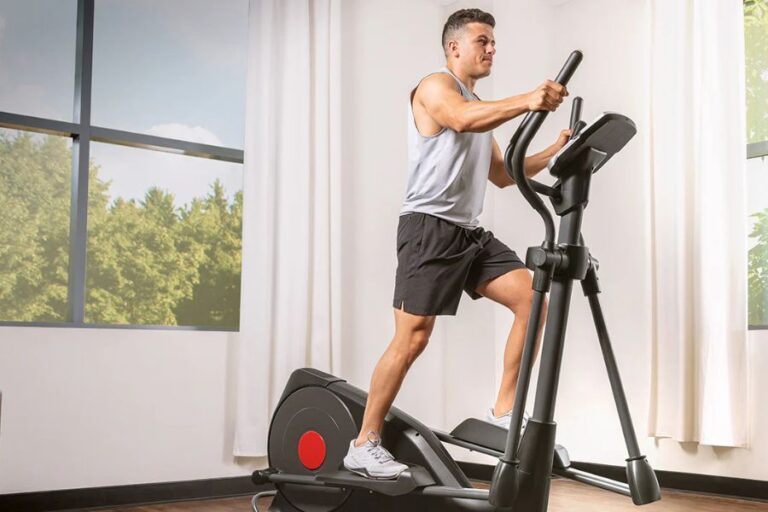
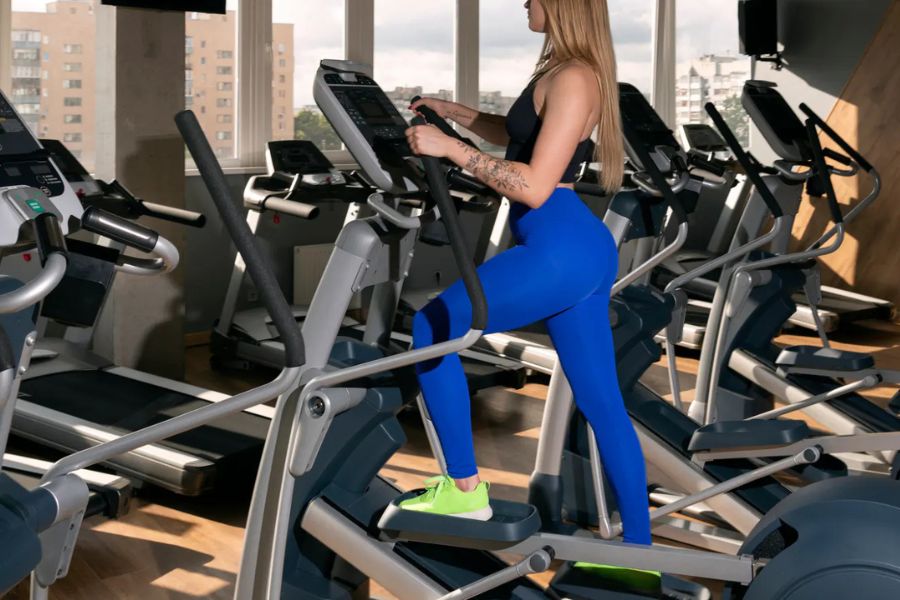
Elliptical cardio workouts do far more than work your legs. When you use the moving handles correctly, you recruit muscles in your upper body and core as well.
According to Healthline, ellipticals with arm handles allow you to work your shoulders, chest, back, glutes, hip flexors, and quadriceps all at once, so you get a more comprehensive muscle workout than with many other cardio machines (Healthline). The Cleveland Clinic also highlights that this upper, lower, and core engagement can help you potentially burn more calories than equipment that focuses on just one area, such as a traditional bike (Cleveland Clinic).
To get that full body benefit, you need to avoid leaning on the stationary handles. Fitness experts recommend that you:
- Stand tall with your shoulders relaxed and down
- Gently engage your core, as if bracing before a small cough
- Actively push and pull the moving handles, instead of resting your weight on them
CNET notes that this kind of posture helps keep you safe while also maximizing calorie burn and muscle activation during your workout (CNET).
Burn calories efficiently to support weight loss
If your main goal is to lose weight, you want to know whether elliptical cardio workouts actually move the needle. Research and expert guidelines say yes.
A 2010 study found that ellipticals can raise your heart rate, oxygen use, and calorie burn to levels that are nearly identical to treadmill running, which means you get a serious workout without the impact (Healthline). Healthline reports that in about 30 minutes on an elliptical you can burn roughly 270 to 400 calories, depending on your body weight and how hard you work (Healthline).
The American Council on Exercise recommends at least 150 minutes of moderate physical activity per week if you want to lose weight. You can meet that target with something as simple as five 30 minute elliptical sessions, or four 45 minute workouts, and you will do even better if you also include strength training (Garage Gym Reviews).
Lose It! adds that burning about 250 calories a day through exercise, combined with a calorie deficit of 500 to 1,000 calories from your diet, can support a healthy weight loss pace of about 1 to 2 pounds per week (Lose It!).
In other words, regular elliptical cardio workouts are a powerful tool, especially when you pair them with a balanced eating plan.
Adjust resistance and incline to shape muscles
If every workout feels exactly the same, you will eventually hit a plateau. The good news is that most ellipticals let you change resistance and incline so you can keep challenging your body and shaping your muscles.
CNET explains that increasing resistance and incline mimics uphill running and forces your muscles to work harder, which can improve strength, muscle building, endurance, and calorie burn (CNET). SOLE Fitness also points out that higher resistance and incline levels significantly enhance calorie burn because your legs and glutes must push and pull more with each stride (SOLE Fitness).
Forward pedaling tends to emphasize your quadriceps, while pedaling backward targets your hamstrings and glutes more directly (CNET). By mixing directions during a single workout, you can create a more balanced leg routine.
According to Set For Set, a well designed elliptical workout engages your glutes, quadriceps, hamstrings, calves, chest, triceps, and core muscles so you are not only burning calories but also gently toning your body over time (Set For Set).
Choose the right workout length for your level
You do not need marathon length cardio sessions to see progress. What matters most is matching your elliptical cardio workouts to your current fitness level, then increasing gradually.
SOLE Fitness suggests that beginners can start with just 15 to 20 minutes per session, while more experienced exercisers can safely work up to 45 to 60 minutes if they feel good doing so (SOLE Fitness). For weight loss, they recommend aiming for about 150 to 200 total minutes of elliptical time per week for a 5 to 10 pound goal, and up to 250 to 300 minutes per week for a 20 to 30 pound goal.
The American Heart Association advises keeping your heart rate between about 50 to 70 percent of your maximum for moderate intensity and 70 to 85 percent for vigorous exercise. Staying in these zones during your workouts helps you maximize calorie burn in a safe way (Lose It!).
If you are new to fitness, it is completely fine to start at the lower end of these ranges and build up slowly. Consistency will do more for your body than trying to do too much on day one.
Try these easy beginner friendly workouts
To help you get started, here are three simple elliptical cardio workouts. You can adjust resistance and incline to match your machine and comfort level.
Before starting any new exercise routine, especially if you have chronic health conditions or joint pain, talk with your healthcare provider or a certified trainer about what is safe for you.
1. 20 minute gentle starter workout
Use this if you are completely new to elliptical training or coming back from a break.
- Minutes 0 to 4: Warm up at very low resistance, light pace
- Minutes 4 to 12: Increase to a comfortable, slightly breathy pace where you could still talk in short sentences
- Minutes 12 to 16: Gently raise resistance one level to add a little challenge
- Minutes 16 to 20: Lower resistance again and cool down at an easy pace
This type of steady state workout at 60 to 70 percent of your maximum heart rate fits the aerobic exercise recommendation for beginners from Set For Set (Set For Set).
2. 30 minute calorie burner
Once you can get through the 20 minute workout comfortably, try this slightly longer session.
- Minutes 0 to 5: Easy warm up, low resistance
- Minutes 5 to 10: Increase resistance to a moderate level, pedal forward
- Minutes 10 to 15: Keep resistance the same, switch to backward pedaling to target glutes and hamstrings
- Minutes 15 to 20: Return to forward pedaling, raise resistance one level if you feel strong
- Minutes 20 to 25: Lower resistance slightly but maintain your pace
- Minutes 25 to 30: Gradual cool down, easing both resistance and speed
For many people this structure will land you in that 170 to 270 calorie range over 30 minutes, depending on your weight and effort level, which lines up with estimates from the Cleveland Clinic and Healthline (Cleveland Clinic, Healthline).
3. Simple HIIT routine for time crunched days
High Intensity Interval Training, or HIIT, lets you burn more calories in less time by alternating hard bursts of effort with easier recovery periods. This style has been shown to improve cardiorespiratory health and support fat loss when you genuinely push during the intense intervals (CNET).
Here is a 20 minute HIIT style workout you can try once you are comfortable with basic elliptical use:
- Minutes 0 to 4: Warm up at a comfortable, easy pace
- Minutes 4 to 6: Increase resistance and speed to a hard but controlled effort
- Minutes 6 to 8: Drop resistance, slow your pace for active recovery
- Repeat steps 2 and 3 three more times, for a total of 4 work intervals and 4 recovery intervals
- Minutes 16 to 20: Cool down at very easy effort
HIIT on an elliptical has been shown to deliver more calorie burn in less time than steady pacing, while still remaining low impact on your joints (Garage Gym Reviews, SOLE Fitness).
Stay safe and make progress over time
Like any new exercise, elliptical cardio workouts can feel unusual at first. Healthline notes that some people experience a learning curve because the motion is slightly different from walking or running, so it can help to ask a trainer at your gym to show you proper form if you feel unsure (Healthline).
To keep your workouts safe and productive:
- Start with low resistance until the movement feels natural
- Keep your posture upright instead of leaning heavily on the handles
- Use the moving handles to involve your upper body, not just your legs
- Give yourself at least one or two rest days per week to recover
SOLE Fitness recommends using the elliptical at least five days per week if weight loss is your main goal, while still taking breaks to prevent overuse injuries and burnout (SOLE Fitness).
If you stay consistent, you may notice changes in your stamina, leg strength, and body composition in just a few weeks. Even short 15 minute sessions can make a difference when you string them together over time (Garage Gym Reviews).
Bringing it all together
Elliptical cardio workouts give you a rare mix of benefits: low joint impact, full body muscle engagement, strong calorie burn, and flexible workout options that match your schedule. You can start with just a few minutes at an easy pace, then build up duration, resistance, and intervals as you gain confidence.
If you want a simple next step, pick one of the beginner workouts above and schedule it into your week. Once you feel how manageable and joint friendly the elliptical can be, it becomes much easier to turn regular cardio into a lasting habit that shapes your body and supports your health.
About the Author