A supplement that started in weight rooms is now showing up in the bottles of cyclists, runners, and triathletes. Creatine for endurance athletes might sound like a mismatch at first, but the research tells a more interesting story. If you want a stronger finish, better recovery, and more power during hard surges, creatine is worth a closer look.
Below, you will learn how creatine works, when it helps, when it might hurt, and how to use it safely and effectively.
What creatine actually does in your body
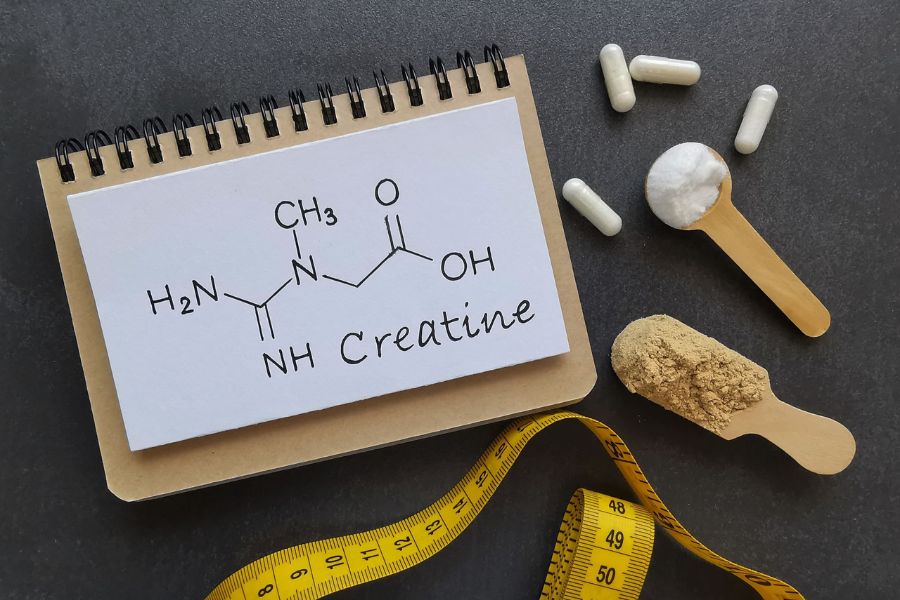
Creatine is a compound stored in your muscles as phosphocreatine. It helps regenerate ATP, which is the main energy currency your muscles use for work. During short, intense efforts, your phosphocreatine system steps in to keep you going.
Supplementing with creatine monohydrate can increase your muscle creatine stores by about 20 percent, which improves your ability to rapidly resynthesize ATP and buffer hydrogen ions. This can support better performance in high intensity efforts that last longer than about 3 minutes, such as hard surges in cycling or rowing intervals (PMC).
You also store more water inside your muscle cells when you increase creatine. That is why many athletes notice a small bump on the scale, often around 1 to 2 percent of body weight (PMC – NCBI).
Why creatine matters for endurance sports
Endurance sports are not just about steady cruising. Races are decided in climbs, surges, and final sprints. In those key moments, your ability to produce short bursts of high power can make the difference between hanging on and getting dropped.
Creatine appears particularly useful for endurance sports that require repeated high intensity efforts or strong finishing kicks. That includes events like cycling, mountain biking, cross-country skiing, triathlon, swimming, and rowing where anaerobic energy plays a crucial role in race defining moments (PMC).
In well trained triathletes, a 2019 study found that creatine monohydrate significantly increased cycling power output. Those athletes were able to ride more efficiently during the cycling portions of their events, a clear advantage in long, demanding races (TrainingPeaks).
Key performance benefits you can expect
The benefits of creatine for endurance athletes tend to show up in specific areas rather than as a magic boost to your overall VO₂ max or steady state pace. Here is where it can help most.
More power in short bursts
Creatine is well known for improving high intensity, short duration exercise capacity. By increasing ATP availability, it helps you sustain higher power during repeated short efforts (TrainingPeaks).
For you, that can translate into:
- Stronger accelerations to close gaps
- More punch on hills or out of corners
- A more powerful sprint at the end of a race
Studies in endurance settings have reported increases in interval power output by up to 18 percent during intermittent high intensity work, without impairing oxygen uptake (PMC).
Better performance in race defining surges
In longer events that mix steady efforts with hard surges, creatine can support your ability to handle those harder segments without fading as quickly. Elite cyclists who used creatine along with carbohydrates showed significant improvements in power output during the closing sprints of a 120 km time trial (PMC).
That kind of edge is especially valuable if you often find yourself dropping off during late race moves or struggling to change pace after long periods at endurance intensity.
Faster recovery from hard training
Creatine does more than support performance in the moment. Research shows that creatine monohydrate can reduce muscle damage and speed recovery from intense exercise. For endurance athletes, that means you may tolerate higher training loads and bounce back more quickly between sessions (TrainingPeaks).
If your schedule includes frequent interval workouts or back to back hard days, better recovery can add up to more quality work over a training block.
Improved glycogen storage
Creatine also seems to enhance how your muscles store and replenish glycogen, which is your primary fuel during long, hard efforts. It does this through mechanisms like increased insulin sensitivity and upregulation of glucose transporter type 4 (PMC – NCBI).
When creatine is combined with carbohydrates, muscle glycogen content and resynthesis improve further. In high intensity aerobic exercise, such as cycling time trials, this combination has been linked with better performance in closing sprints (PMC).
The overall impact on endurance performance appears modest, but in competitive environments even small gains can matter.
Creatine will not turn you into a different athlete overnight, but it can give you more repeatable power, better recovery, and a stronger finish when your training already lays a solid base.
When creatine may not help much
Creatine is not equally beneficial for every endurance athlete or every scenario. The context of your sport and your body weight matters.
Limited effect on pure endurance performance
A systematic review published in May 2023 looked at creatine monohydrate in trained endurance athletes under age 35. Over short durations, creatine did not significantly improve traditional endurance performance measures. Interestingly, a longer supplementation period of around 70 days in rowers did show benefits, which suggests that both duration of use and athlete type influence outcomes (TrainingPeaks).
If your sport is mostly long, even paced efforts with very few surges, you might see less obvious benefit.
Extra body mass in weight bearing sports
One of the clearest drawbacks of creatine is that it increases body mass due to extra intracellular water. For non weight bearing sports like cycling or rowing, the additional weight is often a minor concern compared to the gains in power.
For weight bearing sports such as running, that extra mass can work against you. A 2023 review noted that in runners, this weight gain may negate or even impair performance benefits, particularly in hillier races or longer distances (PMC).
If you are a runner, you may still choose to experiment, but it pays to monitor body weight, feel, and race performance carefully.
How to take creatine for endurance
If you decide to test creatine for endurance, a simple, evidence based protocol keeps things safe and straightforward.
Loading and maintenance phases
A common approach is:
- Loading phase: 20 to 25 g per day, or about 0.3 g per kilogram of body weight, divided into doses every 4 hours for 5 to 7 days
- Maintenance phase: 3 to 5 g per day, or about 0.03 g per kilogram of body weight, after the loading phase
This protocol can significantly increase muscle creatine stores and body weight by around 2 percent due to intracellular water retention (PMC – NCBI).
If you prefer a slower approach with less abrupt weight gain, you can skip the loading and just take 3 to 5 g per day. It will take a few weeks longer to fully saturate your muscles, but you will reach similar levels.
Timing and what to take it with
Timing is flexible, but there are some helpful details from research:
- Taking 5 g of creatine immediately after exercise led to greater gains in fat free mass and fat loss compared to taking it before exercise over four weeks of resistance training (PMC – NCBI). If you do strength work alongside endurance training, post workout might be a smart default.
- Co ingesting creatine with plenty of carbohydrates or a mix of carbohydrates and protein enhances muscle creatine storage. For example, 94 g of carbohydrate per 5 g creatine, or 47 g carbohydrate plus 50 g protein, improved uptake through insulin stimulation (PMC – NCBI).
In practical terms, you might stir creatine into a post workout shake that includes carbs and protein, or mix it with a carb rich drink after hard sessions.
Safety, side effects, and what to watch
Creatine is one of the most studied sports supplements, and the safety profile in healthy people is strong.
What the research says about safety
Placebo controlled, double blind studies up to at least 2016 have found that creatine monohydrate is safe in healthy subjects. It has not been associated with increased cramps, dehydration, or kidney or liver stress when used appropriately (PMC – NCBI). In fact, some research reports fewer cramps, better hydration, and fewer heat related issues in athletes taking creatine (TrainingPeaks).
A review of the literature up to 2000 noted that athletes commonly used up to 20 g per day for several days, followed by 1 to 10 g per day over extended periods, with most users reporting no adverse effects apart from body mass increase (PubMed).
Longer term monitoring studies, ranging from 5 days to up to 5 years, found no adverse effects on kidney function or liver function in healthy athletes. Occasional reports of gastrointestinal issues or cramps appear anecdotal and are not backed consistently by systematic evidence (PubMed).
Even so, that same review recommends regular monitoring during use, especially at high doses, because idiosyncratic reactions are always possible (PubMed).
Common practical side effects
The effects you are most likely to notice include:
- A small, rapid increase in body weight from water retention
- Mild stomach upset if you take large doses at once
- A feeling of bloating during the loading phase
You can reduce discomfort by splitting your dose across the day, taking creatine with food or a shake, and drinking enough fluids.
If you have any history of kidney or liver issues, or if you take medications that affect those organs, speak with your doctor before using creatine.
Is creatine right for you as an endurance athlete?
Whether creatine is a good fit depends on your sport, goals, and willingness to experiment.
It is most promising if:
- Your events involve repeated surges or hard finishes
- You are a cyclist, rower, swimmer, triathlete, or similar
- You care about interval performance and strength as well as pure endurance
It is more of a question mark if:
- You are a distance runner where every extra ounce matters
- Your races are long and very steady with minimal pace changes
- You are highly sensitive to body weight changes
If you decide to try creatine, treat it like any other training tool. Introduce it in a lower priority phase of your season, log how you feel, track body weight and key workout metrics, and give it several weeks before you judge.
Used thoughtfully, creatine for endurance athletes can be a smart way to support stronger surges, better recovery, and more resilient training. It will not replace sound nutrition or a well designed plan, but it can help you make more of the fitness you already work hard to build.
About the Author