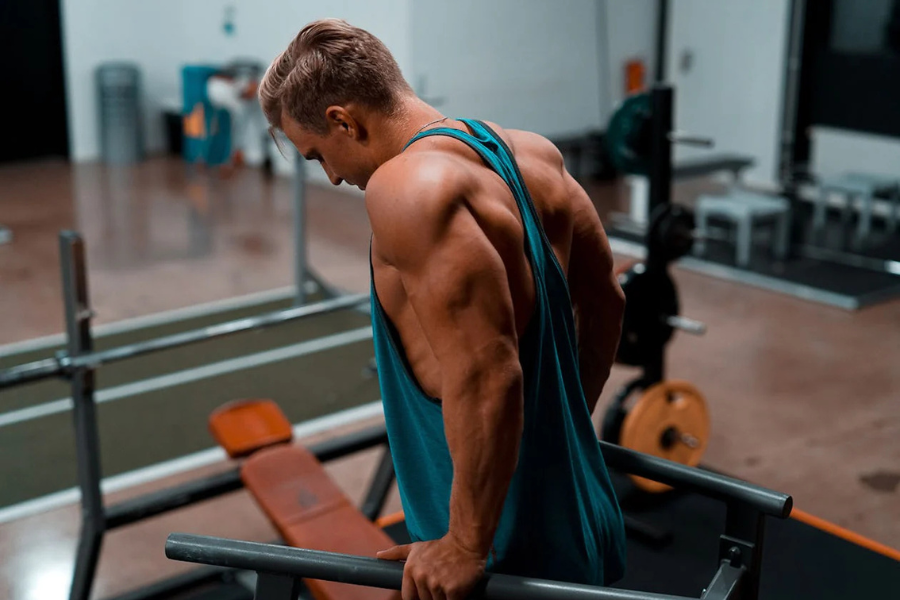
Why tricep strength matters for athletes
If you play a sport that involves throwing, pressing, or pushing, a focused tricep workout for athletes is not just about bigger arms. Strong triceps protect your shoulders, improve lockout strength, and help you generate more power in every upper body movement.
Your triceps make up roughly 70% of your upper arm mass, so they have a big impact on both performance and stability in presses, push ups, and overhead work. For overhead athletes like baseball, softball, volleyball, tennis, and track and field throwers, the triceps act as an important “brake” during high speed movements. They help slow your arm down and protect your joints from the constant stress of throwing or hitting above your head.
Neglecting specific triceps training can increase your risk of overuse injuries, especially in the shoulder and elbow. A smart tricep plan is similar to how runners train hamstrings. You are building the muscles that keep you safe when your primary movers are under heavy, repetitive load.
Understand your triceps anatomy
To build a powerful and balanced tricep, you need to train all three heads of the muscle. Each one responds best to slightly different angles and grips.
The three heads and what they do
-
Long head
-
Runs along the back of your upper arm and attaches to your shoulder blade (scapula).
-
Helps extend the elbow and stabilize the shoulder.
-
Acts as an eccentric decelerator in overhead throwing, helping protect the glenohumeral joint and rotator cuff.
-
Lateral head
-
Sits on the outer side of your upper arm.
-
Contributes a lot to the “horseshoe” look.
-
Works hard in pronated (palms down) pushdowns, dips, and close stance push ups.
-
Medial head
-
Lies deeper and closer to the elbow.
-
Supports fine control and endurance in pressing and pushing.
-
Responds well to supinated (palms up) grip variations.
Overhead movements such as overhead tricep extensions are especially effective for the long head and shoulder stability, while exercises that keep your elbows tucked in, like tricep pushdowns and dips, focus more on the lateral and medial heads.
Know your sport specific demands
Not every athlete uses the triceps in the same way. Your ideal tricep workout for athletes should match how you actually move in your sport.
Overhead and throwing athletes
If you pitch, spike, serve, or throw, your arm repeatedly accelerates then has to slam on the brakes. The long head of your triceps plays a major role in that deceleration and in stabilizing the shoulder.
A 2013 study cited by Manske and Ellenbecker found that:
- 34% of rotator cuffs labeled as “painless shoulders” showed tears on MRI in overhead athletes
- 79% of professional baseball pitchers with no pain still had abnormalities in the glenoid labrum
Those numbers highlight how often damage builds silently over time. Strengthening the triceps along with the shoulder complex helps reduce this gradual wear, especially around the rotator cuff and labrum.
Priority for you:
- Long head strength and endurance
- Overhead stability
- Controlled eccentric (lowering) work
Strength athletes and lifters
If you are a powerlifter, strongman, weightlifter, or CrossFit athlete, your triceps drive:
- Bench press lockout
- Overhead press, push press, and jerk
- Push ups and dips
- Log press and other strongman pushing events
Close grip bench press is especially valuable because it loads the long head heavily and directly carries over to heavier benches. Overhead extensions, dips, skull crushers, and pushdowns round out development and lockout strength.
Priority for you:
- Heavy compound tricep work
- Strong lockout under fatigue
- Multiple weekly exposures at different loads and rep ranges
Contact and grappling athletes
If you are a wrestler, football player, or play a sport that involves pummeling, stiff arms, or hand fighting, you need explosive elbow extension and the ability to hold strong positions.
Dips, close grip presses, and overhead extensions help you:
- Stiff arm opponents
- Control ties and frames
- Punch for underhooks and hand position without the shoulder drifting forward
Standing cable overhead extensions and Miracle Gro style exercises are especially useful for internally rotated athletes such as wrestlers because they teach shoulder co contraction and thoracic extension in strong overhead positions.
Follow science based training guidelines
You can adjust details for your sport, but solid hypertrophy and strength guidelines will keep your tricep workout for athletes effective and safe.
Frequency and volume
For most athletes:
-
Train triceps at least twice per week
-
Once with a heavier, compound focus
-
Once with more isolation and higher reps
-
Hypertrophy guidelines
-
Sets: 3 to 6 per exercise
-
Reps: 6 to 12
-
Load: 60 to 80% of your 1 rep max
-
Rest: about 60 seconds for most working sets
You can still include some very heavy sets of 3 to 5 reps for strength, especially on compound lifts like close grip bench or weighted dips. Balance those with higher rep work to support muscle growth and joint health.
Exercise selection basics
To train all three heads and cover different roles, make sure your program regularly includes:
- Overhead tricep extension
- Tricep dips
- Skull crushers
- Tricep pushdowns
- Close grip bench press
- Diamond push ups
These six are widely recommended for mass and strength development in athletes, and they let you target each area of the triceps with slightly different angles and grips.
Key tricep exercises you should master
This section covers how to perform the most effective exercises for athletic tricep strength and how each one supports performance.
Overhead tricep extension
What it works:
- Long head of the triceps
- Shoulder stability in overhead positions
How to do it (standing dumbbell):
- Stand with your feet shoulder width apart.
- Hold a dumbbell with both hands and press it overhead.
- Keep your elbows pointed forward and close to your ears.
- Slowly lower the weight behind your head by bending at the elbows.
- Press the weight back up until your arms are straight, without leaning back.
Why it helps athletes:
Overhead extensions mimic the position your arm hits in presses, snatches, and throws. Training here strengthens the long head and teaches you to control the shoulder and thoracic spine under load.
Tricep dips
What it works:
- Overall tricep mass and strength
- Lateral and medial heads
- Chest and shoulders as secondary movers
How to do it (parallel bars or sturdy benches):
- Place your hands on the bars or on the edge of a bench, arms straight.
- Lower your body by bending your elbows, keeping your chest lifted.
- Go as low as your shoulders comfortably allow.
- Press back up until your arms are locked out.
You can make it harder with added weight and easier with band assistance.
Why it helps athletes:
Dips are excellent for building serious muscle mass and explosive elbow extension. This carries over to bench press lockouts, stiff arms in football, and powerful finishes on presses and throws. Weekly dips, often with 4 sets of 4 weighted reps plus 2 higher rep drop sets, can stimulate both strength and size gains.
Close grip bench press
What it works:
- Long head and overall tricep strength
- Bench and overhead press performance
How to do it:
- Lie on a flat bench with your feet planted.
- Grip the bar with your hands shoulder width apart, or slightly closer.
- Unrack the bar and hold it above your chest.
- Lower the bar to the lower chest, keeping your elbows close to your sides.
- Press back up, focusing on driving with your triceps.
Why it helps athletes:
For strength athletes, close grip bench is a cornerstone exercise. It builds the long head, which contributes most to size and pressing power, and it directly improves bench lockouts and overall push strength.
Skull crushers
What it works:
- Lateral head emphasis
- Long head depending on angle
How to do it:
- Lie on a bench with a barbell or EZ bar.
- Start with the bar extended above your shoulders.
- Bend your elbows and lower the bar toward your forehead or just behind your head.
- Keep your upper arms steady and elbows tucked.
- Extend your arms back to the start position.
Why it helps athletes:
Skull crushers target the triceps in a stretched position and build strength through the range you need for lockouts and punches. Using controlled eccentrics can further protect your elbows while building size.
Tricep pushdowns
What it works:
- Lateral and medial heads
- High rep endurance and lockout strength
How to do it:
- Attach a straight bar or rope to a high cable pulley.
- Grip with palms down (pronated) for lateral head focus.
- Start with elbows bent at 90 degrees, tucked by your sides.
- Press the handle down until your arms are straight.
- Control the return to the start position.
You can also use a reverse grip (palms up) to put more emphasis on the medial head.
Why it helps athletes:
Pushdowns are ideal at the end of sessions for high rep work. They build endurance in the triceps and improve your ability to finish presses and push ups when you are tired.
Diamond push ups
What it works:
- Triceps across all three heads
- Core stability and shoulder control
How to do it:
- Get into a push up position with hands close together so your thumbs and index fingers form a diamond.
- Keep your body in a straight line from head to heels.
- Lower your chest toward your hands, elbows close to your sides.
- Push back up, focusing on your triceps.
Why it helps athletes:
Diamond push ups are one of the best bodyweight tricep movements. You can do them anywhere and easily progress by adding reps, slowing the tempo, or elevating your feet.
Use advanced tricep methods for extra power
Once you are comfortable with the basics, you can layer in more targeted methods that many athletes use to build power and stability.
Miracle Gro tricep exercise
What it is:
A seated overhead tricep movement using a dumbbell and open palm grip to stretch and strengthen the long head while improving shoulder stability.
How to do it:
- Sit upright on a military press style bench with back support.
- Hold a heavy dumbbell in one hand in an open palm position.
- Press the weight overhead, then lower it behind your head into a deep stretch.
- Keep your chest lifted and avoid arching your lower back.
- Extend back up to lockout, maintaining control.
Recommended programming:
- 4 to 5 sets of 7 to 9 heavy reps
- Followed by 2 drop sets of around 20 reps
Why it helps athletes:
Because the long head attaches to the scapula, training it heavy in an overhead position helps reinforce shoulder stability. This directly transfers to overhead pressing, shot putting, pitching, and any sport where you need a strong, stable arm overhead.
Standing cable overhead tricep extensions
What it is:
An overhead extension variation using cables with back support to encourage better posture and shoulder mechanics.
How to do it:
- Set a cable at a low position and face away from the machine.
- Grab the handle with both hands and step forward so the cable runs behind your head.
- Lean slightly forward with your back supported by a bench or pad if available.
- Start with elbows bent and close to your head.
- Extend your arms overhead, then control the return to the start.
Why it helps athletes:
Internally rotated athletes such as wrestlers often have rounded shoulders. This exercise trains thoracic spine extension and shoulder co contraction, which you need for strong lockout positions in the snatch, push press, and jerk.
Dips with heavy and drop sets
To build both strength and size, you can blend heavy sets with higher rep drop sets:
- 4 sets of 4 reps with added weight
- 2 drop sets of 12 to 17 reps with lighter weight or bodyweight
This combination hits both myofibrillar and sarcoplasmic hypertrophy, which gives you more power and more muscle volume to support it.
Ghostface kickbacks and close grip bench pre fatigue
Step 1: Ghostface kickbacks (with bands)
- Attach a resistance band to a stable point.
- Hinge at the hips with a flat back.
- Hold the band with your elbow raised and bent 90 degrees.
- Extend your arm back until straight, then return under control.
- Aim for 15 to 20 reps.
Rest 30 to 60 seconds.
Step 2: Close grip bench with special tempo
- Use a heavy but manageable load.
- Lower the bar slowly (controlled eccentric).
- Press up rapidly (fast concentric).
- Perform multiple sets focusing on power on the way up.
Why this combo works:
Pre fatiguing your triceps with isolation work forces more fast twitch muscle fiber recruitment when you move to the heavy compound lift. You get strong stimulus for growth and explosive power without needing maximal weights for as many sets. This is useful when you need strength but want to keep overall joint stress moderate.
Sample tricep workout for athletes
Here is a balanced two day weekly structure you can adapt to your sport. Adjust sets and reps based on your training age and schedule.
Day 1: Strength and power focus
- Close grip bench press
- 4 sets of 4 to 6 reps
- Heavy, focus on speed out of the bottom
- Weighted dips
- 4 sets of 4 reps
- Add weight if form stays solid
- Skull crushers
- 3 sets of 8 to 10 reps
- Tricep pushdowns
- 3 sets of 12 to 15 reps
Day 2: Overhead stability and hypertrophy
- Miracle Gro tricep exercise
- 4 to 5 sets of 7 to 9 reps
- 2 drop sets of around 20 reps
- Standing cable overhead tricep extension
- 3 sets of 10 to 12 reps
- Ghostface kickbacks + close grip bench superset
- Kickbacks: 15 to 20 reps
- Rest 30 to 60 seconds
- Close grip bench: 3 sets of 6 to 8 reps with slow eccentric, fast concentric
- Diamond push ups
- 2 to 3 sets to technical fatigue
You can place Day 1 on your heavy upper body or pressing day, and Day 2 on a lighter upper session or as an accessory day.
Train your triceps at home
If you do not have regular access to a gym, you can still follow a structured tricep workout for athletes at home with bodyweight and simple equipment. You can:
- Use diamond push ups and bench dips on a stable chair or table.
- Add resistance bands to mimic cable pushdowns and kickbacks.
- Progress by:
- Increasing reps
- Slowing the eccentric phase
- Reducing rest time
- Elevating your feet or adding a backpack with weight
Consistent progression using these methods, even without heavy barbells, can keep your triceps strong and responsive for sports.
Putting it all together
To build powerful, durable triceps that support your sport:
- Train them at least twice per week with a mix of heavy compounds and focused isolation.
- Include overhead work to strengthen the long head and protect your shoulders, especially if you are an overhead or throwing athlete.
- Use dips, close grip bench, and pushdowns to build lockout strength and overall mass.
- Add advanced methods like Miracle Gro, standing cable overhead extensions, and pre fatigue combos when you are confident with basic technique.
- If you train at home, rely on smart progressions with bodyweight and bands.
Start by choosing one or two changes you can apply in your next session, such as adding close grip bench to your upper day or finishing with diamond push ups. As your tricep strength improves, you will feel the difference every time you press, throw, or push at high speed.
About the Author