A balanced hamstring stretch and strength workout can ease tightness, protect your knees and back, and make everyday movement feel smoother. You do not need fancy equipment or an hour at the gym. With 10 to 20 focused minutes, you can hit both flexibility and strength in one session.
Below, you will find a simple routine you can use 3 to 4 times a week to build stronger, more flexible hamstrings, plus tips on how to adjust it to your fitness level.
Understand your hamstrings first
Your hamstrings are not just “the back of your thigh.” They are a group of three muscles, the biceps femoris, semitendinosus, and semimembranosus, that help you bend your knees, extend your hips, and rotate your thigh. The biceps femoris works a bit differently from the other two, so you want to challenge your hamstrings in slightly different angles for balanced development.
Well conditioned hamstrings support almost every lower body movement you make. They help you walk, run, climb stairs, and stand up from a chair. Strong and flexible hamstrings also reduce your risk of injuries and muscle imbalances, and they add overall leg strength and size, as explained in a Gymshark guide updated in 2024.
If you sit a lot, run, lift weights, or do HIIT, your hamstrings can feel tight, weak, or both. That is where a combined hamstring stretch and strength workout can help.
Why your hamstrings feel so tight
Hamstring tightness is rarely “just” tight muscles. It is usually a mix of lifestyle, training habits, and your nervous system trying to protect you.
If you spend long periods sitting with your hips flexed and your knees bent, your hamstrings stay in a shortened position. Over time, that can lead to tightness and weakness. Personal trainers quoted in a 2026 GQ article note that this can cause discomfort not only in your legs but also in your back, shoulders, and neck as your body compensates.
Runners and people who love HIIT or heavy lower body workouts also put repetitive demand on the hamstrings. Without regular stretching and strength work, that added stress can show up as stiffness or a burning sensation at the back of your thigh.
The Mayo Clinic explains that what you feel as hamstring tightness is often your nervous system sending a warning rather than a clear sign that your muscle is physically short. In other words, your body may be limiting your range of motion because it does not trust that you are stable and strong there.
That is why simply yanking on your hamstrings with aggressive stretching often does not solve the problem. You usually get better, longer lasting relief when you combine gentle stretching with stability and strength exercises such as squats or deadlifts, which Mayo Clinic physical therapists also recommend.
Stretching vs strengthening your hamstrings
Stretching and strengthening are both important for healthy hamstrings, but they do different things for your body.
Stretching helps you:
- Improve flexibility and joint range of motion
- Reduce the feeling of stiffness
- Boost circulation after aerobic or strength sessions
The Mayo Clinic notes that stretching as part of a regular exercise program supports mobility and blood flow after your workouts. A 2024 systematic review and meta analysis also found that hamstring stretching exercises significantly reduced pain intensity in people with different types of low back pain and improved functional outcomes like disability scores and straight leg raise test results.
Strengthening, on the other hand, helps you:
- Build muscle and protect your joints
- Support the lower back and hips
- Improve power and performance in sports and daily life
Patients with hamstring issues often experience more lasting relief by adding targeted stability moves such as squats or deadlifts instead of relying on stretching alone, according to Mayo Clinic guidance.
When you pair both in a single hamstring stretch and strength workout, you are teaching your body to feel safe and strong through a fuller range of motion. That is what usually leads to fewer aches and better movement.
How to warm up your hamstrings safely
Before you hold any long stretches, ease your muscles and joints into motion. A simple warm up can be as short as 3 to 5 minutes.
Focus first on dynamic hamstring stretches. These involve moving in and out of a position instead of holding it still. Trainers typically recommend doing them for 60 to 90 seconds in a steady, controlled way.
You can try:
- Gentle walking or marching in place for 1 to 2 minutes
- Leg swings front to back, lightly holding a wall for balance
- Slow, bodyweight good mornings with soft knees, hinging at your hips
Dynamic movements increase blood flow and signal your nervous system that it is safe to move. You save your longer static holds for after you have completed your strength work or at the end of a cardio session.
Static hamstring stretches you can do anywhere
Static stretches are where you move into a position and hold it for a set time. Aim to hold each stretch for about 30 seconds while breathing normally. You should feel tension but not sharp pain. Avoid bouncing or forcing your range, as Mayo Clinic physical therapists warn against bouncing or painful stretching.
Pick two or three of these and repeat each 1 to 2 times per leg:
Simple hamstring stretch on the floor
- Sit on the floor with one leg extended in front of you and the other leg bent, sole of the foot against the inner thigh.
- Sit tall and gently hinge forward from your hips toward your extended leg.
- Reach toward your ankle or shin while keeping your back long, not rounded.
- Stop when you feel a stretch along the back of your thigh and hold for 30 seconds. Switch legs.
Towel or strap stretch on your back
- Lie on your back with both legs extended on the floor.
- Loop a towel or strap around the ball of one foot.
- Keeping a slight bend in your knee, gently pull your leg toward you until you feel a stretch in your hamstring.
- Hold for 30 seconds, relax, then switch sides.
Standing one leg hamstring stretch
- Stand tall and place one heel on a low step, bench, or sturdy chair.
- Keep your leg mostly straight with a soft knee and your toes pointing up.
- Hinge forward slightly at your hips while keeping your back neutral.
- Hold for 30 seconds, then change legs.
You can also explore hurdler stretches and standing forward bends if they feel comfortable and do not provoke back pain. If you already have low back issues or sciatica, it is wise to check with a healthcare professional or physical therapist before adding new stretches.
Strength moves for powerful hamstrings
After your warm up, you are ready for the strength portion of your hamstring stretch and strength workout. Here the goal is to challenge the muscles enough that they adapt, without sacrificing good form.
Many people rush hamstring exercises and use only a partial range of motion. That means they miss the full stretch at the bottom and the squeeze at the top. Slowing down your reps improves muscle engagement and results.
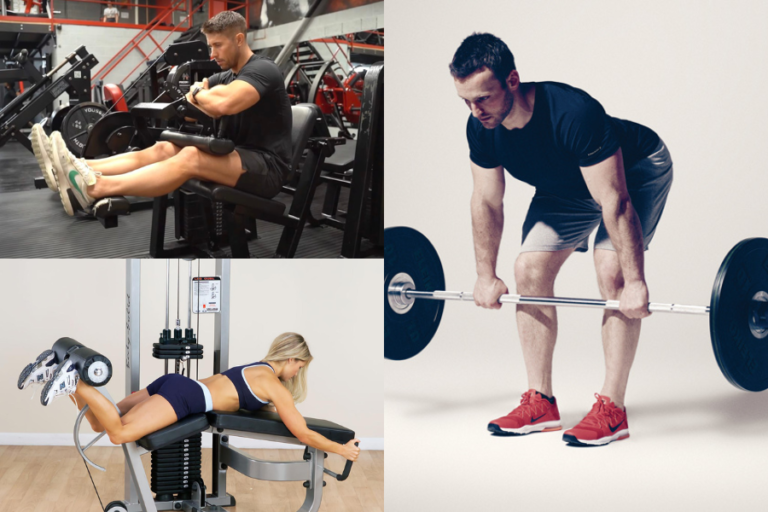
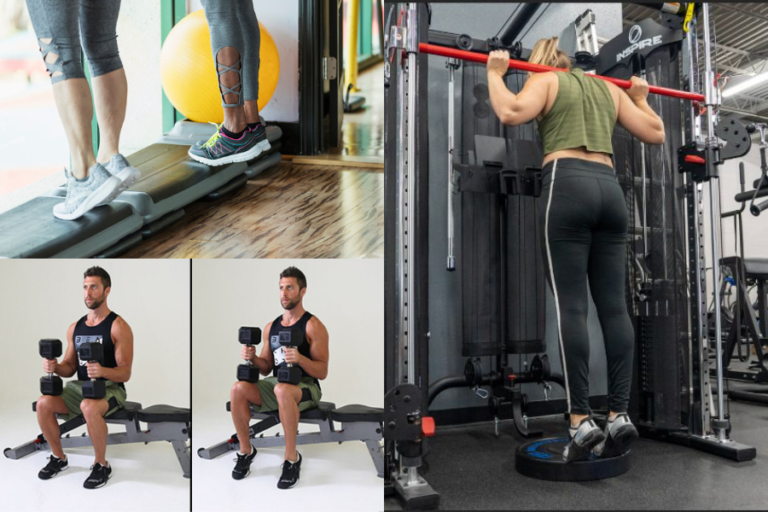
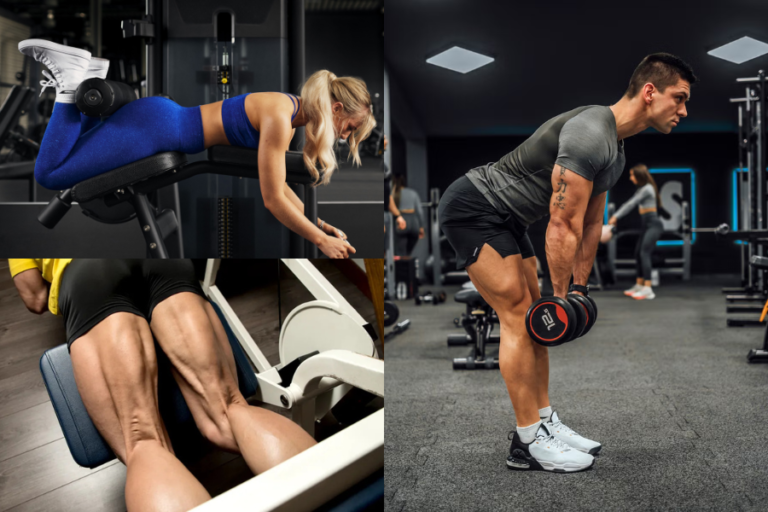
Romanian deadlifts and hamstring curls are especially effective because they place a high load on the hamstrings. The Gymshark guide highlights Romanian deadlifts as one of the best choices for targeted hamstring training and notes that kettlebell swings, single leg Romanian deadlifts, and prone hamstring curls are among the top exercises for hamstring muscle activation.
Your simple hamstring stretch and strength workout
Use this routine 3 times per week on non consecutive days. Start with lighter weights, then progress as you get stronger.
Aim for a total of 15 to 25 minutes, including warm up and cool down.
1. Dynamic warm up, 3 to 5 minutes
- Light marching or walking in place, 1 minute
- Leg swings, 10 to 15 per leg
- Bodyweight hip hinges or good mornings, 10 to 15 reps
Keep the movements easy and pain free.
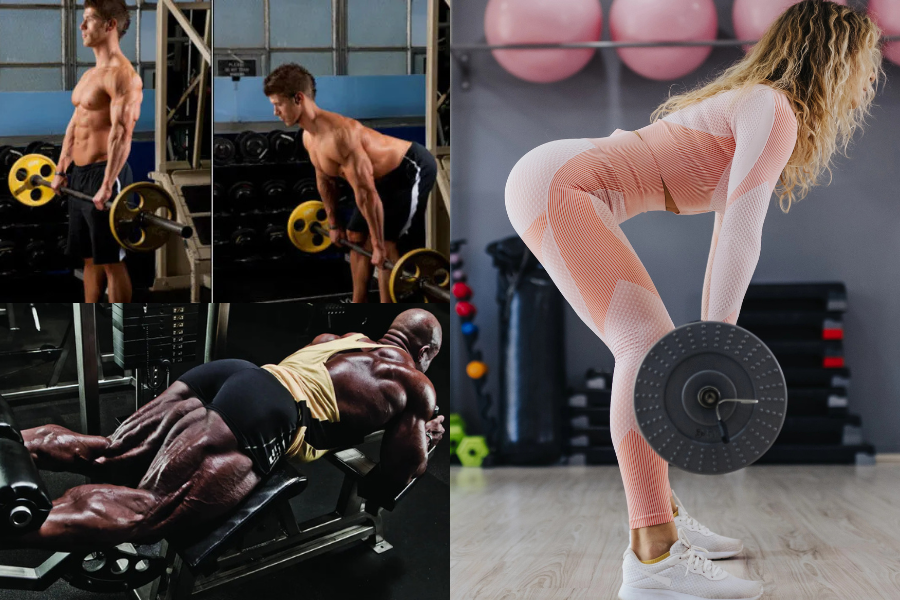
2. Romanian deadlifts, 3 sets of 8 to 12 reps
Use dumbbells, a barbell, or even a kettlebell.
- Stand with feet hip width apart, holding the weight in front of your thighs.
- Soften your knees and push your hips back, letting the weight travel down your legs.
- Lower until you feel a strong stretch in your hamstrings, keeping your back flat.
- Drive through your heels and squeeze your glutes to stand tall again.
Move slowly, especially on the way down. Treat this as a strength exercise, not a stretch. Increase the weight gradually as you master the form.
3. Single leg Romanian deadlifts, 2 to 3 sets of 8 to 10 reps per leg
Single leg work helps correct imbalances between your right and left sides.
- Hold a dumbbell or kettlebell in your right hand.
- Stand on your left leg with a soft knee.
- Hinge at your hip and extend your right leg behind you as your torso leans forward.
- Lower until you feel a stretch in your standing hamstring, then return to standing.
Use a wall or chair for balance if you need it. Stay focused on control rather than speed.
4. Hamstring curls, 3 sets of 10 to 15 reps
You can use a machine at the gym, a stability ball, or a slider at home.
For a machine curl:
- Adjust the machine so the pad rests just above your heels with your knees aligned with the pivot point.
- Curl your heels toward your glutes, pause and squeeze, then lower slowly.
For a stability ball curl:
- Lie on your back with your heels on top of a stability ball and arms by your sides.
- Lift your hips into a bridge.
- Curl the ball toward your glutes by bending your knees, then extend again while keeping your hips lifted.
Whichever version you choose, move deliberately and use your full, comfortable range of motion.
5. Optional kettlebell swings, 2 sets of 15 to 20 reps
If you are familiar with kettlebell technique, swings are a powerful way to train hip extension and hamstring explosiveness.
- Place a kettlebell about a foot in front of you.
- Hinge at the hips, grab the handle, and hike it back between your legs.
- Snap your hips forward to swing the kettlebell up to chest height, keeping your arms relaxed.
- Let the bell swing back between your legs and repeat.
If you are new to swings, skip this step until you can learn the pattern with a coach or instructional session. Proper form is key.
6. Static cool down stretches, 5 to 7 minutes
Finish your workout with static hamstring stretches from the earlier section. For example:
- Towel or strap stretch, 2 rounds per leg, 30 seconds each
- Standing one leg hamstring stretch, 30 seconds per leg
You can also add some gentle hip flexor and glute stretches since tightness there can contribute to hamstring strain.
How often to do this routine
Most people do well with hamstring work 2 to 4 days per week. Trainers from Los Angeles recommend about 10 minutes of daily dynamic stretching before workouts and static stretching afterward or anytime you feel tight.
For strength, training the hamstrings at least as much as you train smaller muscle groups like your biceps makes sense, given their size and importance. Many lifters under train hamstrings and only do a few sets of leg curls, which is not enough volume for such a large muscle group.
If you already lift weights, you can plug this hamstring stretch and strength workout into your leg day. If you are newer to exercise, keep things simple and focus on consistency rather than intensity.
When to see a professional
If you have:
- Persistent hamstring tightness or pain that does not improve with stretching
- Low back pain or sciatica that flares with hamstring work
- A history of hamstring tears or major injuries
then it is smart to check in with a physical therapist, orthopedist, or sports medicine specialist. Experts at the Mayo Clinic recommend getting an evaluation if symptoms linger, so you can identify underlying causes and get individualized strengthening and stability exercises.
You can also add tools like foam rolling and warm Epsom salt baths to relieve short term tightness, but trainers caution that soaking without stretching can make muscles feel tighter afterward. The foundation of lasting change is still regular, smart movement.
Try the routine above once this week. Pay attention to how your hamstrings feel not just right after, but the next day when you walk, sit, and stand. If you like the difference, keep it in your rotation and adjust the weights upward as your strength grows.
About the Author