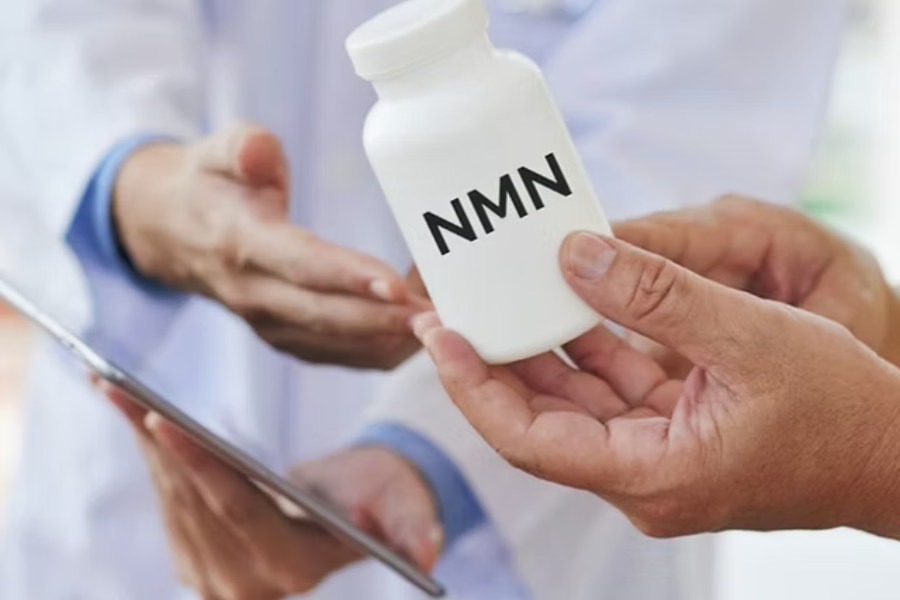
A small capsule that might help you feel more energetic, think more clearly, and age a little more slowly sounds almost too good to be true. If you have seen NMN supplements and wondered “how does NMN work, exactly?”, you are not alone.
You are about to get a clear, no-jargon walkthrough of what NMN is, how it works inside your cells, what current research suggests, and where science still has question marks.
Start with the basics: what is NMN?
Nicotinamide mononucleotide, usually shortened to NMN, is a molecule your body already makes. It is closely related to vitamin B3 and acts as a building block for something even more important called NAD or NAD plus.
NAD plus, short for nicotinamide adenine dinucleotide, is a coenzyme that sits inside every cell in your body. It helps turn the food you eat into usable energy, supports DNA repair, and keeps many cellular processes running smoothly. As you age, your natural NAD levels steadily decline, which is linked to lower energy, slower metabolism, and age related health problems (PMC, PMC).
This is where NMN comes in. NMN is one of the main precursors your cells use to make more NAD. When you take NMN as a supplement, you are essentially supplying extra raw material for your body to rebuild its NAD stores.
How does NMN work inside your body?
To understand how NMN works, it helps to follow its path from capsule to cell. The process is more straightforward than it sounds.
Step 1: Absorption in your gut
After you swallow an NMN supplement, it travels through your digestive system and is absorbed through the walls of your small intestine. Animal studies show that NMN is absorbed quickly and can appear in the bloodstream within minutes (PMC). NMN is also fairly stable in water at room temperature for about a week, which supports its use as an oral supplement (PMC).
Step 2: Transport into your cells
Once NMN reaches your bloodstream, it needs to get inside your cells to be useful. For a long time, scientists thought molecules like NAD could not cross cell membranes easily because they are too large and lack specific transporters.
NMN is different. Your cells have a special transporter protein called Slc12a8 that ferries NMN directly across the cell membrane, particularly in tissues like the small intestine (PMC). Some NMN may also be converted to a related molecule, nicotinamide riboside, and then taken up, but the key idea is the same: NMN has a viable entry route into cells, which is one reason it is seen as more promising than taking NAD directly (Healthline).
Step 3: Conversion to NAD inside cells
Once inside, NMN is converted to NAD through a short enzyme driven pathway. A rate limiting enzyme called NAMPT, nicotinamide phosphoribosyltransferase, helps convert nicotinamide, a form of vitamin B3, into NMN. Then other enzymes, such as NMNATs, convert NMN into NAD plus (PMC).
If you take NMN as a supplement, you essentially skip some of the early steps and feed the pathway closer to the end. Your cells can then use this NMN to build more NAD plus and restore part of what has been lost with age (PMC).
Step 4: Activating NAD dependent processes
Once NAD levels rise, they support several critical processes:
- Energy metabolism in your mitochondria
- DNA repair through enzymes called PARPs
- Activity of sirtuins, a family of proteins linked to aging, inflammation, and metabolism
- Proper function of immune cells and maintenance of cellular homeostasis (PMC)
In simple terms, more NAD gives your cells more fuel and resources to repair damage and maintain normal function.
Think of NMN as extra ingredients delivered to a tired factory. When the ingredients arrive, the factory, your cells, can ramp production back up and repair worn out machinery.
What does the research say about NMN’s benefits?
You will find a lot of bold claims about NMN online. It helps to separate what has been seen in animals from what has been shown in humans so far.
Findings from animal studies
In animal models, especially mice, NMN supplementation has shown several promising effects:
- Increased NAD biosynthesis and restored NAD levels in aged tissues
- Improved insulin sensitivity and metabolic health
- Better mitochondrial and neuronal function
- Reduced inflammation
- Protection against age related diseases such as diabetes and Alzheimer’s disease (PMC, PMC)
These results suggest that supporting NAD with NMN could help counter some aspects of biological aging. However, effects in animals do not automatically translate to humans at the same scale.
What human studies have found so far
Human research on NMN is newer but growing. Several small clinical trials give a clearer picture of how NMN works in people.
- A 60 day randomized, double blind, placebo controlled trial in healthy middle aged adults tested daily doses of 300, 600, and 900 mg of NMN. All NMN groups showed significant increases in blood NAD plus and NADH compared with placebo, with the largest jumps at 600 and 900 mg (PMC).
- The same study measured the six minute walking test, a standard way to assess functional physical performance. Participants taking NMN walked significantly farther than those on placebo at both 30 and 60 days, especially in the 600 and 900 mg groups (PMC).
- Interestingly, the NMN groups maintained a stable blood biological age over the 60 days, while the placebo group showed a significant increase in biological age using the Aging.Ai 3.0 calculator (PMC).
Other human studies, summarized by Healthline, report that NMN doses between 250 and 1,200 mg per day can increase NAD levels, improve some markers of insulin sensitivity, and support aerobic capacity. However, researchers still emphasize the need for larger and longer trials before drawing firm conclusions (Healthline).
Safety profile so far
In the 60 day trial mentioned above, NMN was well tolerated at doses up to 900 mg per day. There were no NMN related adverse events, and lab tests and physical exams showed no significant differences between NMN and placebo groups (PMC).
Early human data and animal studies suggest NMN is generally safe in the short term for healthy adults. Even so, you should talk with your healthcare provider before starting NMN, especially if you are pregnant, breastfeeding, have chronic health conditions, or take prescription medications.
Why NAD and NMN matter more as you age
You might be wondering why boosting NAD is such a big focus for anti aging research. The reason is that NAD sits at the center of several pathways that tend to weaken over time.
Age related NAD decline
As you age, NAD levels in tissues such as muscle, brain, and liver drop. This decline is linked to impaired tissue function, slower DNA repair, mitochondrial dysfunction, and a higher risk of metabolic and inflammatory diseases (PMC, Healthline).
At the same time, enzymes that consume NAD, such as PARPs and CD38, can become more active, which further depletes the pool. The net result is an imbalance between NAD use and NAD creation.
How NMN fits into the bigger picture
By providing more NMN, you essentially help rebalance NAD plus biosynthesis and degradation. This supports NAD dependent enzymes like sirtuins, PARP, and CD38, which play roles in:
- DNA repair and genome stability
- Mitochondrial protection and energy production
- Stem cell function and tissue regeneration
- Inflammation control and stress responses (PMC)
Some researchers propose that NMN might help restore communication between the nucleus and mitochondria through pathways like AMPK, SIRT1, and FOXO, which in theory could delay some age related declines (PMC). These mechanisms are promising, but still under active investigation.
How NMN compares with other NAD boosters
If you have looked into NAD support, you have probably seen other options like NR, nicotinamide riboside, or even NAD infusions. Here is how NMN fits in conceptually.
NAD itself is too large and does not have a clear way into most cells, so direct oral NAD supplements may not effectively raise intracellular NAD (Healthline). NR and NMN both act as precursors your body can convert into NAD.
NMN stands out because:
- It is naturally produced in your body from nicotinamide via NAMPT
- It can enter cells through the specialized transporter Slc12a8, especially in the gut
- It feeds directly into the last steps of the NAD salvage pathway
This does not automatically make NMN “better” than other precursors for every person, but it does explain why so much research is now focused on how NMN works and how effectively it can raise NAD in specific tissues.
Practical considerations if you are thinking about NMN
If you are curious about trying NMN, a few practical points can help you make a more informed decision.
Typical doses in studies
Human trials have tested a broad range of doses, typically between 250 mg and 1,200 mg per day. The 60 day study that found improvements in NAD levels and walking distance used 300, 600, and 900 mg per day, with the most pronounced effects at 600 and 900 mg (PMC). Healthline notes similar dose ranges for other early trials (Healthline).
There is no universally agreed “optimal” dose yet. Starting at the lower end of what has been studied and discussing it with your healthcare professional is generally more prudent than jumping straight to the maximum.
What NMN might and might not do
Based on current evidence, you can think of NMN as a potential support for:
- Maintaining or restoring healthy NAD levels as you age
- Supporting metabolic health and energy production
- Helping with physical function, such as walking performance, in some individuals
- Assisting cellular processes like DNA repair and mitochondrial health
However, NMN is not a magic fix, and there is not enough data to state that it will extend human lifespan, cure diseases, or fully prevent aging. Most of the dramatic anti aging results come from animal work, and human trials are still relatively short.
Key takeaways: How NMN works in your body
- NMN is a naturally occurring molecule and a direct precursor to NAD plus, a vital coenzyme for energy, DNA repair, and cellular health.
- When you take NMN orally, it is absorbed in the small intestine, transported into cells using specific transporters like Slc12a8, and converted into NAD plus.
- Higher NAD levels then support sirtuins, PARPs, and other enzymes that play central roles in metabolism, mitochondrial function, DNA repair, and potentially healthy aging (PMC).
- Animal studies show broad anti aging and metabolic benefits. Early human trials show increased NAD levels, some improvements in physical performance and metabolic markers, and a good short term safety profile (PMC, Healthline).
- Larger, longer clinical studies are still needed before you can treat NMN as a proven anti aging therapy.
If you decide to explore NMN, treat it as one tool among many for healthy aging. Pair it with habits that already have strong evidence behind them, such as regular movement, adequate sleep, and a nutrient dense diet, and work with a healthcare professional who can help you weigh the benefits and uncertainties for your specific situation.
About the Author