A statin prescription can feel like a big step for your heart health. At the same time, you might start hearing about CoQ10 and how it could help if you develop muscle aches or fatigue from your medication. The connection between CoQ10 and statins is real, but the benefits are not as clear-cut as supplement labels might suggest.
Below, you will learn what CoQ10 is, how statins affect it, what research actually says about combining CoQ10 and statins, and how to talk with your healthcare provider about whether a supplement makes sense for you.
Understand what CoQ10 does in your body
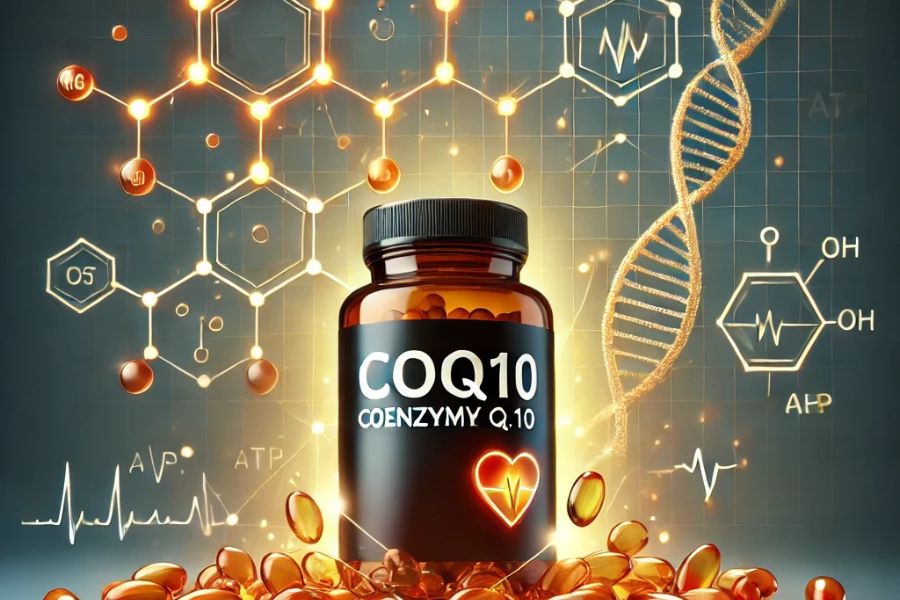
Coenzyme Q10, or CoQ10, is a vitamin-like compound that your body makes naturally. It lives inside your cells, where it helps turn food into energy and protects cells from oxidative damage.
Your CoQ10 levels tend to decline as you age. They may also be lower if you have certain conditions such as heart disease or if you take cholesterol-lowering statin medications (Mayo Clinic). You can get some CoQ10 from foods like meat, fish, and nuts, but the amounts in food are usually not enough to meaningfully boost blood levels (Mayo Clinic).
CoQ10 supplements are widely available over the counter. They are generally considered safe when taken as directed, and they may help in conditions such as congestive heart failure or migraine prevention, although the evidence is still developing in these areas (Mayo Clinic).
See how statins affect CoQ10 levels
Statins work by blocking an enzyme called HMG CoA reductase in the mevalonate pathway. This is the same biochemical route your body uses to produce both cholesterol and CoQ10. When statins inhibit this pathway, your cholesterol drops, which is the goal, but your CoQ10 synthesis can decrease at the same time (PMC Advances in Nutrition, NCBI Bookshelf).
Studies have shown that:
- Blood levels of CoQ10 typically fall during statin therapy, with an average reduction of about 0.44 micromoles per liter (PMC Advances in Nutrition).
- CoQ10 in muscle tissue may also decrease, but findings are inconsistent and can be influenced by how active you are if muscle pain limits exercise (PMC Advances in Nutrition).
- Lower CoQ10 could, in theory, impair mitochondrial energy production in muscle cells and contribute to muscle aches, weakness, or cramps, a cluster of problems often called statin-associated muscle symptoms, or SAMS (NCBI Bookshelf, UCLA Health).
This potential mechanism is one reason you may hear that CoQ10 supplements can help if your muscles hurt on statins. The biology makes sense. But that does not automatically mean supplements deliver a clear benefit in real life.
Learn what statin muscle symptoms look like
If you are on a statin, you have likely been warned about muscle side effects. These problems are common, and they are also a leading reason people stop taking their medication.
Nonindustry funded clinical trials suggest that 10 to 25 percent of patients report statin-associated muscle symptoms, and some observational studies report rates as high as 60 percent (PMC Advances in Nutrition). These symptoms can include:
- Muscle aches or soreness
- Weakness or a heavy, tired feeling
- Cramps
- Reduced stamina during everyday activities
Most people experience mild symptoms, if any at all. However, even mild pain can make you hesitant to exercise or can tempt you to skip doses, which raises your risk of heart attack or stroke over time.
That is why it is so important to find ways to manage symptoms while keeping you on an effective statin plan whenever possible.
Weigh the evidence for CoQ10 and statin side effects
When you look at marketing for CoQ10, you might assume scientists agree that it helps with statin side effects. The reality is more complicated. Studies do not all point in the same direction.
Studies that do not find clear benefits
Several well-designed trials and reviews have found little or no meaningful improvement in statin-related muscle pain with CoQ10 supplementation:
- A 2018 NIH-funded trial followed 120 patients with confirmed statin myalgia. Participants took 600 mg of CoQ10 per day or a placebo while on simvastatin. CoQ10 did not improve muscle pain, muscle strength, or aerobic fitness compared with placebo (PMC Advances in Nutrition).
- A combined analysis of six studies published in Mayo Clinic Proceedings in 2015 found only a slight, not clinically significant reduction in muscle pain among statin users taking CoQ10 (UCLA Health).
- A 2022 multicenter retrospective study of 511 patients with statin-associated muscle symptoms found that CoQ10 use was not significantly associated with symptom resolution. About 25 percent of CoQ10 users versus 31 percent of non users had symptoms resolve, a difference that was not statistically significant (NCBI PMC).
The 2022 study supports current American Heart Association and American College of Cardiology guidance, which does not recommend CoQ10 supplements specifically to treat statin-associated muscle symptoms (NCBI PMC).
Mayo Clinic experts also note that double blind trials have not definitively shown that CoQ10 reduces statin-related muscle aches, and for most people a balanced diet may be enough to maintain normal CoQ10 levels without supplements (Mayo Clinic).
Studies that suggest potential benefits
Other research points to more encouraging results:
- A 2007 study in the American Journal of Cardiology reported about a 40 percent reduction in muscle pain among statin users taking 100 mg of CoQ10 daily compared with those taking vitamin E, but only 18 participants used CoQ10, which makes the results less conclusive (UCLA Health).
- A 2024 systematic review of five high quality studies involving 800 patients found that CoQ10 supplementation, usually 50 to 100 mg per day, significantly improved statin associated myopathy symptoms and helped patients stick with their statin treatment, without notable CoQ10 side effects (Cureus).
So you have two sets of findings. Some trials and reviews see little benefit. Others suggest that CoQ10 may reduce pain severity and improve adherence. This is why you will find conflicting opinions among clinicians and in patient education materials.
How to make sense of mixed research
When studies disagree, it usually means there are differences in design, dosing, patient selection, or how outcomes were measured. For CoQ10 and statins, key variables include:
- Whether people actually had true statin muscle symptoms or nocebo effects
- Whether their CoQ10 levels were measured before and after supplementation
- The form and dose of CoQ10 used
- How long the supplement was taken
Researchers have also suggested that CoQ10 might only help those who are genuinely deficient, but many studies have not screened for deficiency before supplementation (NCBI PMC).
The bottom line is that CoQ10 is not a guaranteed fix for statin side effects, but you may see benefit if you belong to a subset of people who are sensitive to CoQ10 depletion. You and your clinician will need to decide whether a trial run is reasonable in your situation.
Know potential “positive effects” if you combine CoQ10 and statins
Given the mixed evidence, it is helpful to think in terms of possible, not promised, benefits.
If you add CoQ10 while taking a statin, you might experience:
- Relief from mild muscle aches or fatigue. Some studies and patient anecdotes suggest improved comfort, which can make daily activities feel easier, even if lab measures do not change dramatically (GoodRx, Cureus).
- Better tolerance of your statin. When muscle symptoms are less bothersome, you may be more likely to stay on your medication over the long term. Several trials and reviews report improved adherence when CoQ10 is part of the plan (Cureus).
- Potential support for cellular energy. Since CoQ10 is involved in mitochondrial energy production and antioxidant defense, restoring a drop in levels could, in theory, support muscle cell function, even if you do not feel a dramatic difference day to day (Cureus, NCBI Bookshelf).
At the same time, you need to balance these possible upsides with the cost of supplements and the fact that top organizations do not currently recommend CoQ10 as a standard treatment for SAMS.
Use CoQ10 safely with statins
If you and your healthcare provider decide to try CoQ10, a few practical steps can help you do it safely and thoughtfully.
Choose dose and form carefully
In studies that have suggested symptom relief, daily doses range from about 50 mg to 600 mg, often split into two or three doses with meals that contain fat to improve absorption (GoodRx, NCBI Bookshelf). Many clinicians, as reflected in Mayo Clinic guidance, consider around 200 mg per day of ubiquinol, the more absorbable form of CoQ10, to be a reasonable trial dose for low levels or symptoms (Mayo Clinic).
Supplements of up to 1200 mg per day appear to be safe in research settings, although such high doses are usually unnecessary and should only be used under medical supervision (NCBI Bookshelf).
Watch for side effects and interactions
CoQ10 is usually well tolerated, but you may notice mild effects such as:
- Nausea
- Vomiting
- Diarrhea
- Stomach discomfort
- Trouble sleeping
These issues are typically minor and may improve if you lower the dose or take your supplement earlier in the day (Mayo Clinic, GoodRx).
More importantly, CoQ10 can interact with medications, including:
- Blood thinners like warfarin
- Some diabetes drugs
- Blood pressure medications
Because of these possible interactions, you should always talk with your healthcare provider before starting CoQ10. This is especially important if you are pregnant, breastfeeding, or managing multiple health conditions. Safety in pregnancy and breastfeeding has not been well established (Mayo Clinic).
Consider testing and monitoring
In certain cases, your provider may choose to:
- Check your baseline plasma CoQ10 level
- Start a supplement trial
- Recheck levels or track symptoms after several weeks
Monitoring CoQ10 in your blood can help determine whether supplementation is actually raising your levels and whether that improvement lines up with how you feel (NCBI Bookshelf).
Explore other options if you have statin side effects
It is easy to focus on CoQ10 because it is tangible and sold widely, but it is not your only option for dealing with statin-associated muscle symptoms.
You and your clinician might also look at:
- Adjusting the statin dose
- Switching to a different statin such as pravastatin or rosuvastatin, which can be less concentrated in muscle and may cause fewer side effects (UCLA Health)
- Reviewing your other medications for interactions
- Spacing out statin doses if appropriate for the specific drug
GoodRx and Mayo Clinic resources both stress that you should not stop your statin on your own, since doing so can raise your cardiovascular risk (GoodRx, Mayo Clinic).
A diet rich in fruits, vegetables, nuts, and fish can also support normal CoQ10 levels and overall heart health. For many people, this kind of eating pattern, together with the right statin plan, is enough without adding a supplement (Mayo Clinic).
If you notice new muscle pain, weakness, or fatigue after starting a statin, your first step should always be a conversation with your healthcare provider, not an automatic supplement purchase.
Bring it all together for your own plan
The relationship between CoQ10 and statins is real, but it is subtle. Statins lower CoQ10 levels, and that may play a role in muscle side effects for some people. At the same time, large, rigorous trials do not consistently show that CoQ10 supplementation relieves these symptoms, which is why major guidelines do not recommend it across the board.
You may still decide, together with your clinician, that a time limited trial of CoQ10 is worth exploring, especially if:
- You have bothersome but not dangerous muscle symptoms
- You have already tried simple adjustments to your statin
- You understand that any benefit might be modest or even placebo driven
Use a clear plan, track how you feel, and reconnect with your provider to decide whether to continue. That way, you are not just adding another pill to your daily routine, you are making an informed choice that fits into your broader heart and overall health goals.
About the Author