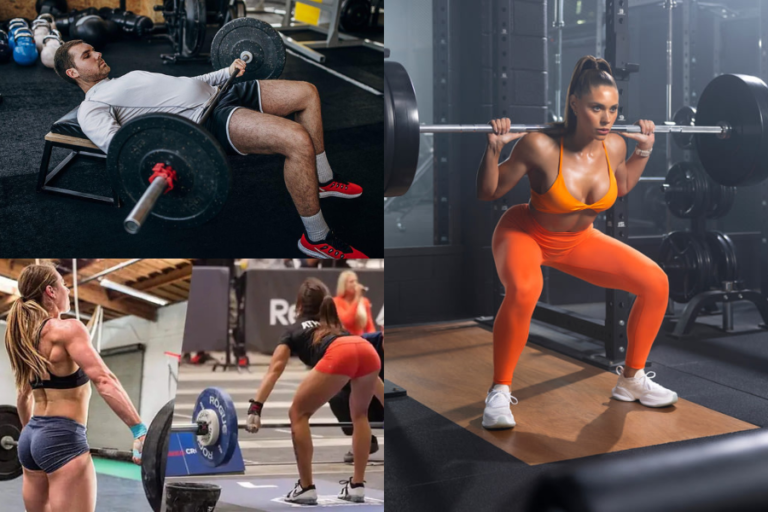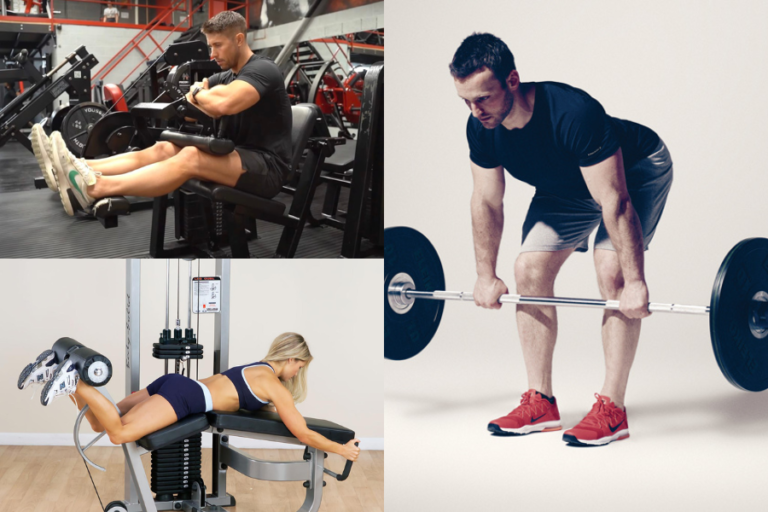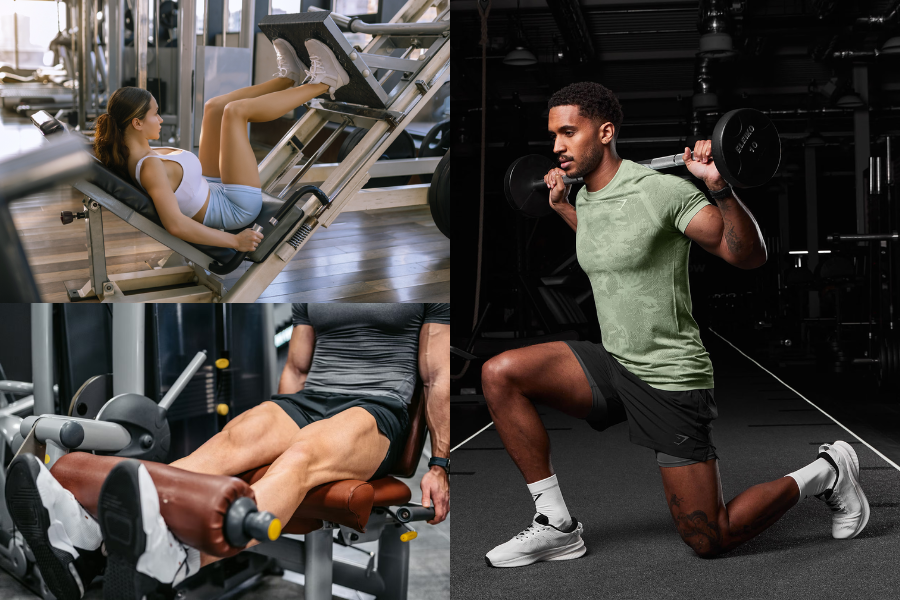
A strong quad workout for athletes does more than build big thighs. When you target your quadriceps with purpose, you boost acceleration, top speed, jumping power, and knee stability so you can perform better and stay healthier across your sport.
This guide walks you through how your quads work, the most effective quad exercises for speed and power, and how to organize them into a simple training plan you can start using this week.
Understand your quad muscles
Your quadriceps are a group of four muscles on the front of your thigh. Together they extend your knee, help flex your hip, and stabilize your leg every time you sprint, cut, or land from a jump.
The four key muscles are:
- Rectus femoris
- Vastus lateralis
- Vastus medialis
- Vastus intermedius
You want your quad workout for athletes to hit all four. When one area lags, you are more likely to see performance plateaus or knee discomfort.
Strong, well balanced quads help you:
- Drive hard out of the blocks or your first few steps
- Stay stable when you cut or change direction
- Absorb landings without overloading your knees
- Protect your ACL and other knee structures during high impact play
Quadriceps weakness is especially common after ACL reconstruction, particularly when bone patellar tendon bone or quadriceps tendon grafts are used, and can slow your return to high demand activities if you do not rebuild size and strength.
Why quad strength matters for speed
If you want to get faster, your quads have to be able to push the ground away with force and control. They work together with your glutes to extend your knees and hips in the early steps of a sprint and during powerful cuts.
You will feel this most in:
- Explosiveness out of the blocks or first few strides
- The drive phase and acceleration in the first 20 meters
- Quick, sharp cuts where you decelerate then re accelerate
Quad focused strength work improves how much force you can put into the ground. When you pair that with sprint and change of direction practice, you get more speed without needing more overall effort.
A good rule of thumb for quad hypertrophy and strength is to train them twice per week, with at least two quad focused exercises per session and a total of at least ten hard sets each week. Aim for 8 to 12 reps per set for most strength and muscle building work, and give yourself about 48 hours between hard quad sessions for recovery.
Key squat variations for athletes
Squat variations are usually the cornerstone of an athletic quad workout because they load the quads in a way that carries over to sprinting, jumping, and change of direction. The trick is choosing squat styles that actually emphasize the quads, not just the hips and back.
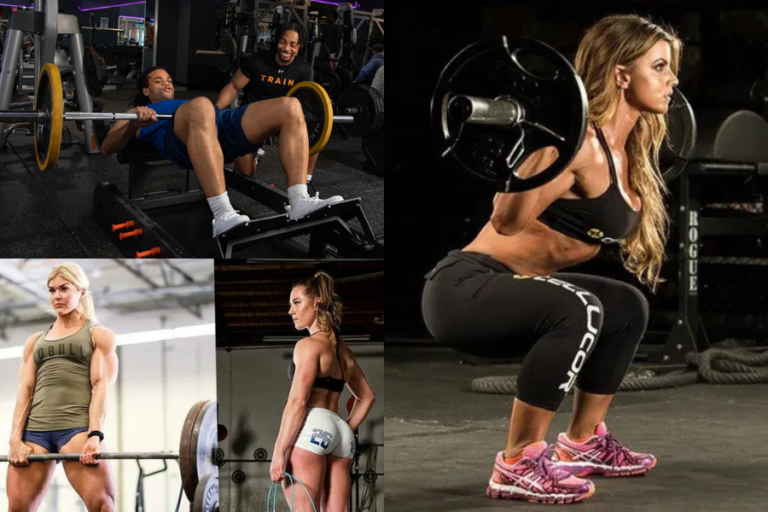
Barbell front squat
The barbell front squat shifts the barbell to the front of your shoulders. This encourages a more upright torso and greater knee bend, which increases quad demand.
Compared with a back squat, the front squat can place less force on your knees and lower back while still challenging your quads heavily. It is a strong choice if you want strength without as much joint stress.
Focus on:
- Feet about shoulder width apart
- Heels flat or slightly elevated on a small plate
- Knees tracking in line with your toes
- Chest up so the bar stays securely racked
Work up to 3 to 4 sets of 5 to 8 controlled reps.
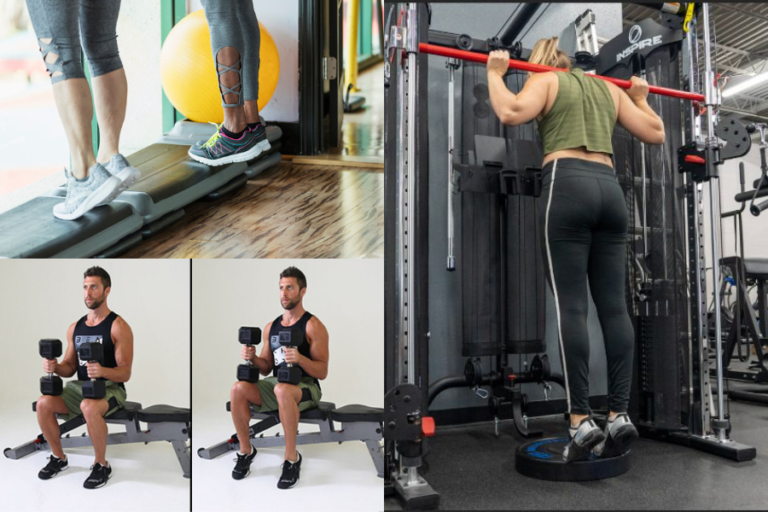
Heel elevated goblet squat or front squat
If you struggle to sit deep without falling forward, a heel elevation helps you hit more range of motion and load the quads. Place your heels on a small wedge, plate, or slant board, then squat with a dumbbell in front (goblet) or a barbell in front (front squat).
This style:
- Increases knee flexion, so your quads do more work
- Allows a more upright torso, which spares your lower back
- Builds the dynamic trunk control you need for running mechanics
A simple starting point is 3 sets of 8 to 10 reps, focusing on smooth depth and fast, powerful drives out of the bottom.
Hack squats, sissy squats, and leg press
If you have access to machines, you can add more quad volume without as much systemic fatigue.
- Hack squats and sissy squats allow heavy or deep quad work with built in support
- Leg presses let you emphasize knee extension by bringing your feet slightly lower on the platform
Machine work is especially useful near the end of a session when your stabilizers are tired but your quads can still handle more targeted work.
Unilateral quad exercises to fix imbalances
As an athlete, you almost never push off both legs in a perfectly even way. That is why unilateral work, where you train one leg at a time, is so valuable. It helps correct imbalances, improve balance, and build hip and core stability that feeds straight back into running and cutting mechanics.
Bulgarian split squat
The Bulgarian split squat is one of the most effective quad exercises you can do on one leg. To emphasize the quads:
- Use a shorter stance so your front knee can travel forward
- Keep your torso more upright
- Let your front knee track over your toes, without collapsing inward
You can elevate the front heel slightly to increase quad focus and range of motion. Start with bodyweight, then add dumbbells as you get stable. Aim for 3 sets of 8 to 10 reps per leg.
Dumbbell elevated split squat
A variation that targets the quads even more is the elevated split squat with your front heel on a ramp or slant board. Keep your back foot slightly raised as well, with the toes down and heel high.
This setup:
- Loads the front leg quads heavily
- Challenges your hip and ankle mobility
- Builds dynamic trunk control that helps acceleration mechanics
Because it is demanding, 3 sets of about 10 reps per leg is plenty for most athletes.
Step ups and walking lunges
Step ups are simple but powerful for the quads, glutes, and hamstrings. You can adjust difficulty by raising the step or adding dumbbells. Focus on driving through your whole foot on the step and avoid pushing off too much with the back leg.
Walking lunges also strengthen your legs, core, hips, and glutes. To protect your knees, keep your front thigh and back calf close to a 90 degree angle at the bottom rather than letting the knee shoot too far past the toes without control. Maintain an upright torso and steady pace.
Both exercises are good additions when you want more unilateral volume without overly complex setups.
Isolation work for maximum quad activation
Compound movements come first, but if you really want to grow and strengthen your quads, some isolation work helps you squeeze out extra progress without beating up your whole body.
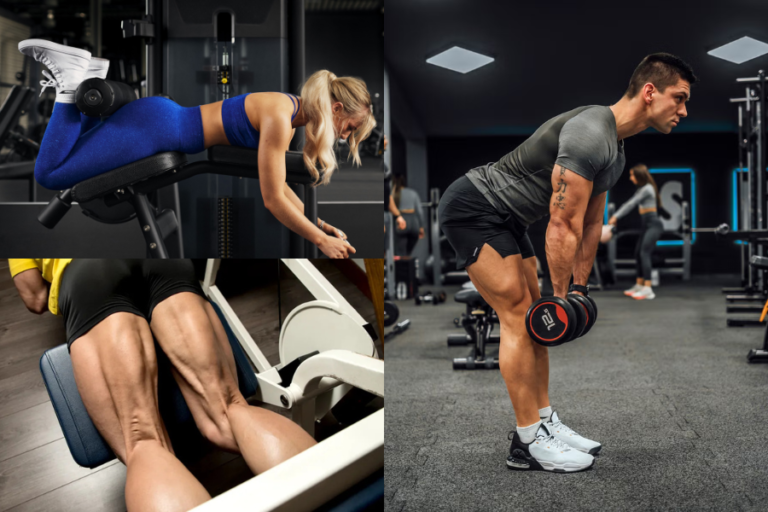
Leg extensions
Leg extensions are the classic quad isolation move. Because the machine supports your body, the quads can do almost all the work, and overall fatigue stays manageable.
You can use leg extensions to:
- Add high rep sets at the end of a workout
- Include single leg work to even out sides
- Hold isometric pauses at the top for extra tension
They are also a useful tool in rehab, as long as they are programmed and progressed carefully under professional guidance.
Banded Spanish squats
Banded Spanish squats use a resistance band anchored behind you at knee height. You step into the band, let it wrap behind your knees, then sit into a squat while the band supports and stabilizes your knees.
This variation:
- Isolates the quads effectively
- Takes pressure off the knees for many athletes
- Can reduce discomfort for people who feel knee stress during regular squats
It is a smart choice if you need quad work that your joints tolerate better.
Quad strength for rehab and injury prevention
If you are coming back from a knee injury, or just want to reduce your risk, quad strength and control are central. After ACL reconstruction, for example, restoring quadriceps size and strength is critical for long term knee health and function, especially with grafts that involve quad or patellar tendon tissue.
An effective rehab focused quad plan usually combines:
- Open kinetic chain (OKC) work like controlled leg extensions
- Closed kinetic chain (CKC) work like squats and step ups
Early on, exercises such as quadriceps setting at 20 to 45 degrees of knee flexion and straight leg raises with slight femoral external rotation and ankle dorsiflexion help you re engage the quad and maximize force output. As you progress, you can move toward short arc knee extensions and then long arc movements closer to full range, always respecting pain and medical advice.
Eccentric training, where you focus on the lowering phase, can be especially powerful. Eccentric one rep max is often significantly higher than concentric, which means you can reap strength and hypertrophy benefits with less metabolic fatigue. Techniques like eccentric quasi isometric holds build control at challenging joint angles.
Blood flow restriction, or BFR, is another evidence based method used in rehab. When prescribed at low loads, often under 20 percent of your one rep max, and taken near fatigue, BFR can stimulate quad hypertrophy and strength without heavy weights, which is useful in the early phases after surgery.
If you are rehabbing, always follow your surgeon or physical therapist’s guidance. Use these ideas as a framework, not a replacement for individual care.
Power moves that carry over to speed
Once you have a solid base of quad strength, you can add more explosive work that looks and feels closer to sport.
Heavy sled push
The heavy sled push teaches you to drive hard through your quads and glutes while leaning forward, similar to your acceleration position in a sprint.
To get the most out of it:
- Lean forward with your torso at a strong angle
- Keep your heels elevated so your ankles stay in plantar flexion
- Drive with long, powerful steps through the forefoot
Perform 3 sets of 10 to 15 meters with challenging but controllable loads. Focus on smooth, aggressive strides, not racing the distance.
Jump squats
Body weight jump squats are a simple way to connect quad strength with power. Squat until your thighs are about parallel to the floor, then explode up into a jump. Land softly, absorb the impact by bending your knees and hips, and go right into the next rep.
Because jump work is demanding on your joints and nervous system, keep sets short and crisp. For example, 3 to 4 sets of 5 to 8 jumps, done when you are fresh, works well for many athletes.
Skater squat into hip lock
If you have access to a band setup that lets you perform banded skater squats, this is an advanced and very specific option for max acceleration work. The band helps you isolate the front leg quad while your back leg stays flexed and off the ground.
The movement pattern promotes:
- Ankle mobility similar to the drive phase of sprinting
- Hip control and stability
- Quad explosiveness through a sport specific range
Try 3 sets of about 5 reps per leg, paying close attention to balance and control before you worry about adding load.
Think of your strength and power work as practice for what you want to do at full speed, not as something separate. Every rep is a chance to refine how you push, land, and stabilize.
How to structure your weekly quad training
You do not need a complicated split to build strong, fast quads. You just need consistent, focused work and smart progressions.
Here is a simple template for a quad workout for athletes, done twice per week:
Session A: Strength focus
- Barbell front squat or heel elevated front squat
- 4 sets of 5 to 8 reps
- Bulgarian split squat or elevated split squat
- 3 sets of 8 to 10 reps per leg
- Leg press or hack squat
- 3 sets of 10 to 12 reps
- Leg extensions or banded Spanish squats
- 3 sets of 12 to 15 reps
Session B: Strength plus power
- Heavy sled push
- 3 sets of 10 to 15 meters
- Goblet or front squat, heels elevated if helpful
- 3 sets of 6 to 8 reps
- Step ups or walking lunges
- 3 sets of 8 to 12 reps per leg
- Jump squats
- 3 sets of 5 to 8 reps
Throughout every session, pay attention to knee tracking. Let your knees move over your toes, but keep them in line with your second and third toes instead of collapsing inward. Use heel elevation when needed to keep your chest up and give your ankles enough room to move.
Putting it all together
When you commit to a consistent quad workout for athletes, you are not just training for bigger legs. You are building the foundation for faster starts, stronger cuts, higher jumps, and more resilient knees.
If you are new to focused quad training, start by adding one or two of these exercises to your current program, then build up to the two session template. Notice how your first steps, your ability to hold your line under contact, and your confidence in your knees all change over the next few weeks.
Stay patient, keep your form sharp, and let your quads turn into the engine that drives your speed and power.
About the Author