Quad workouts at the gym can do far more than build thicker thighs. When you train your quadriceps properly, you improve knee stability, sprint speed, jumping power, and overall leg strength. The key is to work all four quad muscles, the Rectus Femoris, Vastus Lateralis, Vastus Medialis, and Vastus Intermedius, instead of relying on a couple of basic leg extensions and calling it a day.
Below, you will find how quad-focused exercises work, how to structure your sessions for muscle growth, and which movements to prioritize at the gym whether you are a beginner or more advanced.
Understand your quad muscles
Your quadriceps sit on the front of your thighs and straighten your knees. They also help control how you lower yourself into a squat or down a set of stairs.
The four main muscles are:
- Rectus Femoris, runs down the center and crosses both hip and knee, involved in hip flexion and knee extension
- Vastus Lateralis, on the outer thigh, often the most visible from the side
- Vastus Medialis, on the inner thigh, includes the teardrop-shaped portion near your knee
- Vastus Intermedius, sits deep between the other three and assists with overall knee extension
When your quad workouts at the gym focus on movements that bend and straighten the knee under load, with different foot positions and angles, you are more likely to develop balanced size and strength across all four muscles.
Plan your quad workouts for growth
To build noticeable quad size, you need more than the occasional leg day. Research-backed programming guidelines help you make progress while avoiding overuse.
Weekly frequency and volume
A solid starting point is to train quads twice per week with at least two quad-focused exercises per session. Gymshark’s quad routine recommends working in the hypertrophy range of 8 to 12 reps for 3 to 4 sets per exercise and accumulating at least 10 total sets of quad work across the week for muscle growth, with at least 48 hours between sessions for recovery, as noted in their June 2024 guide on quad training.
You can structure your week like this:
- Day 1, Quad emphasis with heavier compound lifts
- Day 2, Hamstring or glute emphasis
- Day 3, Rest or upper body
- Day 4, Quad emphasis again, with more machines or unilateral work
- Day 5, Optional full body or active recovery
This sort of split lets you hit the quads hard, then gives them time to recover and rebuild.
Exercise order and rep ranges
Start your workout with compound exercises that demand the most energy and coordination. After that, add a couple of supportive or isolation movements.
For muscle growth, most of your sets should sit between 8 and 12 reps. You can occasionally go heavier for 5 to 6 reps on squats or lighter for 12 to 15 reps on leg presses and extensions, but staying in that mid range for the bulk of your work keeps tension on the muscle long enough to stimulate hypertrophy.
A practical rule of thumb: pick 1 to 2 big compound quad movements and 1 to 2 accessory or isolation exercises per session, and aim for 3 to 4 challenging sets of each.
Prioritize quad-focused squat variations
Squats show up in almost every effective quad program, but how you squat matters. A few simple changes in where the weight sits and how you position your feet can shift more of the load into your quads instead of only your hips and lower back.
Barbell front squat
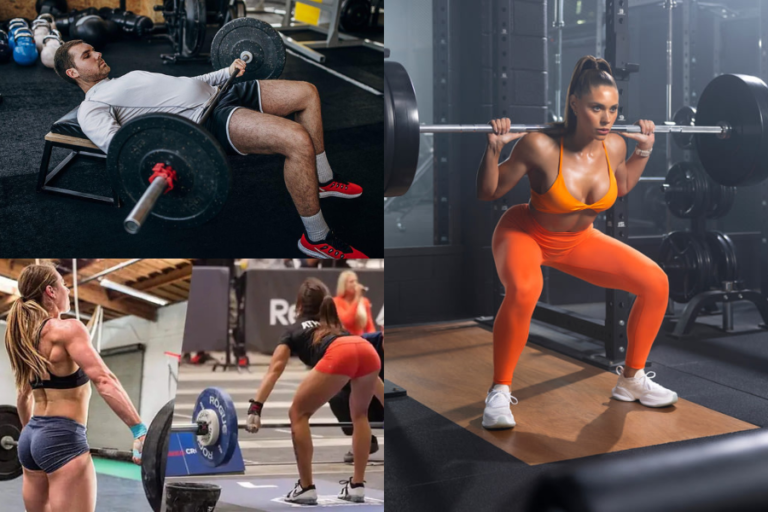
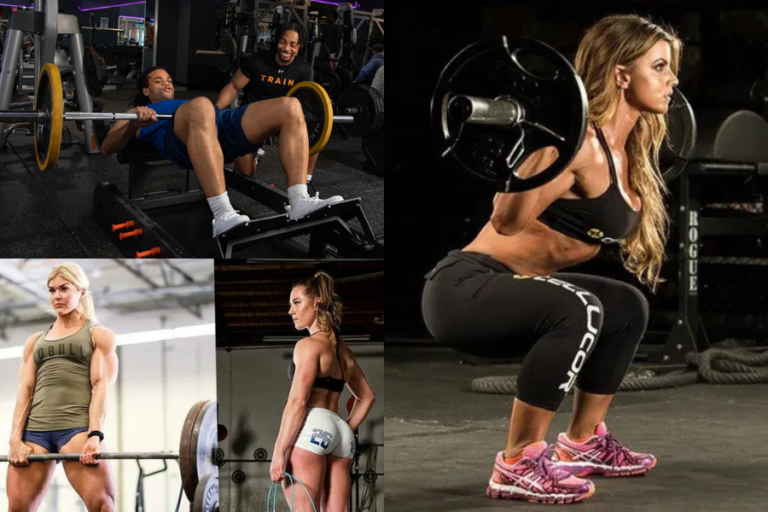
The barbell front squat positions the barbell across the front of your shoulders instead of on your upper back. This encourages a more upright torso and greater knee bend, both of which increase quad involvement. It also tends to place less force on the lower back and sometimes the knees compared with very heavy back squats, because you are forced to keep the movement tighter and more controlled.
Basic setup:
- Set the bar on the rack at mid chest height.
- Step under so the bar rests across the front of your shoulders, then grip it with elbows high or use a cross arm position.
- Step back, place your feet roughly shoulder width apart, and point your toes slightly out.
- Sit down between your hips while letting your knees track over your toes, then drive through the middle of your foot to stand.
Start with 3 sets of 6 to 10 reps, choosing a weight that challenges you without breaking form.
Heel elevated goblet squat
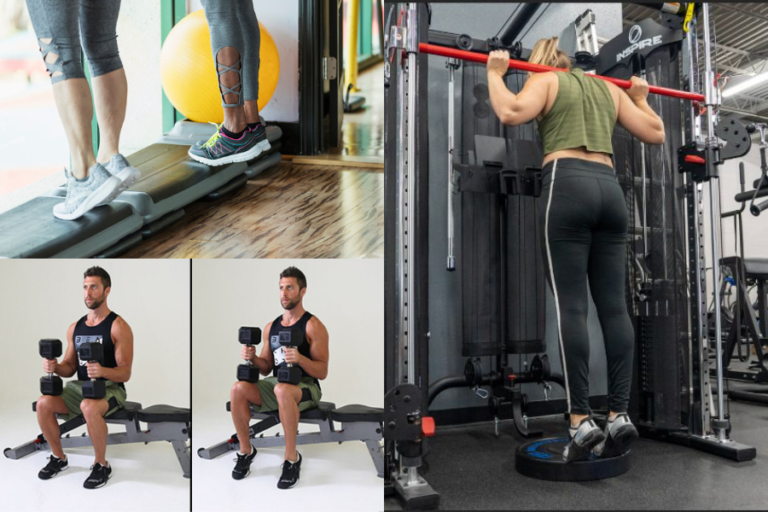
If a barbell feels intimidating or you are still learning to squat, the goblet squat is a great quad workout option at the gym. Holding a dumbbell or kettlebell in front of your chest acts as a counterbalance so you can sit deeper while keeping your chest lifted. Elevating your heels on small plates or a wedge encourages your knees to travel forward, which boosts quad activation.
To perform it:
- Stand with your heels on small plates and toes on the floor.
- Hold a dumbbell vertically at your chest.
- Squat down by pushing your knees forward and out, keeping your torso upright.
- Drive through the front of your foot to stand tall.
Gymshark recommends this as a beginner friendly quad movement with 2 sets of 10 reps and about 60 seconds rest. As you gain strength, you can add more sets or increase load.
Hack squats and machine squats
Hack squat machines and plate loaded squat machines support your upper body and guide your path. This lets you lean your torso back slightly and bend your knees more deeply, which forces your quads to work hard. Foot placement on the platform can shift emphasis, with a lower stance often demanding more from the quads.
Some machine based routines use a reverse pyramid approach. You begin with your heaviest set for fewer reps, then reduce the load and increase reps on subsequent sets. Pausing briefly at the bottom of each rep and focusing on a strong quad contraction on the way up makes these machines especially effective for growth.
Aim for 3 to 4 sets of 8 to 12 reps, stopping just short of failure while maintaining control.
Use machines to load your quads safely
Machines can be a powerful tool in your quad workouts at the gym. They allow you to train close to failure without worrying as much about balance, which is useful when you want to challenge the quads intensely.
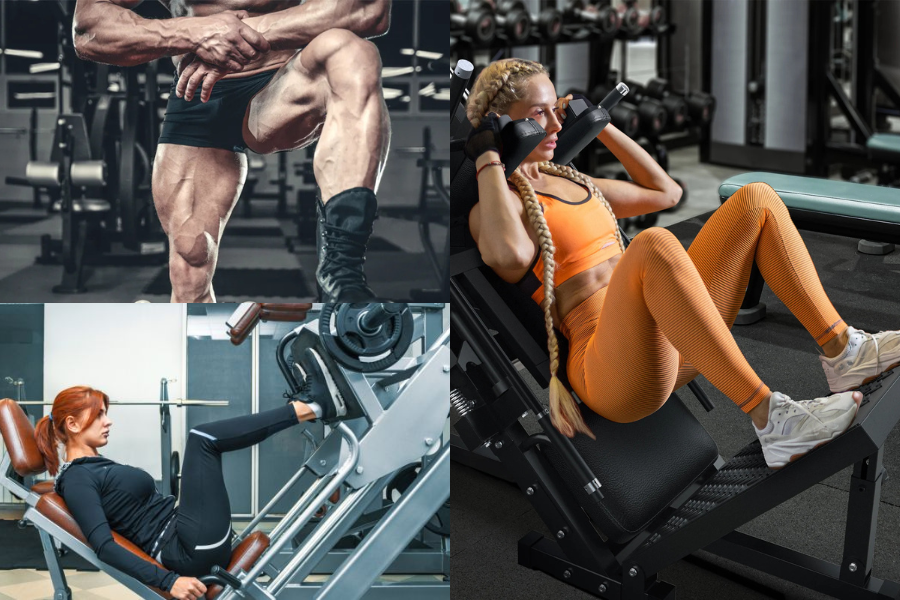
Leg press with quad emphasis
The leg press machine lets you move heavy weight in a fixed path. To place more tension on your quads, use a lower foot position on the plate, which increases knee bend. It is easy to overload this exercise, so avoid treating it as an ego lift. Instead, choose a weight that lets you:
- Lower the weight under control through a full negative phase
- Reach a meaningful depth where your knees bend significantly
- Press back up without locking your knees at the top
The Ultimate Machine Quad Workout for Bigger Legs highlights the leg press as an effective quad developer when you prioritize form, do not lock out, and maintain steady tension throughout each rep. You might start with 3 sets of 10 to 12 reps, resting 90 seconds between sets.
Leg extension for isolation and finishers
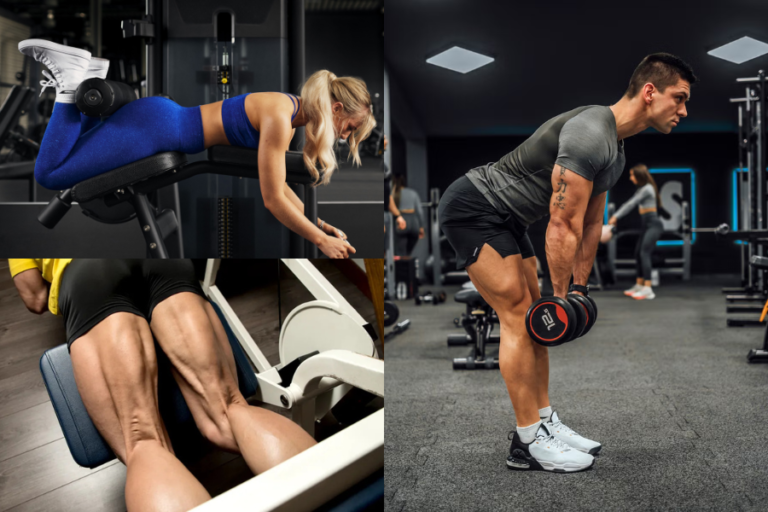
Seated leg extensions directly target your quadriceps and are easier on the rest of your body. That makes them useful if you are a beginner or returning to training after time off. They are also a popular finisher because they let you push your quads to fatigue without worrying about your core or lower back.
Single leg work here can help correct imbalances. One protocol uses the single leg extension as a burnout finisher. You start with your weaker leg for 10 reps, switch to the other leg for 10 reps, then go back and forth, dropping one rep each round until you reach one rep per leg. Follow that with a final set to near failure for each leg to challenge endurance and even out strength differences.
Keep the movement smooth and avoid swinging or jerking the weight. Choose a controlled tempo and focus on squeezing your quads at the top of every rep.
Add unilateral quad exercises for balance
If you want your legs to look and perform well, single leg exercises are an essential part of your quad workouts at the gym. They expose side to side differences, improve balance, and build coordination that carries over to running, jumping, and everyday movement.
Bulgarian split squats and split squats
Split squats involve stepping into a lunge stance, then lowering your hips straight down. This strengthens the front leg while stretching the back leg. Holding dumbbells by your sides increases the challenge without overly stressing your back.
Bulgarian split squats are a more intense version. You place your back foot on a bench and use a shorter stance with an upright torso. Let your front knee track over your toes as you lower down. This setup heavily loads the quads of the front leg and creates a deep stretch.
Typical starting prescriptions include:
- Split squats, 2 sets of 10 reps each side, resting 30 seconds
- Bulgarian split squats, 2 sets of 10 reps each side, also with 30 seconds rest
As you get stronger, you can add sets, increase load, or slow down the lowering phase for even more quad tension.
Lunges and step ups
Forward lunges, especially with your front foot elevated slightly on a plate, encourage more knee bend and quad activation. Keep your torso relatively upright and focus on pushing through the front leg to return to standing.
Step ups onto a stable box or bench are another great unilateral option. Drive through the entire foot of your working leg and minimize pushing off the back leg. Raising the height of the platform or holding dumbbells makes the exercise more challenging and recruits the quads, hamstrings, and glutes.
These moves can replace or complement bilateral squats, especially if heavy barbell work is not ideal for your joints or training goals.
Include bodyweight and banded quad finishers
You do not need heavy equipment for every piece of an effective quad session. Simple bodyweight and band exercises can add volume and time under tension, which support muscle growth.
Wall sits and box jumps
Wall sits are straightforward. You slide down a wall until your knees are around 90 degrees and hold that position. They require no equipment besides a wall, yet they quickly build a burning sensation in the quads. A common starting point is 2 sets of 30 seconds, resting 30 seconds between holds. You can gradually extend the hold time as you improve.
Box jumps train your quads to store and release power. You stand in front of a solid box, sit back slightly, then explode up and land softly on the box, holding the landing position for a moment. Start with 2 sets of 10 jumps and 30 seconds rest between sets. Focus on quality, not height, especially if you are new to this type of plyometric work.
Banded Spanish squats
Banded Spanish squats are especially helpful if you experience knee discomfort but still want to work your quads. You loop a strong resistance band around a sturdy anchor point at knee height, then step into the band so it wraps behind your knees. As you sit back into a squat, the band pulls your shins backward, which can help stabilize the knee and shift emphasis into the quads in a way that is similar to a leg extension machine.
These are useful as part of a warm up or as a lighter day alternative to heavy knee flexion work.
Protect your quads and knees from injury
Strong quads are more resilient, but you still need to respect recovery and technique. Many quadriceps strain injuries occur in active people who sprint, jump, or change direction quickly, such as those in soccer, football, or basketball, often due to sudden stress on the muscle as highlighted by Airrosti’s 2024 resources on quad strain and tendonitis.
Warm up and cool down habits
Skipping a warm up is one of the top causes of muscle injuries according to Icarus Medical’s 2024 injury prevention guidance. Before heavy quad work, spend at least 5 to 10 minutes on:
- Light cardio, such as walking or cycling
- Dynamic leg swings and bodyweight lunges
- A few warm up sets of your first squat or leg press movement
Cooling down with gentle stretching and easy cycling can also help reduce stiffness after intense sessions.
Manage form, load, and support
Good technique is critical. Rushed or sloppy reps, especially on heavy movements like squats and leg presses, increase strain on your quads and knees. Focus on controlled lowering, stable knees that track in line with your toes, and avoiding sudden jerks or bounces at the bottom.
Progressive training that increases load gradually reduces your chance of overuse injuries and builds muscle resilience. Plan regular rest days and consider cross training to vary the stress you place on your legs. For those with knee issues or in high stress training phases, supportive knee braces such as the Ascender brace from Icarus Medical can help offload stress from the quadriceps and stabilize the knee joint during demanding exercises or recovery periods.
If you experience persistent quad pain, especially around the tendon or with everyday activities like stair climbing, resources from providers like Airrosti emphasize seeking individualized treatment that blends hands on therapy with active rehabilitation instead of only masking symptoms.
Putting it all together
Quad workouts at the gym are most effective when you:
- Target all four quad muscles with a mix of compound and isolation movements
- Train quads twice a week with at least 10 challenging sets in the 8 to 12 rep range
- Use specific exercises like front squats, heel elevated goblet squats, hack squats, leg presses, lunges, and leg extensions to emphasize quad activation
- Incorporate unilateral and bodyweight movements to build balance, stability, and power
- Protect your knees and muscles with smart warm ups, sound technique, progressive loading, and adequate rest
Start by choosing two or three of the exercises above for your next leg day and focus on performing them with intent. Over a few consistent weeks, you will feel your quads getting stronger and notice more shape and definition every time you look down at your legs.
About the Author