A consistent elliptical workout for weight loss can be one of the most efficient and sustainable ways for you to lose fat, protect your joints, and improve your health. You get a solid calorie burn, full body muscle engagement, and low impact on your knees, hips, and ankles in a single workout.
Below, you will see how the elliptical helps with weight loss, how many calories you are likely burning, and how to design workouts that keep you progressing without beating up your body.
Understand how the elliptical helps you lose weight
Weight loss happens when you consistently burn more calories than you eat. This is called a calorie deficit. You can create that deficit by eating a bit less, moving more, or a combination of both.
An elliptical workout for weight loss fits in by increasing how many calories you burn each day. A daily deficit of about 500 calories is often recommended to lose around 1 pound per week, which you can reach by adjusting food intake, workouts, or both (MDApp).
The elliptical is especially useful because it lets you work hard without punishing your joints. Your feet never leave the pedals, so impact is low, but your heart rate and muscles still work at a level that supports fat loss (Healthline).
Know how many calories you might burn
You probably want real numbers so you can see if your workout is “worth it.” While exact calories depend on your body weight, fitness level, and intensity, research gives you some reliable ranges.
- Many people burn roughly 175 to 225 calories in 30 minutes on an elliptical at a moderate effort (MDApp).
- Other estimates suggest about 270 to 400 calories in 30 minutes, again depending on weight and intensity (Healthline).
- Harvard Medical School reports that a 155 pound person burns about 335 calories in 30 minutes on the elliptical (ProForm).
In other words, a focused 30 minute elliptical session can easily cover half or more of that typical 500 calorie daily deficit. Over a week, that adds up to a meaningful impact on the scale, especially if you pair it with consistent nutrition.
Just be cautious about the numbers on the machine itself. User reports suggest many built in calorie counters can be off, sometimes by a lot, so treat them as rough guides instead of exact measurements (Reddit Fitness).
Compare elliptical workouts to other cardio
If you are deciding between running, biking, or the elliptical, you might wonder which is “best” for weight loss. The answer depends on your body and your preferences.
For a 155 pound person, 30 minutes on an elliptical burns about 324 calories, while jogging at a 12 minute mile pace burns around 288 calories. At faster running speeds, for example a 10 minute mile, running can edge ahead at about 360 calories in 30 minutes (Lose It).
The key difference is impact. Running stresses your joints more, which can actually be helpful for bone density but may not be ideal if you already have knee, ankle, or hip issues (Lose It). The elliptical, by contrast, keeps your feet planted and is much gentler on your joints and back (Lose It!).
That low impact aspect is why many people can use the elliptical more often, even almost daily, without feeling beat up. There is a well known example of a person losing about 30 kilograms largely through regular elliptical sessions, something that would be hard to sustain with high impact running (Reddit Fitness).
If weight loss and long term consistency are your main goals, the “best” cardio is the one you can do often without pain. For many people, that is the elliptical.
Use full body movement to burn more
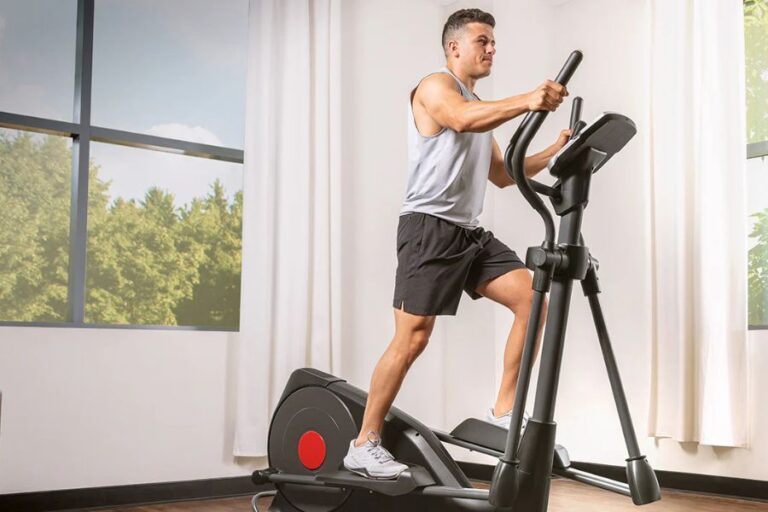
One advantage of the elliptical over some other machines is that it works both your upper and lower body. When you use the moving handles instead of just resting your hands on them, you engage your arms, shoulders, chest, back, core, and legs all at once.
This full body involvement increases your overall calorie burn because more muscle groups are active at the same time (Healthline). It also helps with muscle toning, especially in your glutes, quads, and hamstrings, along with major upper body muscles (Garage Gym Reviews).
You can increase this effect in simple ways:
- Pull and push through the handles instead of letting them carry you.
- Keep your core braced lightly, as if you are zipping up snug jeans.
- Avoid leaning heavily on the console so your legs do more of the work.
When your entire body contributes, your elliptical workout for weight loss becomes more time efficient and more effective.
Dial in your intensity for fat loss
How hard you work during your elliptical workouts directly affects weight loss. To burn fat, you want a balance between effort you can sustain and short bursts where you push yourself.
A helpful way to think about intensity is your heart rate. Many experts suggest aiming for around 70 percent of your estimated max heart rate for strong fat burning and cardio benefits (ProForm). You can estimate your max as 220 minus your age, then multiply by 0.7 to get a target.
You also have the option to use interval training. High intensity interval training, or HIIT, on an elliptical means you rotate between harder pushes and easier recovery periods. This approach can:
- Maximize fat burning in less time (Healthline)
- Temporarily boost your metabolic rate
- Increase the calories you burn even after your workout finishes, a phenomenon called excess post exercise oxygen consumption, or EPOC (ProForm)
A 32 minute HIIT session on the elliptical can burn more calories than a longer steady state workout, while still being easy on your joints (Garage Gym Reviews).
Adjust resistance and incline to keep progressing
If you always use the same settings, your body eventually adapts and your progress can stall. When you increase resistance or incline, your muscles have to work harder, which boosts calorie burn and recruits different muscle fibers.
Raising resistance or incline on the elliptical:
- Forces your glutes and hamstrings to contribute more
- Makes each stride more challenging
- Helps you build strength that supports better posture and balance
This kind of progression keeps your elliptical workout for weight loss from feeling stale and makes sure your sessions remain effective over time (ProForm).
Mix up workout formats for better fat loss
You do not have to guess what to do every time you step on the machine. You can rotate through a few simple programs that target fat loss and keep boredom away.
Examples of effective elliptical workouts include (Lose It!):
- High intensity short intervals, about 30 minutes, where you alternate hard pushes and easy recovery
- Hill climber sessions, around 45 minutes, using higher incline and moderate resistance
- Mid intensity long intervals, also about 45 minutes, with slightly longer work and rest periods
- Ladder style workouts, roughly 60 minutes, where you gradually increase then decrease your effort or resistance
The American Council on Exercise recommends at least 150 minutes of moderate physical activity per week for weight loss. You can meet this target with five 30 minute elliptical workouts or four 45 minute sessions, and you will get even better results if you add strength training on top (Garage Gym Reviews).
That mix of consistent cardio and resistance training improves your body composition, so you lose fat while preserving or even gaining lean muscle, which also helps you burn more calories at rest.
Protect your joints and stay consistent
One of the biggest advantages of choosing an elliptical workout for weight loss is that it supports long term consistency. Because the machine is low impact and your feet stay on the pedals, you put less stress on your joints and back compared to many other forms of cardio (Healthline).
If you already have joint pain, previous injuries, or you are simply cautious about high impact exercise, this can make the elliptical your best option. Many people find they can work out frequently without aggravating their knees or hips, which is crucial when you are trying to build a lasting habit (Lose It).
A small but important detail is your footwear. Running shoes or cross trainers with good arch support, cushioning, and stability reduce your risk of discomfort and help you push harder safely (Lose It!).
Do not forget your overall health benefits
While weight loss might be your main goal, your elliptical sessions are also doing a lot behind the scenes for your health.
Regular aerobic workouts on the elliptical are linked with:
- Reduced abdominal fat and smaller waist measurements
- Better cardiovascular health markers
- Improved insulin sensitivity and blood lipid levels, especially when workouts are at least low to moderate intensity (Healthline, MDApp)
Health organizations such as the CDC, American Heart Association, and Mayo Clinic note that getting at least 150 minutes of moderate cardio per week, which you can easily achieve using the elliptical, helps lower your risk of chronic diseases over time (Lose It).
So each workout is not just about burning calories right now. You are also investing in better heart health, blood sugar control, and long term energy.
Think of your elliptical workouts as a foundation. They help you lose weight today and create a healthier body that will support whatever you want to do next.
Put it all together in a simple plan
If you want a starting blueprint, you can keep it straightforward:
- Aim for 4 to 5 elliptical sessions per week, 30 to 45 minutes each.
- Mix steady, moderate intensity days with 1 or 2 interval focused workouts.
- Gradually nudge up resistance or incline every week or two.
- Pair your workouts with small, consistent improvements in your eating habits to create a calorie deficit.
- Add 2 short strength training sessions per week to protect muscle and joint health.
With this approach, your elliptical workout for weight loss can genuinely be the best choice for your goals. It is effective, joint friendly, and flexible enough to grow with you as your fitness improves.
You do not have to overhaul everything at once. Try one focused 30 minute elliptical session this week, pay attention to how your body feels, and then build on that small win. Over time, those sessions can add up to meaningful, sustainable change.
About the Author