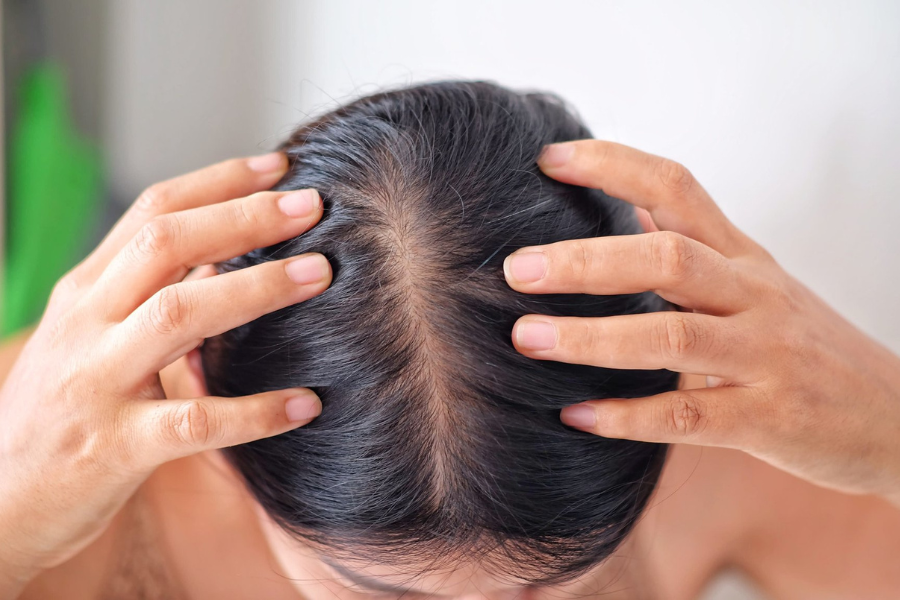
Iron supplements for hair growth might sound like a niche trick, but they actually address one of the most common hidden reasons for thinning hair: low iron stores. When your iron is low, your body struggles to deliver enough oxygen to the cells that power hair growth, and shedding often increases as a result.
If you have noticed more hair in the shower drain or on your brush, understanding how iron affects your hair can help you decide what to do next, and just as importantly, what not to do.
How iron affects your hair
Iron helps your body produce hemoglobin, the protein in red blood cells that carries oxygen throughout your body. That oxygen fuels every cell, including those in your hair follicles. Dermatologist Melissa Piliang, MD, explains that iron is essential for hair growth and that low iron is commonly found in women who are losing hair (Cleveland Clinic).
When you are low in iron, your body prioritizes vital organs over your hair. Hair is not essential for survival, so follicles can be pushed into a resting phase. Over time, this shows up as increased shedding, reduced density, or an overall “thinner ponytail” feel.
Telogen effluvium and iron
A specific type of hair loss called telogen effluvium is closely linked to iron deficiency. In this condition, more hairs than usual enter the telogen, or resting, phase of the growth cycle at the same time, then shed a few months later. GoodRx notes that iron deficiency can trigger telogen effluvium by stalling hair growth and pushing follicles into that resting phase, which leads to diffuse thinning across your scalp rather than patchy bald spots (GoodRx).
The important part for you: this kind of hair loss is usually reversible once iron levels are corrected.
Signs low iron might be affecting your hair
You cannot diagnose iron deficiency by looking at your hair alone, but certain patterns can raise suspicion, especially if they appear alongside other symptoms.
You might notice:
- Hair thinning all over your scalp rather than just at the hairline
- More hair in your brush, on your pillow, or in the shower
- A noticeably thinner ponytail over several months
Outside of your hair, low iron and iron deficiency anemia can show up as:
- Fatigue that feels disproportionate to your daily activity
- Shortness of breath with mild exertion
- Pale skin or inner eyelids
- Frequent headaches
- Feeling cold more often than usual
Women of child-bearing age, especially those with heavy periods, are at higher risk. The Cleveland Clinic notes that women who menstruate and also avoid red meat are particularly prone to low iron, and that eating red meat a couple of times per week can help maintain healthy levels for many women (Cleveland Clinic).
If you recognize yourself in several of these signs, the next step is not to guess with supplements. It is to get tested.
Why testing comes before supplements
Before you start iron supplements for hair growth, it is essential to confirm whether you actually have low iron or iron deficiency anemia. This usually involves a blood test that checks:
- Hemoglobin
- Serum ferritin, which reflects your iron stores
- Sometimes additional iron studies
Clinics that focus on hair loss pay close attention to ferritin. LA Hair MD notes that ferritin is a key marker for people with hair loss and that levels above around 80 are often considered optimal in that context (LA Hair MD). Kopelman Hair highlights that low ferritin, even before severe anemia, is linked to diffuse thinning and that maintaining ferritin above about 70 ng/mL may support better regrowth, especially in women (Kopelman Hair).
Medical guidance from GoodRx and others is clear: taking iron supplements when your levels are normal will not boost hair growth and can be harmful, since excess iron can lead to poisoning or iron overload (GoodRx). This is why you should always work with a healthcare provider rather than self-prescribe.
If your hair is thinning, think “labs before labels.” Ask for a ferritin test and a full blood count before you reach for an iron bottle on the shelf.
How iron supplements can help hair regrowth
If your tests confirm iron deficiency or iron deficiency anemia, then iron supplements can become an important part of your hair recovery plan.
GoodRx explains that oral iron supplements such as ferrous sulfate, ferrous gluconate, ferric citrate, and ferric sulfate are effective at restoring iron levels and reversing hair loss related to deficiency, with dosage and duration guided by a healthcare provider (GoodRx). As your iron stores rise, your body can produce more hemoglobin, which improves oxygen delivery to hair follicles. Wimpole Clinic notes that this improved oxygenation is crucial during the growth phase and can counteract telogen effluvium associated with iron deficiency anemia (Wimpole Clinic).
Specialist hair clinics report similar findings. Kopelman Hair describes how restoring ferritin helps “reactivate” dormant follicles, leading to stronger regrowth over time (Kopelman Hair). Advanced Trichology, which developed DermaIRON, focuses specifically on low ferritin as a root cause of diffuse thinning and uses a chelated iron form that aims to be gentler on your stomach (Advanced Trichology).
What kind of results and timeline to expect
Hair grows slowly under the best of circumstances, so even when you fix the underlying iron problem, you will not see overnight results. Several medical sources line up on the same general timeline:
- Within a few weeks of starting iron therapy, many people notice less shedding as follicles gradually shift back toward the growth phase (GoodRx).
- Between 3 and 6 months, visible regrowth usually becomes more apparent, although this varies with the severity and duration of deficiency (Wimpole Clinic, Kopelman Hair).
Wimpole Clinic notes that in cases of iron deficiency anemia, hair loss may begin to improve somewhere in that 3 to 6 month window after starting tablets (Wimpole Clinic). GoodRx emphasizes that while shedding often decreases sooner, full visible regrowth usually takes several months because your body needs time to rebuild iron stores and your follicles need time to cycle back into active growth (GoodRx).
Making iron supplements work better for you
If your doctor recommends iron supplements for hair growth in the context of a deficiency, a few simple habits can make your treatment more effective and more comfortable.
Support absorption with food choices
Iron is famously tricky to absorb, but you can give your body a boost with small daily tweaks.
You can:
- Take your iron with vitamin C. Cleveland Clinic notes that vitamin C can enhance iron absorption, and several clinics recommend pairing iron with foods like oranges, strawberries, or a vitamin C supplement (Cleveland Clinic, Kopelman Hair). Wimpole Clinic also highlights vitamin C or certain amino acids like L-lysine as helpful partners for raising ferritin (Wimpole Clinic).
- Avoid tea, coffee, and dairy close to when you take your supplement, since they can interfere with absorption. Kopelman Hair specifically advises spacing those drinks away from your iron dose (Kopelman Hair).
If you follow a vegetarian or vegan diet, you can still support your levels. The Cleveland Clinic explains that plant-based iron is not absorbed as efficiently as iron from animal products, but pairing iron-rich plant foods with vitamin C can improve how much you absorb (Cleveland Clinic).
Ease common side effects
Constipation, nausea, and abdominal discomfort are some of the most common reasons people stop taking iron. That can disrupt both your overall health and your hair goals.
Several medical sources note that:
- Slow-release or gentler formulations, including certain chelated irons, can reduce stomach issues (Cleveland Clinic, Advanced Trichology).
- Taking iron with a small snack instead of on an empty stomach sometimes helps, although this can slightly reduce absorption.
- Increasing your water intake and fiber can help counter constipation.
If side effects are intense or ongoing, tell your doctor. There are multiple types and doses of iron, and they can usually adjust your regimen so you can stay consistent.
Use diet to support your hair and iron levels
Supplements are just one part of the picture. Many hair and iron specialists encourage you to use food as your foundation, especially once your lab values are back in a healthy range.
GoodRx and LA Hair MD list several iron-rich foods that support hair and general health (GoodRx, LA Hair MD):
- Lean red meat
- Liver and organ meats
- Shellfish like mussels and oysters
- Fish
- Dark leafy greens such as spinach
- Lentils, beans, and other legumes
- Fortified cereals
- Nuts, seeds, raisins
- Broccoli and other iron-containing vegetables
Pair these with vitamin C rich foods like citrus, berries, peppers, or broccoli to get more out of every serving (GoodRx).
LloydsPharmacy notes that improving and maintaining a balanced diet rich in iron-containing foods, together with treating underlying causes of deficiency like heavy periods or pregnancy complications, is an important step to prevent iron-related hair loss from recurring (LloydsPharmacy).
When iron is not the full answer
Iron deficiency is a significant factor in hair loss, but it is rarely the only one. LA Hair MD points out that low iron can worsen all types of hair loss and make other treatments less effective, especially when it progresses to anemia (LA Hair MD). That means correcting your iron is an important foundation, but you might still need additional hair-specific treatments depending on your diagnosis.
It is also important to know that not all thinning linked to low ferritin is perfectly understood. Wimpole Clinic notes that there is no confirmed link between iron deficiency without anemia and hair loss for everyone, so iron supplements are not automatically recommended to every person with hair loss and normal blood counts. They tend to be prescribed on a case-by-case basis when anemia or clear deficiency is present (Wimpole Clinic).
In other words, you want a customized plan, not a one-size-fits-all supplement routine.
Safety tips before you start
Because iron is a mineral your body cannot easily get rid of, balance really matters. Multiple medical sources stress the same safety points:
- Do not start iron supplements for hair growth without blood work that confirms low iron or iron deficiency anemia. Taking extra iron when your levels are normal does not help your hair and can cause toxicity (GoodRx, LloydsPharmacy).
- Work with a physician to select the right dose and type and to monitor your levels. LA Hair MD underscores that excessive iron intake can lead to iron overload with serious consequences for your liver, heart, and other organs (LA Hair MD).
- If you have a family history of iron loading conditions such as haemochromatosis, be especially cautious and make sure your doctor knows. LloydsPharmacy notes that excessive iron intake can be particularly risky for people with these genetic traits (LloydsPharmacy).
Think of iron as powerful but targeted. It works beautifully when you need it, but it is not a general “more is better” hair supplement.
Putting it all together
If you are considering iron supplements for hair growth, here is a simple way to move forward:
- Notice your hair and body. Pay attention to diffuse thinning, shedding, and any symptoms of low iron like fatigue or feeling unusually cold.
- Ask for tests. Request a ferritin test and a complete blood count from your doctor rather than guessing.
- Follow a guided plan. If you are deficient, use the type and dose of iron your provider recommends and support it with smart food choices and vitamin C.
- Be patient and consistent. Expect shedding to improve within weeks and visible regrowth over several months, not days.
- Keep the big picture in view. You might also need other hair treatments, stress reduction, or hormone evaluation, but correcting iron puts your follicles in a much stronger position to respond.
You do not have to navigate hair thinning on your own or rely on trial-and-error products. With the right testing and a thoughtful plan that includes iron only when you need it, you give your hair and your overall health the support they deserve.
About the Author