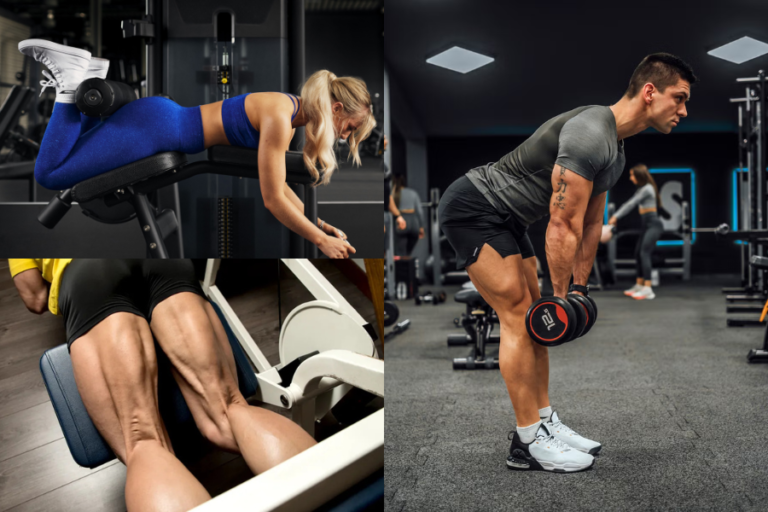
A strong pair of hamstrings does more than help you sprint or jump. When you focus on single-leg hamstring exercises, you also train balance, coordination, and core stability, all of which support how you walk, climb stairs, and move through your day.
Below, you will find simple single-leg moves you can start today, plus tips to help you progress safely whether you work out at home or in the gym.
Why single-leg hamstring work matters
Your hamstrings run along the back of your thighs. They help you bend your knees and extend your hips, which is essential for walking, running, and lifting. When they are weak or out of balance with your quads, your knees and lower back often have to pick up the slack.
Single-leg hamstring exercises help you:
- Spot and correct left-right strength differences
- Improve balance and stability because one leg supports your weight
- Build strength in the muscles that protect your knees and hips
- Prepare for real-life movements like running, which mostly happen one leg at a time
Physical therapists highlight single-leg work such as the Single-Leg Romanian Deadlift and Single Leg Chair Squats for improving muscle balance between the front and back of the legs and reducing knee injury risk. Research also links single-leg strengthening and controlled hip movement with better lumbo-pelvic control, which lowers strain on your lower back.
Getting ready: form and safety basics
Before you try any single-leg hamstring exercises, take a minute to set yourself up for success.
Focus on these basics:
-
Use support at the start
Stand near a wall, countertop, or the back of a sturdy chair. Lightly resting one hand for balance lets you learn the movement pattern without fighting to stay upright. -
Move slowly and with control
Rushing through reps often shifts work away from your hamstrings and into your lower back. Aim for a slow 2–3 second move down and 1–2 seconds up for most exercises. -
Keep a soft bend in the knee
Locking your knee can strain your joint and tug on your hamstring. Instead, keep a gentle, comfortable bend while you hinge or squat. -
Think “hinge from the hips”
For hamstring-focused moves, you want your hips to drift back as your torso leans forward, while your spine stays neutral. Imagine closing a car door with your backside. -
Stop at mild discomfort, not pain
A light stretch or working-muscle burn is normal. Sharp pain, pinching in the knee, or pulling behind the knee is a sign to pause and adjust.
If you have a current injury or long-standing pain, talk with a healthcare professional or physical therapist before starting new exercises.
Tip: When you are not sure if your hamstrings are working, gently place a hand behind your thigh as you move. You should feel the muscles tighten as you lower and lift.
Beginner single-leg hamstring exercises
These exercises are a good starting point if you are new to strength training, returning from a break, or prefer minimal equipment.
Single leg chair squats
Single Leg Chair Squats are often recommended as an accessible way to start single-leg hamstring strengthening. Physical therapists at Hinge Health describe them as a simple way to train hip extension and build balance using a chair you already have at home.
How to do it
- Sit on a sturdy chair with your knees bent at 90 degrees and feet flat.
- Shift your weight onto your right foot and lightly hover your left heel off the floor.
- Lean your torso slightly forward, brace your core, and push through the right heel to stand up.
- Slowly lower back toward the chair, lightly tap the seat, then stand again.
Start with 6 to 8 reps on each leg for 2 to 3 sets.
What to watch for
- Your knee should stay roughly in line with your second or third toe, not collapsing inward.
- Push your hips back as you sit to feel your hamstring and glute engage.
Standing single-leg leg curls
Standing leg curls target your hamstring by bending your knee instead of hinging from your hips. They can be done anywhere and are gentle enough for beginners.
Research notes that standing leg curls can be performed without weights to help you practice proper form and build endurance with a lower risk of soreness or injury. You can later add a resistance band for extra challenge.
How to do it
- Stand tall while holding the back of a chair or a wall for support.
- Shift your weight onto your left leg.
- Bend your right knee, bringing your heel toward your glute.
- Pause for a second, then lower your foot back to the floor with control.
Aim for 10 to 15 reps per side for 2 to 3 sets.
Progression
Once bodyweight feels easy, loop a light resistance band around your ankles or behind the working ankle and a sturdy anchor. This adds progressive resistance to strengthen your hamstrings and calves without heavy equipment.
Single-leg glute bridge with heel on chair
Progressing from a double-leg bridge to a single-leg version places more load on your hamstrings. Sources describing this variation note that placing your heel on a low chair or step and focusing on pelvic stability helps you avoid hamstring cramps and lower back strain.
How to do it
- Lie on your back with your left heel on the edge of a low chair or bench and your right leg extended straight up or bent with the foot in the air.
- Brace your core and squeeze your left glute.
- Press through your left heel to lift your hips until your body forms a straight line from shoulders to knee.
- Hold for 1 to 2 seconds, then lower with control.
Start with 8 to 10 reps per leg, working up to 3 sets of 12 to 15 reps.
Form cues
- Keep your pelvis level so one hip does not drop.
- If you feel your lower back more than your hamstrings or glute, shorten your range of motion slightly.
Intermediate single-leg hamstring exercises
Once you can perform the beginner moves comfortably, you can try these slightly more demanding exercises that challenge both your strength and balance.
Single-leg Romanian deadlift (no weight at first)
The Single-Leg Romanian Deadlift (RDL) is one of the most effective single-leg hamstring exercises for muscle activation, especially in the biceps femoris portion of the hamstring, according to studies referenced by Gymshark. Experts recommend starting without weight, then adding a dumbbell or kettlebell as you get stronger.
How to do it
- Stand with your feet hip width apart. Shift your weight onto your right leg and keep a soft bend in the knee.
- Hinge at your hips, letting your torso tilt forward while your left leg extends straight back behind you.
- Keep your spine neutral and your hips and shoulders square to the floor.
- Lower until you feel a strong but comfortable stretch in the back of your right thigh.
- Press through your right heel and drive your hips forward to return to standing.
Start with 6 to 8 reps per side for 2 to 3 sets.
Common mistakes
- Turning your hips out, which shifts work away from the hamstring.
- Rounding your back instead of hinging from the hips.
- Moving too fast and using momentum instead of muscle control.
Once the movement feels stable, hold a dumbbell or kettlebell in the hand opposite your standing leg to increase the challenge.
Core balance squats
Core Balance Squats require you to balance on one leg as you squat without resting your other foot. According to guidance from Hinge Health, this engages your hamstrings on the way down and up while heavily recruiting your core for stability.
How to do it
- Stand tall and shift your weight onto your left leg.
- Lift your right foot slightly off the ground, keeping it just behind or in front of you.
- Sit your hips back and bend your left knee as if you are going into a shallow single-leg squat.
- Go only as low as you can while maintaining balance and comfort.
- Push through your left heel to return to standing.
Perform 6 to 10 reps per leg for 2 to 3 sets.
Balance help
If full single-leg squats feel too wobbly, lightly hold a countertop or place your toes on the floor of your non-working leg for extra support as you build strength.
Reverse lunge for hamstrings and glutes
Reverse lunges are not strictly a hamstring isolation move, but they are a powerful way to train your glutes and hamstrings together. Compared to forward lunges, reverse lunges tend to be easier on the knees and can better emphasize the back of your leg, especially if you use a small slider under your moving foot to control the eccentric, or lowering, phase.
How to do it
- Stand with your feet hip width apart.
- Step your right foot back, keeping your weight mostly on your left heel.
- Bend both knees to lower toward the floor, with your front knee tracking in line with your toes.
- Push through the front heel to bring your right leg forward and stand tall.
Complete 8 to 10 reps on each leg for 2 to 3 sets.
Focus on a slight forward torso lean and pushing the floor away with your front heel. You should feel work in the back of your thigh and your glute on the front leg.
Advanced single-leg hamstring options
If you are already comfortable with intermediate movements and want a higher challenge for strength and injury prevention, you can try these advanced exercises. Take your time and step back if your form starts to slip.
Weighted single-leg deadlift
The single-leg deadlift is a close cousin of the Single-Leg RDL, but often performed with a bit more range and resistance. It strengthens your hamstrings and glutes while boosting balance and position sense, and it recruits stabilizing muscles like the gluteus medius to keep your hips steady.
How to do it
- Hold a dumbbell or kettlebell in one or both hands.
- Stand on your left leg with a soft bend in the knee.
- Hinge forward at the hips, extending your right leg back in line with your body.
- Lower the weight toward the floor while keeping your back flat.
- When your torso is roughly parallel to the floor, pause, then drive through your left heel to stand.
A common routine is 3 sets of 6 to 8 reps per side.
To progress over time, gradually increase the weight or add a small pause at the bottom of each rep to challenge your control.
Nordic hamstring curl (advanced variation)
The Nordic hamstring curl is a powerful tool for reducing hamstring injury risk. Research has linked consistent Nordic curl training with fewer hamstring strains, especially in sports. It involves controlling a forward lean from your knees while your ankles are anchored, which demands strong core engagement as well as powerful hamstrings.
Although the classic Nordic curl is usually performed bilaterally, you can train one leg at a time or emphasize one side more during the exercise.
How to do it (basic version)
- Kneel on a soft surface with your ankles firmly anchored under a heavy object or held by a partner.
- Cross your arms over your chest or keep your hands ready to catch yourself.
- Keeping your body straight from knees to shoulders, slowly lean forward.
- Use your hamstrings to resist the pull of gravity for as long as possible.
- When you can no longer control the descent, place your hands on the floor and lightly push off to help you back to the start.
Start with 3 to 5 controlled reps and focus on form rather than depth. As you get stronger, try to lower more slowly and rely less on your hands.
For single-leg emphasis, you can shift more weight to one side or use an assisted variation where one leg does most of the work while the other offers light support.
Single-leg hamstring curl machine
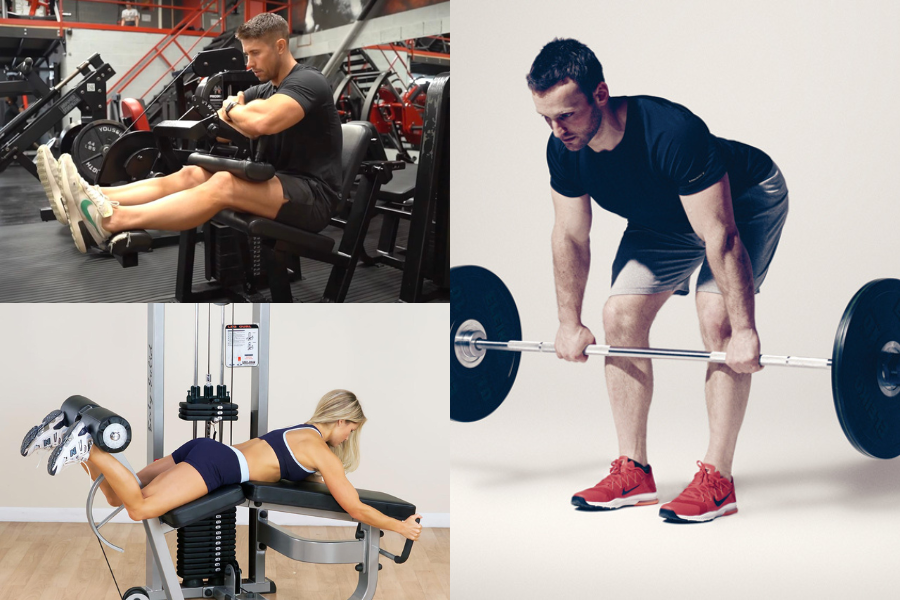
If you have access to a gym, the single-leg hamstring curl machine lets you target each hamstring individually. This is especially helpful if you have a noticeable strength difference between legs.
According to descriptions from Sweat, you perform this exercise lying prone on a leg curl machine with the pad positioned between your calf and ankle. You then bend one knee at a time, bringing your heel toward your glutes while keeping your torso as still as possible.
How to do it
- Adjust the leg curl machine so the pad rests comfortably just above your ankle.
- Lie face down and grip the handles for support.
- Inhale, then on your exhale bend one knee to curl the pad up toward your glute.
- Pause briefly at the top, then lower with control.
- Complete half your reps on one leg before switching sides.
Aim for 8 to 12 reps for 2 to 3 sets per leg, using a weight that challenges you without causing your hips to lift off the bench.
How to build a simple single-leg hamstring routine
To get the most from single-leg hamstring exercises, consistency matters more than complexity. You can make steady progress with a short routine done 2 or 3 times per week.
Here is a sample structure you can adjust to your level:
-
Warm up, 5 minutes
March in place, do gentle leg swings, or walk briskly to get blood flowing. -
Strength block
- Single Leg Chair Squats, 2 to 3 sets of 8 to 10 reps per leg
- Single-Leg Romanian Deadlifts, 2 to 3 sets of 6 to 8 reps per leg
- Standing leg curls (with or without band), 2 sets of 10 to 15 reps per leg
- Optional finisher, 1 exercise
- Single-leg glute bridge with heel on chair, 2 sets of 10 to 12 reps per leg
or - Reverse lunges, 2 sets of 8 to 10 reps per leg
- Cooldown, 3 to 5 minutes
Gently stretch your hamstrings, quads, and hips, holding each stretch for 20 to 30 seconds.
As you get stronger, you can increase reps, sets, range of motion, or resistance. You can also gradually introduce advanced options like weighted single-leg deadlifts or Nordic curls.
Key takeaways
- Single-leg hamstring exercises help you correct side-to-side imbalances, improve balance, and support healthy knees and hips.
- Beginner-friendly moves like Single Leg Chair Squats, standing leg curls, and single-leg bridges are enough to get you started at home.
- Intermediate and advanced options such as the Single-Leg Romanian Deadlift, weighted single-leg deadlift, and Nordic hamstring curls offer powerful benefits for strength and injury prevention.
- Focus on slow, controlled movement with a soft knee bend, a solid hip hinge, and no pain.
- Aim for 2 to 3 short sessions per week and progress gradually as your confidence and strength grow.
Choose one or two of the exercises above and add them to your next workout. With consistent practice, you will feel the difference every time you walk, climb stairs, or pick something up from the floor.
About the Author