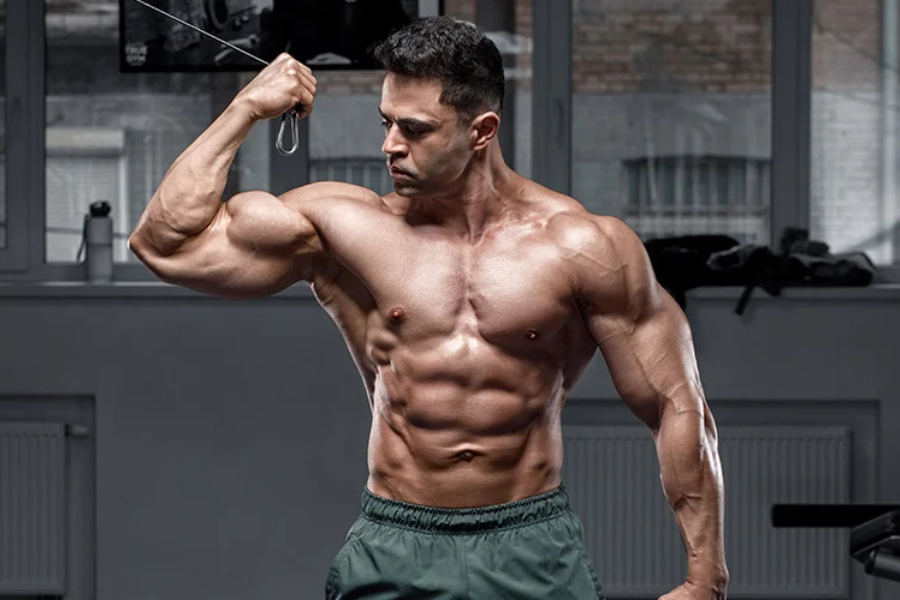
What unilateral bicep exercises are
Unilateral bicep exercises are movements where you train one arm at a time. Instead of curling, rowing, or pressing with both arms together, you focus on a single limb for a set number of reps, then switch sides.
Training this way helps you:
- Spot and fix strength imbalances
- Prevent your dominant side from always taking over
- Build more balanced size and definition between arms
- Challenge your core and stabilizing muscles
You will see unilateral bicep exercises in curls, rows, presses, and cable movements. These single arm exercises are useful whether you want stronger lifts, better sports performance, or simply more symmetrical arms.
Why train your biceps unilaterally
Unilateral training is not just a variation to keep things interesting. It has specific benefits that bilateral training, like barbell curls or two-arm cable work, cannot match on its own.
Correct strength and size imbalances
Most people have one side that is stronger or more coordinated. When you use both arms together, the stronger side often does more of the work. Unilateral bicep exercises prevent this compensation because each arm is responsible for its own reps.
Research notes that unilateral exercises are recommended as one of the best options to correct muscle imbalances, especially when you add more volume to the weaker side during training sessions. This approach helps the lagging bicep catch up in both strength and size.
Potentially unlock more strength
Strength produced by individual limbs during unilateral training can sometimes exceed what you create with both limbs working together. A paper in The Strength & Conditioning Journal reports that unilateral training may reduce bilateral force deficits and lead to better strength development in each limb.
For you, that can mean:
- Stronger curls and rows
- Better stability in pressing and pulling
- Improved performance in sports that rely on arm drive and coordination
While some evidence suggests that bilateral training is often superior for overall total strength performance, unilateral bicep exercises still play a key supportive role in a complete program.
Improve technique and injury resilience
Training one arm at a time gives you constant feedback on limb symmetry and control. If one bicep feels weaker or less coordinated, you will notice it right away.
Benefits here include:
- Cleaner lifting technique because you can focus on one side at a time
- Reduced risk of overloading a stronger side while a weaker side struggles
- A safer path back to training after injury by gradually loading one arm
Unilateral work also distributes load more gently across joints. Strength coach Andy Vincent notes that single limb exercises can reduce joint stress compared to heavy bilateral lifts. This can help you train hard without overtaxing elbows and shoulders.
Support rehab and “cross-education”
If you are dealing with an injured arm, unilateral bicep exercises on the healthy side can still help you maintain strength. Unilateral training stimulates a neural process called cross-education, where training one side increases strength on the opposite, untrained side.
This effect is useful in rehab settings because:
- You can limit direct load on the injured bicep
- You still send a strength signal to the healing side through the nervous system
- You reduce strength loss during enforced time off
Engage your core and stabilizers
Any time you push or pull with one arm, your body wants to rotate. Your core, hips, and back muscles have to work harder to keep you stable. This is true even for bicep-focused moves like single arm rows or presses.
Benefits include:
- Better trunk stability under load
- Improved coordination between upper body and core
- Stronger, more athletic movement patterns
How unilateral training compares to bilateral
You may wonder if you should swap all your bilateral exercises for unilateral bicep work. The research suggests a balanced approach is best.
- Bilateral training is generally favored for maximizing total strength in two-limb tasks.
- Unilateral training is more effective for correcting side-to-side differences and for single leg or single arm performance in many athletic settings.
A meta-analysis that looked at unilateral vs bilateral training in 651 athletes over 6 to 12 weeks found that:
- Unilateral training was more effective for single leg maximal force and unilateral jumping ability.
- Bilateral training better supported bilateral jumping performance.
- Linear sprint performance improved more with unilateral training, likely due to better neuromuscular control of individual limbs.
- Balance outcomes were similar between the two, with no clear overall winner.
Applied to your program, this points to a simple plan:
- Keep bilateral compound lifts for overall strength.
- Use unilateral bicep exercises to refine technique, fix imbalances, and build symmetry.
Key unilateral bicep exercises to try
You do not need dozens of options. A handful of well chosen unilateral bicep exercises can cover strength, size, and stability.
Single arm bicep curl
Single arm bicep curls are a beginner friendly place to start. They target the biceps directly while also training forearms and grip.
How to do it
- Stand tall with your feet hip width apart, holding a dumbbell in one hand.
- Let your arm hang at your side with your palm facing forward.
- Keep your elbow close to your torso and curl the dumbbell up toward your shoulder.
- Squeeze the bicep at the top without swinging your body.
- Lower the weight in a controlled way until your arm is straight.
- Complete all reps on one side, then switch arms.
What it trains
- Biceps brachii
- Forearms and grip endurance
- Elbow joint stability and control
Single arm curls improve elbow flexion strength and help build definition while supporting overall upper body coordination.
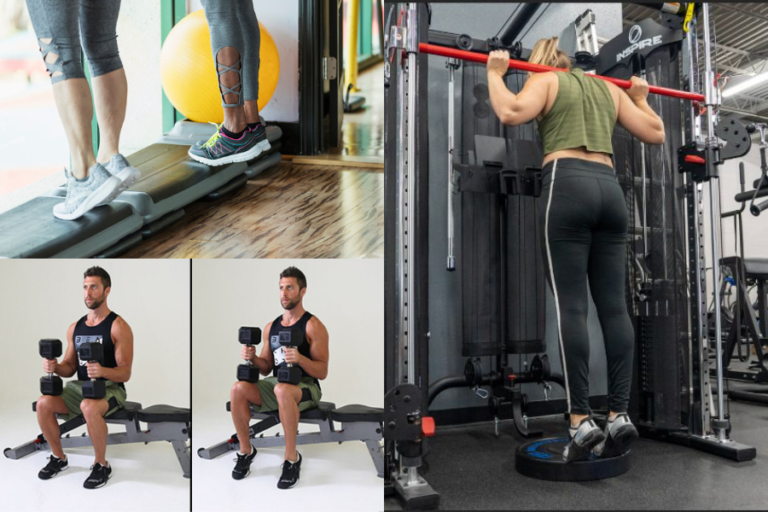
Concentration curl
Concentration curls are one of the most effective unilateral bicep exercises for isolation. They focus heavily on the short head of the bicep.
How to do it
- Sit on a bench with your feet flat on the floor.
- Hold a dumbbell in one hand and rest the back of your upper arm against the inside of your thigh.
- Let the dumbbell hang toward the floor with your palm facing up.
- Curl the weight toward your shoulder, keeping your upper arm fixed on your leg.
- Squeeze the bicep hard at the top, then lower slowly.
- Finish your reps, then switch sides.
Programming tips
- Use lighter weights and higher control, especially after compound exercises.
- Perform 3 sets of 8 to 12 reps per arm, resting about 1 minute between sets.
Research updated in early 2024 suggests that concentration curls isolate the biceps more than many other movements, which makes them ideal if your goal is hypertrophy and detail.
Single arm high cable curl
The single arm high cable bicep curl targets the short head while also engaging your shoulders for stabilization.
How to do it
- Set a cable at about head height and attach a single handle.
- Stand sideways to the machine so the working arm is farthest from the cable.
- Grasp the handle with your palm facing up and your arm out to the side in a slightly externally rotated position.
- Keeping your upper arm fairly still, curl the handle toward your head.
- Pause briefly and focus on the bicep contraction.
- Slowly return to the start position with control.
- Repeat for the desired reps, then switch sides.
This position keeps constant tension on the biceps and challenges your shoulder and core to stabilize.
Some evidence suggests that bilateral work may still come out ahead for overall strength performance. However, single arm high cable curls are useful for addressing asymmetries between arms and for increasing bicep size and control.
Hammer curl (single arm)
Hammer curls use a neutral grip, with your palm facing inward. They are excellent for emphasizing the long head of the biceps along with the brachialis and brachioradialis.
How to do it
- Stand tall with a dumbbell in one hand, arm at your side, palm facing your thigh.
- Without rotating your wrist, curl the dumbbell toward your shoulder.
- Keep your elbow close to your ribcage and avoid swinging.
- Squeeze at the top, then slowly lower.
- Do all reps on one side, then switch arms.
Why include hammer curls
- They build thickness through the upper arm.
- They develop forearm strength and grip.
- The neutral grip is often friendlier on the wrists and elbows.
Performing hammer curls unilaterally lets you focus on each arm’s path and contraction, which can help correct small strength or size differences.
Single arm floor press
The single arm floor press is often described as a unilateral bicep exercise, but it is better viewed as an upper body compound that trains chest, shoulders, and triceps while still involving the biceps and stability muscles.
How to do it
- Lie on your back on the floor with your knees bent and feet flat.
- Hold a dumbbell in one hand at chest level, elbow on the floor.
- Brace your core to keep your torso from rolling.
- Press the dumbbell straight up until your arm is extended.
- Lower the weight until your upper arm lightly touches the floor.
- Complete your reps, then switch arms.
A guideline used in practice is 4 sets of 12 reps per side, though you can adjust based on your goals and overall program.
This exercise improves:
- Shoulder stability
- Pressing strength
- Core control as your body resists rotation
Single arm presses are also recommended in programs highlighted by outlets like Women’s Health UK for building full body strength and stability.
Other helpful unilateral upper body moves
Several upper body unilateral exercises involve or support the biceps, even if they are not pure curls:
- Single arm row variations, including chest supported cable rows, let you adjust cable height and reduce cheating by bracing your torso.
- Single arm landmine shoulder presses provide a rotational core challenge and can feel more comfortable for people with limited shoulder mobility.
- Single arm tricep pushdowns allow for a freer arm path that can reduce elbow discomfort, especially compared to fixed two arm movements.
These moves keep your program balanced while still reinforcing unilateral strength and control that supports bicep work.
How to program unilateral bicep exercises
To get the most from unilateral bicep exercises, you need a strategy for sets, reps, and how you handle differences between arms.
Sets and reps for growth and strength
For most people focused on strength and hypertrophy:
- Use 3 sets of 8 to 12 reps per arm for direct bicep work like curls and cable curls.
- Rest about 60 seconds between sets.
- Use controlled tempos, especially on the lowering phase.
You can mix unilateral bicep work with bilateral compound lifts in the same session. For example:
- Bilateral pulling or rowing
- Bilateral pressing
- Unilateral bicep exercise (such as concentration curl)
- Unilateral tricep or shoulder exercise
This structure keeps your main lifts heavy and efficient, with unilateral movements refining imbalances and control.
Handling a weaker side
There is debate about the best way to program unilateral exercises when one side is clearly weaker.
From the research:
- Keeping volume and intensity identical on both sides can mean the strong side stays stronger indefinitely.
- Adding more volume to the weaker side, such as extra sets or reps, may help it catch up over time.
- Some approaches cap the stronger side at whatever the weaker side can handle. That can allow symmetry to improve but may limit progress on the stronger limb.
You can test two practical options:
- Option 1: Perform the same sets on each side, but add 1 or 2 extra reps for the weaker arm when possible.
- Option 2: Use an identical rep count, but choose your load based on the weaker side so it is working close to its limit, while the stronger side operates slightly below its maximum.
Both reduce the gap over time. Take notes and see which approach feels better and leads to more even progress.
Avoiding “junk volume”
More volume is not always better. Extra sets that are too light or too easy will not drive new strength or size gains. They simply lengthen your session.
To avoid junk volume:
- Stop sets 1 to 3 reps shy of failure for most of your work.
- Only add extra sets to the weaker side if those sets are still challenging.
- Keep an eye on elbow and shoulder comfort. Persistent aches are a sign to cut back.
When and how often to include unilateral work
Unilateral bicep exercises fit well into most strength programs, but you do not need every exercise in every session.
Here are simple guidelines:
- Beginners or those with joint issues: First build a base with basic two arm exercises. Coaches like Andy Vincent recommend mastering stable bilateral movements before adding higher stability demands. Once you are comfortable with form, introduce 1 or 2 unilateral exercises per week.
- Intermediate lifters: Include some form of unilateral upper body work in every strength session. That might be a single arm row one day, and concentration curls another.
- Advanced lifters or rehab scenarios: Use unilateral exercises more heavily to refine weak points, manage joint stress, and support injured limbs through cross-education.
Keep in mind that unilateral training takes longer since you are working each limb separately. Plan your session time so you do not rush through sets and lose technique.
Putting it together in a sample workout
Here is a simple upper body session that relies on unilateral bicep exercises while keeping the rest of your training balanced.
Warm up, 5 to 10 minutes
- Light cardio like walking or cycling
- Dynamic arm swings and shoulder circles
- A few light sets of band pull aparts or rows
Main work
- Push: Bilateral dumbbell bench press, 3 sets of 6 to 8 reps
- Pull: Single arm chest supported cable row, 3 sets of 8 to 10 reps each arm
- Biceps: Single arm hammer curl, 3 sets of 8 to 12 reps each arm
- Biceps: Concentration curl, 3 sets of 8 to 12 reps each arm
- Triceps: Single arm tricep pushdown, 3 sets of 10 to 12 reps each arm
Finisher (optional)
- Single arm landmine press, 2 sets of 10 reps each arm, focusing on core control
Adjust weights and rest based on your experience level. The goal is controlled, challenging sets, not rushing from one side to the other.
How to progress over time
To keep getting results from unilateral bicep exercises:
- Track your loads separately for each arm.
- Aim to add a small amount of weight or a rep every week or two, especially on the weaker side.
- Rotate exercise variations every 6 to 8 weeks. For example, swap standard curls for high cable curls or hammer curls.
- Check in on symmetry every few weeks by comparing reps and load between arms. If a gap is closing, your programming is working.
Final thoughts
Unilateral bicep exercises give you more than just a nice pump. They help you:
- Build balanced, symmetrical arm strength
- Correct side to side imbalances before they become problems
- Engage your core and stabilizers in a more functional way
- Support rehab and joint health with more controlled loads
Start by adding one or two single arm bicep movements to your current routine. Focus on steady, controlled reps and thoughtful progression. Over time, you will feel and see the difference in how both arms perform and look.
About the Author