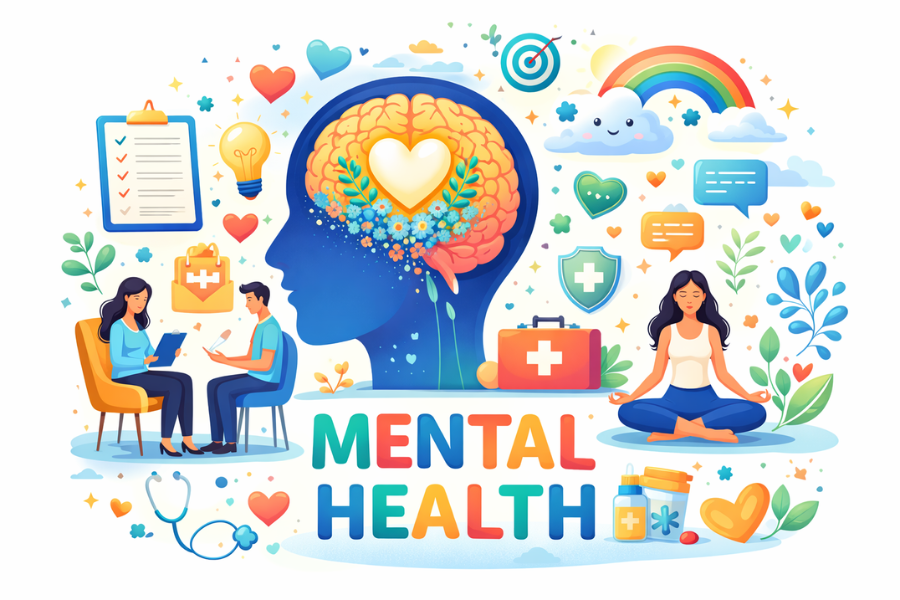
A strong foundation in self care for mental health can help you feel steadier, calmer, and more able to handle what life throws at you. Self care is not about expensive spa days or elaborate routines. It is about small, consistent choices that protect your emotional, mental, and physical wellbeing.
Below, you will find practical ideas you can start using today, along with guidance on when to reach out for professional support.
Understand what self care really means
Before you try to overhaul your routine, it helps to be clear about what self care for mental health actually is and is not.
Self care is any activity or routine that supports your physical, mental, and emotional health. This can be as simple as going for a short walk, talking to a friend, or going to bed a bit earlier. The National Institute of Mental Health (NIMH) notes that self care plays an important role in managing stress, lowering your risk of illness, and increasing your energy (NIMH).
Self care is:
- A necessity, not a luxury
- Ongoing, not something you do only when you feel burnt out
- Personal, which means it should fit your needs and preferences
Self care is not:
- A quick fix for serious mental health conditions
- A reason to blame yourself if you still struggle
- One-size-fits-all
When you see self care as a basic part of daily life, it feels more realistic and less like another chore on your to-do list.
Spot your main sources of stress
It is easier to care for your mental health when you know what is draining you. According to the NHS, identifying the cause of stress is the first step to feeling better, and ignoring it can make things worse over time (NHS).
Simple way to identify stress triggers
Take five to ten minutes and jot down:
- Situations that leave you feeling tense, irritable, or overwhelmed
- People or environments that consistently raise your stress level
- Times of day when your mood tends to dip
Look for patterns. Maybe your stress spikes after checking work email at night, or you always feel low after scrolling social media. Once you see the patterns, you can make small adjustments, like setting boundaries around technology or preparing differently for certain parts of your day.
Build a basic self care routine
You do not need a complicated plan. A simple routine that covers the essentials can have a big impact.
Focus on the three core areas
Many mental health resources break self care into three broad areas:
- Physical self care
- Emotional self care
- Social self care
You can think of them as three legs of a stool. If one is missing, everything feels less steady.
Support your body to support your mind
Your body and mind are closely connected. Physical self care gives your brain the energy and resilience it needs.
HelpGuide notes that activities like getting quality sleep, regular exercise, and eating nourishing foods are linked to lower levels of depression, stress, and anxiety (HelpGuide).
Move your body regularly
You do not have to run marathons for exercise to support your mental health. The NHS explains that physical activity can reduce the emotional intensity of stress, clear your thoughts, and help you handle problems more calmly (NHS). The Mayo Clinic also notes that activities like walking, swimming, gardening, or even household chores trigger feel-good endorphins and refocus your mind (Mayo Clinic).
Try one of these options:
- A ten-minute walk during lunch
- Gentle stretching while you watch TV
- Dancing to two songs you like
- Light chores such as sweeping or tidying a room
The goal is consistency, not intensity. Even small bursts of movement count.
Protect your sleep
Sleep is one of the most powerful forms of self care for mental health. The Mayo Clinic recommends aiming for about 7 to 9 hours per night and notes that good sleep recharges both brain and body, reduces stress, and stabilizes mood (Mayo Clinic).
Support better sleep by:
- Going to bed and waking up at roughly the same time every day
- Limiting screens for 30 to 60 minutes before bed
- Creating a simple wind-down routine, like reading, stretching, or listening to calming music
- Keeping your bedroom as dark, quiet, and cool as is comfortable
Small tweaks to your sleep environment can make your whole day feel different.
Choose healthier coping tools
When you feel stressed or low, it is tempting to turn to quick fixes. The NHS warns that relying on alcohol, smoking, or excessive caffeine may offer brief relief but often makes problems worse in the long run (NHS).
You do not have to be perfect, but you can:
- Notice when you are using substances mainly to numb emotions
- Swap one drink or extra coffee for water or herbal tea
- Experiment with stress relievers like a short walk, a shower, or breathing exercises instead
Self compassion is important here. The goal is gradual change, not sudden restriction.
Care for your emotional wellbeing
Emotional self care helps you understand, express, and work with your feelings instead of fighting them. HelpGuide highlights practices such as journaling, meditation, therapy, and self validation as powerful tools for managing emotions and building emotional intelligence (HelpGuide).
Try simple mindfulness and breathing techniques
Meditation and mindfulness are not about emptying your mind. They are about noticing what is happening inside you, without judgment. Mayo Clinic notes that meditation techniques, including guided meditation, mindfulness, and deep breathing, can quiet jumbled thoughts and promote calm and emotional balance (Mayo Clinic).
You can start small:
- Sit or stand comfortably.
- Inhale slowly through your nose for a count of four.
- Hold for a count of four.
- Exhale gently through your mouth for a count of six.
- Repeat for one or two minutes.
You can use this while commuting, before a stressful conversation, or during a break at work.
Use journaling to process thoughts
Writing things down can help you untangle what you are feeling. You do not need a special notebook or lots of time.
You might try:
- A daily “brain dump” of everything on your mind
- Listing three things that went well today
- Writing about one challenging situation and how you handled it
According to the NHS, focusing on positives and practicing gratitude, such as noting three things to be thankful for each day, can improve mental wellbeing (NHS).
Practice kinder self talk
You probably talk to yourself more than to anyone else. Emotional self care includes paying attention to that inner voice.
You can:
- Notice when your thoughts turn harsh or overly negative
- Ask yourself, “Would I talk to a close friend this way”
- Gently replace harsh statements with more balanced ones
For example, switch “I always mess this up” to “This is hard, but I am learning”. It may feel awkward at first, but over time it can soften anxiety and shame.
Nurture your social connections
Human connection is a key part of self care for mental health. You do not need a large circle of friends. A few supportive people can make a real difference.
The NHS emphasizes that building and maintaining a good social support network can ease work related stress and offer new perspectives (NHS). Mayo Clinic also notes that staying connected, whether through friends, family, or volunteering, helps you feel supported and less alone when life is difficult (Mayo Clinic). HelpGuide adds that social self care reduces isolation, which can otherwise worsen depression and even affect physical health (HelpGuide).
Simple ways to connect more
You can build social self care into your week by:
- Texting or calling someone you trust, just to catch up
- Inviting a friend for a walk instead of only chatting online
- Joining a local group, class, or faith community that interests you
- Exploring volunteer opportunities in your area
If you feel shy or out of practice, start small. One brief conversation is a meaningful step.
Create a personal self care plan
Self care for mental health is most effective when it fits your life. HelpGuide suggests creating a personalized plan with specific goals, a realistic routine, and flexibility so you can adjust as needed (HelpGuide).
Step 1: Assess what you need most
Ask yourself:
- Am I more physically exhausted, emotionally drained, or socially isolated
- Which part of my life feels most out of balance right now
- What has helped me cope in the past
Pick one area to focus on first. For example, you might start with sleep or with reconnecting to supportive people.
Step 2: Set a few small, specific actions
Vague goals are hard to follow. Choose two or three actions that are clear and doable. For example:
- “Walk for ten minutes after dinner on weekdays”
- “Write down three things I am grateful for before bed”
- “Call one friend or family member each Sunday”
You can use a notebook, phone reminders, or a simple checklist to keep track of what you try.
Step 3: Stay flexible and kind to yourself
Your needs will change, and so will your capacity. Some weeks you might manage all your planned actions. Other weeks, you might only manage one. That is normal.
Reflect regularly:
- What is working well
- What feels like a struggle
- What do you want to adjust or drop
Think of your self care plan as a living document, not a rigid rulebook.
Know when to seek professional help
Self care is powerful, but it is not a substitute for mental health treatment. Sometimes you need extra support, and reaching out is a sign of strength, not failure.
The NIMH advises seeking professional help if severe or distressing mental health symptoms persist for two weeks or more, especially if they interfere with your daily life, work, or relationships (NIMH).
Signs it might be time to get more support
Consider talking to a professional if you notice:
- Ongoing sadness, hopelessness, or emptiness
- Constant worry, panic, or racing thoughts
- Irritability or anger that feels hard to control
- Changes in sleep, appetite, or energy that concern you
- Loss of interest in activities you usually enjoy
- Difficulty functioning at work, school, or home
Your primary care provider can help you decide what to do next and may refer you to a psychologist, psychiatrist, counselor, or clinical social worker for further support (NIMH).
Crisis support
If you are in the United States and ever feel at risk of harming yourself, or you are worried that you might, you can contact the 988 Suicide & Crisis Lifeline for confidential, free support 24 hours a day by call, text, or chat (NIMH).
If you are outside the United States, check local health services for crisis lines or emergency resources in your area.
Put it all together
You do not have to transform your life overnight to practice meaningful self care for mental health. Consistency matters more than perfection.
To recap, you can:
- Notice your main sources of stress
- Support your body through movement, sleep, and healthier coping strategies
- Care for your emotions with mindfulness, journaling, and kinder self talk
- Nurture your social connections, even with small, simple interactions
- Create a flexible self care plan that fits your real life
- Reach out for professional help when self care alone is not enough
If this feels like a lot, choose one tiny step to start with today. Maybe a ten-minute walk, a brief gratitude list, or a quick text to someone you trust. Small actions add up, and each one is a way of telling yourself that your mental health matters.
About the Author