Understand your lower back
Lower back exercises can feel intimidating if your back already hurts. Understanding what is going on in this area makes it easier to choose moves that feel safe and productive instead of risky.
Your lower back, or lumbar spine, works with your core, hips, and glutes to support nearly every movement you make. Over time, normal age-related changes like lower muscle mass and declining bone density can make this region more vulnerable to pain. Researchers estimate that up to 80% of adults will deal with low back pain at some point in life, and at least a quarter of U.S. adults feel it in any given three-month period.
The encouraging part is that the right mix of strength and mobility work can help. Weight-bearing and core exercises can slow or even reverse some of the age-related declines that contribute to discomfort, as explained by experts at the University of Pittsburgh School of Health and Rehabilitation Sciences. When you combine smart training with everyday movement like walking, you give your spine better support and may notice less stiffness and strain.
If your pain is severe, new, or paired with symptoms like numbness, weakness, or loss of bladder or bowel control, check in with a medical professional before starting a new routine.
Start with movement basics
Before you jump into specific lower back exercises, it helps to have a few ground rules in place. These will keep your workout safer and more comfortable.
Keep a neutral spine
Many lower back problems show up when your spine is forced into extreme positions while you move. During strength work, aim to keep your back in a neutral, straight line instead of dramatically arched or rounded.
Neutral spine is especially important when you:
- Lift weights
- Perform planks or push-ups
- Squat or hinge at the hips
If an exercise forces you to hold your breath, strain, or feel pinching in your lower back, lighten the load or switch variations.
Avoid high-risk ab moves
Not all core work is friendly to your lower back. Some classic exercises actually increase strain on your lumbar spine.
Moves to approach with caution include:
- Sit-ups
- Traditional crunches
- Aggressive toe-touching
- Heavy leg presses when your back feels fragile
Crunches and sit-ups can tighten your hip flexors, pull your lumbar spine forward, and aggravate disc or nerve issues. Experts recommend choosing alternatives like planks and side planks that work your core without forcing your back into repeated flexion.
Progress slowly
Your lower back responds best to gradual, steady change. To protect it:
- Increase intensity, weight, or rep counts a little at a time
- Stop any exercise that creates sharp, shooting, or worsening pain
- Allow rest days between demanding lower back sessions
Guidance from sources like Verywell Fit suggests starting with 1 to 2 sets of 12 to 16 repetitions of strengthening moves twice per week, then working up to 2 to 3 sets of 8 to 12 repetitions as you become more comfortable.
Build strength with key lower back exercises
Strengthening the muscles that support your spine is one of the most effective long-term strategies for managing and preventing low back pain. Your goal is to train the back muscles, abs, glutes, and hips together so they can stabilize your spine in daily life.
Below you will find approachable lower back exercises that rely mostly on body weight. You can do many of them at home with just a mat.
Bridge
The bridge is a powerful way to train your glutes and lower back together. A strong gluteus maximus helps stabilize your lower back and hips, which can reduce pain over time.
How to do it:
- Lie on your back with your knees bent and feet flat on the floor, hip-width apart.
- Tighten your belly and buttocks muscles.
- Press through your heels and raise your hips until your body forms a straight line from knees to shoulders.
- Hold this position as you take three deep breaths.
- Slowly lower back down with control.
Start with 5 repetitions and gradually work up to 30 daily, as recommended by Mayo Clinic in 2024. This exercise strengthens the lower back and supporting muscles while training good hip extension.
Bird dog
The bird dog builds core and lower back stability without loading your spine with heavy weight.
How to do it:
- Begin on your hands and knees with your wrists under your shoulders and knees under your hips.
- Brace your core to keep your spine neutral.
- Extend your right arm forward and your left leg straight back, forming a long line from fingertips to heel.
- Hold for a few seconds without letting your lower back sag or rotate.
- Return to the starting position and switch sides.
This move targets the erector spinae, glutes, and hamstrings, which all help support your lumbar spine.
Plank
A well-done plank trains your abdominal muscles along with the back extensors and deeper stabilizers.
How to do it:
- Start on your forearms and knees.
- Step your feet back so your body forms a straight line from head to heels.
- Keep your hips in line with your shoulders, not sagging or piked.
- Brace your core and squeeze your glutes.
- Hold as long as you can maintain good form, then rest.
If this full version feels too intense, try an incline plank with your hands on a bench or counter. Experts recommend planks as a safer core option than sit-ups when your lower back is sensitive.
Side plank
The side plank targets muscles that stabilize your hips and lower back, including the quadratus lumborum, gluteus medius, and tensor fascia lata.
How to do it:
- Lie on your side with your legs straight and your elbow directly under your shoulder.
- Stack your feet or place one in front of the other for more balance.
- Press through your forearm and lift your hips until your body forms a straight line from head to feet.
- Hold, breathing steadily, then lower with control.
- Switch sides.
This exercise improves lateral stability, which supports your spine when you twist, step sideways, or walk on uneven ground.
Back extensions
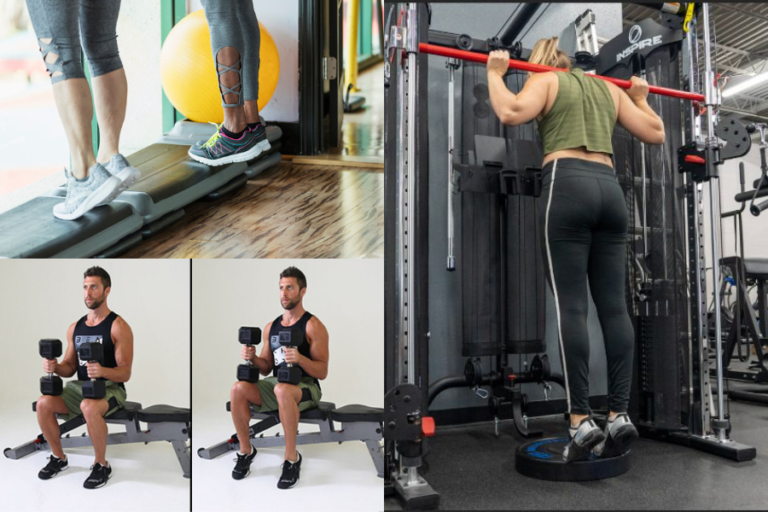
Back extensions target the erector spinae muscles that run along your spine. You can do them on the floor, a stability ball, or a BOSU trainer.
Simple floor version:
- Lie face down with your legs straight and arms by your sides or gently behind your head.
- Engage your glutes and lower back.
- Lift your chest a few inches off the floor while keeping your neck in line with your spine.
- Pause briefly at the top, then lower with control.
Performed correctly, back extensions can improve core stability and support spinal alignment, as noted by Verywell Fit in 2024.
Reverse hyperextensions on a ball
This variation uses a stability ball to work your glutes, hamstrings, and lower back together.
How to do it:
- Lie face down on a stability ball with your hips centered on the ball and your hands on the floor for balance.
- Start with your toes touching the floor.
- Squeeze your glutes and lift your legs until they are in line with your body.
- Pause briefly at the top, then lower slowly.
This move teaches your lower back and hips to work as a team, which helps protect your spine during lifting and bending.
Improve flexibility with lower back stretches
Strength without mobility can still leave your back feeling tight and sore. Adding regular lower back exercises that focus on stretching can improve flexibility, restore range of motion, and lower your risk of injury.
Several trusted routines from Mayo Clinic and other medical sources emphasize gentle, controlled stretches performed once or twice a day.
Knee-to-chest stretch
This stretch relaxes your hips, thighs, glutes, and lower back.
How to do it:
- Lie on your back with your knees bent and feet flat on the floor.
- Tighten your belly muscles and press your spine gently into the floor.
- Bring one knee toward your chest and hold behind your thigh or shin.
- Hold for about 5 seconds, then release.
- Repeat 2 to 3 times on each leg, then with both knees drawn toward your chest if comfortable.
Mayo Clinic recommends doing this routine once in the morning and once in the evening to stretch and strengthen the back.
If reaching is difficult, place a towel around your thigh or use cushions under your head or hips for support.
Lower back rotational stretch
This move gently rotates your spine and can ease stiffness.
How to do it:
- Lie on your back with your knees bent and feet flat.
- Extend your arms out to the sides in a T position.
- Keeping your shoulders on the floor, slowly roll your bent knees to one side.
- Hold for 5 to 10 seconds, then return to center.
- Repeat 2 to 3 times on each side.
Mayo Clinic suggests performing this full routine twice daily to improve lower back mobility and reduce pain.
Lower back flexibility exercise (pelvic tilt)
Also known as a pelvic tilt, this simple movement builds strength in your abdominals and improves lower back flexibility.
How to do it:
- Lie on your back with your knees bent and feet flat.
- Tighten your belly muscles and tilt your pelvis so your lower back gently pulls away from the floor. Hold for 5 seconds.
- Then flatten your lower back against the floor by pulling your bellybutton down. Hold for another 5 seconds.
- Relax and repeat.
Mayo Clinic advises starting with 5 repetitions and progressing up to 30 each day as your comfort improves.
Cat-cow stretch
Sometimes called cat-camel, this stretch wakes up your spine and relieves tension.
How to do it:
- Start on your hands and knees with your wrists under shoulders and knees under hips.
- For the “cat” phase, slowly arch your back toward the ceiling and let your head drop.
- For the “cow” phase, gently sag your belly toward the floor and lift your head and tailbone.
- Move slowly between the two positions, breathing steadily.
Mayo Clinic recommends repeating this 3 to 5 times twice a day. This stretch also helps your shoulders, neck, and chest feel looser.
If your wrists or knees are sensitive, add extra cushioning under them or place your hands on yoga blocks.
Child’s pose
Child’s pose is a traditional yoga stretch that gently lengthens your spine and hips.
How to do it:
- Kneel on a mat and sit back toward your heels.
- Fold forward, bringing your chest toward your thighs.
- Extend your arms in front of you or alongside your body.
- Rest your forehead on the floor or a cushion.
- Breathe slowly and relax into the stretch.
This pose stretches the gluteus maximus, latissimus dorsi, and spinal extensors, which can ease pain and tension along your spine, neck, and shoulders.
Combine strength and flexibility safely
You will get the most from lower back exercises by combining strengthening and stretching in a way that respects your current fitness level.
Here is one simple session you can try 2 to 3 times a week:
- Gentle warm-up
- 5 to 10 minutes of walking at a comfortable pace
- A few rounds of cat-cow to prepare your spine
- Strength circuit
- Bridges: 1 to 2 sets of 8 to 12 reps
- Bird dog: 1 to 2 sets of 8 to 10 reps per side
- Plank or incline plank: 2 to 3 holds of 15 to 30 seconds
- Side plank: 2 holds per side of 10 to 20 seconds
- Cool-down stretches
- Knee-to-chest: 2 to 3 repetitions per leg
- Lower back rotational stretch: 2 to 3 repetitions per side
- Child’s pose: 30 to 60 seconds of relaxed breathing
On non-strength days, you can still support your lower back by walking, doing low-impact activities like water aerobics, Pilates, or yoga, and spending 10 minutes on gentle stretching.
The National Institute of Neurological Disorders and Stroke (NINDS) recommends avoiding sudden, jarring movements and instead focusing on low impact exercises that gradually build up your back and abdominal muscles to relieve pain.
Exercises to rethink or avoid
Some exercises are less friendly to a sore or sensitive lower back, especially if you are just getting started.
You may want to avoid or modify:
-
Traditional sit-ups and crunches
Because they tighten the hip flexors and pull the lumbar spine forward, they can aggravate herniated or bulging discs and pinched nerves. Side planks or other stability moves are safer choices. -
Heavy leg presses
Excessive weight on the leg press can load your spine in a way that irritates symptoms. Bodyweight squats or carefully progressed weighted squats are often better options as your back gets stronger. -
High impact activities
Intense running, jumping, or heavy weightlifting can put extra pressure on spinal discs. When your back feels vulnerable, use lighter weights with higher repetitions and choose low-impact aerobic options.
If an exercise consistently leaves your lower back feeling worse, set it aside and focus on alternatives that feel supportive rather than punishing.
Know when to get expert help
While general lower back exercises can help many people, sometimes you need a more tailored plan. A physical therapist can:
- Identify specific triggers for your pain
- Watch your form and correct subtle habits that strain your back
- Prescribe exercises that match your body type and activity level
Research shows that a personalized exercise regimen from a physical therapist can improve outcomes compared to generic programs. One-on-one sessions can be especially valuable if you have chronic pain, a history of injuries, or complex conditions.
If you notice any of the following, it is a good idea to get professional input:
- Pain that worsens steadily instead of easing with rest and gentle movement
- Numbness, tingling, or weakness in your legs
- Difficulty walking, standing, or controlling your bladder or bowels
Your provider can work with you to decide which lower back exercises are safe and helpful for your specific situation.
Putting it all together
You do not need a perfect routine or specialized equipment to start feeling a difference in your lower back. A few simple moves, done consistently, can build strength, improve flexibility, and help you move through the day with more ease.
You might begin with just three steps:
- Add a gentle daily stretch, like knee-to-chest or child’s pose.
- Practice bridges or bird dogs twice a week to wake up your glutes and core.
- Pay attention to neutral spine and avoid sudden, high impact movements.
Over time, you can layer in more lower back exercises, longer holds, or additional walking as your comfort and confidence grow. Your back will thank you for every small, steady step in the right direction.
About the Author