Calf workouts do much more than add shape to the back of your legs. Strong calves support your ankles, protect your shins and Achilles, and help you run faster and jump higher. When you build a smart routine of calf workouts, you gain both strength and size while lowering your risk of injury.
Below, you will find a practical guide to the best calf exercises, how to structure your training, and how to stay injury free while you grow stronger.
Understand your calf muscles
Your calves are not just one muscle. They are a group that works together every time you walk, run, or push off the ground.
The main muscles are:
- Gastrocnemius, the visible two-headed muscle that gives your calves their rounded shape and helps with explosive movements like sprinting and jumping
- Soleus, a deeper muscle that works hard when your knees are bent and you perform endurance activities such as walking or distance running
- Plantaris, a small helper muscle that assists the other two
Together, these three form the triceps surae, which plays a major role in posture, movement, and balance. Because they are so involved in daily activity, your calves are predominantly slow-twitch fibers, which means they respond very well to high volume, lower load training rather than only heavy weights. Research summarized by exercise scientist Brad Schoenfeld suggests that effort and high repetitions are often more important than maximal loading for calf growth.
Warm up properly before calf workouts
You may be tempted to jump straight into heavy sets, but a targeted warmup will help you perform better and protect your calves from strain.
Use dynamic stretching to wake up the muscles
Dynamic stretching is more effective before training than long static holds because it raises your temperature, improves flexibility, and activates the muscle fibers you are about to use. Before your calf workouts, spend 5 to 10 minutes on movements such as:
- Leg swings, front to back and side to side
- Walking lunges with a gentle push through the toes
- High knees or marching in place, focusing on landing softly
These movements prepare both your calves and hamstrings so your ankles and lower legs move freely when you start loading them.
Add light activation sets
Once you feel warm, add one or two easy sets of bodyweight calf raises. Move through a full range of motion, from heels all the way down to a controlled rise onto your toes. This signals to your nervous system that heavier work is coming and lets you test how your ankles and calves feel that day.
If you notice sharp pain or unusual tightness, scale back the intensity or focus on mobility and stretching instead.
Choose the best calf exercises
The best calf workouts combine a few key exercises that hit both the gastrocnemius and the soleus through different knee angles and loading styles. You do not need a huge list of moves. In fact, coaches at RP Strength suggest you will do best with 1 to 3 exercises per session and 2 to 4 different exercises across a week, rather than constant variation.
Standing calf raise variations
Standing calf raises target the gastrocnemius most strongly and should be a staple in your routine.
You can use several versions:
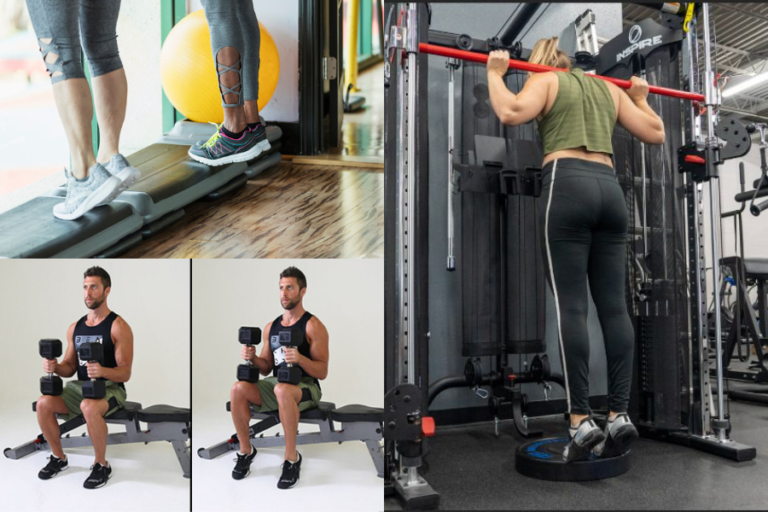
- Standing bodyweight calf raises. An ideal starting point that you can do anywhere. Stand on the floor or on a step, press through the balls of your feet, and rise up slowly.
- Single-leg calf raises. By placing your full body weight on one leg at a time, you greatly increase the demand. You can hold a wall or rail for balance and add a dumbbell when you are ready. A simple starting prescription is 2 sets of 15 reps per leg with about 30 seconds of rest.
- Standing weighted calf raises. Once bodyweight is easy, you can wear a belt with a kettlebell attached or hold weights in your hands while keeping your core engaged.
- Standing barbell calf raises. If you have experience with barbells, you can place the bar across your upper back and rise onto your toes. Using a stable block under your feet increases the range of motion, while going from the floor can help you practice balance.
No matter which version you choose, move in a controlled way and avoid bouncing. Your goal is to feel the calves doing the work from the bottom stretch to the top squeeze.
Seated calf raise variations
When you bend your knees, your gastrocnemius contributes less and your soleus works harder. This makes seated variations essential if you want complete development and stronger ankles.
Good options include:
- Chair or bench seated calf raises. Sit on a sturdy chair, place your feet flat on the floor, then lift your heels while keeping your knees roughly over your toes. You can place a heavy book or dumbbell on your thighs for added resistance.
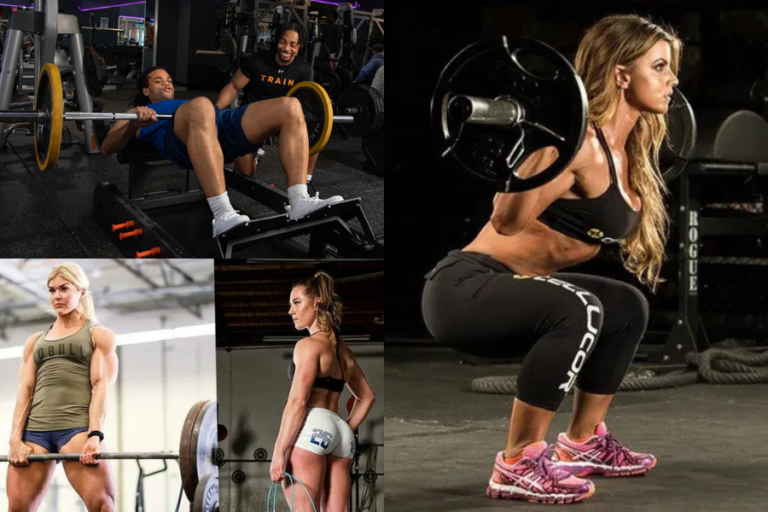
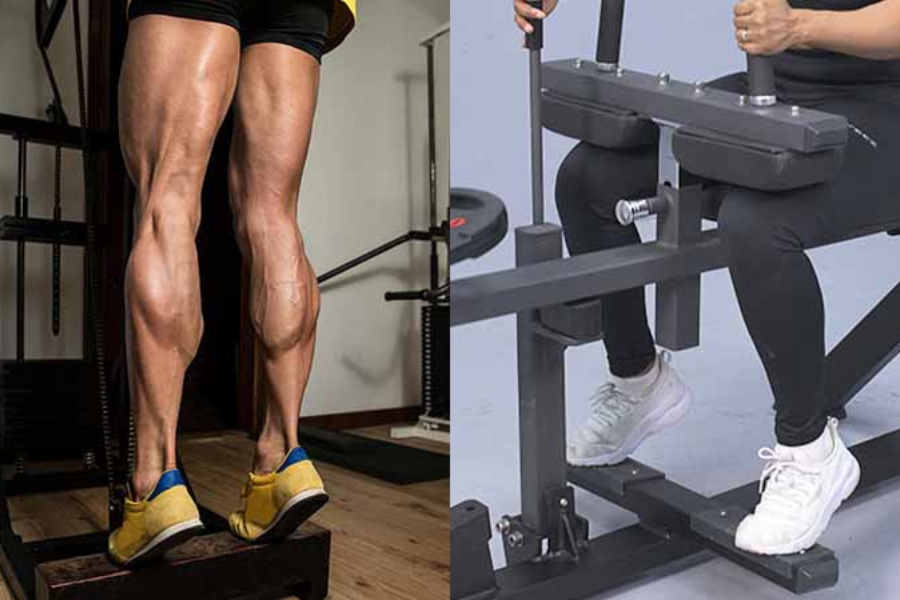
- Seated barbell calf raises. Sit on a bench with a barbell resting across your lower thighs. Beginners can start with no weight to master balance. A block or weight plate under your forefeet increases the stretch at the bottom.
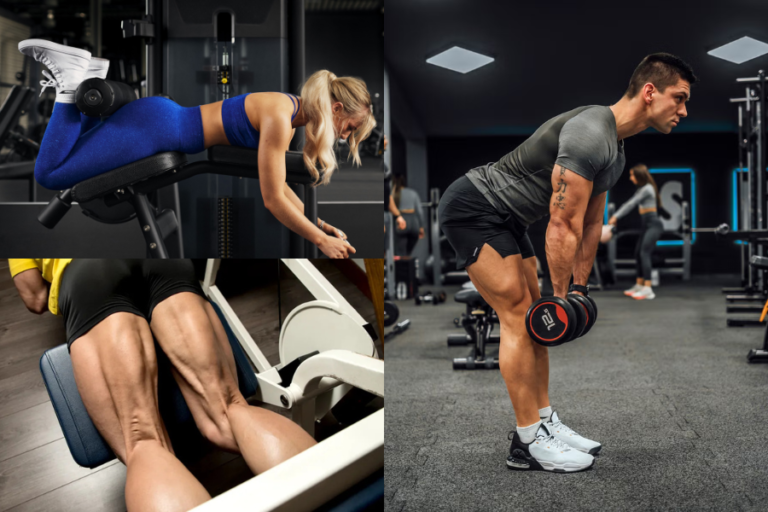
- Calf press on a machine. If your gym has a seated calf machine or leg press, you can position your feet on the lower edge of the platform and push through the balls of your feet to extend your ankles.
Aim to feel fatigue deep in the lower calf. Because these muscles are built for endurance, they often respond well to higher rep ranges.
Eccentric and loaded stretch work
An eccentric calf raise emphasizes the lowering portion of the movement. You rise up with both legs and slowly lower with one, or you use external weight and control the descent for 3 to 4 seconds.
Coaches at RP Strength note that holding a deep, slightly painful stretch at the bottom for up to 2 seconds can help with hypertrophy and joint health. However, this technique can create intense delayed onset muscle soreness, especially if you are not used to it, so start with low volume.
You can apply this approach to both standing and seated calf raises. Think of it as a way to safely lengthen the muscle under tension, not as an excuse to bounce or drop quickly.
Loaded carries and athletic movements
Not every effective calf exercise looks like a traditional raise. Two powerful options are:
- Tip toe farmer’s carry. Hold dumbbells or kettlebells at your sides, rise onto your toes, and walk slowly. This challenges your calves, ankles, and balance all at once.
- Squat into calf raise. Perform a bodyweight squat, then as you stand up, continue into a full calf raise. This connects your calves to the rest of your lower body pattern.
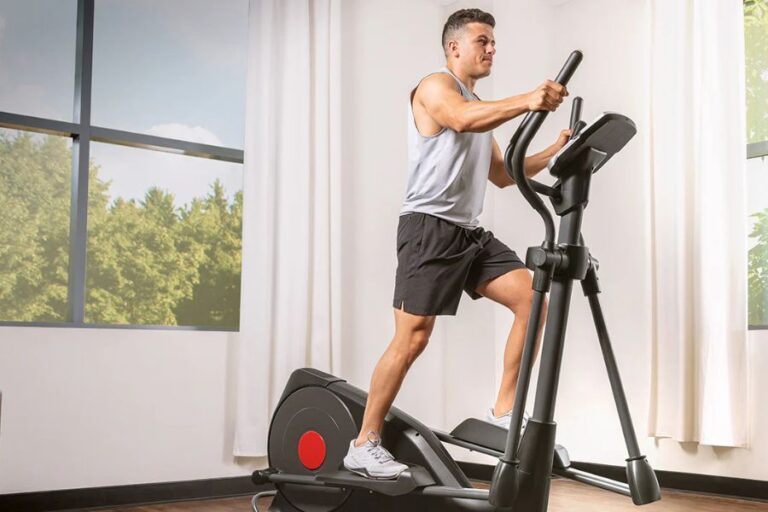
Calf-building sports such as uphill running, soccer, basketball, tennis, dance or step classes, and swimming also place heavy demands on your calves. Running and jumping sports ask your calves to absorb and produce force repeatedly, and swimming provides a low-impact way to keep them active during recovery or after minor injuries.
Structure your calf workouts for strength and size
Knowing the right moves is only half the story. To build both strength and size, you need to dial in frequency, volume, and rep ranges.
How often to train calves
Sports medicine physician Jordan D. Metzl, MD, recommends that runners perform calf strength training two to three times a week to keep shins, calves, and Achilles tendons healthy, as summarized in his work and in coverage from Runner’s World. That frequency also works very well if your main goal is muscle growth and general strength.
Because calves recover relatively quickly between sessions, many lifters can handle 3 to 6 calf workouts per week, from maintenance up to their maximum recoverable volume. You will need to adjust based on how you feel. If your performance drops session after session or you experience persistent soreness or tightness, dial back the number of sessions.
Sets, reps, and intensity
Calves respond well to a mix of rep ranges from about 5 to 30 reps per set, or roughly 30 to 85 percent of your one-rep max. In practice, that means you can organize your work this way:
- Use moderate reps, around 10 to 20 per set, for about half of your weekly sets.
- Fill in the rest with some lighter, higher rep work, 20 to 30 reps, and a smaller portion of heavier sets in the 5 to 10 range.
For most people, very heavy standing calf raises in the 5 to 10 rep range can create a lot of fatigue relative to their benefit, so keep those limited and focus more on moderate and high reps with controlled form.
Because your calves recover quickly between sets, you often only need short rests. As a simple rule, rest just long enough for the intense burning to subside and for your breathing to return closer to normal. For some, that can be as little as 30 to 60 seconds, although you can extend rest if your next set would otherwise suffer.
Foot position and knee angle tweaks
You can subtly shift where you feel the work by changing your knee and foot positions:
- Bent knee variations, such as seated calf raises, shift emphasis toward the soleus.
- Straight leg variations, such as standing calf raises, target the gastrocnemius.
Foot angle also helps you hit different parts of the gastrocnemius:
- Toes pointing forward, both heads share the workload.
- Toes slightly inward, you feel more in the outer (lateral) head.
- Toes slightly outward, you hit the inner (medial) head more.
One practical protocol is to perform 4 sets of a given exercise with 2 sets toes forward, 1 set toes inward, and 1 set toes outward. The angles do not need to be extreme. A small rotation is enough to create a different training stimulus.
Prevent injuries while you grow your calves
Because your calves play a central role in running and jumping, weak or overly tight muscles can raise your risk of Achilles issues, shin splints, and stress fractures. Dr. Jordan Metzl has noted that weak calves and imbalances in the hips and core can disrupt your running mechanics and put extra strain on your shins and tendons, as reported in Runner’s World.
You can lower your risk with a few consistent habits.
Prioritize regular stretching and mobility
After your calf workouts or cardio sessions, spend a few minutes on simple stretches:
- Wall calf stretch, standing facing a wall with one leg back and the heel pushed down
- Bent-knee calf or ankle stretch to reach the soleus more directly
- Foam rolling along the back of your lower leg for about one minute per side, focusing on tight or tender spots
These drills help maintain muscle suppleness, improve ankle flexibility, and support better movement mechanics. Increased ankle mobility is useful for everything from deeper squats to smoother running and higher jumps, as highlighted in a 2026 article by Muscle & Fitness that emphasizes the importance of the gastrocnemius and soleus for overall athletic movement.
Avoid overtraining and listen to your body
Although it is relatively hard to truly overtrain your calves, you can still push them past their current capacity with sudden jumps in volume, intensity, or impact. Watch for signs such as:
- Sharp pain rather than normal muscle soreness
- Swelling or warmth around the Achilles
- A feeling of weakness or giving way when you push off the ground
If you experience these, scale back your loading, add an extra rest day, and focus on gentle stretching and low-impact activities such as easy cycling or swimming. Calf strength will not disappear overnight, but a tendon injury can take a long time to heal.
Wear appropriate footwear
Shoes that match your activity can reduce stress on your calves and the rest of your lower legs. Look for:
- Adequate cushioning if you run or jump frequently
- Enough support for your arches and ankles
- A fit that feels secure but not restrictive
If you change from highly cushioned shoes to minimal shoes, or from a lot of heel lift to a very flat sole, do so gradually. Your calves and Achilles will need time to adapt to the new loading pattern.
Putting it all together
You do not need marathon gym sessions to get noticeable calf strength and size. A focused plan that combines standing and seated raises, occasional eccentric or loaded stretch work, and a few athletic variations will move you forward quickly.
As a simple template, you might:
- Train calves 2 to 3 times per week if you are a beginner, increasing toward 3 to 5 sessions only if your recovery is solid
- Pick 1 or 2 exercises per session, such as a standing raise plus a seated raise
- Perform 3 to 4 sets per exercise with 10 to 20 reps for most sets, plus some higher rep work when you are ready
- Rotate foot angles and knee positions over the week so you hit the entire triceps surae
Stay patient, track your progress, and pay attention to how your lower legs feel from day to day. Over a few consistent months, you will notice stronger, more defined calves that help power every step, jump, and workout you do.
About the Author