A smart hamstring workout for beginners can do more than just tighten the back of your legs. Strong, flexible hamstrings help you walk, run, squat, and bend your knees comfortably, and they protect your knees and lower back from strain. When you understand how these muscles work and how to train them safely, you get better results with less guesswork.
Below, you will find a simple, beginner friendly plan that builds strength, improves flexibility, and lowers your risk of pulled hamstrings, without taking over your whole week.
Understand your hamstrings first
Your hamstrings are a group of three muscles on the back of each thigh, the biceps femoris, semitendinosus, and semimembranosus. Together, they help you extend your hip and bend your knee, which is why you feel them when you hinge forward or pull your heel toward your glutes.
When your hamstrings are weak or tight, a few things often show up:
- You feel a dull achiness at the back of your thigh or just under your butt.
- You struggle to bend forward or reach your toes.
- Your knees feel cranky, especially if your quads are much stronger than your hamstrings.
An imbalance between tight hip flexors from sitting a lot and lengthened, weaker hamstrings is a common setup for pulled hamstrings and even back issues. A focused hamstring workout for beginners helps correct that imbalance.
Key principles for beginner hamstring training
Before you get into specific exercises, it helps to know how often and how hard to work.
Train both main movement patterns
For complete hamstring development, you want to train two patterns every week:
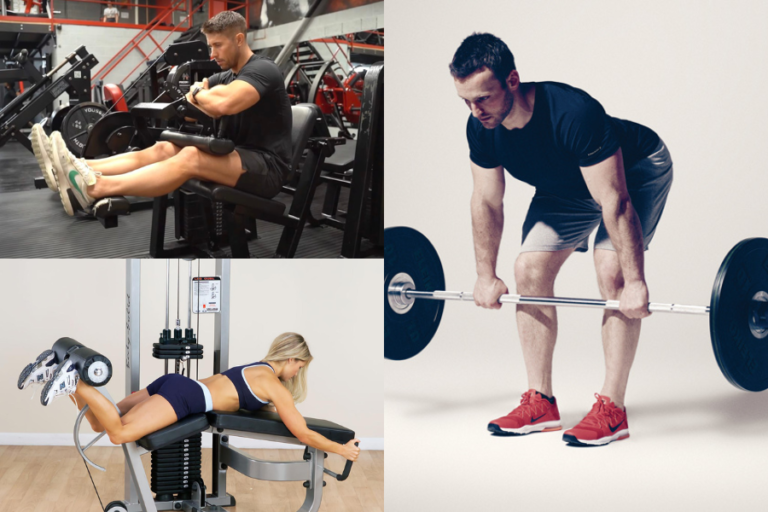
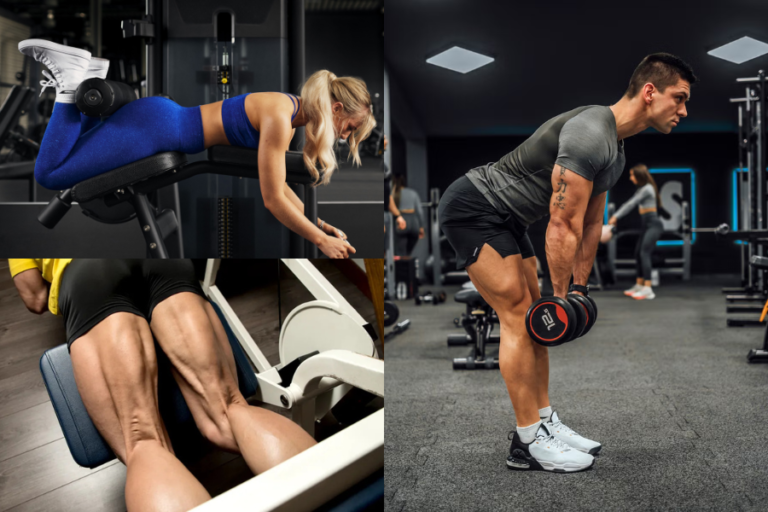
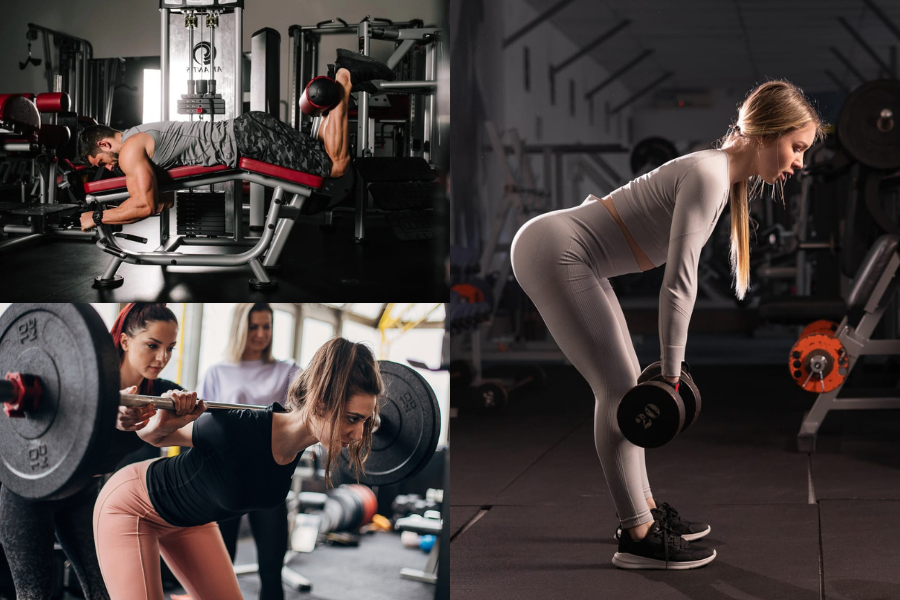
- Hip hinge movements such as Romanian deadlifts and good mornings
- Knee flexion movements such as leg curls or banded curls
These patterns target the hamstring complex through its full function, hip extension and knee flexion.
Keep volume and frequency beginner friendly
Hamstrings do not usually tolerate very high volume, especially when you are just starting. A good starting point is:
- 2 to 3 hamstring focused sessions per week
- 1 direct hamstring exercise per session
- 2 to 3 different hamstring exercises across the week, at least one hip hinge and one curl
Pay attention to lingering soreness, if your hamstrings are still very sore 48 hours later, reduce sets or cut back one session.
Choose smart weights and rep ranges
For hamstring strength and muscle gain, beginners typically do well with:
- 30 to 85 percent of your estimated one rep max
- 5 to 10 reps per set on hip hinges, because your back and grip fatigue first
- 10 to 30 reps per set on leg curls, with a sweet spot around 10 to 20 reps
Stay in control of the weight at all times. If you have to swing or bounce to complete a rep, it is too heavy for now.
Warm up your hamstrings the right way
A good warm up does three things, increases mobility, activates the muscles, and wakes up your nervous system so you can move powerfully and safely. This is especially important before sprinting, squatting, or any heavy lower body work.
You can use this simple sequence before each hamstring workout for beginners:
-
Dynamic mobility, 3 to 5 minutes
Think of these as moving stretches. Try hamstring sweeps, alternating high kicks, or gentle single leg Romanian deadlifts without weight. Move slowly and stay in a comfortable range. -
Activation with bands, 2 sets of 6 to 10 reps
Use a light resistance band for slow, controlled hamstring curls. Focus on both directions of movement, curling the heel in and resisting as you straighten the leg. This gives you both concentric and eccentric work. -
Nervous system primer, 1 to 2 short drills
Add low level drills like marching in place, standing hip hinges, or bodyweight good mornings. The goal is to feel “switched on,” not tired.
You can layer in foam rolling at the start or end of your workout. Rolling each hamstring for 3 to 5 minutes total and focusing on tight spots for around 30 seconds can increase flexibility and reduce soreness when combined with movement, rather than used alone.
Essential beginner hamstring exercises
The most effective hamstring workout for beginners does not require a gym full of equipment. These basic moves are accessible at home or in a fitness center and cover both main hamstring functions.
Glute bridge
Glute bridges are a gentle way to activate both glutes and hamstrings.
- Lie on your back, knees bent, feet flat and hip width apart.
- Press through your heels to lift your hips until your body forms a straight line from shoulders to knees.
- Pause for a second at the top, then lower with control.
You can progress by adding a pause at the top, slowing the lowering phase, placing a band above your knees, or adding a dumbbell across your hips. This move trains hip extension from a more shortened hamstring position, which supports your entire posterior chain.
Single leg Romanian deadlift
The single leg RDL builds strength, balance, and hamstring awareness. It is one of the top beginner friendly hamstring builders.
- Stand tall on one leg, with a slight bend in the knee.
- Hinge at your hip, sending your free leg back as your torso tips forward.
- Stop when you feel a stretch in the back of your standing leg, then return to standing by driving your hips forward.
A common beginner prescription is 2 sets of 10 reps per leg with about 30 seconds rest. Start with bodyweight, then hold a light dumbbell or kettlebell in the opposite hand as you get comfortable.
Good morning
Good mornings train your hamstrings in a lengthened position and teach proper hip hinge mechanics.
- Stand with feet hip width apart, hands on your hips or lightly holding a dowel across your upper back.
- Soften your knees and hinge forward at the hips, keeping your back flat.
- Move only as far as you can while maintaining a neutral spine and a strong stretch in the hamstrings, then return to standing.
Focus on pushing your hips back rather than bending your spine. This pattern will carry over to deadlifts and everyday bending tasks.
Banded or stability ball leg curl
Knee flexion exercises directly target the hamstrings’ curling function. You can mimic a leg curl machine at home with bands or a physio ball.
For a banded leg curl:
- Anchor a band low, loop it around your ankles, and lie face down.
- Start with legs straight, then curl your heels toward your glutes.
- Squeeze at the top and lower slowly back to the start.
For a physio ball leg curl:
- Lie on your back with your heels on a stability ball.
- Lift your hips into a bridge, then curl the ball toward you with your heels.
- Extend your legs again while keeping your hips raised.
The physio ball version also challenges your core and glutes, which helps overall lower body stability.
Beginner friendly stretches and recovery
Finishing your session with static stretching and light recovery work helps maintain flexibility and ease stiffness. Simple options include:
- Supine hamstring stretch with a strap or towel
- Seated hamstring stretch
- Standing single leg hamstring stretch
Hold each for 20 to 30 seconds and repeat 2 to 3 times per side. Foam rolling after your workout for 2 sets of about 20 seconds per hamstring, with 30 seconds rest, can further reduce spasms and improve blood flow.
A simple 2 day beginner hamstring plan
You can plug these exercises into your week without turning your life upside down. Here is a sample structure that balances strength, flexibility, and recovery.
Aim to leave each workout feeling like you could do a little more, not like you have nothing left.
Day 1: Hip hinge focus
- Warm up, dynamic mobility, band curls, light drills
- Single leg Romanian deadlift, 2 to 3 sets of 8 to 10 reps per leg
- Glute bridge, 2 to 3 sets of 10 to 15 reps
- Static hamstring stretch, 2 to 3 positions, 20 to 30 seconds each
Day 2: Curl and stability focus
- Warm up in the same way as Day 1
- Banded or physio ball leg curl, 2 to 3 sets of 10 to 20 reps
- Good morning, 2 to 3 sets of 8 to 12 reps
- Foam rolling and static stretching, 3 to 5 minutes total
Space these days at least one day apart. For example, train Monday and Thursday, or Tuesday and Friday. If your hamstrings feel very sore, add an extra rest day before the next session.
Technique tips that protect your hamstrings
Good form matters more for your hamstrings than how much weight you lift. These small cues make a big difference.
- Use a full but comfortable range of motion. On hip hinges, bend at the hips until you feel a stretch without rounding your back. On curls, start with knees straight and pull the pad or band all the way toward your glutes.
- Move with control. Fast, bouncy reps reduce the work your hamstrings actually do and raise your injury risk. Take about 2 seconds to lift and 2 to 3 seconds to lower.
- Keep your knees soft, not locked. Straightening your legs completely during hinges shifts stress to your joints instead of your muscles.
- Progress gradually. When an exercise feels easy across all sets and reps with perfect form, add a small amount of weight or a few reps next time.
As you get stronger, you can experiment with more advanced techniques like slower eccentrics, pauses, or additional sets, but as a beginner your main goal is consistent, technically sound work.
When to ease up and when to push
Soreness is common when you first start a hamstring workout for beginners, especially in the 24 to 48 hours after training. This should feel like a dull ache, not sharp pain. If you notice:
- Sudden, sharp pain during an exercise
- Swelling or bruising in the back of the thigh
- Pain that makes walking difficult
Stop and consult a healthcare professional. Pulled hamstrings are often linked to tight hip flexors and long, weak hamstrings from too much sitting, so pushing through sharp pain is not worth the risk.
On the other hand, to build real strength over time you eventually need to work close to fatigue, especially on safe, supported exercises like leg curls. As your confidence grows, let your last 2 to 3 reps of a set feel challenging, while always keeping your form intact.
Putting it all together
If you are consistent, a basic hamstring workout for beginners can quickly translate into stronger, steadier legs and fewer annoying tugs in the back of your thighs. Start with two sessions per week, include both a hip hinge and a curl across those days, warm up thoroughly, and give equal attention to controlled reps and gentle stretching.
Pick one exercise from this guide to try in your next lower body workout, such as glute bridges or banded leg curls, and notice how much more connected and stable your legs feel afterward.
About the Author