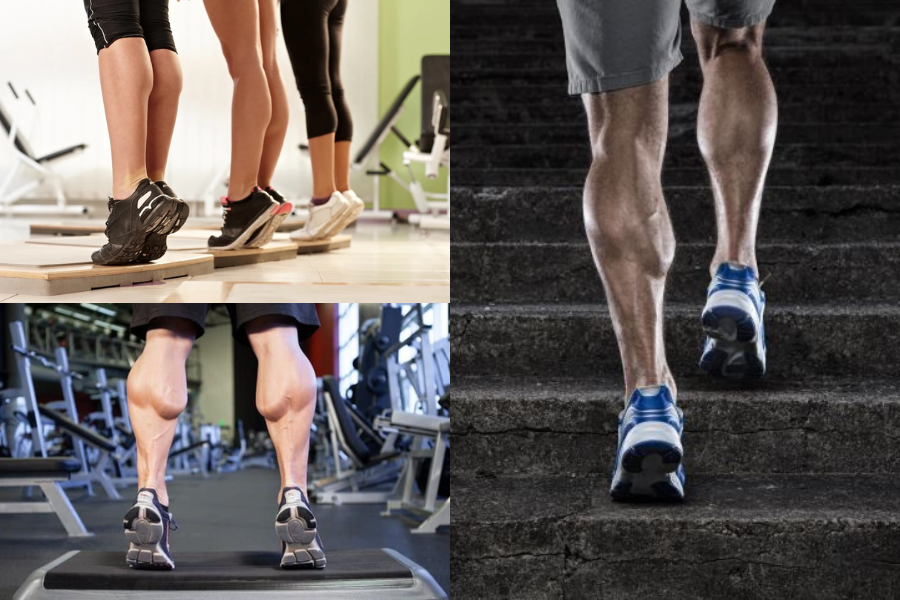
A strong, stable ankle starts higher up the leg than you might think. Targeted calf workouts for ankle strength help you walk, run, and jump with more confidence, while also lowering your risk of sprains and nagging Achilles issues.
Below, you will find practical exercises and simple progressions you can start today, even if you are new to strength training or returning after an injury.
Understand how your calves support your ankles
Your calf is made up of two main muscles: the gastrocnemius (the one you see when you flex your calf) and the deeper soleus. Together they control plantar flexion, which is the movement of pointing your toes down and pushing the ground away when you walk, run, or climb stairs.
When these muscles are strong and flexible, they help your ankle:
- Absorb impact during daily movements
- Stay stable on uneven ground
- Handle quick changes in direction without rolling or twisting
Physical therapists note that strong calves can reduce the risk of ankle sprains and support the Achilles tendon, which takes on high loads during sports that involve sprinting or jumping. Over time, this also supports your knees and hips by improving your overall gait and alignment.
Warm up before calf and ankle work
A short warmup prepares your muscles and joints so your calf workouts for ankle strength feel smoother and safer.
Simple warmup routine
Spend 5 to 10 minutes on low impact movement. You could:
- Walk at a comfortable pace
- Cycle gently on a stationary bike
- March in place if you are at home
Gradual movement and strength work is especially important if you are recovering from a calf or ankle problem, because it supports tissue healing and helps you regain mobility.
If your ankles feel stiff, finish your warmup with 30 to 60 seconds of easy ankle circles in both directions. Keep the motion small and controlled.
Start with self‑myofascial release
Before you load your calves, it helps to loosen tight spots. Self‑myofascial release with a foam roller or massage ball can increase mobility and may reduce your risk of future calf and ankle injuries.
How to foam roll your calves
- Sit on the floor with your legs straight and the foam roller under one calf.
- Place your hands slightly behind you for support.
- Lift your hips a little and slowly roll from the back of your ankle to just below your knee.
- Pause on any tender areas for 15 to 20 seconds and breathe.
- Switch legs and repeat.
Spending 1 to 2 minutes per calf is usually enough to feel looser without overdoing it. This gentle prep makes your strengthening exercises more effective.
Build strength with basic calf raises
Calf raises are the foundation of most calf workouts for ankle strength. They strengthen the muscles just above your ankle, which in turn support the joint and improve lower body mobility.
Double‑leg calf raise on the floor
This is a good starting point if you are new to strength training or easing back after an injury.
- Stand tall with your feet hip width apart and fingertips lightly resting on a wall, counter, or chair for balance.
- Slowly lift your heels as high as you comfortably can so you come onto the balls of your feet.
- Pause for 1 second at the top.
- Lower your heels back down in a controlled way.
Aim for 2 to 3 sets of 10 to 15 repetitions. Move slowly so your calves, ankles, and Achilles tendon can handle the load without straining.
Monitor your pain level as you work. Guidance from rehabilitation services suggests keeping discomfort in the 0 to 5 range on a 0 to 10 scale. Mild soreness is acceptable with new exercises, but your pain should not spike during or the day after your workout.
Progress to step calf raises
When floor calf raises start to feel easier, you can increase the challenge and improve ankle control by using a small step or sturdy platform.
Cleveland Clinic recommends standing calf raises on a step to build ankle strength. This type of controlled heel raise improves ankle stability and calf strength and can be done once a day for 10 repetitions.
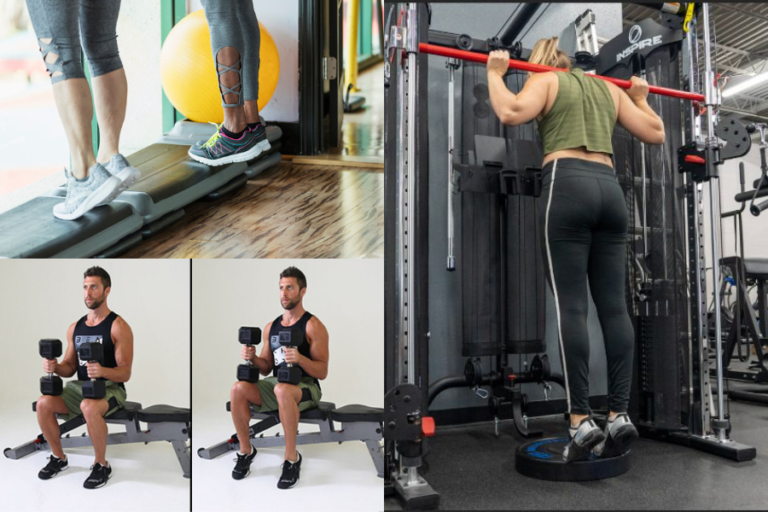
Standing calf raise on a step
- Stand on the edge of a step or low platform with your heels hanging slightly off, holding a railing or countertop for support.
- Keep your feet hip width apart and your weight evenly distributed.
- Slowly rise up onto your toes as high as you can.
- Pause for a second, then lower your heels until they are just below the step, feeling a gentle stretch.
Keep the movement controlled in both directions. This version encourages full range of motion, which helps your calves absorb force and support your ankles.
Start with 1 to 2 sets of 10 to 12 repetitions. Over time you can work toward 2 to 3 sets of 15.
Add single‑leg calf raises for stability
Once you feel steady with both feet on the step, you can shift to single‑leg work. This is where ankle stability and balance really improve.
Single‑leg calf raises ask your ankle to stay aligned while your entire body weight is on one leg. That trains the small stabilizing muscles around the joint and helps you move more confidently when you walk, run, or climb stairs.
How to do a single‑leg calf raise
- Stand near a wall or sturdy surface and place one fingertip on it for light balance help.
- Lift one foot off the ground so all your weight is on the standing leg.
- Slowly raise your heel as high as you can, keeping your knee straight.
- Pause briefly at the top.
- Lower your heel back down with control.
Begin on flat ground. When that feels steady, you can try single‑leg calf raises on a step.
Aim for 2 sets of 8 to 12 repetitions per leg. If you wobble at first, that is normal. Focus on slow, smooth movement instead of speed.
Target the soleus with bent‑knee raises
Your deeper soleus muscle works hard whenever your knee is bent, such as when you walk up hills or climb stairs. Strengthening it is especially useful for ankle strength and Achilles tendon resilience.
Hinge Health physical therapists recommend the soleus raise, a calf raise done with bent knees, to target this important stabilizer muscle.
Bent‑knee (soleus) calf raise
- Stand with your feet hip width apart and lightly hold a counter or wall.
- Bend your knees slightly, as if you are starting to sit into a small squat. Keep your heels on the floor.
- From this bent‑knee position, lift your heels so you rise onto the balls of your feet.
- Pause for a second, then lower your heels slowly while keeping your knees bent.
You can do this with both legs together or, when you are ready, one leg at a time.
Aim for 2 to 3 sets of 10 to 15 repetitions. Because the soleus works more in daily life when your knee is bent, this exercise can translate directly into stronger, more stable steps.
Include seated heel raises on lighter days
On days when your ankles feel tired or you want a gentler option, seated heel raises are a helpful addition.
How to do seated heel raises
- Sit in a chair with your feet flat on the floor and knees at a 90 degree angle.
- Keep your toes and the balls of your feet on the ground.
- Lift both heels up as high as you comfortably can.
- Lower slowly back down.
This variation still works your calves and Achilles tendon but with less load than standing exercises. You can start with 2 sets of 10 to 15 repetitions.
Seated heel raises fit well into early rehab stages or desk breaks if you sit for long periods.
Strengthen your ankle with control exercises
Calf strength is one part of the equation. Specific ankle movements teach your joint to move smoothly and handle load in different directions.
Exercises like ankle bends and tilts help train the muscles and tendons around the joint without heavy impact.
Basic ankle control moves
Try these simple options, especially if you are recovering from an injury or want to build a foundation:
- Ankle bends: Sit or lie down with your leg out straight. Point your toes away from you, then pull them back toward your shin. Move slowly and within a comfortable range.
- Ankle tilts: From the same position, gently roll your foot so the sole turns inward, then outward, without forcing the motion.
NHS Inform suggests starting with 2 to 3 repetitions of these types of movements several times a day, then gradually increasing the number of reps every few days until you reach about 2 sets of 15.
Stretch your calves to keep ankles mobile
Strength work is only half of effective calf workouts for ankle strength. Stretching the calf muscles helps maintain ankle range of motion and flexibility so you can move freely and reduce stiffness.
Standing calf stretch for the gastrocnemius
- Stand facing a wall and place your hands on it for support.
- Step one leg back and keep that back knee straight, with your heel on the floor.
- Bend your front knee and lean gently toward the wall until you feel a stretch in the upper calf of the back leg.
- Hold for 20 to 30 seconds.
- Switch legs and repeat.
Aim for 2 to 3 repetitions per leg, 2 to 3 times a day if your calves feel tight.
Standing soleus stretch
To reach the deeper soleus:
- Stand close to a wall with one foot back.
- This time, bend both knees while keeping your back heel on the ground.
- Lean slightly forward until you feel a stretch lower in the back of your leg, closer to the Achilles.
- Hold for 20 to 30 seconds and repeat 2 to 3 times per leg.
You can also deepen these stretches using a towel or resistance band looped around the ball of your foot. Gently pulling the towel toward you increases the stretch along the calf and Achilles tendon.
Know how much is enough
It is tempting to push hard when you are motivated, but your ankles respond best to steady, gradual progress.
A practical approach is:
- Start with 2 to 3 repetitions of gentle rehab type exercises, such as ankle bends, if you are recovering.
- Gradually increase by a few repetitions every few days.
- Work toward 2 sets of 15 repetitions for most strengthening exercises, as suggested for early rehab progressions.
Pay attention to your pain levels. Some mild discomfort is common when you challenge your muscles in new ways. If pain rises above a 5 out of 10, or feels worse the next day, ease back by reducing your range of motion, sets, or frequency.
A simple rule of thumb: your exercises should feel challenging, but not punishing. Your ankles should feel steadier over time, not more fragile.
Put it all together into a simple routine
Here is one way to combine these exercises into a short, effective plan:
- Warmup: 5 to 10 minutes of walking or gentle cycling.
- Foam roll calves: 1 to 2 minutes per leg.
- Strength
- Double‑leg calf raises on the floor or a step: 2 to 3 sets of 10 to 15.
- Single‑leg calf raises (when ready): 2 sets of 8 to 12 per leg.
- Bent‑knee (soleus) calf raises: 2 to 3 sets of 10 to 15.
- Optional accessory
- Seated heel raises or simple ankle bends and tilts, especially if you are rebuilding strength.
- Stretch
- Standing calf stretch and soleus stretch: 2 to 3 holds of 20 to 30 seconds per leg.
Perform this routine 2 to 3 times per week, with at least one rest day between sessions to let your muscles and tendons recover. On off days, shorter stretching and light ankle control work can keep you feeling mobile without overloading your calves.
With consistent effort, you will likely notice steadier ankles, smoother walks and runs, and more confidence on stairs, curbs, and trails.
About the Author