Understand intermittent fasting and inflammation
If you have heard that intermittent fasting can calm inflammation, you might be wondering what that really means for your body. In simple terms, inflammation is your immune system in action. It helps you fight infections and heal injuries, but when it stays turned on at a low level all the time, it can contribute to problems like obesity, type 2 diabetes, heart disease, and some autoimmune conditions.
Intermittent fasting, or cycling between periods of eating and not eating, may help reduce certain inflammatory markers in your blood. The research is still evolving, but there are some promising findings that can help you decide whether intermittent fasting and inflammation benefits might be worth exploring for your health and weight goals.
What inflammation actually is
Before you look at how fasting affects inflammation, it helps to know what is going on under the surface.
Acute vs chronic inflammation
You deal with two main types of inflammation:
-
Acute inflammation
This is the short-term kind. You cut your finger, twist an ankle, or catch a cold, and your immune system quickly reacts. You get redness, swelling, warmth, or pain. Once the problem is handled, things settle back to normal. -
Chronic low-grade inflammation
This is quieter and more persistent. You do not usually feel it directly, but blood tests can show higher levels of certain inflammatory markers. Over time, this slow burn can damage tissues and raise your risk for conditions like: -
Obesity and insulin resistance
-
Type 2 diabetes
-
Heart disease
-
Some autoimmune and neurodegenerative diseases
Key inflammatory markers researchers measure
When scientists study intermittent fasting and inflammation, they usually look at specific molecules in your blood, such as:
- C-reactive protein (CRP)
- Tumor necrosis factor alpha (TNF-α)
- Interleukin-6 (IL-6)
- Leptin (a hormone linked to appetite and inflammation)
- Adiponectin (often considered anti-inflammatory)
Changes in these markers give clues about whether a diet or lifestyle shift is calming or stirring up inflammation.
How intermittent fasting works
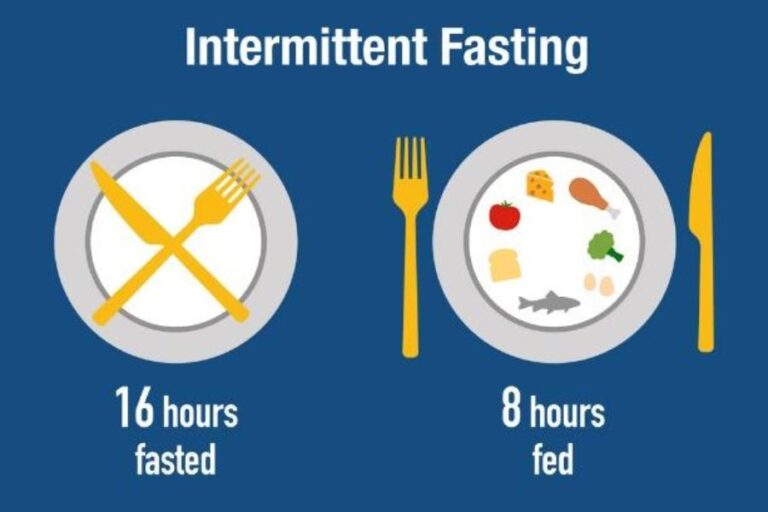
Intermittent fasting is any pattern where you limit when you eat instead of simply what you eat. You still focus on overall nutrition, but timing becomes part of the strategy.
Common intermittent fasting styles
Here are some of the most studied approaches:
-
Time-restricted eating (TRE) / time-restricted feeding (TRF)
You eat all your meals within a set window each day, such as: -
10-hour window, like 8 a.m. to 6 p.m.
-
8-hour window, like 10 a.m. to 6 p.m.
-
6-hour window, such as 12 p.m. to 6 p.m.
-
Alternate day fasting (ADF)
You alternate between: -
Days of normal eating
-
Days of very low calorie intake or complete fasting
-
5:2 diet
You eat normally 5 days a week and have 2 non-consecutive days of significant calorie reduction.
All of these patterns create longer stretches of time when you are not eating, which seems to trigger certain metabolic and cellular changes, including ones that affect inflammation.
What the science says about fasting and inflammation
Research on intermittent fasting and inflammation has grown quickly over the past few years. The picture is not perfectly clear yet, but there are several consistent findings worth noting.
A closer look at inflammatory markers
A 2024 systematic review and meta-analysis of 21 studies with 839 adults found that intermittent fasting produced small but statistically significant improvements in several inflammatory markers (Nutrients). Compared to control groups, intermittent fasting:
- Reduced TNF-α
- Reduced CRP
- Reduced leptin
- Did not significantly change IL-6 or adiponectin
Time-restricted feeding stood out in this review as especially helpful for lowering TNF-α and leptin, while the 5:2 diet ranked highest for reducing CRP, although some of these differences did not reach strong statistical significance (Nutrients).
This suggests that when you adopt an intermittent fasting routine, your body may gradually shift toward a lower inflammatory state, especially if you stay consistent over several weeks.
Intermittent fasting, weight loss, and inflammation
Some of the impact of intermittent fasting on inflammation seems to be tied to weight loss, especially loss of visceral fat, which is the fat stored deep in your abdomen around your organs. That fat is metabolically active and can drive chronic inflammation.
A review of human trials up to 2023 found that:
-
Time-restricted eating with 4 to 10 hour eating windows usually led to about 1 to 5 percent weight loss, along with 11 to 13 percent reductions in visceral fat, but did not significantly change CRP, TNF-α, or IL-6 in adults with obesity (Frontiers in Nutrition).
-
Alternate day fasting produced 5 to 12 percent weight loss over 8 to 24 weeks. Reductions in CRP were most consistent when weight loss exceeded 6 percent. TNF-α and IL-6 often did not change much, even with weight loss (Frontiers in Nutrition).
Altogether, this suggests that:
- Modest weight loss can help your inflammatory markers,
- Larger and longer-term weight loss may have a stronger effect,
- And fasting is one method, but not the only method, to reach that point.
A new mechanism: arachidonic acid and the inflammasome
More recent research has started to unpack how intermittent fasting might calm inflammation at the cellular level, beyond basic weight loss.
In a 2024 study, researchers funded by the National Heart, Lung, and Blood Institute asked 21 volunteers to fast for 24 hours between meals. They found that fasting increased blood levels of a fatty acid called arachidonic acid (NHLBI).
Laboratory experiments showed that arachidonic acid can:
- Suppress the NLRP3 inflammasome, a protein complex that triggers inflammation.
- Reduce inflammasome-induced inflammatory responses in immune cells (NHLBI).
Scientists at the University of Cambridge reported similar findings, noting that:
- A 24-hour fast raised arachidonic acid levels,
- Levels dropped again after participants ate,
- Arachidonic acid, once thought mainly to promote inflammation, actually inhibited the NLRP3 inflammasome in their experiments (University of Cambridge).
This gives a possible explanation for how intermittent fasting might help protect against chronic inflammation even before large weight changes occur. It also hints that the effects might overlap with some non-steroidal anti-inflammatory drugs, such as aspirin, which may increase arachidonic acid levels by slowing its breakdown (NHLBI).
Intermittent fasting and autoimmune conditions
If you are managing an autoimmune disease, you might be especially interested in the connection between intermittent fasting and inflammation.
A 2023 review that looked at multiple studies found that intermittent fasting can:
- Modulate the immune system,
- Improve gut microbiota,
- And enhance autophagy, a cellular clean-up process that helps control inflammation (PubMed).
These mechanisms may support better control of inflammatory processes in conditions such as:
- Type 1 diabetes
- Rheumatoid arthritis
- Systemic lupus erythematosus
However, for some diseases, like multiple sclerosis and psoriasis, the evidence is still limited and somewhat inconclusive. Overall, the authors emphasized that more research is needed to define the safest and most effective intermittent fasting protocols for autoimmune disease management (PubMed).
If you have an autoimmune condition, it is especially important to:
- Talk with your healthcare team before changing your eating pattern.
- Watch for any changes in medication needs, energy, or symptoms.
- Make sure you are still getting enough calories and nutrients.
Benefits and limits of fasting for inflammation
Intermittent fasting and inflammation are closely linked in current research, but it is helpful to know both the upsides and the limits of what we know so far.
Potential benefits you might see
Based on current studies, here are some possible benefits:
-
Lower TNF-α and CRP
These changes suggest a shift toward less systemic inflammation, especially with consistent fasting patterns over several weeks (Nutrients). -
Reduced leptin levels
Since high leptin is connected to both higher body fat and inflammation, lowering leptin may help with low-grade inflammatory states related to obesity (Nutrients). -
Improved visceral fat levels
Intermittent fasting can help you lose visceral fat, which may in turn reduce inflammation, especially if your weight loss is more than modest (Frontiers in Nutrition). -
Cellular level benefits
The increase in arachidonic acid during fasting and the suppression of the NLRP3 inflammasome point to deeper protective effects on chronic inflammation (NHLBI, University of Cambridge).
Important limitations to keep in mind
At the same time, current research has some clear boundaries:
-
Studies are often small and short-term
Many trials last 8 to 24 weeks and include relatively small groups of participants. -
Not all markers change
IL-6 and adiponectin often stay the same, even when CRP or TNF-α improve (Nutrients). -
Results are not identical for everyone
Your age, baseline health, medication use, and actual food choices during eating windows all play a role. -
Fasting is not a replacement for medical treatment
Intermittent fasting might support your health plan, but it does not take the place of prescribed medications or other therapies.
Choosing a fasting approach that fits you
If you want to see whether intermittent fasting helps your inflammation and weight, it is best to start with a style that feels realistic in your daily life.
Compare common intermittent fasting patterns
| Fasting style | Typical pattern | Possible inflammatory impact* | Best for you if you… |
|---|---|---|---|
| Time-restricted eating | Daily 8 to 10 hour eating window | Good evidence for lowering TNF-α and leptin | Prefer consistent daily routines |
| 5:2 diet | 2 low-calorie days, 5 regular days each week | May reduce CRP, though results are mixed | Want flexibility most days of the week |
| Alternate day fasting | Fast or eat very few calories every other day | Can drive more weight loss, CRP reductions when weight loss is >6% | Are comfortable with more intense fasting patterns |
*Based on current short-term research, not guaranteed results for every person.
Practical tips for getting started
If your main goals are weight loss and reducing inflammation, you might:
-
Begin with gentle time-restricted eating
Try a 12-hour eating window at first, for example 8 a.m. to 8 p.m., then gradually shorten to 10 or 8 hours if you feel well. -
Focus on what you eat as well as when
During your eating window, emphasize:
-
Vegetables and fruits
-
Whole grains or other high fiber carbohydrates
-
Lean proteins
-
Healthy fats like olive oil, nuts, and seeds
A high-calorie, highly processed diet can still drive inflammasome activity, even if you are fasting at other times (University of Cambridge).
-
Stay hydrated
Drink water, unsweetened tea, or black coffee during fasting periods, unless your healthcare provider advises otherwise. -
Watch how you feel
Track your:
-
Energy levels
-
Sleep quality
-
Mood and focus
-
Digestive comfort
If you notice dizziness, extreme fatigue, or other concerning symptoms, adjust your plan or check in with a medical professional.
- Be patient with results
Most studies measure changes after several weeks, not days. Give your body time to adapt before you decide whether intermittent fasting is helping you.
Who should be cautious about intermittent fasting
Intermittent fasting is not the right fit for everyone. You should talk with your doctor or a registered dietitian before trying it if you:
- Have diabetes or take blood sugar medications
- Take medications that need to be taken with food at specific times
- Have a history of eating disorders or disordered eating
- Are pregnant, trying to conceive, or breastfeeding
- Have very high training demands as an athlete
- Are underweight or recovering from serious illness or surgery
In these situations, changes to when and how you eat need closer supervision to avoid side effects.
How to talk with your doctor about fasting and inflammation
If you would like to explore intermittent fasting for inflammation and weight loss, you can bring the topic to your next medical appointment. A simple way to start the conversation is to:
- Share your goals, such as improving your blood markers or reducing medications over time.
- Ask whether your current health conditions or medications make fasting risky.
- Discuss which style of intermittent fasting might be safest for you.
- Request baseline blood tests like CRP or other markers, if appropriate, so you can track changes over time.
Your care team can help you adjust your plan, especially if you see changes in blood pressure, blood sugar, or other key numbers.
Key takeaways
Intermittent fasting and inflammation are connected in several promising ways, even though the science is still catching up to the popularity of fasting. Here is what you can take with you:
- Intermittent fasting can modestly reduce some inflammatory markers, especially TNF-α, CRP, and leptin in adults, according to recent reviews (Nutrients).
- Time-restricted eating and the 5:2 diet show particular potential, while alternate day fasting may offer stronger effects tied to greater weight loss (Frontiers in Nutrition).
- New research suggests fasting raises arachidonic acid and suppresses the NLRP3 inflammasome, which may help protect against chronic inflammation and related diseases (NHLBI, University of Cambridge).
- Intermittent fasting is not a cure, and it should not replace medical treatment, but it can be a useful tool alongside a nutrient-dense diet, activity, and other lifestyle changes.
You do not have to overhaul your entire routine overnight. You might simply tighten your evening eating window this week, pay attention to how you feel, and talk with your healthcare provider about whether a more structured fasting plan could be a good next step for your weight and long-term health.
About the Author