Why shoulder strength matters for athletes
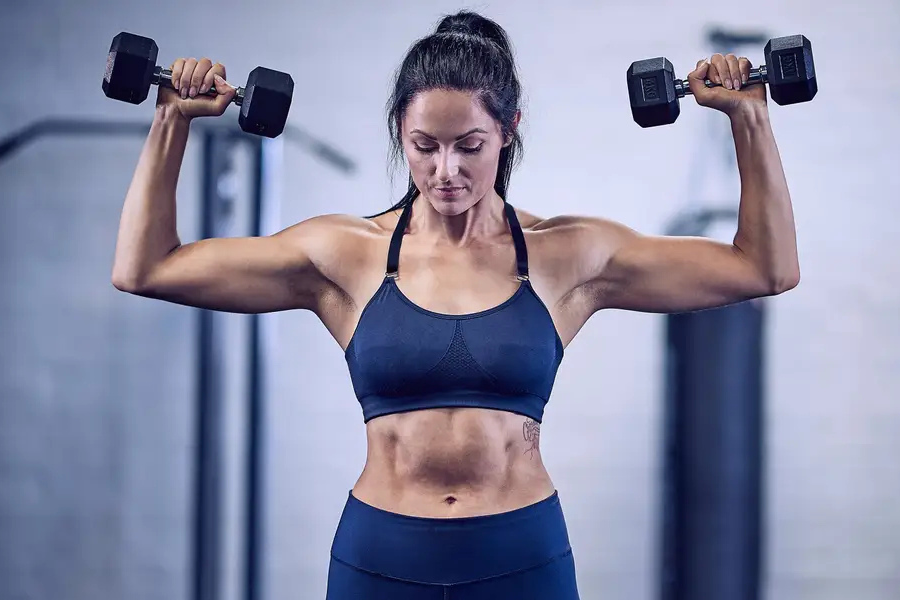
If you play a sport that involves throwing, serving, or lifting your arms overhead, a smart shoulder workout for athletes can change how you feel and perform. Your shoulder is one of the most mobile joints in your body, which is great for power and reach but also makes it more vulnerable to injury.
Common issues like impingement, rotator cuff strains or tears, tendinitis, and labral instability often trace back to the same problems: overuse, poor posture, or weak supporting muscles around the joint. The good news is that you can improve shoulder stability, strength, and mobility with a focused routine that fits into your current training.
The workout below is built around what research supports for overhead athletes:
- Strong rotator cuff and scapular (shoulder blade) muscles
- Good control through your full range of motion
- Progressive loading that prepares you for the demands of your sport
Use this as a guide, then adjust reps and volume to your current level and schedule.
Key muscles to target in your shoulder workout
You will get the most out of your shoulder workout for athletes if you train more than just the “mirror” muscles. Instead of only hitting your deltoids, you will focus on the small stabilizers that keep your shoulder healthy and powerful.
Rotator cuff
These small muscles wrap around your shoulder joint and help center the ball in the socket when you throw, lift, or swim:
- Supraspinatus
- Infraspinatus
- Teres minor
- Subscapularis
They control internal and external rotation of your shoulder and are essential for decelerating your arm after a throw or swing. Weak rotator cuff muscles often show up as soreness in the front or side of the shoulder.
Scapular stabilizers
These muscles control how your shoulder blade moves on your rib cage. When they are strong and coordinated, your arm has a solid base to move from:
- Mid and low trapezius
- Rhomboids
- Serratus anterior
If these muscles are undertrained, you may see your shoulder blades wing out or shrug upward during overhead movements, which can increase your risk of impingement and rotator cuff problems.
Why mobility matters too
Improving shoulder mobility is just as important as building strength. Adequate range of motion, especially in internal and external rotation, helps reduce strain on your tissues and allows smoother, more efficient movement patterns.
A 2022 study on professional water polo players found that a six week mobility and strength program significantly improved glenohumeral (shoulder) range of motion in both shoulders, with median increases of over 15 degrees in each arm. However, strength did not improve much, likely because the program intensity was too low. This highlights two key points:
- Targeted work can improve mobility
- You still need enough load to build strength
In your own training, you will want a blend of controlled mobility work and progressively heavier strengthening.
How to use this shoulder workout
You can plug this shoulder workout for athletes into your routine in a few ways:
- In-season: 1 to 2 times per week, lower volume, focus on quality and control
- Off-season: 2 to 3 times per week, moderate volume, gradually increase loads
- As rehab or prehab: follow your physical therapist’s recommendations, and keep the focus on pain-free movement and good technique
Aim to keep the whole session in the 20 to 40 minute range, depending on your schedule and whether you add it before or after other training.
General guidelines
- Warm up your shoulders with 5 to 10 minutes of light cardio and dynamic arm circles
- Move through a comfortable, pain-free range of motion
- Stop or modify an exercise if you feel sharp pain, catching, or instability
- Rest 45 to 90 seconds between sets, depending on your conditioning
If you have a current injury or long-standing shoulder pain, it is best to work with a physical therapist who can tailor a graded program, use manual therapy, and adjust your activities so you keep progressing safely.
Phase 1: Foundational stability and control
Start with these exercises to wake up your rotator cuff and scapular muscles. You can use them as a stand-alone routine, or as prep for heavier work.
1. KB/DB internal and external rotation
These internal and external rotation drills help balance your shoulder, strengthen the rotator cuff, and improve control of your arm position. They are especially important if you repeatedly throw or hit overhead.
How to do it
- Use a light dumbbell or cable/band
- For external rotation:
- Lie on your side or stand with your elbow at your side, bent to 90 degrees
- Keep your elbow pinned to your ribcage as you rotate your forearm outward
- For internal rotation:
- Stand sideways to the cable or band anchor
- Keep your elbow at your side and rotate your forearm inward across your body
Programming
- 2 to 3 sets of 8 to 12 reps each direction per arm
Focus on smooth, controlled motion instead of chasing heavy weight.
2. Sidelying or banded shoulder external rotation
This is another targeted way to train the infraspinatus and teres minor, which are key for external rotation strength and shoulder stability.
How to do it
- Lie on your side with a light dumbbell in your top hand and your elbow bent to 90 degrees
- Keep your elbow against your side as you rotate your forearm up toward the ceiling
- Slowly lower back to the starting position
Or, use a light resistance band anchored at waist height and replicate the same motion while standing.
Programming
- 2 to 3 sets of 10 to 15 reps per arm
3. Scapular retractions
Scapular retractions train your mid and low trapezius and rhomboids, which help keep your shoulder blades stable.
How to do it
- Use a cable machine, band, or light dumbbells
- Stand tall with your chest gently lifted
- Pull your shoulder blades back and slightly down, as if you are tucking them into your back pockets
- Keep your arms relaxed so the work happens between your shoulder blades, not in your neck
Programming
- 2 to 3 sets of 10 to 15 reps
4. Supine scapular protraction “punch”
This exercise targets your serratus anterior, a crucial stabilizer that helps your shoulder blade glide smoothly when you raise your arm.
How to do it
- Lie on your back with a light dumbbell in one hand, arm straight above your chest
- Without bending your elbow, gently reach your knuckles toward the ceiling so your shoulder blade lifts slightly away from the floor
- Slowly lower your shoulder blade back down
Programming
- 2 to 3 sets of 10 to 15 reps per arm
Phase 2: Athletic strengthening and coordination
Once you feel confident with the foundational work, you can progress to more demanding shoulder exercises for athletes. These build strength and power while challenging your coordination and core stability.
5. ER banded walkouts
This variation progresses your external rotation strength and teaches your shoulder to resist unwanted motion.
How to do it
- Loop a light band around your hand and anchor the other end at chest height
- Stand sideways to the anchor with your elbow bent to 90 degrees and tucked at your side
- Rotate your forearm outward into external rotation
- Take small steps sideways to increase band tension while keeping your forearm rotated outward
- Hold for a moment, then walk back in with control
Programming
- 2 to 3 sets of 6 to 10 steps per direction per arm
Keep the movement slow and steady so you feel your rotator cuff working, not your upper trap shrugging up.
6. Side plank weighted ball catch
This drill links shoulder stability with core strength, which is important for transferring power from your legs and trunk into your arm.
How to do it
- Get into a side plank on your forearm, body in a straight line, top arm extended toward a partner or a wall
- Your partner gently tosses a light medicine ball to your top hand
- Catch the ball without letting your shoulder collapse, then toss it back
- If you are solo, you can bounce the ball off a wall at chest height
Programming
- 2 to 3 sets of 6 to 10 catches per side
If a full side plank is too demanding, you can modify by bending your bottom knee or doing the drill in a tall kneeling position.
7. Landmine press with protraction
The landmine press lets you load the shoulder in a more joint-friendly angle while still challenging stability and strength. Adding protraction trains your serratus anterior and the muscles around your shoulder blade.
How to do it
- Place one end of a barbell in a landmine attachment or securely in a corner
- Stand in a staggered stance and hold the bar with one hand at shoulder height
- Press the bar up and slightly forward
- At the top, gently reach your hand a bit farther forward to protract your shoulder blade
- Reverse the motion with control
Programming
- 3 sets of 6 to 10 reps per arm
Use a weight that lets you move smoothly and keep your ribcage stacked over your pelvis, not flaring up as you press.
8. Single arm dumbbell snatch
The single arm dumbbell snatch is a powerful way to connect lower body drive with overhead shoulder stabilization. It is especially useful if your sport involves explosive one arm actions like throwing or serving.
How to do it
- Stand with feet about hip width apart, dumbbell on the floor between your feet
- Hinge at your hips, grab the dumbbell with one hand, and keep your back flat
- Drive through your legs and hips to pull the dumbbell upward close to your body
- As it passes chest height, quickly punch your hand up so the dumbbell finishes overhead with your arm straight
- Lower it back down with control or to your shoulder, then to the floor
Programming
- 3 to 4 sets of 5 to 8 reps per side
Focus on using your legs and hips for the initial drive, and your shoulder for a crisp, stable lockout overhead.
Phase 3: Advanced stability and full body integration
If you have built a solid base of strength and stability without pain, you can add more complex patterns that challenge your shoulder through a wider range of motion.
9. Kettlebell bottom up press
The bottom up press forces your rotator cuff to work hard to keep the kettlebell stable, since the weight sits above the handle. This high demand on external rotation can make it a powerful prehab or rehab tool when used correctly.
How to do it
- Hold a light kettlebell upside down so the bell is directly above the handle
- Start with your elbow bent and the kettlebell at shoulder height
- Brace your core and press the kettlebell overhead, keeping the handle vertical
- Slowly lower back down
Programming
- 2 to 3 sets of 8 to 12 reps per arm
Start very light. If the kettlebell wobbles too much or you cannot control it, reduce the load or switch to a regular dumbbell press until your control improves.
10. Turkish get up
The Turkish get up is a full body exercise that takes your shoulder through a large range of motion while you hold weight overhead. It has the potential to improve mobility, stabilization, coordination, and even correct muscular imbalances by engaging your glutes, traps, lower back, hamstrings, triceps, and lats.
How to do it (simplified steps)
- Lie on your back holding a kettlebell or dumbbell straight up in one hand
- Bend the same side knee, foot flat on the floor
- Roll up onto your opposite elbow, then your hand, keeping your eyes on the weight
- Lift your hips off the floor
- Sweep your straight leg back into a half kneeling position
- Rotate your torso upright so you are in a lunge with the weight still overhead
- Stand up
- Reverse the sequence step by step to return to the floor
Programming
- 2 to 3 sets of 4 to 8 reps per side
Move slowly and deliberately. It is better to use a moderate weight and maintain perfect form than to go heavy and lose control of the overhead position.
11. Crawling drills
Crawling forward and backward challenges your shoulder complex and core together. This can improve mobility, strength, and coordination in positions that look more like real sport movements.
How to do it
- Set up on hands and knees with a neutral spine and your knees just off the ground
- Step forward with the opposite hand and foot, keeping your hips level
- Continue for 10 to 15 yards, then reverse and crawl backward
Programming
- 2 to 3 rounds of 10 to 15 yards each direction
Keep your movements quiet and controlled. Your shoulders and core should feel engaged without pain or pinching.
Evidence based prevention and rehab considerations
If you are dealing with shoulder pain or want to prevent it, it helps to know what recent research suggests.
- Active rehab works: A 2022 study in male baseball players found that an active rehabilitation program that combined warm up, strengthening, and cool down exercises, three times per week for 12 weeks, significantly reduced shoulder pain and disability compared with doing nothing.
- Exercise often beats passive treatment: Reviews have shown that strengthening and stretching programs tend to reduce pain and disability better than passive approaches like manual therapies alone, although the quality of evidence ranges from very low to moderate and more research is needed.
- Heat for supraspinatus tendinopathy: For athletes with supraspinatus tendinopathy, hyperthermia treatments that warmed the skin to about 38 to 40 °C three times a week for 4 weeks produced large improvements in pain and function compared with ultrasound or exercise alone, based on a 2022 randomized controlled trial.
Prevention programs tailored to overhead sports also show promise. Shoulder programs such as the Oslo Sports Trauma Research Center Shoulder Injury Prevention program, the Shoulder Control program, a baseball specific throwing program, and the FIFA 11+ shoulder program have demonstrated moderate to large effects in reducing shoulder injury risk in overhead athletes, though evidence quality is low to moderate.
If you suspect a specific shoulder structure is injured, clinical tests like the apprehension test for anterior instability, Biceps Load II for SLAP injuries, the three pack test for biceps labrum complex issues, and the internal rotation lag test for subscapularis rupture can be useful in expert hands. Their diagnostic accuracy is rated from low to moderate quality overall, so interpretation by a skilled clinician is important.
Working with a physical therapist can help you:
- Get a clear diagnosis
- Build a graded exercise program tailored to your sport
- Adjust your training load to avoid setbacks
- Use manual therapy and other modalities when appropriate
Sample shoulder workout template
Here is how you might combine these exercises into a balanced session. Adjust volume based on where you are in your season and how your shoulders feel.
Warm up (5 to 10 minutes)
- Light cardio
- Arm circles, band pull aparts, and a few scapular retractions
Main session
- KB/DB internal and external rotation
- 2 sets of 10 reps each direction per arm
- Supine scapular protraction “punch”
- 2 sets of 12 reps per arm
- Landmine press with protraction
- 3 sets of 8 reps per arm
- Single arm dumbbell snatch
- 3 sets of 5 reps per arm
- Kettlebell bottom up press
- 2 sets of 10 reps per arm
- Crawling forward and backward
- 2 rounds of 10 yards each way
If you want a lighter “maintenance” day, you can focus on the first three or four exercises in lower volume and keep your heavier work for a different session.
When to scale back and when to seek help
Pay attention to how your shoulders feel during and after workouts. It is normal to feel muscular fatigue or mild soreness when you start something new. It is not normal to feel:
- Sharp pain
- Joint catching or locking
- Sensation of the shoulder slipping or giving way
- Numbness or tingling down the arm
If any of these show up, or if pain lingers for more than a few days, it is a good idea to pause overhead loading and get assessed by a qualified provider.
Improving shoulder mobility and strength can be a game changer if you are tired of nagging discomfort or worried about future injuries. With a structured shoulder workout for athletes, you can build stronger, more stable shoulders that support better performance and a longer, healthier career in your sport.
Start with two or three exercises from this guide in your next training session. Notice how your shoulders respond over a couple of weeks, then build from there.
About the Author