Why core strength matters
If you are searching for the best ab exercises, you are probably thinking about a stronger core, more defined abs, or both. The good news is that the same exercises that build a visible six pack also support your spine, improve posture, and make everyday movement easier.
Your core is more than your abs. It includes the muscles around your spine, pelvis, and hips. When these muscles work well together, you get:
- Better balance and stability
- Less strain on your lower back
- Safer, stronger movement in workouts and daily life
Below, you will find 10 of the best ab exercises for building core strength, plus a simple routine that fits into 10 to 15 minutes.
How to use this ab guide
Before you dive into the exercises, keep a few basics in mind:
- Start with 1 to 2 sets and build up over time
- Move slowly and with control rather than rushing reps
- Rest at least 24 hours between full ab workouts so your muscles can recover
Many experts suggest starting with about 10 to 15 minutes of focused core work 1 to 3 times per week and progressing gradually as you get stronger.
1. Dead bug
The dead bug is one of the best ab exercises for beginners because it trains your core to stabilize your spine while your arms and legs move. It is also easier on your lower back than many traditional crunch variations.
How to do it
- Lie on your back with your arms straight up toward the ceiling.
- Bend your hips and knees to 90 degrees so your shins are parallel to the floor.
- Brace your core, as if you are preparing for a gentle punch to the stomach.
- Slowly lower your right arm and left leg toward the floor while keeping your lower back lightly pressed into the mat.
- Return to the starting position and switch sides.
Try this
- Time based: 30 to 45 seconds of alternating sides, 1 to 3 sets
- Focus on keeping your ribs down and your lower back from arching
2. Glute bridge
The glute bridge, also called the back bridge, strengthens your glutes and many core muscles at once. Because your hips and trunk move together, it helps support your lower back and improves hip stability.
How to do it
- Lie on your back with knees bent and feet hip width apart, flat on the floor.
- Place your arms by your sides with palms down.
- Press through your heels, squeeze your glutes, and lift your hips until your body forms a straight line from shoulders to knees.
- Pause at the top for 1 to 2 seconds.
- Lower your hips back down with control.
Try this
- 10 to 15 reps, 1 to 3 sets
- To make it harder later, you can progress to a single leg bridge
3. Bird dog
The bird dog is a simple, effective core exercise that targets your rectus abdominis and obliques while also training the muscles of your lower back. Research suggests it can help improve lower back function and reduce back pain, which makes it a smart choice if you are dealing with discomfort.
How to do it
- Start on your hands and knees with wrists under shoulders and knees under hips.
- Brace your core and keep your back flat.
- Extend your right arm forward and your left leg back until both are in line with your torso.
- Pause for a second without letting your hips tilt.
- Return to the start and switch sides.
Try this
- 8 to 10 controlled reps per side, 1 to 3 sets
- Move slowly, as if you are balancing a glass of water on your lower back
4. Bear plank with knee taps
This variation of the plank challenges your entire core while keeping you close to the ground, which can feel more stable than a full high plank. It also gently works your shoulders and hips.
How to do it
- Start on hands and knees.
- Brace your core and tuck your toes under.
- Lift your knees 1 to 2 inches off the floor so they hover under your hips.
- Keeping your back flat, slowly tap your right knee to the floor, then lift it back up.
- Repeat with your left knee and continue alternating.
Wrist friendly option
If your wrists feel strained, you can make fists and balance on your knuckles instead of placing your palms flat.
Try this
- 30 to 45 seconds, 1 to 3 sets
- Keep your hips steady and avoid swaying side to side
5. Modified side plank
The side plank is one of the best ab exercises for your obliques and deep core muscles. It trains your body to resist bending sideways, which improves posture and helps protect your spine. A beginner friendly version uses your knees instead of your feet for support.
How to do it
- Lie on your side with knees bent at 90 degrees.
- Prop yourself up on your bottom forearm, elbow under your shoulder.
- Stack your knees and keep your body in a straight line from head to knees.
- Press your bottom knee into the floor and lift your hips off the ground.
- Hold the position while breathing steadily.
Try this
- Hold for 30 to 45 seconds per side, 1 to 2 sets
- Focus on lifting your hips away from the floor and keeping your chest open
As you get stronger, you can straighten your legs and perform a full side plank, which many guides recommend holding for 15 to 60 seconds.
6. Classic crunch
The abdominal crunch is a staple for a reason. When you do it with control, it targets your rectus abdominis and helps you learn to engage your deepest abdominal muscle, the transversus abdominis.
How to do it
- Lie on your back with knees bent and feet flat on the floor.
- Cross your arms over your chest or lightly support your head with your fingertips.
- Brace your core and tilt your pelvis slightly so your lower back presses gently into the floor.
- Lift your head, neck, and shoulder blades a few inches off the floor, using your abs rather than pulling on your neck.
- Pause briefly, then lower with control.
Try this
- 12 to 15 reps, 1 to 3 sets
- Keep your chin slightly tucked, as if holding an orange under your chin
7. Plank
Planks teach bracing, one of the most important core functions. Unlike crunches, which flex your spine, planks train your abs, obliques, and deep stabilizers to keep your spine steady.
Experts often recommend working up to about 4 sets of 30 seconds to 1 minute for a strong, durable core.
How to do it
- Start on your forearms and knees.
- Step your feet back so your body forms a straight line from head to heels.
- Keep your elbows under your shoulders and your gaze slightly ahead of your hands.
- Squeeze your glutes, brace your abs, and hold without letting your hips sag or pike.
Try this
- Hold for 20 to 30 seconds at first, 1 to 3 sets
- Gradually add time as your form improves
8. Bicycle crunch
According to research from the American Council on Exercise, the bicycle crunch ranks as one of the most effective ab exercises for engaging your obliques and transverse abdominis. It combines a crunch with a twist and a leg movement, so it challenges several parts of your core at once.
How to do it
- Lie on your back with your hands lightly behind your head.
- Lift your legs and bend your knees to about 90 degrees.
- Curl your head and shoulders off the floor.
- Bring your right elbow toward your left knee while straightening your right leg.
- Switch sides in a pedaling motion, moving with control rather than speed.
Try this
- 10 to 15 slow reps per side, 1 to 3 sets
- Focus on rotating your ribcage, not just flapping your elbows
9. Leg raises
Leg raises place extra emphasis on the lower part of your rectus abdominis and your hip flexors. Many guides recommend starting on the floor and later progressing to hanging variations as you get stronger.
How to do it
- Lie on your back with legs straight and arms by your sides or hands under your hips for support.
- Brace your core and press your lower back gently into the floor.
- Keeping your legs as straight as you comfortably can, raise them toward the ceiling.
- Slowly lower them back down until they are just above the floor, without letting your lower back arch.
Try this
- 10 to 15 reps, 1 to 3 sets
- If your back arches, raise your legs only partway or bend your knees slightly
10. Russian twist
Russian twists are a popular weighted core exercise for building rotational strength, which is useful for sports and daily tasks that involve twisting. You can start with no weight and later add resistance, as many strength guides suggest for progressive overload.
How to do it
- Sit on the floor with your knees bent and feet flat.
- Lean back slightly until you feel your core engage.
- Clasp your hands together in front of your chest.
- Rotate your torso to the right, bringing your hands toward the floor beside your hip.
- Rotate to the left and repeat, moving with control.
Try this
- 10 to 15 twists per side, 1 to 3 sets
- To make it harder, lift your feet a few inches off the floor or hold a light weight
Sample 10 to 15 minute core workout
Here is a simple routine that uses several of the best ab exercises you just learned. You only need a mat.
Perform each move for the suggested time or reps. Rest about 15 to 30 seconds between exercises. Start with 1 round and build up to 3 or 4 over time.
- Dead bug, 30 seconds
- Glute bridge, 12 to 15 reps
- Bird dog, 8 to 10 reps per side
- Plank, 20 to 30 seconds
- Modified side plank, 30 seconds per side
- Bicycle crunch, 10 to 15 reps per side
This will take around 7 to 10 minutes for one round. When that feels manageable, you can either add another round or slowly increase your time under tension, such as holding planks and side planks a little longer.
How to progress safely
It can be tempting to train your abs every day, especially if you are chasing visible definition. Your core muscles, however, still need time to recover. Many experts recommend at least 24 hours between full ab workouts, with 1 to 3 focused core sessions per week.
A few simple guidelines:
- Increase only one thing at a time, such as sets, reps, or hold time
- If your lower back hurts, stop and modify the exercise
- Use slow, controlled movement rather than momentum
- Add resistance, like light weights or cables, only after you can hold good form
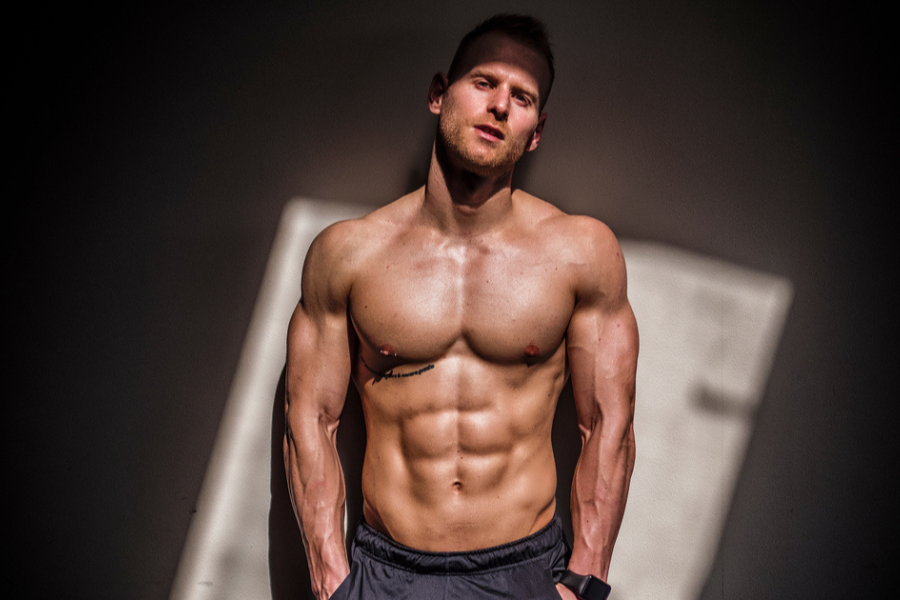
If your long term goal is a visible six pack, remember that defined abs depend heavily on lowering overall body fat with a sustainable approach to nutrition, strength training, and cardio, not just endless ab moves.
Bringing it all together
You do not need fancy equipment or a long routine to build a strong, dependable core. With a short list of the best ab exercises, like dead bugs, bridges, bird dogs, planks, side planks, and a few smart crunch and twist variations, you can cover your entire midsection in just a few focused sessions each week.
Pick two or three of the exercises that feel approachable right now and add them to your next workout. As your strength grows, you can rotate in new moves and increase the challenge. Over time, you will not just see the difference in the mirror, you will feel it every time you sit, stand, and move through your day.
About the Author