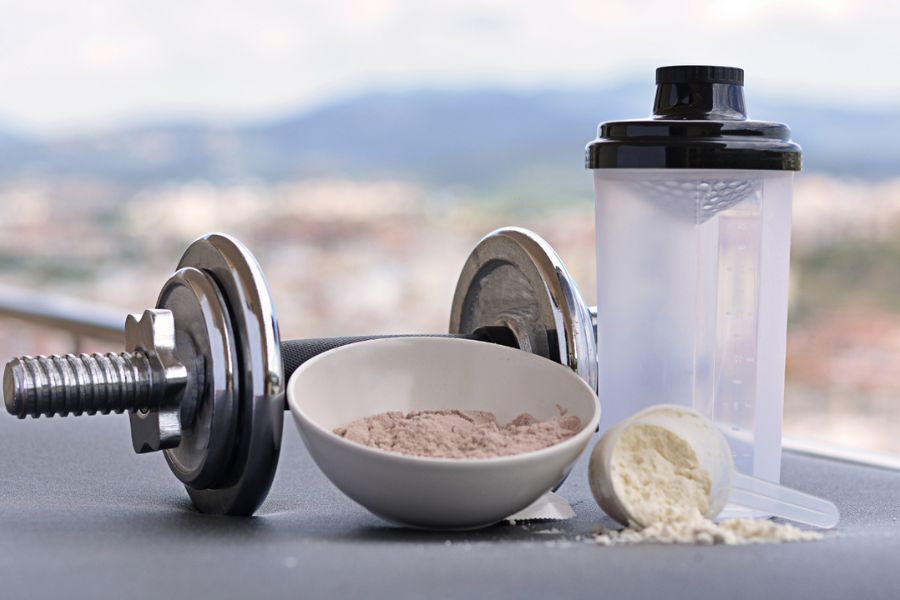
Whey protein can be a helpful shortcut to hitting your daily protein goal, but the supplement aisle is crowded and confusing. Learning how to choose whey protein powder wisely helps you support your health and fitness goals without wasting money on flashy labels or unnecessary additives.
Below, you will find a simple guide that walks you through each decision, from protein type to sweeteners and certifications.
Understand the different types of whey
Before you compare brands, you need to know the three main types of whey protein. The type you choose affects protein content, lactose level, digestion, and price.
Whey concentrate
Whey concentrate is the most common and usually the most affordable form. It typically contains 40 to 90 percent protein per serving, along with some naturally occurring lactose and a small amount of fat and cholesterol (Myprotein, Healthline).
Because it is less processed, it tends to retain more of the beneficial nutrients found in dairy and is often recommended as a good all around choice for most people (Healthline). If you tolerate lactose well and want a budget friendly option for muscle building and workout recovery, concentrate is usually enough.
Whey isolate
Whey isolate is more filtered and has a higher protein percentage, usually over 90 percent protein by weight. Most of the fat and lactose is removed during processing (Myprotein, University of Georgia Health Center).
This makes isolate:
- Lower in calories, carbs, and fat
- Better suited for people with mild lactose intolerance
- A good match if you want to increase protein while keeping calories tight, for example during weight loss or body recomposition (Garage Gym Reviews)
Isolate usually costs more than concentrate, but you pay for a higher protein density and fewer extras.
Hydrolyzed whey
Hydrolyzed whey (or hydrolysate) is isolate or concentrate that has been partially broken down into smaller peptides through a process called hydrolysis. This is designed to make it easier to digest and faster to absorb (Garage Gym Reviews, Myprotein).
You might consider hydrolyzed whey if:
- You have digestive sensitivities and find regular whey uncomfortable
- You are very focused on precise post workout timing
- You have allergies to concentrate or isolate in their usual forms (Myprotein)
However, it is often the most expensive and can taste more bitter. For most people, concentrate or isolate is enough.
Match the protein type to your goals and tolerance
Once you understand the forms, you can decide how to choose whey protein powder that aligns with your lifestyle instead of picking at random.
If your goal is general muscle building and you tolerate dairy well, whey concentrate works for around 90 percent of people (Myprotein). You get plenty of protein, a bit more lactose, and a lower price tag.
If your priority is staying lean or managing calories, or you have mild lactose intolerance, whey isolate is usually a smarter choice. It offers more than 90 percent protein per serving and very low lactose, carbs, and fat (Myprotein, Healthline).
If you have significant digestive issues with standard whey products, you can discuss hydrolyzed whey with a healthcare professional. Its smaller peptides are designed for easier metabolism and higher amino acid absorption, but the price is higher and the benefit is most relevant for specific needs (Garage Gym Reviews).
If you are fully lactose intolerant or vegan, whey will not be suitable. In that case, plant based protein powders from soy, pea, rice, or hemp are better alternatives. Some blends are formulated to be complete proteins and can still help you reach your intake goals (University of Georgia Health Center).
Check how much protein you actually get
Two tubs can look similar on the shelf but provide very different amounts of protein per scoop. To choose whey protein powder wisely, you need to pay attention to both the absolute grams and the percentage.
Many experts recommend looking for a serving that offers around 20 to 25 grams of protein, ideally in a 30 gram scoop. This amount appears to maximize muscle protein synthesis in most people after a workout (Garage Gym Reviews, Men’s Health).
You can also check the protein to total weight ratio. A good rule of thumb is:
Aim for a protein powder where more than 65 percent of each scoop is protein.
So, if a 30 gram scoop contains at least 20 grams of protein, you are in a good range (Wellbeing Nutrition).
For most people, 1 to 2 scoops per day, about 25 to 50 grams of protein total, is considered a typical supplement range. If you already eat a high protein diet, you might not need the full amount, so it helps to look at your overall intake as well (Healthline).
If you have kidney or liver conditions, or any existing health concerns, you should check with your healthcare provider before adding protein supplements. People with allergies or ongoing digestive problems may need to avoid whey entirely or choose alternatives (Healthline).
Look for a complete amino acid profile and BCAAs
One of the advantages of whey protein is that it is a complete protein. That means it naturally contains all nine essential amino acids your body cannot make on its own (Garage Gym Reviews, University of Georgia Health Center).
When you are deciding how to choose whey protein powder, it helps to consider:
- Does the label mention a complete amino acid profile?
- Does it specify branched chain amino acids, or BCAAs?
BCAAs, especially leucine, play a key role in triggering muscle protein synthesis. Experts often recommend choosing a whey supplement that provides at least 2 to 3 grams of leucine per serving, and around 3 to 5 grams of total BCAAs in a 25 gram protein serving, to help support muscle building and recovery (Wellbeing Nutrition, Men’s Health).
Animal based proteins like whey and casein are naturally complete, which is part of why they have long been popular among athletes and people focused on building or maintaining muscle (Garage Gym Reviews, University of Georgia Health Center).
Pay attention to sugars, sweeteners, and additives
The base protein is only part of the story. Flavors, sweeteners, and thickeners can quickly turn a simple supplement into something that does not support your health goals.
When you read the label, look for:
- Minimal or zero added sugar
- Limited ingredient lists
- Sweeteners that match your preferences and tolerance
Experts usually recommend choosing whey protein powders without added sugars to avoid unnecessary calories and potential inflammation. Natural, low calorie sweeteners such as stevia and monk fruit are commonly suggested as better options than artificial sweeteners for people who prefer to avoid them (Garage Gym Reviews, Wellbeing Nutrition).
At the same time, some popular products use artificial sweeteners like sucralose or aspartame. Many nutrition experts suggest limiting these where possible and choosing powders that rely on more natural options instead (Wellbeing Nutrition, Forbes).
If you prefer the cleanest possible ingredient list, unflavored whey powders that contain only whey protein concentrate or isolate and nothing else can be appealing. For example, some unflavored powders are praised for having a single ingredient with no added sugar or flavors, although it is still important to check independent testing where available (Forbes).
Whatever you choose, get into the habit of scanning labels for:
- Added sugars or syrups
- Long lists of artificial flavors or colors
- Thickeners you may not tolerate well
Flavored powders often contain extra ingredients so reading carefully helps you avoid surprises (Healthline, Forbes).
Check third party testing and certifications
Protein powders are not regulated by the FDA in the same way as medications. That means you cannot automatically assume every label is perfectly accurate.
To protect yourself, it is a good idea to look for whey protein powders that are third party tested by reputable organizations. Independent testing helps verify that what is on the label is actually in the tub, and that contaminants or banned substances are not present (Garage Gym Reviews, University of Georgia Health Center).
Certifications to look for include:
- NSF International or NSF Certified
- Informed Sport or Informed Choice
- U.S. Pharmacopeia (USP)
- ConsumerLab evaluations where available
These seals can give you more confidence in both purity and potency, especially if you are an athlete subject to drug testing or you are simply cautious about supplement quality (Wellbeing Nutrition, Men’s Health, Forbes).
Some experts also advise seeking brands that test for heavy metals such as lead and cadmium, since these are a concern in a subset of supplements on the market (Forbes).
Balance taste, texture, and everyday use
Even the highest quality powder will not help you if you cannot stand drinking it. Taste and mixability matter a lot for long term consistency.
When you are choosing:
- Think about how you plan to use it. In water, you might prefer a lighter, cleaner taste. In smoothies or oatmeal, you can be more flexible.
- Read reviews about texture. Powders that dissolve easily tend to be used more often, simply because they are convenient and pleasant to drink.
- Decide how sweet you like your shakes. Some brands are known for strong dessert like flavors, others are more subtle or neutral (Forbes, University of Georgia Health Center).
You might need to experiment with a small tub or a few single serving packets before committing to a large container. Your ideal product is the one that you enjoy enough to use regularly and that still matches your health criteria.
Put it together: a quick label checklist
When you stand in front of the supplement shelf or scroll through an online store, use this simple mental checklist to choose whey protein powder more confidently:
- Protein type
Does it match your goals and tolerance?
- General use: concentrate
- Lower calories or lactose sensitivity: isolate
- Digestive concerns and special needs: discuss hydrolyzed with a professional
-
Protein per serving
Does each scoop give you about 20 to 25 grams of protein and at least 65 percent of the scoop weight as protein (Garage Gym Reviews, Wellbeing Nutrition)? -
Amino acid profile and BCAAs
Is it a complete protein, and does it provide roughly 3 to 5 grams of BCAAs and at least 2 to 3 grams of leucine per serving (Wellbeing Nutrition, Men’s Health)? -
Carbs, fats, and sugars
Do the carb and fat numbers work for your goals? Are added sugars low or zero, and are the sweeteners in line with your preferences (Men’s Health, Healthline)? -
Ingredient list
Are there minimal additives, and do you recognize most ingredients? If there are artificial colors or flavors, are you comfortable with them (Healthline, Forbes)? -
Third party testing
Does the tub display certifications like NSF, Informed Sport, USP, or similar that confirm independent testing for purity and label accuracy (Garage Gym Reviews, University of Georgia Health Center)? -
Taste and mixability
Does the flavor profile sound appealing, and do reviews mention smooth mixing and a texture you are likely to enjoy (Forbes)?
When you walk through these steps, how to choose whey protein powder becomes much clearer: you are simply matching the product’s facts to your own body, goals, and preferences.
Start by checking the tub you already have at home against this checklist. You might find that a few small upgrades, like switching to an option with better testing or fewer additives, can make your daily shake work even better for you.
About the Author