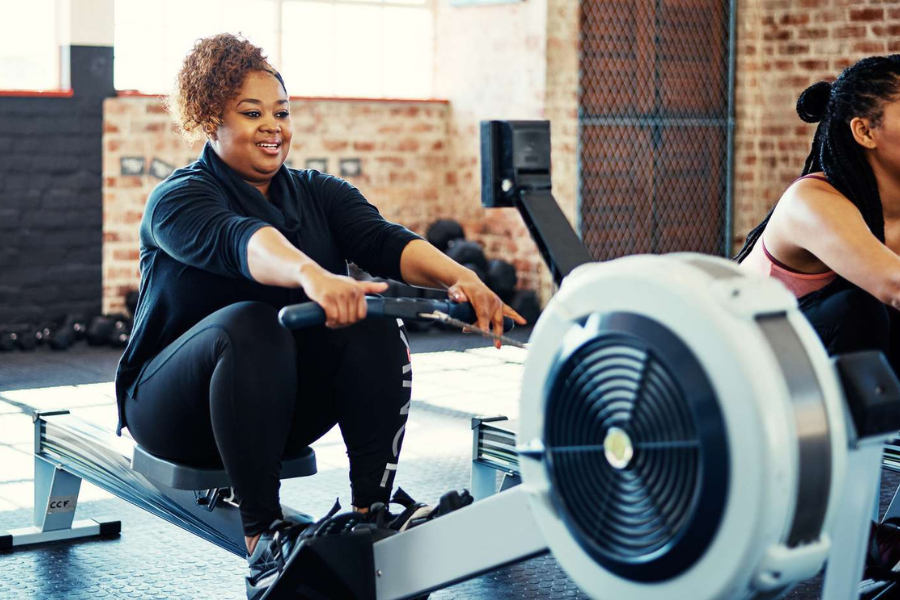
Rowing workouts for endurance are one of the most efficient ways to improve your fitness, support weight loss, and protect your joints at the same time. With each stroke you work your legs, core, back, and arms in a smooth movement that is easier on your body than running but still challenging for your heart and muscles. That combination makes a rowing machine a smart choice if you want simple, repeatable workouts that actually move the needle on your health.
Below, you will find straightforward rowing workouts for endurance, plus tips on form, progression, and recovery so you can build stamina safely and steadily.
Why rowing is so good for endurance
Rowing is often called a full body cardio workout, and that is not an exaggeration. Rowing workouts on a rowing machine engage roughly 65 to 75% leg muscles and 25 to 35% upper body muscles in every stroke, which helps you strengthen and tone major muscle groups while you build endurance at the same time (Healthline). This blend of strength and cardio is what makes rowing such an effective tool for both stamina and body composition.
Because you sit low and slide on a rail, rowing is also low impact. You can burn a significant number of calories without pounding your knees and ankles, which is especially helpful if you are dealing with joint issues or want a form of active recovery on days between harder workouts (Healthline).
Over time, consistent rowing improves your cardiovascular system at a deeper level. Regular rowing increases mitochondrial density and capillary count in your muscles, which raises your aerobic capacity and maximum oxygen uptake, or VO2 max (IDEA Fit). In simple terms, your body becomes better at using oxygen, so daily activities and longer workouts feel easier.
How to set up your rowing workouts for endurance
Before you start rowing workouts for endurance, it helps to understand how often to row, how long to row, and how hard to push yourself. Getting these basics right makes your progress more consistent and reduces the risk of overuse injuries.
For general fitness, a home rowing workout will usually last 20 to 30 minutes of steady rowing, done at least 3 to 4 times per week (RP3 Rowing). If you are just starting, your sessions can be shorter while you learn technique and build a base.
Rowing 3 to 5 times per week tends to be ideal for improving endurance while still allowing enough recovery (RP3 Rowing). Because each stroke uses so many muscles, rowing every single day at a high intensity can lead to fatigue or repetitive strain.
Think of your plan in three layers:
- Frequency: 3 to 5 sessions per week
- Duration: 10 to 15 minutes at first, then up to 20 to 30 minutes and beyond
- Intensity: clear easy, moderate, and hard days, instead of going all out every time
As you move through the simple workouts below, you will gradually adjust these variables to keep progressing without big jumps that could cause setbacks.
Learn the basics of safe rowing form
Good technique makes every rowing workout for endurance more effective and more comfortable. It also protects your lower back and shoulders so you can keep training consistently.
A simple way to think about form is to break the stroke into four parts:
- The catch: You start with knees bent, shins vertical, torso leaning slightly forward from the hips, arms straight, and core braced.
- The drive: You push through your feet to extend your legs first, then swing your torso back to about 1 o’clock, and finally pull the handle to your lower ribs with elbows close to your sides.
- The finish: Legs are straight but not locked, torso is leaning slightly back, and the handle is at your midsection.
- The recovery: You reverse the order, arms extend first, torso leans forward, then knees bend as you glide back to the catch.
Rowing builds both power and endurance by combining strengthening and cardiovascular exercise, so focusing on strong leg drive and relaxed recovery will help you get more from each stroke (Healthline). Start slower than you think you need, and practice the sequence until it feels smooth and rhythmic.
Beginner rowing workouts for endurance
If you are new to rowing or returning after a long break, beginner workouts will help you build a foundation without overwhelming you. During this phase, your primary goals are learning proper form, getting comfortable with the machine, and building a basic level of stamina.
Beginners should start with sessions that last 10 to 15 minutes. Include a 2 to 3 minute warm up and then use short intervals of 1 to 2 minutes at a moderate intensity, with easy rowing in between, slowly increasing the total duration by 2 to 5 minutes per week over 4 to 6 weeks (RP3 Rowing).
Workout 1: 10 minute intro session
Use this on your first few days with the machine.
- 3 minutes very easy rowing. Focus on smooth strokes, light resistance, and breathing steadily.
- 1 minute moderate pace, 1 minute easy pace. Repeat this two times.
- 3 minutes very easy rowing to cool down.
Aim for a stroke rate of around 20 to 24 strokes per minute. You should be able to hold a conversation, even during the moderate segments. If you feel your form breaking down, slow down and reset.
Workout 2: 15 minute base builder
Once the 10 minute session feels comfortable, move to this simple progression.
- 3 minutes easy warm up.
- 3 minutes moderate, 2 minutes easy.
- 3 minutes moderate, 2 minutes easy.
- 2 minutes very easy cool down.
This structure adds a bit more total work at a modest intensity without pushing you too hard. Building this base is important before you start doing longer or harder rowing workouts for endurance.
Steady state workouts that build aerobic endurance
Steady state rowing is the backbone of most endurance plans. In these workouts you row at a continuous, comfortable pace for a set amount of time. They train your body to use oxygen efficiently and are key to raising your aerobic capacity.
For general fitness, steady state sessions in the 20 to 30 minute range, done 3 to 4 times per week, are highly effective for cardiovascular health and muscular endurance (RP3 Rowing). As you adapt, you can work up to 40 or even 60 minute rows.
Workout 3: 20 minute steady row
Use this once your 15 minute base builder feels manageable.
- 4 minutes easy warm up.
- 12 minutes continuous rowing at a moderate pace.
- 4 minutes easy cool down.
During the 12 minute block, your breathing should be deeper but still controlled. If you use a 1 to 10 effort scale, stay around 6. You are working, but you are not gasping.
Workout 4: 30 minute endurance session
After a few weeks, progress to this longer steady row.
- 5 minutes easy warm up.
- 20 minutes continuous rowing at a comfortable, steady pace.
- 5 minutes easy cool down.
Longer steady state workouts like this gradually increase your mitochondrial density and capillary network, which supports higher VO2 max and better general fitness (IDEA Fit). In practical terms, walks, stairs, and daily tasks will feel easier as your endurance improves.
Interval rowing workouts for faster endurance gains
Once you have a solid base, interval rowing workouts for endurance let you get more benefit in less time. High intensity interval training, or HIIT, has been shown to improve fitness levels, cardiac function, glucose control, and blood pressure in less than 15 minutes when done on a rowing machine. These short, powerful sessions can work as well as, or even better than, longer moderate workouts for certain health markers (Healthline).
HIIT works by alternating between short bursts of higher intensity and periods of easier rowing. Because the hard segments are time limited, you can push a bit more than you would in a steady state workout, while the easier segments allow partial recovery.
Workout 5: 15 minute interval starter
Use this once you are comfortable rowing 20 minutes at a steady pace.
- 3 minutes easy warm up.
- 6 rounds of:
- 30 seconds hard effort, around 8 out of 10.
- 1 minute 30 seconds easy rowing.
- 3 minutes easy cool down.
Keep your stroke powerful but controlled on the hard intervals. Focus on a strong leg drive and a relaxed recovery. High intensity rowing workouts like this can efficiently build both endurance and strength by challenging your cardiovascular system and muscles at the same time (Healthline).
Workout 6: 10 9 8 7 endurance intervals
If you want a more advanced interval structure, you can use the 10 9 8 7 aerobic rowing workout, which is designed to improve cardiovascular endurance and heart rate recovery (IDEA Fit).
For general fitness, you can adapt it to a shorter format:
- 5 minutes easy warm up.
- 10 minutes steady but challenging pace.
- 3 minutes light rowing.
- 9 minutes steady but challenging pace.
- 3 minutes light rowing.
- 5 minutes easy cool down.
As your fitness grows, you can add the 8 and 7 minute segments described in the original version, but this shorter version already provides a strong endurance stimulus without needing a long training window.
Short sprint sessions to boost stamina
Very short, powerful rowing sprints can support your overall endurance by training your body to handle high intensity efforts and recover efficiently. These workouts mainly target your anaerobic and glycolytic systems, which help buffer lactic acid and maintain performance during harder rowing sessions and other bursts of activity in daily life.
Glycolytic system training, for example, can be done with 500 meter rowing repeats using a 1 to 2 work to rest ratio. This style of workout improves your muscles buffer against lactic acid and enhances both physical and mental resilience during intense efforts (IDEA Fit).
Anaerobic rowing workouts that use 20 second sprints with low intensity rowing between them are another option. They challenge your body’s capacity for short, powerful bursts of energy and, when repeated within a session, contribute to higher overall endurance (IDEA Fit).
Try this simplified version:
Workout 7: Sprint and recover
- 5 minutes easy warm up.
- 8 to 10 rounds of:
- 20 seconds fast, strong strokes.
- 1 minute 40 seconds very easy rowing.
- 5 minutes easy cool down.
Keep this type of workout to once a week at first. It is demanding, even if the total time is short, and your body needs time to adapt.
How to progress your rowing workouts safely
The principle that ties all rowing workouts for endurance together is progressive overload. To keep improving, you gradually increase the challenge by adjusting one variable at a time, such as resistance, duration, or rest periods. You do not need big jumps, and in fact, sudden spikes in intensity or volume can raise your risk of injury.
Progressive overload on a rowing machine can mean:
- Adding 2 to 5 minutes to a steady state session.
- Increasing the number of intervals by one round.
- Slightly shortening rest periods between higher intensity intervals.
- Raising the resistance or drag factor a small amount once form is solid.
The key is to stay consistent and avoid making several changes at once. When you increase one element, keep the others stable for a week or two so your body has a clear signal and time to adapt (Aviron Active).
Over the long term, your endurance improves most from steady, thoughtful progress, not occasional all out efforts. Rowing 3 to 5 times per week, with a mix of steady and interval sessions, gives you that balance (RP3 Rowing).
Consistency and quality of technique matter more for endurance than any single long or hard workout. When in doubt, choose better form and regular sessions over extra minutes at sloppy intensity.
Support your rowing endurance with recovery and nutrition
Endurance does not come from the rowing machine alone. How you eat, hydrate, and recover plays a big role in how you feel during your sessions and how quickly you progress.
Proper nutrition for rowing workouts means a balanced intake of protein, complex carbohydrates, and healthy fats, along with enough fluids. These nutrients fuel your workouts, support muscle repair, and help your body adapt, which ultimately boosts your endurance and stamina (Aviron Active). A light snack that includes carbohydrates and a bit of protein an hour or so before rowing often works well for most people.
Sleep and non exercise movement also matter. Aim for regular sleep schedules and gentle activities on rest days, such as walking or stretching. Rowing is low impact, but it still taxes your body because you are engaging around 86% of your muscles with each stroke (Aviron Active). Giving those muscles time to recover is part of what makes each subsequent workout feel easier.
Putting it all together
If you want rowing workouts for endurance that really work, you do not need an elite training plan. A handful of simple, repeatable sessions will take you far when you pair them with good form, gradual progression, and steady habits.
You can start with 10 to 15 minute beginner sessions a few times per week. As you get more comfortable, build up to 20 to 30 minute steady rows and add a short interval workout to your week. Over time, this mix will help you lose weight, improve your cardiovascular health, and feel stronger in your daily life, all with a single machine that supports nearly your entire body each time you sit down to row.
Pick one workout from this guide, schedule it for your next training day, and use it as your starting point. Once it feels easier, you will know it is working, and you will be ready to take the next step in your endurance journey.
About the Author