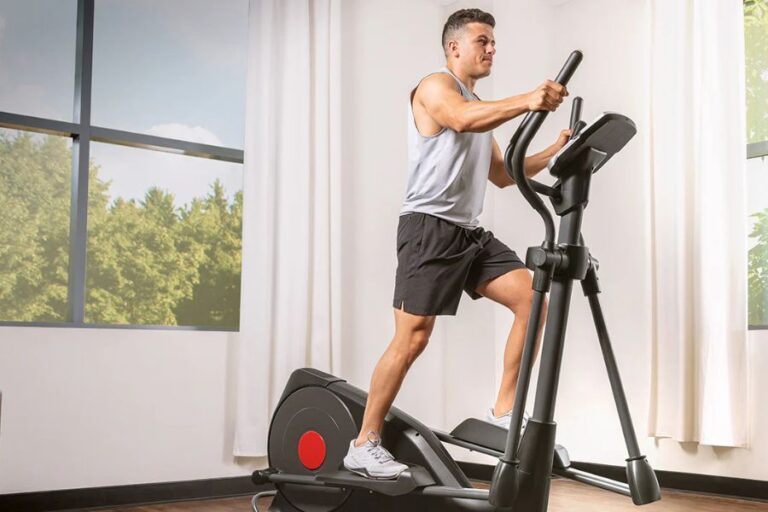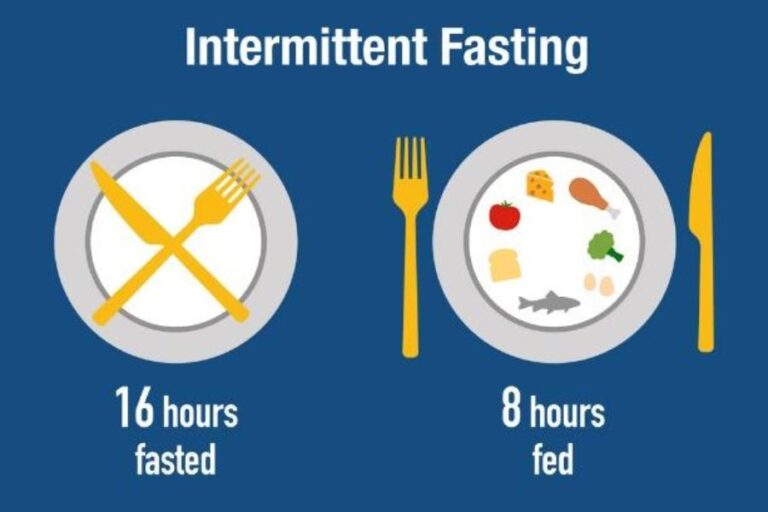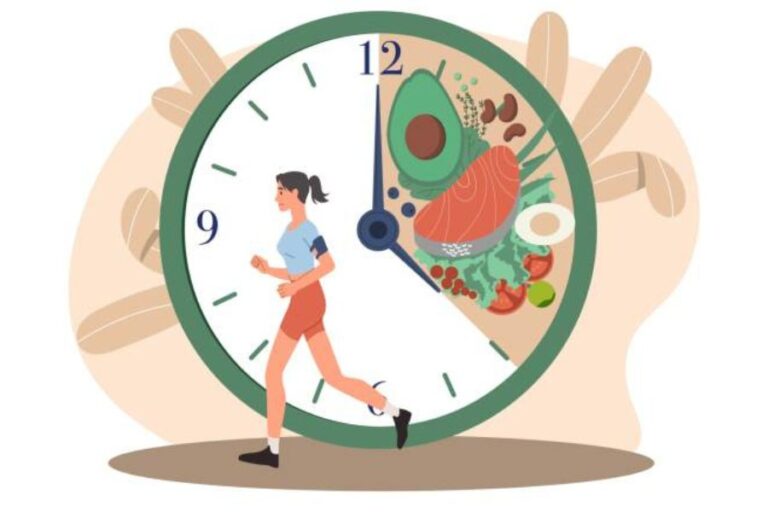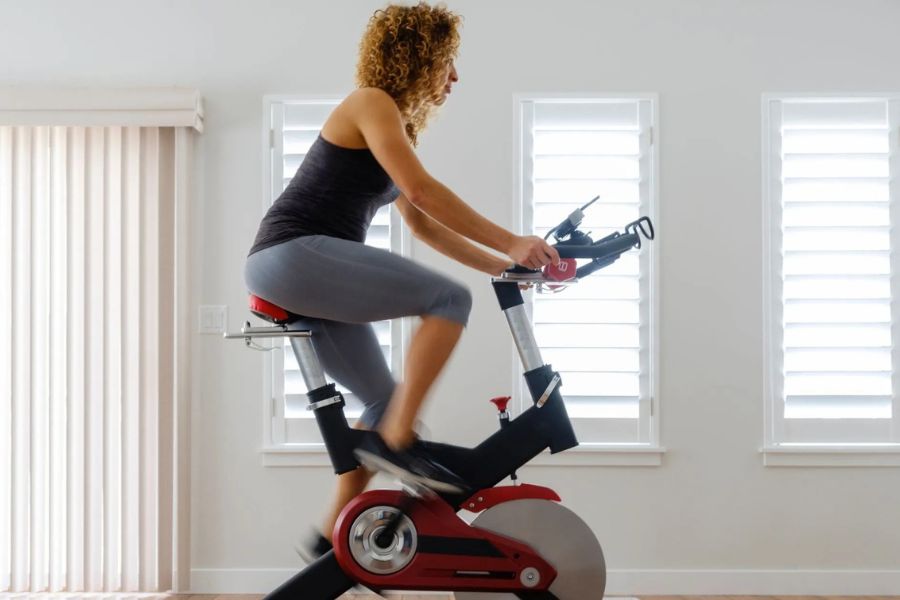
A stationary bike can be one of the simplest tools you use to get leaner, fitter, and healthier. Exercise bike workouts for weight loss are joint friendly, easy to start at any fitness level, and surprisingly effective at burning calories in a short amount of time.
Below, you will find a set of easy routines you can follow, plus guidance on how to use the bike so you actually see results.
Why exercise bikes work for weight loss
An exercise bike helps you lose weight by increasing how many calories you burn each day. When you consistently burn more calories than you eat, your body starts using stored fat for energy.
According to Harvard Health data cited by PureGym, 30 minutes of moderate stationary cycling burns roughly 210 calories for a 125 lb person, 252 calories for a 155 lb person, and 294 calories for a 185 lb person. If you ride vigorously, those numbers jump to about 315, 378, and 441 calories in the same half hour (PureGym).
You also get several side benefits that make it easier to stick with your plan:
- Stationary bikes are low impact and gentle on your joints, which is especially helpful if running hurts your ankles, knees, or hips (PureGym).
- Indoor cycling builds cardiovascular endurance and leg strength, and it is suitable even if you are just starting out or coming back from an injury (SELF).
- You can ride at home or at the gym, which removes common obstacles like bad weather or lack of daylight.
The key is choosing exercise bike workouts for weight loss that match your current fitness and then progressing them gradually.
Get set up safely and comfortably
Before you dive into intervals or longer rides, spend a few minutes setting up your bike so it feels good on your body. Proper setup helps you avoid soreness and makes it easier to keep going.
Start by adjusting the seat height so that when the pedal is at the bottom of the stroke, your knee has a slight bend instead of locking out. If your hips rock side to side while you pedal, the seat is probably too high. If your knees feel cramped or pushed forward, it is probably too low.
Next, slide the seat forward or backward until your front knee lines up roughly above the middle of the pedal when it is at the 3 o’clock position. This helps protect your knees and makes your pedal stroke feel smoother.
Sit tall with a relaxed upper body, light hands on the handlebars, and a gentle brace in your core. You should feel stable but not tense. Begin each session with an easy 3 to 5 minute warmup and finish with a short cooldown to let your heart rate come back down gradually.
Easy steady rides for beginners
If you are new to exercise or coming back after a long break, start with simple, steady rides. These are sometimes called Low Intensity Steady State, or LISS, workouts. They help you build a base level of fitness and confidence without feeling wiped out.
Verywell Fit notes that beginner stationary bike sessions can start with just a few minutes and build up to 30 minutes, which already meets the minimum daily recommendation for endurance and calorie burning (Verywell Fit).
Here is a beginner friendly 20 minute steady ride you can try:
- Warm up: 5 minutes at very easy resistance. You should be able to talk in full sentences without getting breathless.
- Main ride: 10 minutes at a comfortable pace. Breathing is slightly heavier, but you can still hold a conversation.
- Cooldown: 5 minutes where you gradually reduce the resistance and pedal slower.
Aim to ride like this 3 times per week. As it gets easier, add 2 to 5 minutes to the middle section until you reach 30 minutes. Studies show that low to moderate intensity cycling sessions of 30 to 60 minutes, 2 or 3 times a week, can significantly increase how many calories you burn in a week and support fat loss when combined with a sensible diet (PureGym).
Fat burning intervals for busy days
Once you are comfortable with steady rides, interval training is one of the most efficient ways to use exercise bike workouts for weight loss. Intervals alternate short bursts of harder effort with periods of easier riding.
Health experts note that interval training on a stationary bike can help you burn more calories in less time and improve your cardiovascular fitness, which supports weight loss goals (Healthline). Jennifer Tallman, an indoor cycling instructor, recommends using varied intensities instead of riding at a constant pace if you want the biggest payoff for fat burning (SELF).
Here is a simple 25 minute beginner interval workout:
- Warm up: 5 minutes very easy pedaling.
- Interval block (repeat 6 times):
- 1 minute at a “challenging but doable” pace. Your breathing is heavier, and you could say a short sentence but not chat.
- 1 minute very easy riding to recover.
- Cooldown: 5 minutes very easy pedaling.
Start with one interval block like this. If you feel good after a couple of weeks, add another 1 or 2 intervals or slightly increase the resistance during the work segments.
Try a gentle HIIT cycling routine
High Intensity Interval Training, or HIIT, sounds intimidating, but you can make it as approachable as you need. The idea is still short bursts of effort followed by rest or light pedaling. The difference is that the work intervals are closer to your top effort.
Studio Three explains that HIIT cycling involves riding at about 80 to 95 percent of your maximum heart rate for the work phases, then using lower intensity recovery to catch your breath. This style of training burns a lot of calories in a relatively short session of about 30 minutes (Studio Three).
Here is an entry level HIIT style session that keeps the hard efforts brief:
- Warm up: 6 to 8 minutes, building gradually from very easy to a moderate pace.
- Main set (repeat 8 times):
- 20 seconds hard effort. Think 8 out of 10 on your personal effort scale, where talking is difficult.
- 70 seconds very easy pedaling.
- Cooldown: 5 minutes very easy pedaling.
The work segments are short but focused. If you are new to HIIT, keep the total number of intervals low and rest more if you need to. A couple of HIIT cycling sessions per week, paired with steady rides, can noticeably increase your weekly calorie burn and help create the energy deficit needed for fat loss (Studio Three).
Short Tabata inspired blasts
If your schedule is very tight, you can use a Tabata inspired format. The Tabata protocol was first studied on stationary bikes and is built around 20 seconds of all out work followed by 10 seconds of rest, repeated several times. It is intense, but you can adapt the classic version to fit your current fitness.
SELF notes that during Tabata, you gauge effort using your rate of perceived exertion, or RPE, then adjust resistance and speed so that each 20 second burst feels like 80 to 100 percent of your best effort (SELF).
Here is a more approachable Tabata style workout:
- Warm up: 8 minutes, ending at a moderate pace.
- Tabata sets (choose 1 or 2 sets):
- 8 rounds of 20 seconds hard, 10 seconds very light pedaling.
- Rest 2 to 3 minutes of easy riding between sets.
- Cooldown: 5 minutes very easy pedaling.
Because the work intervals are so demanding, the entire session can be finished in about 20 to 30 minutes. This format is best if you already have a basic fitness foundation. If you are a beginner, spend a few weeks with steady rides and basic intervals before trying this.
Use spinning classes for extra motivation
If you prefer guidance, music, and a group atmosphere, indoor spin classes are a good way to do structured exercise bike workouts for weight loss. A typical class includes a warmup, a mix of hills, sprints, and recovery tracks, and a cooldown.
PureGym notes that spin classes provide the benefits of cycling workouts plus the motivation of an instructor and group setting, which can help you maintain higher intensity and consistency over time (PureGym). You simply follow the cues, adjust your resistance as suggested, and let the playlist carry you through.
If you are new, arrive a few minutes early so the instructor can help you set up your bike. Start near the back or side so you can sit and recover whenever you need to. Over a few weeks, your stamina will grow and the profiles that once felt impossible will start to feel manageable.
How often you should ride to lose weight
Consistency matters more than any single “perfect” workout. Several experts recommend aiming for at least three cardio sessions per week to build endurance and burn enough calories to support weight loss (Verywell Fit).
A balanced weekly plan might look like this:
- 2 days of steady state riding, such as 30 to 45 minutes at an easy to moderate pace
- 1 or 2 days of intervals or HIIT style sessions, 20 to 30 minutes each
- 1 or 2 days of rest or gentle movement, such as walking or stretching
Healthline notes that a stationary bike workout can burn more than 600 calories per hour, depending on your body weight and how hard you ride (Healthline). Combined with a reasonable calorie intake, this higher energy expenditure can lead to a steady loss of body fat over time. A 2010 study cited by Healthline found that indoor cycling three times per week, paired with a 1,200 calorie diet, reduced body weight, body fat, cholesterol, and triglycerides over 12 weeks (Healthline).
If weight loss is your goal, remember that even a perfectly designed cycling program works best alongside a balanced, portion conscious way of eating.
Track your progress without obsessing
It can be tempting to stare at the calorie counter on the bike, but those readouts are often inaccurate. A discussion on r/Fitness points out that many stationary bike displays overestimate calories, while power meters and wattage based tools are more reliable (Reddit r/Fitness).
The RunBundle stationary bike calorie calculator estimates calories burned using your weight, workout duration, and either power in watts or perceived intensity. It uses MET values, which describe how much energy an activity uses compared to sitting still, to give more realistic numbers (RunBundle).
If your bike does not show watts, you can still track progress by:
- Noting how long you ride each session
- Recording how many intervals you complete
- Paying attention to how your breathing and perceived effort change over time
- Watching how your clothes fit, your resting heart rate, and your energy levels
Try to see each ride as one small deposit in your health bank. Even short 10 minute sessions are useful, and consistency from week to week has a bigger impact than any single long workout (Reddit r/Fitness).
Putting it all together
Exercise bike workouts for weight loss do not need to be complicated. Start with steady 20 to 30 minute rides a few times a week. When that feels comfortable, layer in simple intervals. If you enjoy a challenge and your body handles it well, experiment with gentle HIIT or Tabata style sessions, or join a spin class for built in structure and motivation.
Choose a starting plan from this guide that feels realistic for your current fitness and schedule, then commit to trying it for the next two weeks. After that, you can make small adjustments based on how you feel and the progress you are seeing.
Your bike is already a powerful tool. The next step is getting on it regularly and letting those minutes add up.
About the Author