A basic leg day can build some strength, but an advanced hamstring workout is what really upgrades your power, speed, and injury resilience. When you train your hamstrings with intent using heavy hip hinges and targeted curls, you do more than grow muscle. You protect your knees, lower back, and hips, and you set yourself up to move better in almost every sport and daily activity.
Below, you will find a science backed advanced hamstring workout plus clear guidelines on how often to train, how hard to push, and how to progress without wrecking your recovery.
Understand what makes an advanced hamstring workout
If you are past the beginner stage, you probably already do some form of deadlift or leg curl. An advanced hamstring workout builds on that with smarter structure, not just heavier weight.
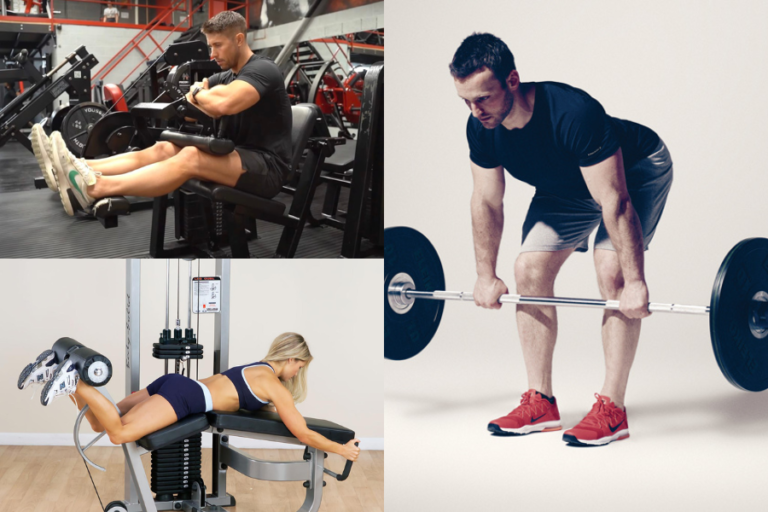
Your hamstrings cross both your hip and knee joints. To train them completely you need two movement patterns: a hip hinge, such as Romanian deadlifts or stiff legged deadlifts, and a knee flexion, such as seated or lying leg curls. This biarticulate structure is highlighted in Dr Mike Israetel’s hamstring hypertrophy guide, which emphasizes hitting both patterns each week for full development and injury prevention.
An effective advanced session checks these boxes:
- One big hip hinge in the 5 to 10 rep range for strength and size
- One or two leg curl variations in the 10 to 20 or even 20 to 30 rep range
- Volume that feels hard but still lets you recover for your next session
- Attention to the eccentric, or lowering phase, which is where much of the hamstring growth and injury protection happens
Meta analyses of 23 randomized controlled trials with more than 18,000 people show that eccentric hamstring training can cut lower body injury risk by about 28 percent and hamstring injury rates by roughly 46 percent in athletes. When you program eccentrics on purpose, you harness that protective effect instead of leaving it to chance.
Learn how often to train your hamstrings
If you want stronger hamstrings fast, you may be tempted to crush them every day. Your results will actually be better if you respect their recovery needs.
Current science based guidelines suggest:
- Train hamstrings 2 to 3 times per week
- Keep per session volume modest, then spread the work across the week
- Include at least one hip hinge and one curl across those sessions
In a 2023 review, eccentrically focused hamstring programs done twice per week clearly outperformed once per week programs for lowering sports injury risk, with a risk ratio of 0.60 versus no meaningful benefit at once weekly frequency. The same review found that 21 to 30 week training blocks were most effective for injury prevention, with about a 38 percent reduction in lower limb injuries during that window.
If you are already lifting legs 3 days a week, you can spread your hamstring work like this:
- Day 1: Heavy hip hinge focus
- Day 2: Lighter, higher rep curls
- Day 3: Mixed hinge and curl with slightly lower total volume
You keep the muscle signaling often without turning every session into a marathon.
Follow this advanced hamstring workout template
Use this template 1 or 2 times per week, depending on how often you train lower body. Each exercise is chosen to challenge the hamstrings in a lengthened position, which research suggests is especially effective for both growth and injury reduction.
Exercise 1: Romanian deadlift (RDL)
The Romanian deadlift is one of the best advanced hamstring exercises because it loads your hamstrings hard while they are lengthened. You can perform it with a barbell, dumbbells, or a kettlebell.
- Sets: 3 to 4
- Reps: 5 to 8
- Rest: up to 3 minutes between sets
Focus on a slow, controlled lowering phase of about 2 to 3 seconds, a solid stretch at the bottom, and then a powerful hip drive to stand up. Keeping reps in the lower range matches guidance from RP Strength’s 2024 hamstring guide, which recommends 5 to 10 reps for heavy hip hinges to balance stimulus and safety.
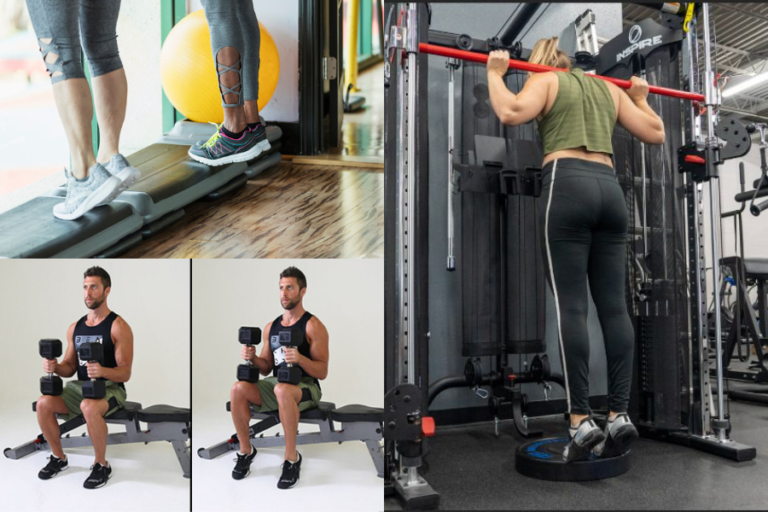
Exercise 2: Bulgarian split squat
The Bulgarian split squat, also known as the rear foot elevated split squat, trains your hamstrings and glutes one leg at a time, which helps fix imbalances.
- Sets: 3 to 4 per leg
- Reps: 8 to 12
- Rest: 90 to 120 seconds between legs
Keep your shin relatively vertical so your back hip and hamstrings have to work. You can do this with bodyweight at first, then progress to dumbbells once your balance and strength improve.
Exercise 3: Lying or seated leg curl
Leg curls give you direct knee flexion work that is less limited by grip and lower back fatigue.
- Sets: 3 to 4
- Reps: 10 to 20
- Rest: 45 to 60 seconds
Slow your reps down and aim to fully straighten your leg at the bottom and squeeze hard at the top. Guides from RP Strength suggest curls in the 10 to 20 or even 20 to 30 rep ranges are ideal for growth, since they are less stressful on posture muscles and allow you to safely chase a deep burn.
If you have access to a unilateral machine, alternate legs so each side does its own work. Research on advanced leg curls notes that slower reps and full range of motion, especially when done one leg at a time, maximize hamstring activation compared with rushing through the set.
Exercise 4: Nordic hamstring curls or physio ball leg curls
To add a strong eccentric emphasis, finish with either Nordic curls or physio ball leg curls.
- Sets: 2 to 3
- Reps: 6 to 8 Nordics or 12 to 20 physio ball curls
- Rest: 60 to 90 seconds
Nordic curls create intense tension as the hamstrings lengthen, which is exactly what makes them so powerful for both strength and injury protection. A 2024 study on female dance students found that a 6 week eccentric program combining Nordic hamstring exercises and single leg deadlifts significantly improved both concentric and eccentric hamstring strength compared with static stretching or no special training. The same program also improved hamstring flexibility more than traditional stretching.
If Nordics are too challenging, use physio ball leg curls. Lie on your back, heels on the ball, then lift your hips and curl the ball toward you. This challenges stability and hamstring strength together.
If you complete all four exercises with solid form and controlled eccentrics, you have covered heavy strength work, unilateral balance, and high tension isolation in a single advanced hamstring workout.
Add a second hamstring day for faster progress
If your schedule allows, you can layer in a second hamstring focused session in the week. Keep it slightly lighter and more focused on volume and technique.
Here is a sample second session:
- Dumbbell Romanian deadlift
- 3 sets of 6 to 8 reps
- Focus on form and range, not maximum load
- Single leg deadlift
- 3 sets of 6 to 8 reps per leg
- Use a dumbbell or kettlebell and move slowly to challenge balance
- Seated leg curl
- 3 sets of 15 to 20 reps
- Short rests of 30 to 45 seconds
- Kettlebell swings
- 3 sets of 12 to 15 reps
- Think explosive hip drive, not a squat
Exercises like the dumbbell RDL are easier on your lower back than barbell versions, which makes them ideal for this second weekly hit. Single leg deadlifts, in particular, recruit more posterior chain muscles for stability, including the gluteus medius, which helps with athletic balance and knee control.
Use advanced techniques without overdoing it
Advanced does not have to mean reckless. You can increase intensity with a few smart methods while still managing fatigue.
Here are techniques that work well for hamstrings:
- Straight sets with 0 to 2 reps in reserve so you are close to failure but not grinding dangerously
- Controlled eccentrics, pausing at the stretched position in RDLs or leg curls
- Occasional down sets where you reduce the weight after a heavy set to maintain good technique for extra volume
- Sparing use of drop sets or myoreps on leg curls only, since these are less risky than pushing heavy hinges to full failure
RP Strength’s 2024 guide suggests that such methods, especially controlled eccentrics and pauses, improve the mind muscle connection and safety, while myoreps and drop sets should be used with caution to avoid excessive fatigue.
If you decide to add any of these, start with just one technique on one exercise per workout, then see how you recover before stacking more intensity.
Progress your advanced hamstring workout safely
To get stronger fast you still need patience. Your body responds best when you nudge it forward consistently, rather than trying to leap ahead every session.
Use these simple rules for progression:
- Increase weight or reps every 4 to 6 weeks on your key lifts like RDLs and leg curls
- Keep most of your work in recommended rep ranges, 5 to 10 for hip hinges and 10 to 20 for curls
- If your technique starts to break down, hold the weight steady and improve form instead of forcing more load
- Take deload weeks, where you reduce volume or intensity, after 6 to 8 hard weeks if your joints or energy feel worn down
Fitness experts often suggest that advanced trainees focus on long term strength gains in RDLs and leg curls, rather than just piling on more fancy variations. When you consistently add small amounts of weight or a rep here and there, you create a clear upward trend that keeps your hamstrings adapting.
Support your hamstrings beyond the weight room
You put a lot of stress on your posterior chain during an advanced hamstring workout. To get the most from that effort, pay a little attention to what happens between sessions.
A few habits make a noticeable difference:
- Warm up with dynamic movements like leg swings, hip circles, and light hip hinges so your hamstrings are ready to handle heavier loads
- Cool down with gentle stretching if that feels good, but rely on eccentric work like Nordics and RDLs as your primary flexibility builders, since the Hebei Normal University study found they improve both strength and range of motion more effectively than static stretching alone
- Take care of your hip flexors and glutes, which often get tight or weak from sitting a lot, because this imbalance pushes more strain onto your hamstrings and lower back
When your whole posterior chain is strong and coordinated, your hamstrings can finally do their job without picking up slack from other muscles.
Putting it all together
An advanced hamstring workout is not just about heavy deadlifts. You are combining:
- One serious hip hinge to load your hamstrings in a lengthened position
- One or two curl variations to hammer knee flexion
- Eccentric focused reps to reduce injury risk and build strength faster
- Smart weekly frequency that hits the muscle often, but lets you recover
Start by adding the four exercise template once a week for four weeks. When that feels manageable, layer in a second, slightly lighter session. Stay consistent for at least 12 to 16 weeks, because the best research on hamstring injury reduction shows that real benefits build over months, not days.
Your reward is not only bigger, stronger hamstrings. You also gain more powerful sprints and jumps, steadier knees, and a lower chance of those frustrating pulls that can sideline your training.
About the Author