
A smart hamstring workout for runners does a lot more than build muscle. Strong, resilient hamstrings help you handle hills, speed work, and long runs with less soreness and a lower risk of strains. With the right mix of exercises, you can get stronger fast without spending hours in the gym.
Below, you will learn why your hamstrings matter so much for running, which exercises give you the biggest return, and how to put them together into a simple routine you can stick with.
Understand why hamstrings matter for running
Your hamstrings are a group of three muscles on the back of your thigh. They cross both the hip and knee, so they help flex your knee and extend your hip every time you run.
During each stride, your hamstrings help pull your foot backward on ground contact, assist with knee lift during the swing phase, and control your leg as it swings forward before foot strike. This makes them essential for both propulsion and control.
Because you take roughly 1,500 strides per mile, your hamstrings contract over and over again with very little rest. Without enough strength and mobility work, they tend to become tight, irritated, and vulnerable to strains. Chronic tightness can also feed into lower back pain, hip discomfort, and inefficient running form.
A focused hamstring workout for runners helps you:
- Reduce the risk of hamstring strains and pulls
- Ease post-run soreness
- Support better hip and knee control
- Handle faster paces and hills with more confidence
You might not instantly run faster just because your hamstrings are stronger, but you will usually feel smoother and more stable, which sets you up for better training over time.
Focus on strength, not just stretching
If your hamstrings feel tight, your first instinct might be to stretch more. Stretching has a place, but on its own it usually is not enough to solve the problem.
Research suggests that combining dynamic stretching before you run with more advanced techniques such as proprioceptive neuromuscular facilitation (PNF) stretching after activity can improve flexibility and neuromuscular control. However, without concurrent strengthening exercises, stretching alone does not significantly reduce hamstring injury risk.
A better approach is to pair mobility with strength, especially eccentric strength. Eccentric work means your hamstrings are working while they lengthen, which mimics what happens in late swing and early stance when you run. This is exactly when many strains occur.
So instead of thinking, “I need looser hamstrings,” think, “I need hamstrings that are both strong and comfortable at long lengths.”
Build strength with the Nordic hamstring curl
If you add only one move to your hamstring workout for runners, make it the Nordic hamstring curl. It is one of the most researched and effective exercises you can do.
Why the Nordic works so well
The Nordic hamstring exercise loads your hamstrings while they lengthen. Multiple studies show it can significantly cut hamstring injury rates. A meta analysis found eccentric strengthening exercises, especially the Nordic, reduced primary hamstring muscle injury rates by about 51 percent in athletes.
Longer term programs matter. A nine week Nordic hamstring exercise program led to microscopic adaptations in the biceps femoris long head muscle, including adding sarcomeres end to end, which effectively lengthens the muscle fibers and may protect them from overstretching. Those adaptations began to decline after just a three week training break, which highlights how important it is to keep up with the exercise instead of doing it for only a few weeks pre season.
How to perform a Nordic hamstring curl
You can do this move with a partner holding your ankles or by anchoring your lower legs under something sturdy.
- Kneel on a mat with your torso tall and your hips straight.
- Have a partner hold your ankles, or wedge your heels under a solid object.
- Cross your arms over your chest.
- Slowly lean your body forward from the knees, keeping a straight line from your head to your knees.
- Go as far as you can under control, then catch yourself with your hands and gently push off the floor to return to the start.
Start with a very small range of motion. The Nordic is intense, and it is normal to feel soreness at first, so begin with 1 to 2 sets of 4 to 6 reps once or twice per week. Over several weeks you can build to 2 to 3 sets of 6 to 8 controlled reps.
Consistent practice has been shown to dramatically reduce hamstring injury rates, especially in sports that involve sprinting and quick accelerations.
Add hip extensor and RDL variations
While the Nordic targets your hamstrings in a lengthened position, you also need exercises that strengthen them as hip extensors and knee flexors through other parts of your stride.
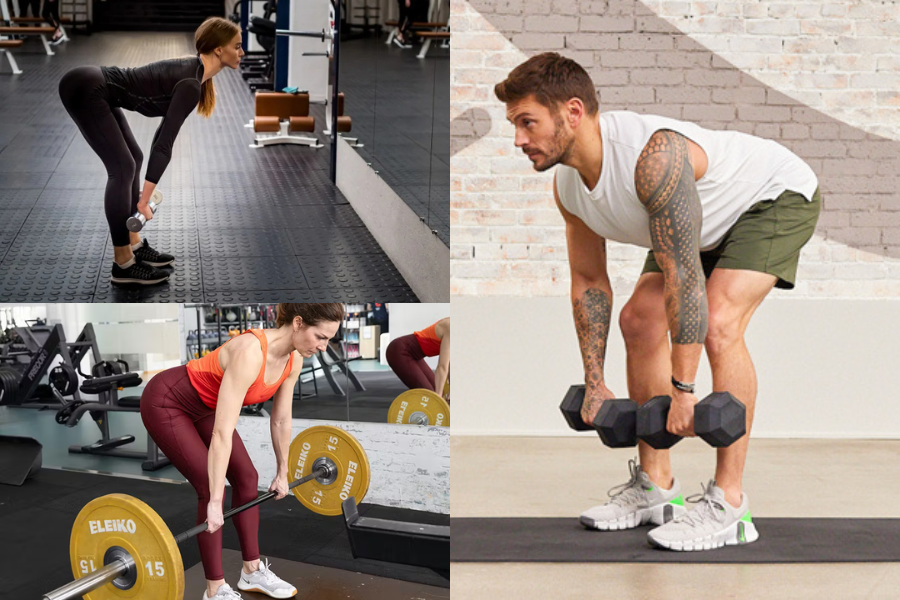
Single leg Romanian deadlift
Single leg Romanian deadlifts (RDLs) strengthen your hamstrings during muscle shortening and challenge your balance. This pattern is crucial during the stance phase of running when one leg supports your body and pushes you forward.
To perform:
- Stand tall with your weight on one leg and a slight bend in the knee.
- Hinge at the hips, sending your hips back while your torso tips forward.
- Let the back leg extend straight behind you as a counterbalance.
- Lower until you feel a stretch in the hamstring of the standing leg, then drive through your heel to return to standing.
You can start with bodyweight and then add a dumbbell or kettlebell in the opposite hand for more challenge. Aim for 2 to 3 sets of 8 to 12 reps per side.
Hip extensor exercises
Hip extensor exercises performed with the hip extended, often called HEE in the research, eccentrically contract the hamstrings and help improve the hamstring to quadriceps strength ratio. A 2025 review reported that these exercises can improve eccentric peak torque by roughly 13 to 16 percent, which supports injury prevention.
Simple options include:
- Romanian deadlifts with both legs
- Good mornings with light weights
- Hip thrusts focusing on full hip extension
Move slowly and keep tension on the muscles throughout the range, instead of bouncing or relying on momentum.
Use bridges and curls for control and power
Once you are comfortable with basic strength work, bridge and curl variations help you build more control and eventually power in the posterior chain.
Eccentric bridges
Eccentric bridges strengthen your hamstrings while they stretch, similar to Nordic curls, but with less load and minimal equipment.
Try this version:
- Lie on your back with your heels on a bench or chair and your knees bent.
- Lift your hips into a bridge so your shoulders, hips, and knees form a straight line.
- Slowly straighten your knees, letting your heels slide away so your hips lower under control.
- Reset and repeat.
You can start with two legs and progress to single leg variations as you get stronger.
Hamstring curls and plyo bridges
Exercises such as alternating hamstring curls and single leg plyo glute bridges build force and speed in your hamstrings and glutes. They train you to produce power quickly, which pays off on hills, during accelerations, and in strong race finishes.
A sample progression might look like:
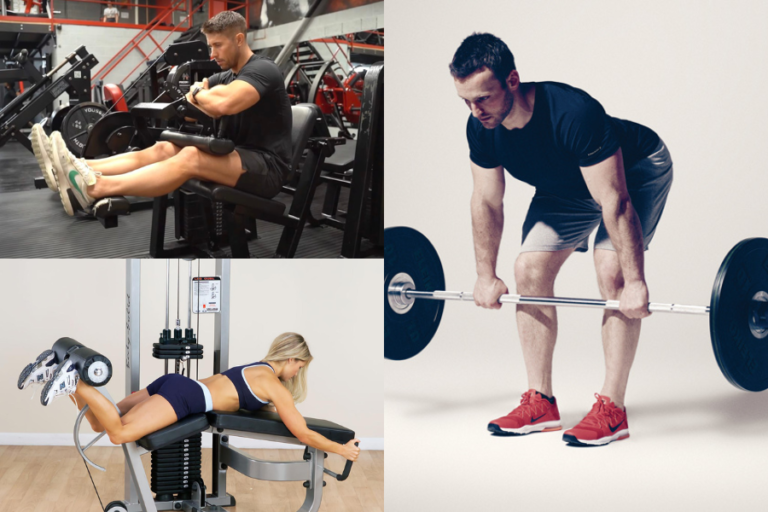
- Week 1 to 3: Slow hamstring curls on a ball or sliders
- Week 4 to 6: Alternating curls with more range of motion
- Week 7 onward: Single leg plyo glute bridges, focusing on quick but controlled hip extension
Begin with 20 to 30 seconds of work and 30 to 40 seconds of rest, then build toward 40 to 60 seconds of work as your endurance improves.
Support your hamstrings with core and pelvic control
Hamstring issues are rarely just a hamstring problem. How you control your pelvis, trunk, and hips changes how much strain your hamstrings feel with each step.
Research has found that some runners accelerate with technique that minimizes hamstring stretch, while others show pelvic and torso control issues that lead to rapid hamstring lengthening, which may raise injury risk. Motion capture with systems like OpenCap has helped identify these patterns in more realistic running environments.
Core muscle strengthening and neuromuscular training improve pelvic control and can significantly reduce the recurrence of hamstring injuries. Agility drills, trunk stabilization work, and glute activation all play a role.
You can support your hamstring workout for runners by including:
- Side planks for lateral core stability
- Dead bugs for coordinated trunk and hip control
- Glute bridges and monster walks for targeted glute activation
These do not have to be long sessions. Even 5 to 10 minutes two or three times per week can make a noticeable difference in how stable you feel when you run.
Think of your hamstrings as part of a team that includes your glutes, core, and even your calves. When the whole team is strong and coordinated, each member works less frantically and stays healthier.
Stretch smart to stay mobile
Because your hamstrings do so much work when you run, it makes sense that they often feel tight, especially when you increase mileage or add hills. A smart stretching routine helps keep them comfortable, but the goal is to improve range of motion without forcing painful positions.
Commonly recommended static stretches for runners include:
- Standing or seated hamstring stretches with a slight bend in the knee
- Kneeling or lying hamstring stretches with a strap or band
- Pigeon pose for combined hip and hamstring relief
Experts also point out that sometimes what feels like hamstring tightness actually comes from pelvic position problems, such as anterior pelvic tilt with an exaggerated lumbar arch. In that case, you may benefit from stretching your hip flexors and working on posture instead of only pulling on your hamstrings.
Use dynamic stretches such as leg swings and gentle lunges before you run, then save longer static holds for after your workout or on rest days. Aim for 15 to 30 seconds per stretch, repeated 2 to 3 times, and avoid pushing into sharp pain.
Put it all together in a weekly plan
You do not need a complicated gym routine to get stronger fast. A simple structure that fits around your running can be enough.
Here is one way to organize a hamstring workout for runners over a typical week:
-
Twice per week, on non consecutive days
-
Nordic hamstring curl: 2 to 3 sets of 4 to 8 reps
-
Single leg RDL: 2 to 3 sets of 8 to 12 reps per leg
-
Eccentric bridge or hamstring curl on ball or sliders: 2 sets of 8 to 10 slow reps
-
Core and glute work: 5 to 10 minutes of planks, dead bugs, and bridges
-
Most run days
-
3 to 5 minutes of dynamic warm up, including leg swings and light lunges
-
5 to 10 minutes of easy static stretching or foam rolling after your run
Keep the strength sessions relatively easy during heavy training weeks and build intensity in your off season or base phase. Remember that research on the Nordic hamstring exercise shows that benefits start to fade within a few weeks if you stop, so consistency across the whole year is key.
Start small, maybe with a single hamstring session this week, and notice how your legs feel on your next few runs. As you gradually add more strength work, you are likely to feel more powerful off the ground and more relaxed at the end of your workouts, which is exactly what you want from a targeted hamstring routine.
About the Author










10 thoughts on “Get Stronger Fast with a Hamstring Workout for Runners”
Comments are closed.