A well designed quad hypertrophy workout does more than just build impressive thighs. Strong quadriceps support your knees, improve your squat and deadlift numbers, and make everyday movements like climbing stairs or getting up from the floor feel easier. With the right exercises, volume, and technique, you can grow your quads in a way that is both effective and joint friendly.
Below, you will learn how to structure your training, which moves to prioritize, and how often to work your quads for muscle size.
Understand your quad muscles
Your quadriceps are a group of four muscles on the front of your thigh: the rectus femoris, vastus lateralis, vastus medialis, and vastus intermedius. Together, they extend your knee and help flex your hip, which is why they are so involved in squatting, lunging, and stepping.
For a complete quad hypertrophy workout, you want to train all four muscles. That means choosing exercises that bend and straighten the knee under load, using a deep range of motion, and not relying on just one movement pattern or rep range.
Key principles for quad hypertrophy
Before choosing exercises, it helps to know the basic rules that drive quad growth. These guidelines come from evidence based strength programming, including recommendations summarized by Gymshark in a 2024 guide to quad training and RP Strength’s work on volume landmarks for hypertrophy.
Train often enough, but not too often
Most people grow best when they train quads 2 to 3 times per week. A common recommendation for a quad hypertrophy workout is to hit quads at least twice weekly, with a minimum of two quad focused exercises per session. This schedule helps you:
- Accumulate enough quality sets for growth
- Recover between sessions
- Practice technique frequently enough to improve
If you recover quickly and your schedule allows, you can work up to 4 or even 5 quad focused sessions per week, as long as total volume stays within your personal recovery limits.
Get your weekly volume in the right range
Training volume is one of the biggest drivers of muscle growth. For quads, you can think in terms of hard sets per week per muscle group. Common targets are:
- At least 10 sets per week aimed at the quads for noticeable growth
- Spread over 2 to 5 sessions so no single workout becomes overwhelming
Sports scientists and coaches often describe volume using landmarks such as Maintenance Volume, Minimum Effective Volume, Maximum Adaptive Volume, and Maximum Recoverable Volume. These concepts, highlighted in RP Strength’s 2024 guidelines, give you a framework for understanding how much work is enough, and how much might be too much.
If you are new to structured training, start closer to the minimum effective range and build up over time.
Use a mix of rep ranges
Quads respond well to various rep ranges, as long as sets are challenging. For hypertrophy, you can use loads between about 30 percent and 85 percent of your one rep max, which roughly corresponds to 5 to 30 reps per set.
A balanced approach is:
- Heavy sets of 5 to 10 reps for strength and dense muscle
- Moderate sets of 10 to 20 reps for a strong growth stimulus
- Light sets of 20 to 30 reps on safer isolation work like leg extensions
Many coaches suggest that about half your quad sets live in the moderate 10 to 20 rep range, with the rest split between heavier and lighter work. This gives you a good balance of stimulus and fatigue.
Prioritize full range of motion
If your goal is size, range of motion matters. Deep squats, where your hips sink low and your butt approaches your calves, create a strong stretch on the quads under load. The same is true for deep leg presses where your knees come back toward your chest while staying in line with your toes.
This “stretch under load” is considered an independent driver of muscle growth. Research based guides from brands like Gymshark emphasize that full range of motion should be a priority, as long as your form stays controlled and your joints feel comfortable.
If you are not used to deep range training, progress gradually, lower the weight, and focus on stability.
Best exercises for a quad hypertrophy workout
Quad hypertrophy hinges on choosing exercises that truly target the quads rather than letting hips and glutes do most of the work. The movements below are all strong options, with slightly different strengths.
Quad focused squats
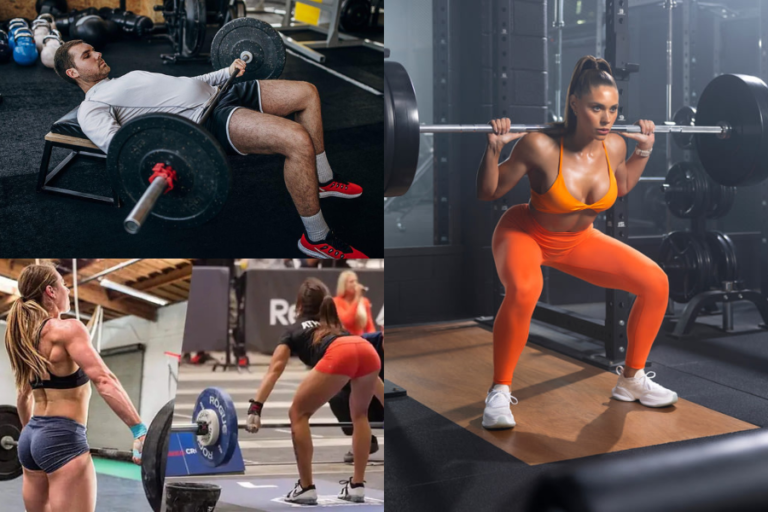
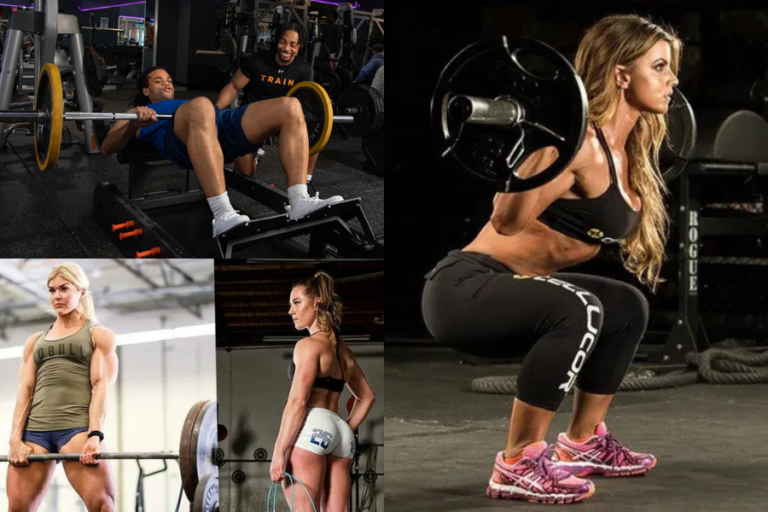
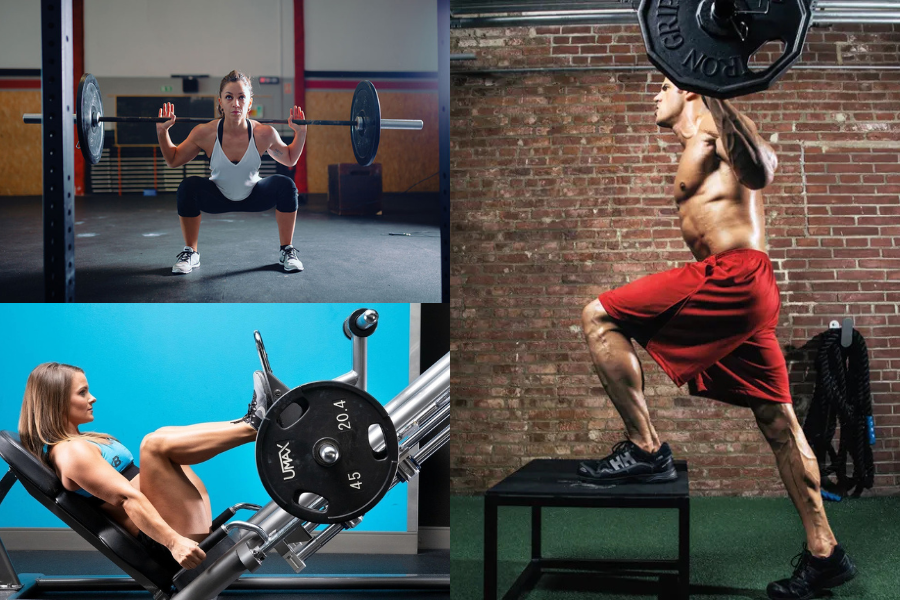
Squats will likely be the backbone of your quad hypertrophy workout. You can shift emphasis more toward the quads by keeping a more upright torso and allowing more knee travel over the toes.
Helpful variations include:
- Barbell front squats, which naturally keep your torso upright and push more load into the quads
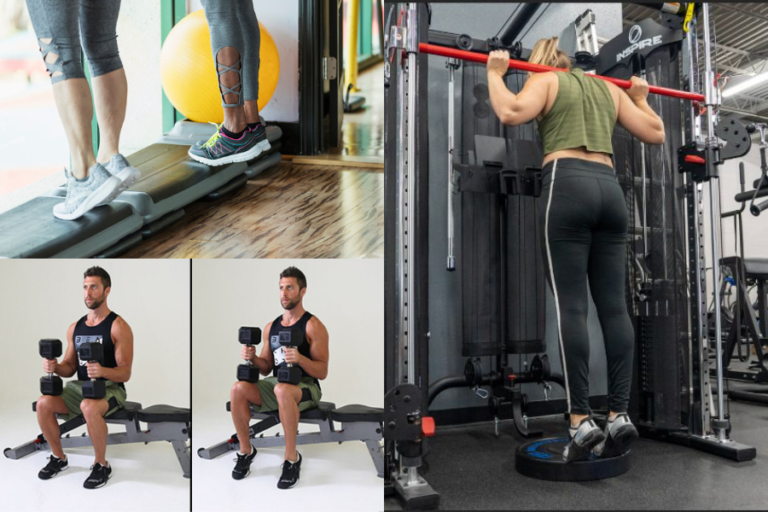
- Heel elevated goblet squats using a plate or slant board to increase knee bend and reduce hip involvement
- Hack squats on a machine, with feet placed a little lower on the platform to increase quad activation
- Sissy squats, bodyweight or weighted, which use extreme knee bend to target the front of the thigh
These quad focused squat variations are highlighted in the Gymshark guide as some of the best tools for loading your quads heavily and safely.
Leg press and leg extension
Machines are very useful for hypertrophy because they let you push close to failure with less concern about balance or lower back fatigue.
- Leg press is excellent for heavy quad loading with back support. You can focus on quads by placing your feet lower on the platform and allowing your knees to travel over your toes, while keeping them in line with your feet.
- Leg extensions are a true isolation exercise for the quads. They are ideal for higher rep sets of 15 to 30 reps where you chase a deep burn without overloading your joints.
Because leg press and leg extensions reduce the need for full body stabilization, they fit well later in the workout after your heavy free weight sets.
Unilateral quad exercises
Single leg work helps you build symmetrical quads, improve balance, and find and fix side to side strength gaps.
Two powerful options are:
- Lunges, especially with your front foot slightly elevated on a plate to increase knee flexion and depth
- Bulgarian split squats with a shorter stance, upright torso, and your front knee tracking over your toe for maximum quad recruitment
Guides from Gymshark and RP Strength both highlight these unilateral exercises as valuable additions to quad hypertrophy workouts for range of motion and muscle balance.
Sample quad hypertrophy workouts
You can organize your training in many ways. Below is a simple 2 day per week structure that hits the key principles: enough volume, exercise variety, and both heavy and moderate rep ranges.
Day 1: Heavy and moderate focus
- Barbell front squat
- 3 to 4 sets of 6 to 8 reps
- Controlled descent, pause briefly at the bottom, then drive up through mid foot
- Leg press
- 3 to 4 sets of 10 to 15 reps
- Feet lower on the platform, knees tracking over toes, go as deep as you can with control
- Bulgarian split squat
- 3 sets of 10 to 12 reps per leg
- Keep your torso upright and your front knee bending far over the toes without collapsing inward
- Leg extension
- 2 to 3 sets of 15 to 20 reps
- Smooth tempo, slight pause at the top, controlled lower
Day 2: Deep range and higher reps
- Heel elevated goblet squat
- 3 to 4 sets of 10 to 15 reps
- Use a plate or slant board to raise your heels, sink deep while staying balanced
- Hack squat
- 3 sets of 8 to 12 reps
- Feet lower on the platform, go deep, and avoid bouncing out of the bottom
- Walking lunges with front foot elevated
- 3 sets of 12 to 15 steps per leg
- Small plate or low step for the front foot, focus on smooth, controlled movement
- Leg extension drop set
- 2 sets of 15 to 20 reps, then drop the weight and do 10 more reps
- Perfect for finishing the session with a strong pump
Across the week, this setup gives you roughly 18 to 24 hard sets for quads, depending on whether you take the higher or lower end of the recommended ranges. That fits comfortably within typical hypertrophy volume guidelines and leaves room to adjust based on how you feel.
Adjust volume and frequency to your recovery
Guidelines for volume and frequency are starting points, not rigid rules. Your ideal quad hypertrophy workout depends on how you personally respond to training.
Signs you may need to reduce quad work:
- Soreness lasting more than 3 days
- Performance dropping from week to week
- Knees or hips feeling irritated rather than just muscle tired
Signs you might benefit from a bit more:
- Little or no soreness, even when pushing hard
- Strength plateauing for several weeks
- Workouts feeling easy and not mentally demanding
Volume landmarks like Minimum Effective Volume and Maximum Recoverable Volume, discussed in detail by RP Strength, can help you think about these adjustments in a structured way. Start with conservative volume, then add sets or an extra exercise only when you are clearly handling the current load well.
Most people will do well with:
- 2 quad focused days per week at first
- 10 to 16 hard sets per week
- 48 hours or more between heavy quad sessions
From there, add sets slowly, reassess after several weeks, and track your progress in strength, muscle measurements, or workout photos.
Technique and safety tips
Pushing for quad hypertrophy does not have to mean beating up your joints. With a few form habits, you can load your quads heavily while staying safe.
- Let your knees travel over your toes, but keep them in line with your feet rather than collapsing inward
- Brace your core before heavy squats and leg presses, and maintain an upright torso when your goal is quad emphasis
- Use a controlled tempo, especially in the bottom half of the movement where your quads are under the most tension
- Rest 60 seconds to 3 minutes between sets, aiming for “very good” recovery, not perfect, so you can maintain intensity across the session
Rest times, according to RP Strength’s training recommendations, can be bent slightly based on the exercise and how you feel. Heavier compound lifts usually need closer to 2 to 3 minutes, while lighter isolation sets may only need 45 to 90 seconds.
Putting it all together
A strong quad hypertrophy workout program checks a few boxes. You hit your quads at least twice a week, accumulate around 10 or more hard sets weekly, use a mix of squats, presses, and isolation moves, and train through a deep and controlled range of motion. You vary rep ranges across the heavy, moderate, and light zones, and you adjust volume and frequency based on your own recovery.
Pick one change to start with, such as adding heel elevated goblet squats to the beginning of your leg day or increasing your leg press depth over the next few weeks. As your technique and tolerance improve, you can build out the full structure. With consistent effort and smart progression, you will see your quads grow in both size and strength.
About the Author