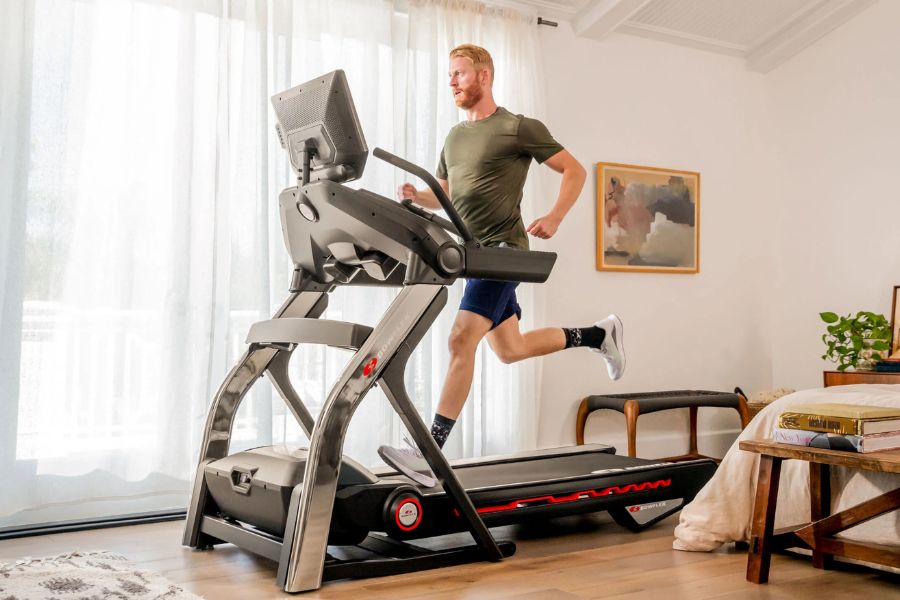
Treadmill incline workouts might look simple, but they quietly check a lot of boxes for weight loss, strength, and overall health. By tilting the treadmill deck even a few degrees, you turn an ordinary walk into a workout that burns more calories, recruits more muscle, and is still gentle on your joints.
In other words, if you are trying to lose weight without pounding your knees or sprinting, treadmill incline workouts can be your secret weapon.
What makes treadmill incline workouts so effective
When you walk on an incline, you are moving your body against gravity. That extra lift means your muscles have to work harder, and your heart has to pump more blood to keep up.
Several studies and fitness brands have highlighted why that matters:
- Walking on an incline between 5% and 10% significantly increases calorie burn and raises your heart rate more quickly than walking on a flat surface at the same speed (NordicTrack).
- The metabolic cost of walking goes up by about 52% at a 5% incline and by 113% at a 10% incline compared with flat walking, so you burn more calories in the same amount of time (NordicTrack).
That extra effort happens even if your speed stays exactly the same. You can keep your walk comfortable and still turn it into a serious calorie burner.
How incline helps you lose weight
For weight loss, you care about two main things: how many calories you burn and how consistently you can stick with your routine. Incline walking supports both.
You burn more calories in less time
Because your muscles are working harder against gravity, incline treadmill workouts automatically increase your energy expenditure. Multiple sources agree that incline walking is more efficient for calorie burn than flat walking at the same pace (NordicTrack, Healthline, PureGym).
You are essentially turning an everyday walk into a hill workout without leaving your living room or gym. That can be especially useful if:
- You have a tight schedule and need more impact from 20 to 30 minutes of exercise
- You prefer walking to running but still want weight loss results
- You want to feel like you are working hard without sprinting
You stay in a fat burning intensity zone longer
Incline walking often keeps you in a moderate intensity range that feels sustainable but still challenging. This intensity is where your body uses a higher percentage of fat for fuel compared with very high intensity efforts.
A recent lab study looked at the viral 12-3-30 treadmill workout, which involves walking at a 12% incline and 3 miles per hour for 30 minutes. Researchers found that this type of incline walking produced a higher percentage of fat utilization, roughly 40.5%, which was about 7.5% higher than self paced running matched for energy expenditure (International Journal of Exercise Science).
The same study noted that 12-3-30 was less time efficient for total calorie burn than running, but it was more favorable for fat oxidation. If your priority is to encourage your body to use more fat during exercise, incline walking is a strong option.
You can actually stick with it
Because incline workouts are typically lower impact and lower speed than running, they are often easier to maintain week after week. Instead of dreading all out intervals, you focus on breathing steadily while your legs climb a virtual hill.
Using a simple Rate of Perceived Exertion (RPE) scale, where 1 feels like sitting on the couch and 10 feels like a full sprint, many fitness pros recommend keeping incline sessions around a 6 or 7 out of 10. This level is hard enough to drive weight loss, but still manageable for regular workouts (NordicTrack).
The muscle and strength benefits you get
Weight loss is not just about the scale. It is also about how strong and capable you feel in everyday life. Treadmill incline workouts shine here too.
You engage more lower body muscles
When you walk uphill, your backside and legs have to push harder to move your body forward and up. Research and gym data show that incline walking activates the:
- Glutes
- Hamstrings
- Quadriceps
- Calves
- Supporting lower leg muscles like the tibialis anterior and peroneals
For example, walking at a 9% incline has been shown to increase calf muscle activity by 175%, glute engagement by 635%, and hamstring activation by 345% compared with flat walking (TRUE Fitness). That is a big return from what feels like a simple adjustment on the console.
This extra muscle recruitment helps you:
- Build strength in your posterior chain, which is especially helpful if you sit a lot
- Improve balance and stability, since more supporting muscles are involved
- Shape and tone your legs and glutes as you lose body fat
You protect and support your knees
Incline treadmill walking tends to shift more of the work to your hips and glutes and can reduce the loading on your knees compared with running on a flat surface. Several fitness brands and resources highlight that incline workouts are generally lower impact and reduce joint strain on your knees, hips, back, and ankles while still improving cardiovascular fitness (NordicTrack, TRUE Fitness).
Healthline also notes that walking at gradients of 10% to 15% targets your quadriceps, hamstrings, and calves in a way that can help reduce knee pressure and support people with knee issues or higher body weight (Healthline).
If you have struggled with impact from jogging, incline walking lets you challenge your muscles and heart without the same pounding.
Cardiovascular and metabolic health perks
Beyond weight loss and strength, incline treadmill workouts are a solid investment in your long term health.
Stronger heart and better endurance
Any time you increase the incline, your heart has to work harder to deliver oxygen to your working muscles. Studies and fitness brands report that walking at inclines like 10% or 16% boosts heart rate more than flat walking and engages your whole body more completely (Healthline).
Over time, that extra effort can:
- Improve your cardiovascular fitness
- Help you climb real stairs and hills more comfortably
- Make everyday activities feel easier
Incline workouts can also help you reach and maintain a fat burning heart rate zone more quickly, which is useful if you only have 20 to 30 minutes to exercise (TRUE Fitness).
Better metabolic health and insulin sensitivity
Several sources suggest that regular incline walking improves metabolic health markers by increasing overall energy expenditure and reducing strain on the heart. TRUE Fitness notes that incline treadmill training can support cardiovascular health and improve insulin sensitivity while keeping joint stress lower than traditional running (TRUE Fitness).
Combined with consistent nutrition habits, this kind of training can be a practical tool for managing body weight, blood sugar, and long term health risks.
If you already walk for exercise, adding even a small incline is one of the simplest ways to upgrade your routine without changing your schedule.
Popular incline workout: 12‑3‑30 explained
If you have scrolled fitness content on social media, you have probably seen the 12-3-30 treadmill workout. It looks like a code, but it is actually straightforward:
- 12% incline
- 3 miles per hour
- 30 minutes
This routine went viral for promising fat loss through walking instead of running. Beyond social media hype, it has now been tested in a controlled lab setting. The 2025 study mentioned earlier found that 12-3-30:
- Had a lower rate of energy expenditure than self paced running
- Took longer to complete when matched for total energy expenditure
- Produced a higher percentage of fat use as a fuel source, about 40.5%, compared with running (International Journal of Exercise Science)
The takeaway for you: 12-3-30 may not be the fastest way to burn the most calories, but it can be a smart choice if you prefer to walk, want joint friendly training, and are interested in improving fat oxidation.
If 12% feels too intense at first, you can use the same structure with less incline and still get benefits, for example 6-3-30 or 8-3-20, then progress over time.
How to start incline workouts safely
Incline training is powerful, but it is also a new stress on your muscles, tendons, and ankles. A smart start keeps you progressing instead of sidelined.
Choose a gentle incline at first
If you are new to treadmill incline workouts, follow the common recommendation to begin at a 3% to 5% incline. NordicTrack and PureGym both suggest using lower inclines and shorter sessions initially to avoid overloading your calves and Achilles tendon (NordicTrack, PureGym).
You might start with:
- 5 to 10 minutes total at 3% incline
- Flat warm up and cool down on either side
- An every other day schedule so your muscles adapt
From there, you can gradually increase either the incline or the duration, but not both at once.
Watch for lower leg soreness
Incline walking changes how your ankles and lower legs move. Healthline notes that going uphill increases the demands on muscles like the tibialis anterior, peroneals, gastrocnemius, and soleus, and increases the range of motion at the ankle. If you jump into high inclines too fast, this can cause pain or even lead to overuse injuries (Healthline).
Pay attention to:
- Tightness or sharp pain in your calves or shins
- Aching at the back of your heel or Achilles tendon
- Ankle discomfort during or after your workout
If any of these show up, back the incline down, shorten your sessions, and allow more recovery days before increasing again.
Use RPE to guide your effort
Instead of focusing only on numbers on the console, use how you feel as a guide. Aim for that 6 to 7 out of 10 on the Rate of Perceived Exertion scale during the main part of your incline workout (NordicTrack).
You should be breathing heavier but still able to speak in short sentences. If you can sing, you are probably going too easy. If you cannot get out more than a word or two, you may be going too hard for a sustainable weight loss session.
Simple incline workout ideas you can try
You do not need complicated programming to benefit from incline walking. Start with one of these simple structures and adjust speed or incline based on your fitness level.
Beginner incline session (20 minutes)
- 5 minutes flat warm up at an easy pace
- 10 minutes at 3% to 5% incline at a comfortable walking speed
- 5 minutes flat cool down
This is a good way to introduce your muscles and joints to incline without overdoing it.
Interval incline session (25 to 30 minutes)
Alternate between flat and incline walking so you can recover between harder efforts:
- 5 minutes flat warm up
- 2 minutes at 5% to 8% incline
- 3 minutes flat
- Repeat steps 2 and 3 three or four times
- 5 minutes flat cool down
This structure keeps the workout engaging and lets you push a bit harder during the incline segments.
12‑3‑30 style session (with modifications)
If you want to work toward the full 12-3-30, you might build up in stages:
- Week 1: 6% incline, 3 mph, 10 to 15 minutes
- Week 2: 8% incline, 3 mph, 20 minutes
- Week 3 and beyond: 10% to 12% incline, 3 mph, up to 30 minutes
Include a 5 minute warm up and cool down, ideally at 0% to 2% incline, just as PureGym and other sources recommend for incline routines (PureGym).
Bringing it all together
Treadmill incline workouts are a practical way for you to:
- Burn more calories in the same amount of time
- Encourage your body to use more fat for fuel
- Strengthen your glutes, hamstrings, quads, and calves
- Protect your joints while still challenging your heart
- Make walking workouts feel fresh and genuinely effective
You do not need advanced equipment or complex plans. Even a small incline transforms a familiar walk into a powerful tool for weight loss and fitness.
The next time you step on a treadmill, instead of automatically pressing start and leaving the incline at zero, nudge it up a few percent and see how your body responds. With consistent practice and gradual progression, that small change can make a noticeable difference in how you look, feel, and move.
About the Author