Kettlebells are some of the most versatile and powerful tools in functional fitness. Whether you’re new to strength training or looking to switch up your workout routine, incorporating kettlebells into your regimen offers numerous benefits. These include improving muscular endurance, enhancing grip strength, boosting cardiovascular health, and sculpting full-body muscle. Unlike dumbbells or barbells, kettlebells challenge your body in dynamic ways due to their off-center weight, which activates stabilizing muscles and engages the core with every move.
For beginners, mastering fundamental kettlebell movements is essential for building proper form, preventing injuries, and laying the groundwork for more advanced training. The following exercises have been carefully chosen for their effectiveness in building strength, muscle, and coordination across multiple muscle groups.
Choosing the Right Kettlebell Weight
Finding Your Starting Point
Before diving into the exercises, it’s important to determine the appropriate starting weight for your fitness level. If you’re a beginner, the goal is to choose a kettlebell that feels challenging but still allows you to maintain good form.
- For men, a typical starting weight is between 35-45 lbs (16-20 kg).
- For women, starting with 18-26 lbs (8-12 kg) is usually recommended.
- If you have prior experience with resistance training, you can explore slightly heavier options—up to 70 lbs (32 kg) for men and 53 lbs (24 kg) for women.
More important than following rigid weight guidelines is choosing a kettlebell that allows controlled movements without compromising your posture or technique.
Top 5 Beginner Kettlebell Exercises for Full-Body Strength
These exercises were selected for their ability to target multiple muscle groups while building core stability, power, coordination, and strength. They form the foundation of an effective kettlebell training program.
1. Kettlebell Slingshots (Around the World)
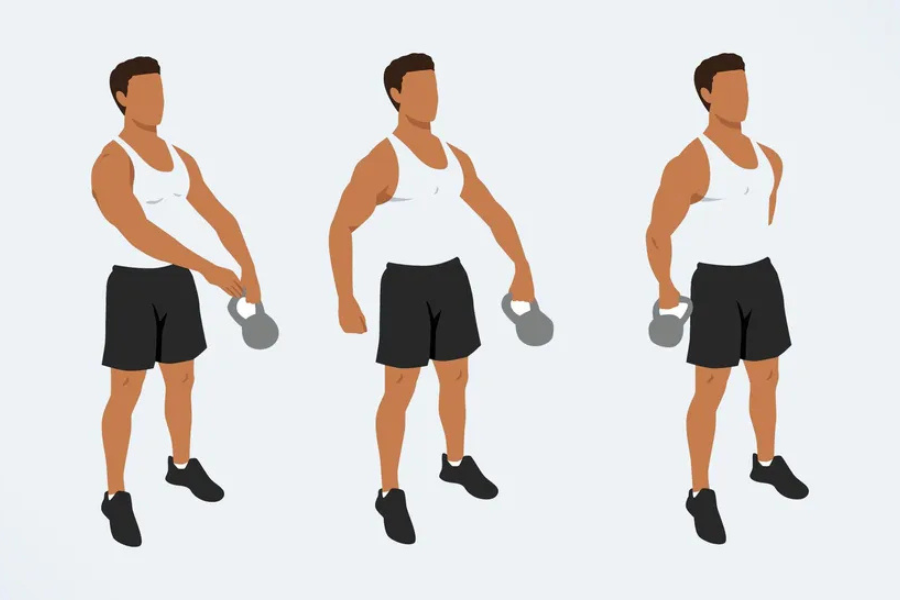
Slingshots are a deceptively simple yet powerful move to start your kettlebell journey. Also known as “Around the World,” this exercise involves rotating the kettlebell around your body at waist height, switching hands at the front. Though it may look like a warm-up (and it can be used as one), it trains your grip strength, core stability, and upper body coordination.
How to perform:
- Stand with your feet hip-width apart and hold the kettlebell in one hand.
- Begin to pass it around your waist, switching hands behind your back.
- Keep your hips steady and your back upright throughout the motion.
Slingshots are ideal for getting accustomed to the weight and flow of a kettlebell while preparing your muscles for more complex movements.
2. Kettlebell Snatch
The kettlebell snatch is a powerful, explosive movement that builds strength, speed, and coordination. It’s a total-body exercise commonly seen in CrossFit and kettlebell sport competitions. Though it requires practice, the rewards are worth the effort.
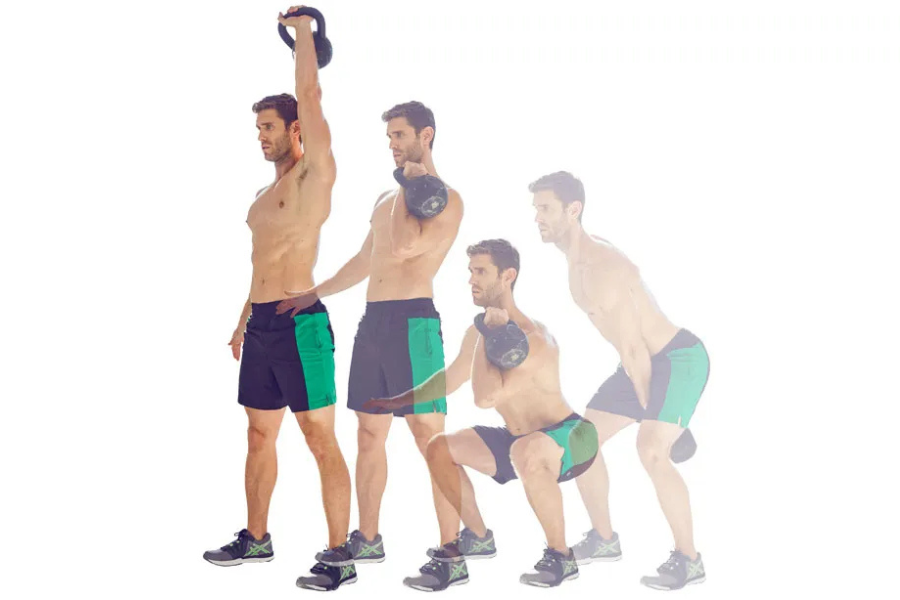
Muscles worked: Shoulders, glutes, hamstrings, core, upper back.
How to perform:
- Start with the kettlebell on the floor between your feet.
- Hinge at the hips and grip the kettlebell with one hand.
- Swing it back between your legs, then drive through your hips to propel the kettlebell upward.
- As it rises, pull it close to your body, flip it gently over your wrist, and punch it overhead.
- Lock your elbow at the top, then reverse the motion and repeat on the other side.
Tip: Avoid letting the kettlebell smack your forearm. The movement should be smooth and controlled.
3. Kettlebell Clean
The kettlebell clean is another foundational movement, perfect for transitioning into more complex exercises like the press or front squat. It trains the posterior chain while also demanding coordination and precision.
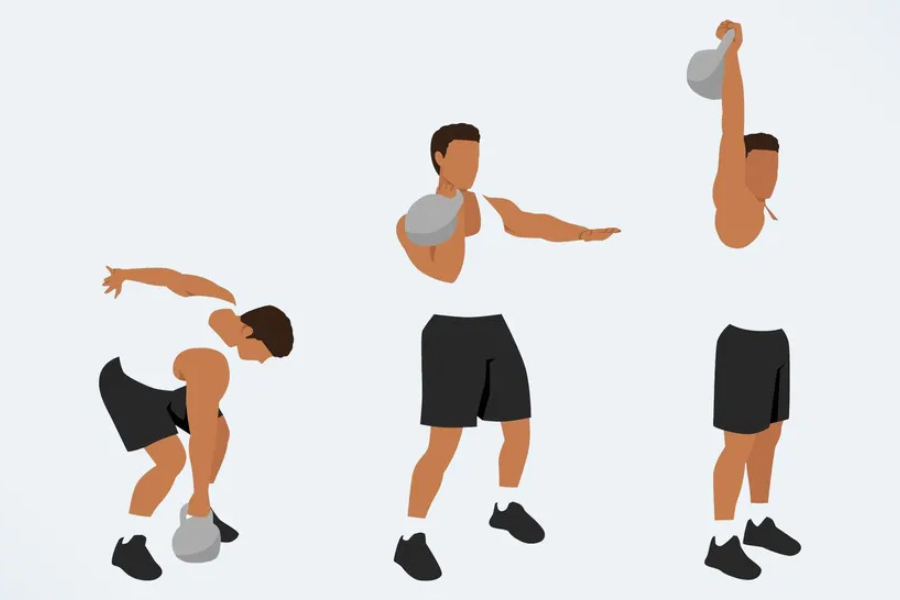
How to perform:
- Place the kettlebell between your feet and grab it with an overhand grip, slightly off-center.
- Swing it back between your legs, then pull it upward along your torso.
- Flip your wrist and guide the kettlebell into a front rack position—resting on your forearm with your elbow tucked close to your ribs.
- Lower the weight and repeat on the opposite side.
A properly executed clean should not slam into your forearm but land softly with control.
Full-Body Control Exercises for Stability and Power
While the first three movements focus on strength and dynamic movement, the following two integrate balance, core stability, and controlled strength, making them essential for functional fitness.
4. Kettlebell Turkish Get-Up
Perhaps the most intricate movement on this list, the Turkish get-up is a slow, deliberate transition from lying to standing with a kettlebell held overhead throughout. This move challenges nearly every muscle in your body, particularly your core, shoulders, and legs.
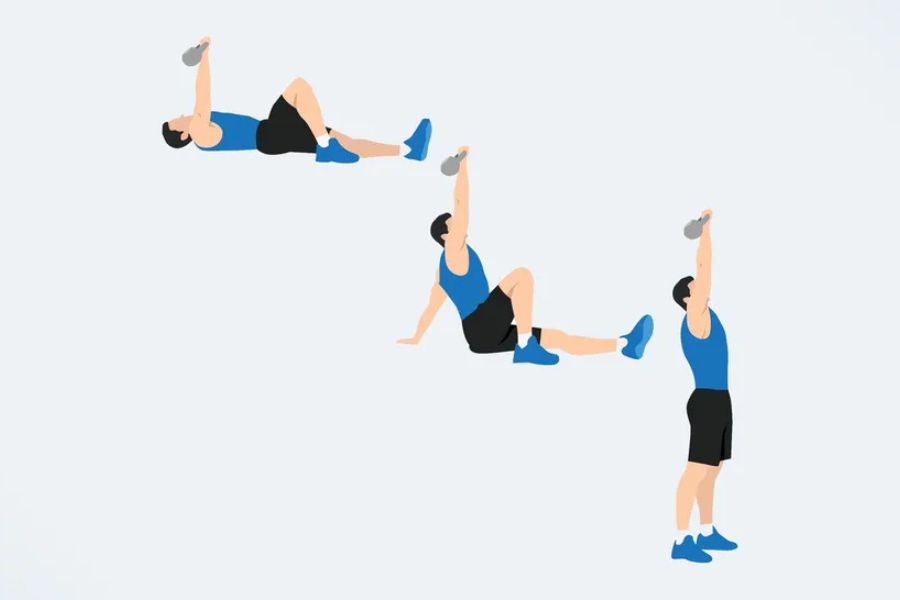
How to perform:
- Lie on your back, holding a kettlebell in your right hand with your arm extended toward the ceiling.
- Bend your right knee and place that foot flat on the floor.
- Push off your right foot and left elbow to sit up.
- Press your left hand into the ground and lift your hips.
- Sweep your left leg behind you to a kneeling position.
- Straighten your torso, then stand up.
- Reverse the steps to return to the starting position, then repeat on the left side.
Due to its complexity, many beginners may take time to master the Turkish get-up. However, its benefits in balance, shoulder stability, and total-body awareness are unmatched.
5. Kettlebell Squat Clean
A more advanced variation of the clean, the kettlebell squat clean adds a deep squat to the movement, engaging the lower body more intensely. This move combines power, flexibility, and coordination in one fluid sequence.
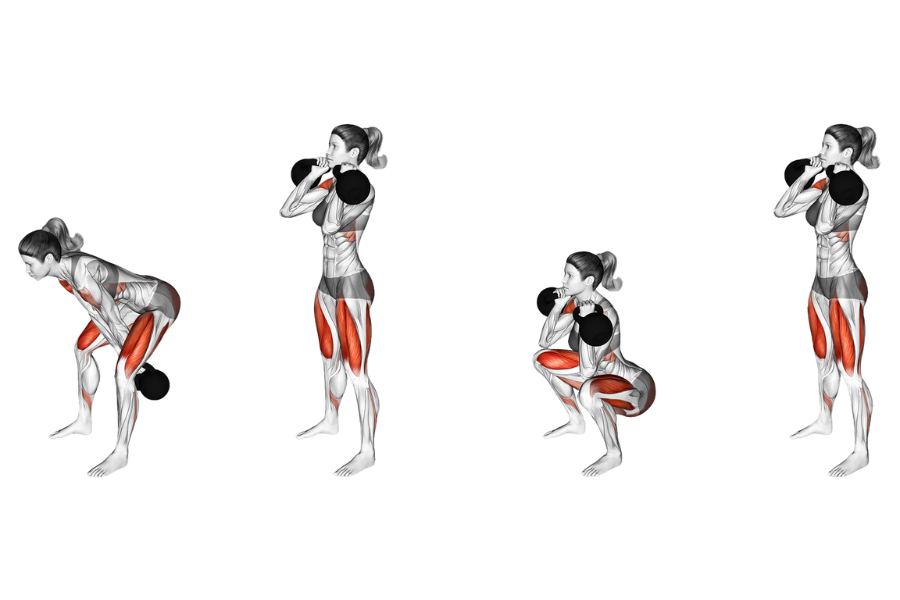
How to perform:
- Start with the kettlebell on the ground between your feet, standing shoulder-width apart.
- Bend your knees, brace your core, and grip the kettlebell with both hands.
- Pull it upward toward your chest as you quickly switch your grip and drop into a deep squat.
- Keep your chest lifted and your heels flat.
- Rise back to standing, flip the grip back, and repeat.
The squat clean targets your quads, hamstrings, glutes, and core while also building explosive strength.
Benefits of Kettlebell Training for Beginners
Why You Should Start With Kettlebells
Kettlebell training isn’t just for athletes or seasoned lifters. In fact, beginners can gain immense value by learning proper technique early. Some of the major benefits include:
- Functional Strength: Many kettlebell exercises mimic everyday movements, making them excellent for practical strength development.
- Cardiovascular Endurance: Exercises like snatches and swings provide a cardio boost alongside strength gains.
- Improved Coordination: Because of the way the kettlebell moves and its unbalanced design, your body has to work harder to stay controlled.
- Core Engagement: Nearly every movement activates your core muscles, improving stability and reducing injury risk.
- Space-Efficient Training: One kettlebell is all you need for a comprehensive full-body workout.
Getting Started: Tips for Beginner Kettlebell Training
- Start slow and focus on form. Quality over quantity will reduce your risk of injury.
- Practice without weight first to get comfortable with the movement pattern.
- Incorporate rest days to allow your muscles to recover.
- Mix exercises to create a balanced workout that targets all major muscle groups.
- Stay consistent—progress comes with regular practice.
Build a Strong Foundation with These Kettlebell Movements
Mastering these five kettlebell exercises can transform your fitness journey by building strength, endurance, and mobility. They provide the tools to train your entire body with minimal equipment and can be scaled up or down based on your goals. With consistent practice and attention to form, beginners can make impressive strides using just one piece of equipment.
About the Author