A rowing machine can look a little intimidating at first, but it might be one of the most efficient tools in the gym for improving your cardio, building strength, and supporting weight loss. Rowing machine cardio workouts challenge your heart, lungs, and muscles in a single, low impact session, which makes them a smart option if you want results without pounding your joints.
Below, you will learn what makes rowing different from other cardio, how it can help you lose weight and improve your health, plus simple workout ideas you can start using right away.
Understand why rowing is such effective cardio
Rowing is not just a leg workout. Each stroke recruits your legs, core, back, shoulders, and arms. Research suggests you use about 80 to 85 percent of your main muscle groups when you row, far more than what you get from a treadmill or elliptical workout (GQ).
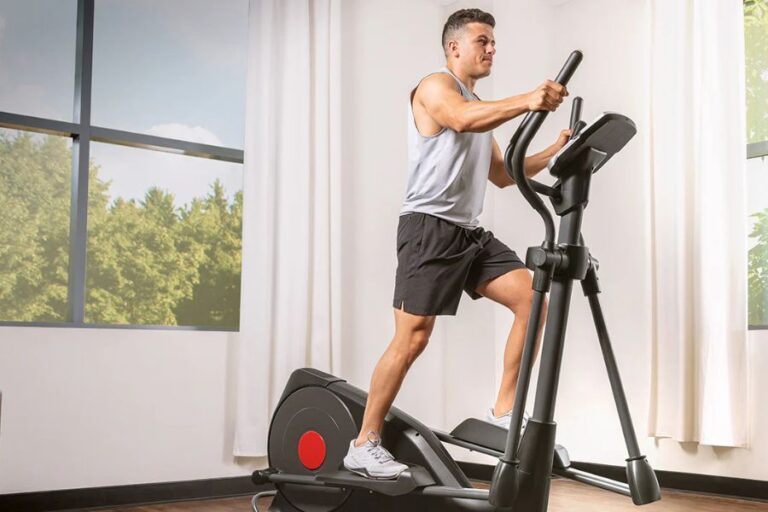
Because so much of your body is working at once, your heart has to pump harder to deliver oxygen. Studies show that rowing can match treadmill running for peak oxygen uptake, or VO₂ max, and outperform an elliptical machine, while still being low impact on your joints (GQ).
Over time, consistent rowing machine cardio workouts can:
- Improve cardiovascular endurance and VO₂ max
- Strengthen your legs, glutes, back, and core
- Support better posture and balance
- Help manage stress and boost mood (Cleveland Clinic)
A 30 minute session on a rowing machine can provide a cardio workout similar to running, but with less strain on your knees and lower back (Cleveland Clinic).
Learn basic rowing technique before you go hard
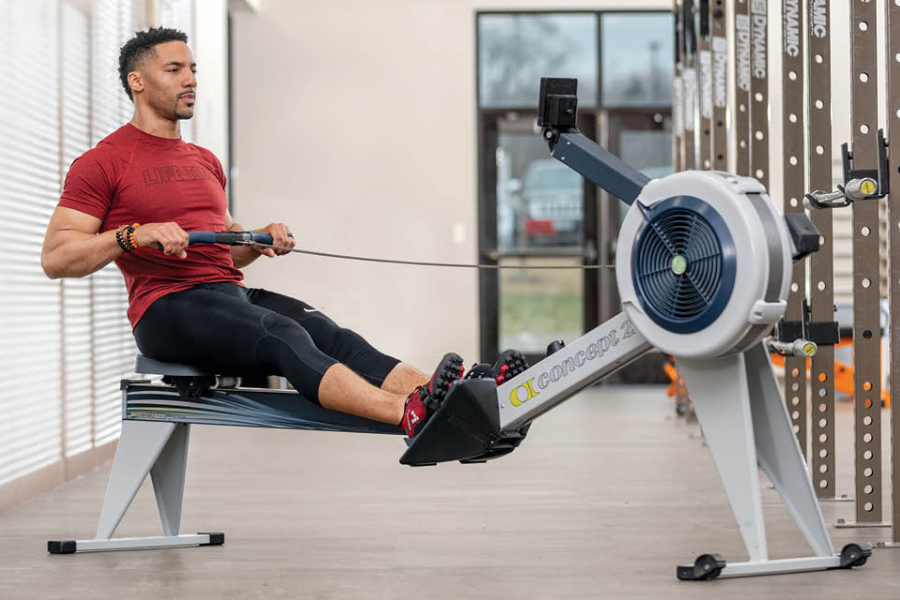
Good form is the key to getting the benefits of rowing without irritating your back or shoulders. Rowing coaches often break the stroke into three simple phases. Your legs should drive first, then your torso leans back slightly, and your arms pull last (Men’s Health).
Think of the movement in this order:
-
Drive with your legs
Start with a strong push through your heels. Your knees straighten and your hips open, similar to a deadlift or squat motion. This should be the most powerful part of the stroke (Men’s Health). -
Swing your body
Once your legs are almost straight, lean your torso back slightly from the hips, keeping your core braced and your back neutral. -
Finish with your arms
Pull the handle toward the base of your ribs, keeping your elbows close to your sides. Do not shrug your shoulders up toward your ears.
Then you reverse the sequence to return to the start: arms forward, torso folds slightly toward your thighs, then your knees bend and you glide back in.
If you are new, give yourself a couple of weeks to groove this pattern. It is common to need up to three weeks of consistent practice or coaching to feel confident with your form (Reddit Fitness).
Set up your rowing machine for success
Before you start your first real workout, take a minute to adjust the machine. Thoughtful setup makes your rowing safer and more effective.
Choose the right resistance
On popular machines like the Concept2, you adjust resistance with a lever on the side of the flywheel. The actual load is often described as “drag factor.” For most people, a drag factor that corresponds roughly to a damper setting between 4 and 6 works best (Men’s Health).
Higher settings can be useful for short sprints. Lower settings are better for longer endurance pieces. Cranking the resistance to the max tends to be counterproductive, even for advanced rowers, because it encourages poor form and early fatigue (Men’s Health).
Check your body position
Sit tall on the seat, not slumped. Strap your feet in so the strap runs across the widest part of your foot. At the front of the stroke, your shins should be close to vertical, not folded into a deep crouch. This position helps protect your knees and lets your legs drive powerfully.
If anything feels awkward or painful, reduce the resistance and slow down until you feel more in control.
Use rowing for weight loss the smart way
You may be wondering how rowing machine cardio workouts stack up against running or other cardio for fat loss. Rowing definitely burns calories, although typically not quite as many as running at a similar effort, which is why running is often considered more efficient for pure weight loss (American Home Fitness).
However, rowing has distinct advantages:
- It is easier on your joints, so you can train consistently even if your knees do not love running (Reddit Fitness)
- It builds muscle and muscular endurance, especially in your legs and back, which supports long term metabolism (American Home Fitness)
- It spreads the work across your whole body, so fatigue is not concentrated only in your legs (Reddit Fitness)
For weight loss specifically, rowing helps by contributing to a calorie deficit. A 175 pound adult can burn around 139 calories in 15 minutes of moderate rowing (Healthline). For many people, that adds up quickly over several sessions a week.
That said, exercise is only one part of the equation. Maintaining a consistent caloric deficit, often around 500 calories per day, through a combination of movement and nutrition is still the primary driver of weight loss (Healthline, Reddit r/Rowing).
Match your workout type to your goals
Different styles of rowing workouts will shape your results in slightly different ways. You do not have to choose just one, but it helps to know which approach supports your current goal.
In general, longer steady rows at a moderate pace are best for building a cardio base and burning calories over time, while shorter high intensity intervals are better for improving fitness quickly and adding variety.
Steady state cardio for endurance and fat loss
Steady state means rowing at a sustainable, conversational pace for an extended period. A classic example is a 30 minute row at around 20 strokes per minute, which is widely recommended for aerobic endurance (Men’s Health).
Many rowers aim to spend a good chunk of their weekly training in this “Zone 2” effort range, where you are working but not gasping. It burns a lot of calories over time without leaving you completely wiped or overly hungry afterward (Reddit r/Rowing).
Intervals for intensity and time efficiency
If you have less time, high intensity interval training, or HIIT, on the rowing machine can be very effective. You alternate short, hard efforts with periods of rest or easy rowing. When done correctly, rowing intervals can rival longer steady sessions for calorie burn in a shorter window (Reddit r/Rowing).
Workout ideas from rowing coaches and trainers include:
- 1 minute hard, 1 minute easy, repeated for 10 to 20 rounds
- All out 100 meter sprints with full rest between each
- Alternating stroke rates, for example 2 minutes at 20 strokes per minute, then 2 minutes at 30, and repeat
These styles train both your speed and endurance, and they tend to feel more engaging than doing the same pace for half an hour straight (Men’s Health).
Combo workouts that blend strength and cardio
You can also mix rowing with bodyweight or strength movements. For instance, circuits that pair 400 meters of rowing with kettlebell deadlifts and push ups balance cardiovascular and muscular training in one session (GQ).
Other options include EMOM (every minute on the minute) formats or short challenges that alternate rowing with burpees, thrusters, or core work. Several structured workouts like these are designed to build fat burning, heart health, and muscular endurance in 10 to 20 minutes (Men’s Health).
Try sample rowing workouts for every level
If you are not sure how to put this together, start with simple, clear workouts. You can adjust distance, pace, or rest as you get fitter.
Beginner: Build your base
Aim for 3 sessions per week. Focus on technique and consistency.
- Warm up: 5 minutes easy rowing
- Main set: 10 rounds of 1 minute moderate rowing, 1 minute very light rowing
- Cool down: 5 minutes very easy rowing or walking
Alternatively, try a continuous 20 minute row at a pace where you can still say short sentences. This aligns with beginner friendly structures recommended for building aerobic fitness (Healthline).
Intermediate: Burn more calories and add variety
Once you feel comfortable, you can increase duration or intensity.
Option 1, steady state:
- Warm up: 5 minutes easy
- Main set: 25 to 30 minutes continuous rowing at a moderate pace
- Cool down: 5 minutes easy
Option 2, intervals:
- Warm up: 5 minutes easy
- Main set: 10 rounds of 1 minute hard, 1 minute easy
- Cool down: 5 minutes easy
You can also play with stroke rates, for example alternating between 20 and 30 strokes per minute, as suggested by rowing coaches to keep workouts interesting and challenging (Men’s Health).
Advanced: Push fitness and performance
If you already have a solid base, you can move toward more demanding intervals or mixed sessions.
- Warm up: 10 minutes, gradually increasing intensity
- Main set: 6 to 10 rounds of 250 to 400 meters at a strong pace, with equal rest
- Finisher: 5 to 10 minutes of easy rowing
Advanced rowers sometimes incorporate HIIT formats similar to those laid out in detailed rowing plans, which are designed to improve VO₂ max and overall exercise capacity (Healthline).
Protect your joints and track your progress
One of the biggest advantages of rowing is that it is gentle on your joints. Studies have found that guided rowing can reduce knee pain and improve thigh strength in people with mild knee osteoarthritis (GQ). Other research suggests rowing helps people with arthritis gain muscular strength and endurance while keeping joint pain in check (Men’s Health).
To keep things safe:
- Maintain a neutral spine, and avoid hunching or overreaching at the front
- Do not let your knees collapse inward
- Start with shorter sessions and build up gradually
If you want a clearer picture of your calorie burn, consider connecting a heart rate monitor to apps like ErgData or Garmin Connect. Many rowing machines tend to overestimate calories, so external tracking can give you a more accurate view (Reddit r/Rowing).
Over time, watch for improvements in:
- Distance you can cover in a set time
- Split pace, often shown as time per 500 meters
- Heart rate at a given pace
- How you feel during daily activities, like climbing stairs or carrying groceries
Meeting general health guidelines, such as 150 minutes of moderate exercise per week, becomes much easier when you can hit a lot of that target with a single machine. About 20 minutes of rowing per day can move you toward the CDC recommendation for cardiovascular health (Cleveland Clinic).
Put it all together
Rowing machine cardio workouts give you a rare combination of benefits. You get a strong cardio session, full body muscle engagement, and minimal joint impact in a relatively short time. Compared with other options, rowing may burn slightly fewer calories than running, but it often wins on comfort, sustainability, and how much of your body it trains in each stroke (American Home Fitness, Reddit Fitness).
If your goal is weight loss and better health, you do not need to chase records or sprint every day. Start with manageable sessions, focus on solid technique, and stay consistent. Your heart, joints, and energy levels will all benefit, and you will have a reliable, low impact way to keep moving toward your fitness goals.
About the Author