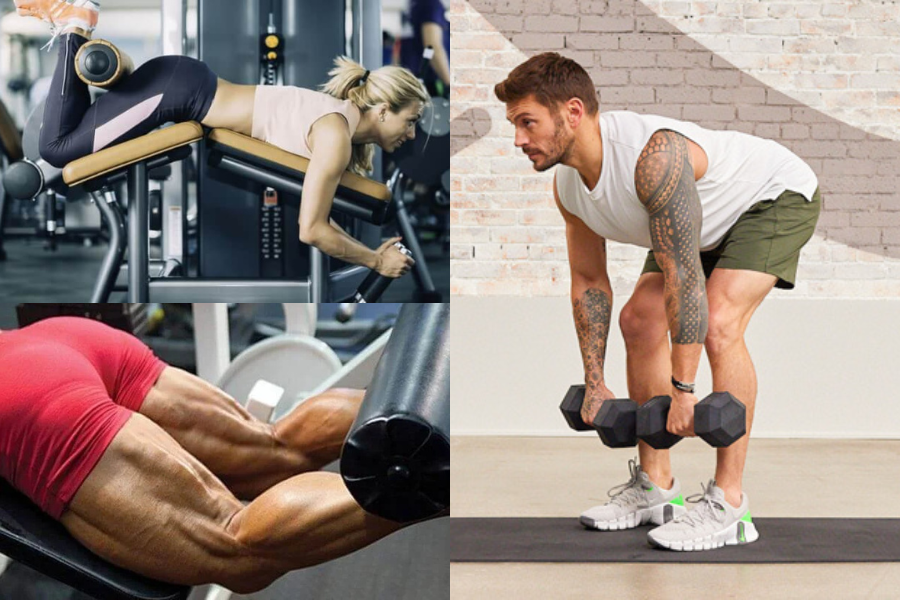
A solid hamstring workout plan does more than build the back of your thighs. It supports your knees, protects your lower back, and makes everyday movements like walking, climbing stairs, and running feel smoother and stronger. With the right exercises and a smart progression, you can train your hamstrings in a way that feels approachable, effective, and safe.
Below, you will find a friendly, step-by-step guide you can follow whether you are new to strength training or looking to upgrade your leg days.
Understand what your hamstrings actually do
Your hamstrings are a group of three muscles that run along the back of your thigh. They are responsible for bending your knees, extending your hips, rotating your lower leg, and helping stabilize your glutes and pelvis. This combination makes them essential for powerful movements such as squatting, jumping, and sprinting.
If you sit often, your hip flexors tend to get tight while your hamstrings stay elongated and relatively weak. That imbalance can lead to pulled hamstrings, lower back discomfort, and less efficient movement. A good hamstring workout plan should not only strengthen the hamstrings but also help stabilize your pelvis and restore better movement patterns.
Set simple goals for your hamstring workout plan
Before you jump into exercises, decide what you want from your hamstring training. Your goals will shape how often you train and how challenging your sessions should be.
You might aim to:
- Reduce your risk of hamstring pulls and knee pain
- Build strength for running, sports, or general fitness
- Increase muscle definition in the back of your legs
- Improve flexibility so you move more comfortably day to day
Hamstring strengthening through resistance training improves muscle endurance and reduces injury risk, especially because your quadriceps at the front of the thigh are naturally stronger. Balancing that strength front to back helps protect your knees and lower back.
Learn the key hamstring exercises
A well-rounded hamstring workout plan includes a mix of compound and isolation movements, plus flexibility and mobility work. Here are the main categories and how they help you.
Heavy hitters: compound strength exercises
Compound lifts recruit multiple muscle groups and are ideal for building overall strength and size.
-
Conventional deadlift
Conventional deadlifts heavily load your hamstrings by emphasizing hip extension while also engaging your core, hips, and back. They are a foundational movement for overall posterior chain strength. -
Romanian deadlift (RDL)
RDLs are performed with a soft bend in your knees as you hinge at the hips. This creates a deep stretch and strong contraction in your hamstrings. According to guidance summarized by Gymshark, Romanian deadlifts place most of the workload on the hamstrings rather than the lower back, which makes them one of the best options for targeted tension and relatively safe loading. -
Single-leg Romanian deadlift
Single-leg RDLs train each leg individually, challenge your balance, and build hip stability. They are especially valuable if you are a runner, since they strengthen the hamstring as it shortens during the stance phase of your stride, as highlighted by Recover Athletics in 2022. -
Hip thrusts
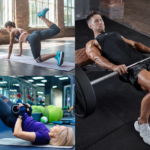
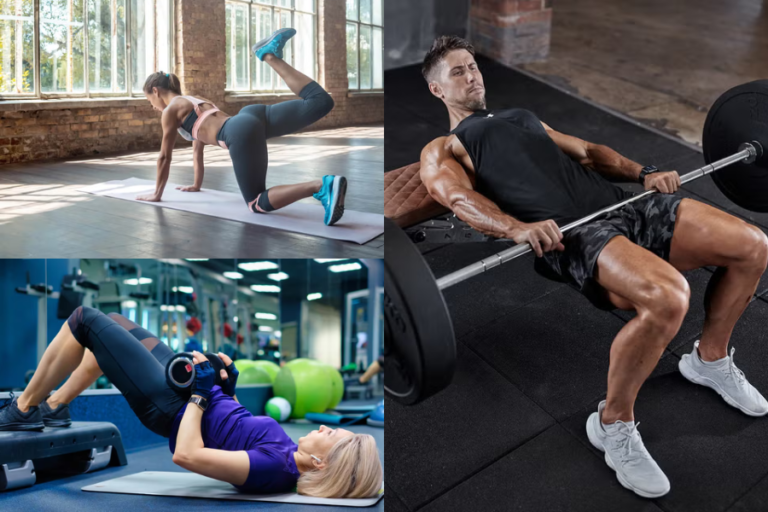
Hip thrusts are often thought of as a glute exercise, but they also engage your hamstrings through hip extension. Placing your feet slightly wider and farther in front of you increases hamstring involvement and can help you feel more work in the back of your legs rather than just your glutes.
Focus work: isolation hamstring exercises
Isolation movements let you target your hamstrings directly, which is useful for building muscle and filling in weak spots.
-
Nordic hamstring curls
Nordic curls anchor your feet and ask your hamstrings to control your body as you slowly lower yourself forward. They are one of the most researched exercises for hamstring injury prevention and strengthen the muscle in its stretched state. Consistent Nordic training has been associated with significantly reduced hamstring injury rates in athletes. -
Hamstring curls and bridge variations
Bridge curls and eccentric bridges combine hip extension and knee flexion so your hamstrings work in multiple roles at once. Hinge Health therapists describe the bridge curl as sliding your feet away from you and then back while your hips stay raised. This deepens hamstring activation and also strengthens your glutes and lower back. -
Physioball leg curl and bridge
Using a physio ball for leg curls and bridges creates instability that your hamstrings and glutes must control. These exercises improve hamstring strength, glute activation, and lower back stability. They are often prescribed at 2 sets of 10 reps with about 30 seconds of rest as part of beginner-friendly programs.
Support work: mobility, stretching, and recovery
Strong hamstrings are only truly useful if they can move through a good range of motion and recover well.
-
Sumo squat to stand
This is a dynamic stretch where you drop into a wide squat, grab your toes or ankles, and then straighten your legs. It challenges your hamstring flexibility and hip mobility at the same time. It is often recommended for beginners at 2 sets of 10 repetitions with short rests. -
Foam rolling
Foam rolling your hamstrings helps release tight spots and supports mobility. A typical starting point is 2 sets of about 20 seconds per leg, with 30 seconds rest in between passes. -
Static stretching
Stretching before and after exercise maintains or improves your hamstring range of motion. Dr. Joshua D. Harris notes that it is also important to stretch your glutes and lower back, not just the hamstrings, for optimal function and comfort around the hip and pelvis region.
Follow a beginner-friendly hamstring workout plan
If you are just getting started, you can build a simple plan that you do 2 days per week. Give yourself at least one day of rest between these sessions.
Here is a sample structure you can follow. Adjust the sets, reps, and rest times if something feels too easy or too hard.
Always warm up for 5 to 10 minutes before you start, for example with light walking, cycling, or dynamic leg swings.
Day A: Strength and stability
- Romanian deadlift
- 3 sets of 8 to 10 reps
- Rest 60 to 90 seconds between sets
- Single-leg Romanian deadlift
- 2 sets of 10 reps per leg
- Rest 30 to 45 seconds between legs
- Hip thrusts
- 3 sets of 10 to 12 reps
- Rest 60 seconds
- Physio ball leg curl
- 2 sets of 10 reps
- Rest 30 seconds
Finish with 2 sets of Sumo squat to stand, 10 reps each, resting 30 seconds.
Day B: Injury prevention and mobility
- Conventional deadlift or kettlebell deadlift
- 3 sets of 6 to 8 reps
- Rest 90 seconds
- Nordic hamstring curl (assisted as needed)
- 2 to 3 sets of 5 to 8 controlled reps
- Rest 60 to 90 seconds
- Eccentric bridge
- 2 sets of 8 to 10 reps
- Focus on a slow, controlled lowering phase
- Bridge curl (with sliders or a towel)
- 2 sets of 10 reps
- Rest 30 seconds
Wrap up with foam rolling for the hamstrings: 2 sets of 20 seconds per leg, resting 30 seconds between passes.
Training your hamstrings at least twice per week with a mix of compound and isolation exercises, and gradually increasing weight and total sets, is in line with strength guidelines summarized by Gymshark for optimal gains.
Progress your hamstring training safely
As your hamstring workout plan starts to feel easier, it is tempting to jump ahead quickly. You will see better results and avoid setbacks if you progress in small, consistent steps.
You can increase the challenge by:
- Adding a little weight to your deadlifts or hip thrusts
- Adding one set to key exercises once you complete your current work with solid form
- Slowing down the lowering phase of each repetition to emphasize control
- Progressing from two-leg to single-leg variations
Gradually increasing workout intensity and avoiding overexertion is critical. Overdoing it, especially with unfamiliar exercises like Nordic curls, increases your chance of strain or soreness that lingers.
Recover well and avoid hamstring injuries
Your hamstrings grow and adapt when you are resting, not while you are lifting. Respecting that recovery window is part of a smart plan.
Rest is particularly important after harder hamstring workouts. Soreness is a sign of muscle fatigue and a signal that your body needs time to repair. Give yourself enough sleep, hydrate, and try gentle walking or easy cycling on off days to keep blood flowing without overloading your legs.
If you feel a sharp pull or suspect a minor hamstring strain, the RICE method is a common first-line approach: rest, ice, compression, and elevation. This can support early recovery and help prevent further injury. Make sure you allow enough time to heal before you return to full-intensity training, and consult a healthcare professional if pain is significant or does not improve.
Digital physical therapy programs such as those from Hinge Health have shown that personalized hamstring exercise therapy can provide meaningful pain reduction for many people at home, with their data indicating an average 68 percent reduction in pain in the first 12 weeks of participation. If you are dealing with ongoing discomfort, a guided program may be worth exploring.
Adjust your hamstring workout plan for running and sports
If you are a runner or play field sports, strong hamstrings are especially valuable. They help pull your leg forward and control your knee motion with every stride. Recover Athletics points out that the main reason runners need strong hamstrings is to avoid injury and become healthier, more resilient athletes, rather than to chase big speed improvements from strength training alone.
For sport-focused goals, keep these ideas in mind:
- Include single-leg RDLs and lunges to mimic running mechanics
- Feature Nordic curls at least once a week for injury prevention
- Use eccentric bridges and bridge curls to build control at longer muscle lengths
- Maintain regular foam rolling and stretching to stay mobile, especially if your weekly mileage is high
A small, consistent dose of targeted hamstring work can go a long way in keeping you on the road, track, or field instead of sidelined.
Put your hamstring plan into action
You do not need an advanced program or a gym full of machines to transform your legs. A clear hamstring workout plan, built around hip hinges, curls, bridges, and thoughtful recovery, can help you gain strength, protect your joints, and move with more confidence.
Start with one or two of the exercises above in your next leg session. Focus on smooth, controlled form and how your hamstrings feel as they work. As you get comfortable, add more of the movements and structure the two-day plan so it fits into your week.
Over time, those small, consistent sessions will add up to stronger, more capable legs that support everything else you want to do.
About the Author