A focused hamstring workout for men does more than build the back of your legs. Strong hamstrings help you run faster, jump higher, and protect your knees and lower back. When you learn how to train them with purpose, your entire lower body feels more powerful and stable.
Below, you will find simple moves, clear cues, and practical routines so you can build stronger hamstrings without overcomplicating your workouts.
Understand what your hamstrings actually do
Your hamstrings sit along the back of your thighs and include three main muscles: the biceps femoris, semitendinosus, and semimembranosus. These muscles work together to bend your knees and extend your hips, which is the motion you use when you sprint, climb stairs, or stand up from a chair. They also help stabilize your knees during movement, balancing out your quadriceps on the front of your thighs.
This means your hamstring workout for men is not just about looks. According to Banner Health, you rely on your hamstrings for everyday activities like walking, running, sitting, and standing, and they help support your back when you bend forward. When they are weak or tight, your risk of lower back pain, poor posture, and strains goes up.
Why many men undertrain their hamstrings
It is common to start leg day with squats, leg press, or lunges, then throw in a few quick leg curls at the end. That pattern makes your quads do most of the work and leaves your hamstrings underdeveloped. Over time, this quad dominance can affect how you cut, jump, and land, and it can increase your injury risk.
Many athletes and regular gym goers have below average hamstring development for exactly this reason. You may move fast through your hamstring sets, use limited range of motion, or skip heavy hip hinge work. To fix this, you need:
- Enough total sets focused directly on hamstrings
- A mix of compound and isolation exercises
- Intentional form instead of rushed reps
A good starting target is around 10 to 12 quality sets per week that really challenge the back of your legs.
Key principles for effective hamstring training
Before you pick up weight, it helps to set a few ground rules for your hamstring workout for men so your time in the gym actually pays off.
Focus on form and muscle tension
Your hamstrings respond best when you move with control. That means:
- Keeping your core and glutes engaged so your lower back does not take over
- Using a deliberate lowering phase, especially on hinges and curls
- Feeling a stretch in the back of your thighs, not pain in your knees or back
If you cannot maintain good form through the full range of motion, lighten the weight and slow down. You can always build up.
Use both compound and isolation moves
Compound lifts let you load your hamstrings heavily and build strength fast. Isolation exercises help you fully shorten and lengthen the muscles so they grow evenly.
You will get the best results when you include both in your weekly routine rather than relying on just one style of training.
Progress your workload over time
Your hamstrings grow when you gradually increase the challenge. That might look like:
- Adding a small amount of weight
- Adding 1 or 2 reps per set
- Adding 1 extra set for a key exercise
You do not need to overhaul your routine every week. You just need consistent, small jumps in difficulty.
Best compound hamstring exercises for men
These lifts train your hamstrings while also challenging your glutes, hips, and back. For many men, they form the foundation of a strong, balanced lower body.
Barbell deadlift
Barbell deadlifts are one of the best hamstring builders you can add to leg day. They let you move heavy weight through a multi joint pattern that hits your hamstrings, glutes, and entire posterior chain. The June 2026 Men’s Health guide recommends 3 sets of 6 to 8 reps for effective strength and muscle growth.
Key cues:
- Stand with feet about hip width apart and the bar over midfoot
- Hinge your hips back, grip the bar, and keep your chest lifted
- Push the floor away and stand up, squeezing your glutes at the top
- Lower the bar with control, keeping it close to your body
If your lower back feels strained instead of your hamstrings and glutes, reduce the weight and focus on a cleaner hip hinge.
Romanian deadlift (RDL)
The Romanian deadlift emphasizes hip extension with just a slight bend in your knees, which puts the spotlight directly on your hamstrings and glutes. It is often considered a pinnacle hamstring exercise for men because it creates a deep stretch and strong contraction.
How to do it:
- Stand tall, holding a barbell or dumbbells in front of your thighs.
- Soften your knees and hinge your hips back, sending your butt behind you.
- Keep your back flat as the weight travels down your legs.
- Stop when you feel a strong hamstring stretch, then drive your hips forward to stand.
Aim for 3 to 4 sets of 6 to 8 reps, as recommended for hamstring growth in the Men’s Health fitness guide. You can also perform single leg RDLs to build balance and unilateral strength.
Kettlebell swing
Kettlebell swings are a powerful ballistic movement that train your hamstrings, glutes, and hips explosively. They also raise your heart rate and challenge your upper and mid back as you stabilize the weight, making them a time efficient option.
Basic setup:
- Stand with feet just wider than hip width and the kettlebell slightly in front of you
- Hinge at the hips, grab the handle, and hike the bell back between your legs
- Snap your hips forward to swing the kettlebell up to chest level
- Let the bell fall naturally and hinge again to repeat
The Men’s Health guide suggests 3 sets of 12 to 15 reps to build power and conditioning.
Best isolation hamstring exercises for men
Isolation moves let you directly target the hamstrings without help from stronger muscles. They are especially useful if your hamstrings lag behind your quads.
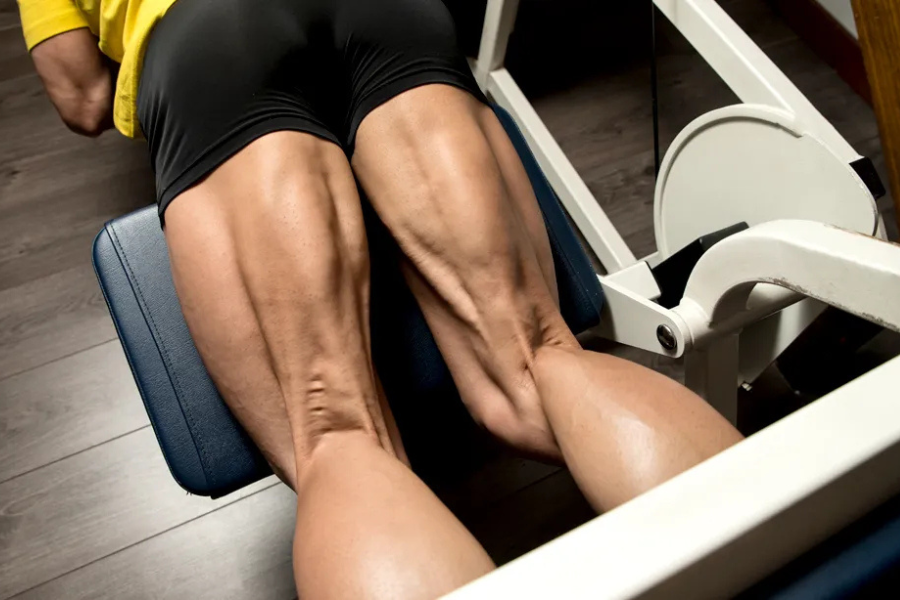
Leg curls (lying or seated)
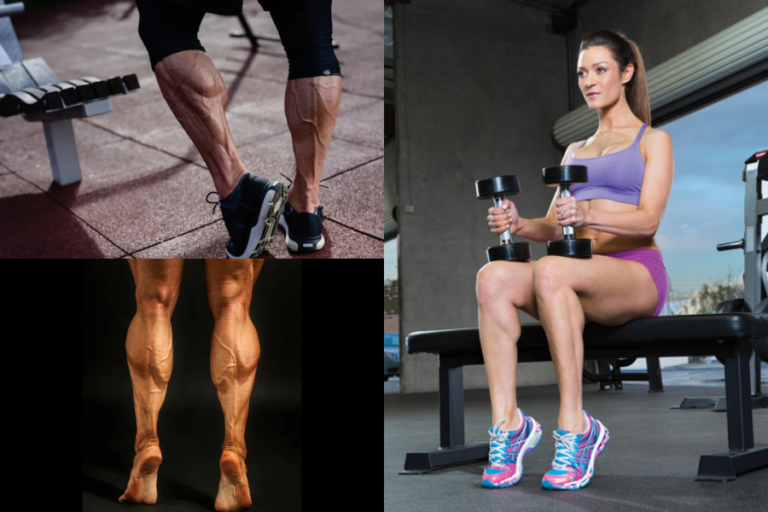
Leg curls focus on knee flexion, which hits the part of the hamstring near the knee. To get the most out of them:
- Set the pad just above your heels, not on your calves
- Keep your hips down and your core braced
- Curl slowly and squeeze at the top, then lower with control
A strong routine might include 4 sets each of lying and seated leg curls, giving you 8 total sets that really zero in on the back of your thighs. Some lifters benefit from doing curls one leg at a time for better range of motion and mind muscle connection.
Nordic hamstring curl
Nordic curls are a challenging bodyweight movement that load your hamstrings heavily as they lengthen. You can do them by anchoring your feet under a sturdy object or having a partner hold your ankles.
Steps:
- Kneel on a pad with your body upright and your feet anchored.
- Cross your arms over your chest.
- Slowly lower your body forward, keeping your hips extended.
- Use your hamstrings to resist the fall as long as possible, then catch yourself with your hands.
Start with just a few controlled reps and gradually build up. These can be tough, but they are highly effective for strength and muscle gain.
Bridges and hip thrusts
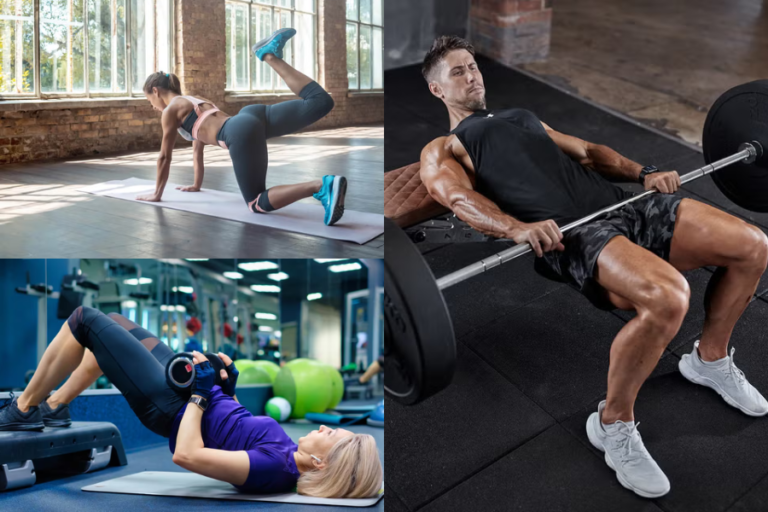
Glute bridges and hip thrusts primarily target your glutes, but they also recruit your hamstrings, especially when your feet are placed slightly farther from your hips or you push through your heels.
To shift a bit more emphasis to your hamstrings:
- Place your feet so your knees form a little more than a 90 degree angle
- Drive your heels into the floor or bench
- Pause for a second at the top of each rep
You can progress from bodyweight to barbell hip thrusts as you get stronger.
A simple hamstring workout for men you can follow
Here is a sample routine that balances compound and isolation exercises while giving your hamstrings the attention they usually miss. Perform this 1 to 2 times per week, leaving at least one rest day between sessions.
Day 1: Strength focused
Romanian deadlift
- 4 sets of 6 to 8 reps
Barbell deadlift or conventional deadlift
- 3 sets of 5 to 6 reps
Lying leg curl
- 3 sets of 8 to 10 reps
Seated leg curl or single leg curl
- 2 to 3 sets of 10 to 12 reps
Day 2: Power and control focused (optional second session)
Kettlebell swing
- 3 sets of 12 to 15 reps
Single leg RDL
- 3 sets of 8 to 10 reps per leg
Nordic curl
- 3 sets of 4 to 6 controlled reps
Glute bridge or hip thrust
- 3 sets of 10 to 12 reps
Rest 60 to 120 seconds between sets, depending on how heavy you go. Your goal is to finish sets feeling challenged but not sloppy.
Quick guideline: If you often finish leg day with only 2 or 3 light sets of curls, you are probably undertraining your hamstrings. Give them at least 10 to 12 focused sets per week for real progress.
Technique mistakes to avoid
A few common habits can quietly limit your results or increase your injury risk.
Moving too fast
If you rush your reps, your hamstrings never get a full stretch or contraction. Slow your lowering phase and pause briefly at the hardest point of the lift.
Cutting range of motion
Short, partial reps feel easier, but they skip the parts of the movement where your hamstrings work hardest. Use a weight that allows you to move through a full, pain free range.
Letting your lower back dominate
On deadlifts and RDLs, round your back less and hinge at the hips more. Think about pushing your hips back instead of bending over at the waist.
Skipping progressive overload
If your weights and reps never change, your results will not either. Track your lifts and nudge them up regularly, even if it means adding just 5 pounds or 1 extra rep.
Do not forget hamstring flexibility
Strong hamstrings that are also flexible help you move freely and can support better performance in the gym. Physical therapist Sam Becourtney recommends stretches like the hamstring scoop, hamstring flossing, and lying hamstring stretch with a towel to combat tightness and improve mobility.
You can keep your stretching routine simple:
- Stretch your hamstrings 2 to 3 times per week
- Use standing or seated hamstring stretches
- Hold each stretch for 15 to 30 seconds
- Stop before you feel sharp pain
Better flexibility makes it easier to hinge deeply in RDLs, maintain good deadlift form, and keep your lower back happier.
Putting it all together
When you treat your hamstring workout for men as a priority instead of an afterthought, you get stronger legs, safer knees, and a more powerful stride. Focus on:
- Including heavy hip hinge movements like deadlifts and RDLs
- Adding isolation work such as leg curls and Nordic curls
- Progressing your weights, reps, or sets gradually
- Keeping your form slow, controlled, and full range
- Supporting strength gains with regular stretching
Pick one or two of the exercises above to add to your next leg day, then build toward the full routine over a few weeks. As your hamstrings catch up, you will feel the difference every time you run, jump, or simply walk up a flight of stairs.
About the Author