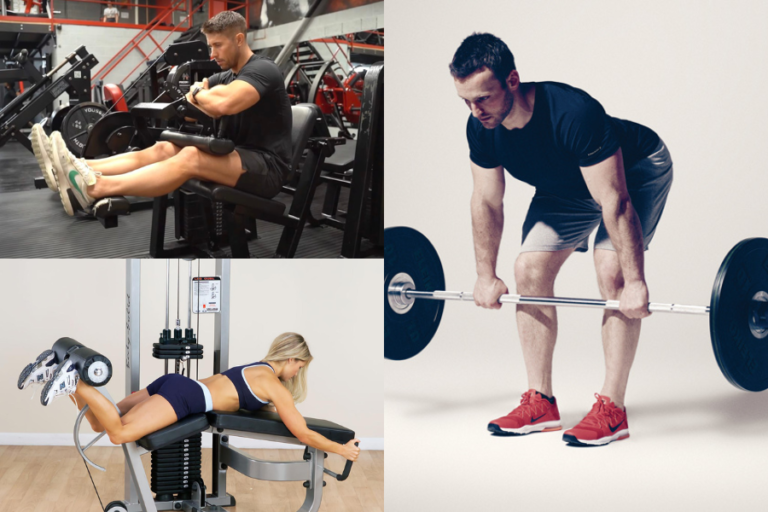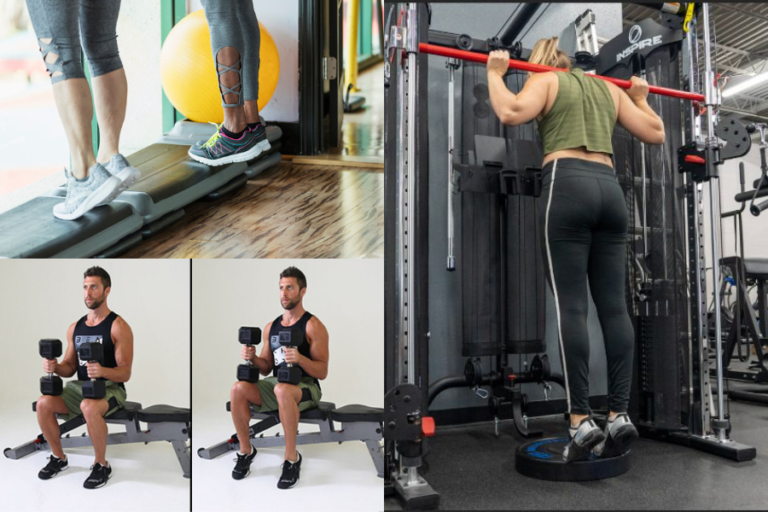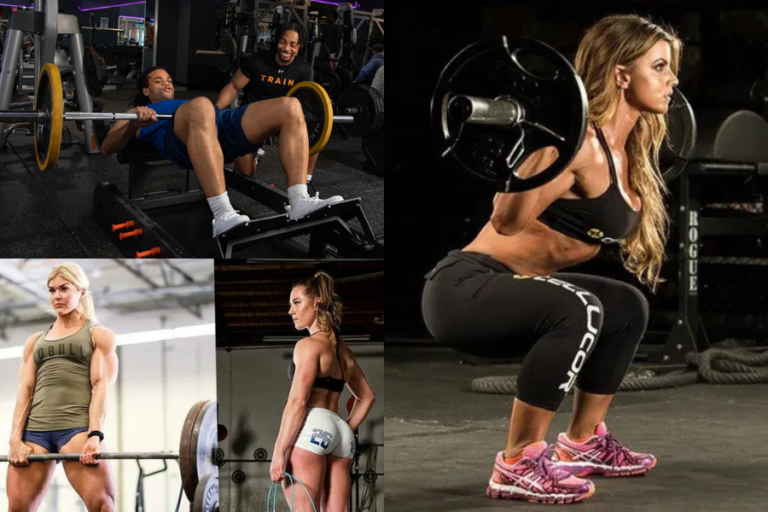
A strong, smart hamstring workout for athletes does much more than build the back of your legs. It protects you from common strains, supports faster sprinting, and helps you cut, stop, and jump with more control. With the right mix of strength, mobility, and sprint work, your hamstrings become a real performance asset instead of a weak link.
Below, you will find a practical training plan you can plug into your week, why each exercise matters, and how to progress safely.
Understand what your hamstrings actually do
Your hamstrings are a group of three muscles on the back of your thigh that cross both the hip and knee. They help you extend your hip, bend your knee, and control high speed movements.
During running, they work in both the stance phase and the swing phase. They help you push the ground away and also slow your leg as it swings forward before your foot hits the ground, as explained by Recover Athletics in 2022. Strong, resilient hamstrings are especially important for:
- High speed sprinting
- Decelerating and changing direction
- Stabilizing the knee and protecting it from injury
Hamstring injuries often happen when the muscles are stretched beyond their normal range or suddenly loaded at high speeds, such as in the terminal swing phase of sprinting. This is when the hamstrings are working hard eccentrically, meaning they are lengthening while producing force.
Keeping this role in mind will help you understand why a good hamstring workout for athletes needs more than machine curls.
Combine strength, mobility, and sprinting
A balanced hamstring workout for athletes should include three pillars:
- Strength work with an emphasis on eccentric loading
- Mobility and control so you can use the range you have
- Sprint or power work that looks like your sport
Research from Brukner (2015) highlights that eccentric hamstring strength is often still reduced even after athletes return to play. That lingering weakness may help explain why reinjury rates are high. Lengthening eccentric exercises, such as the Nordic hamstring exercise, Romanian deadlifts, and Askling’s “extender”, “diver”, and “glider”, have become the mainstay of post injury rehabilitation and injury prevention because they train the hamstring to handle force at long lengths.
At the same time, a 2024 guide from Pliability notes that improving hamstring mobility reduces injury risk in sports with sprinting, jumping, and quick direction changes by helping stabilize the knee and allowing better mechanics. Dynamic stretching before training and static stretching after are both recommended approaches.
Finally, sprinting itself stands at the top of the heap for hamstring training. Multiple coaches and articles rate sprinting in the S+ tier for contact athletes as the most powerful hamstring exercise to build athletic strength and performance. It loads the hamstrings in a sport specific way and trains the stretch shortening cycle.
Warm up for better performance and safety
Before you go heavy or sprint, you want your hamstrings, glutes, and core awake and ready. A good warm up takes 8 to 12 minutes and makes your first working set feel like your second or third, not like shock to the system.
You can try this simple flow:
- Light cardio: 3 to 5 minutes of easy jogging, cycling, or jump rope.
- Dynamic mobility:
- Leg swings front to back and side to side
- Walking lunges with a reach
- Hip circles and bodyweight good mornings
- Activation:
- Glute bridges or single leg bridges
- High knees and butt kicks
- Short build up runs at 50 to 70 percent speed
Coaches and physical therapists quoted in the 2024 Pliability resource recommend dynamic stretches like these before training to prepare the muscles and reduce micro tearing.
Build strength with smart hamstring exercises
Your main strength work should focus on lengthened, eccentric heavy exercises. These moves strengthen the hamstrings where they are most vulnerable and most useful for running and cutting.
Romanian deadlifts and single leg RDLs
Romanian deadlifts (RDLs) are one of the most effective hamstring exercises for athletes. They rank in the S tier for contact athletes and are also highlighted by Pliability as key strength builders.
You hinge at the hips, keep a soft bend in the knees, and lower the weight under control until you feel a strong stretch in the back of your thighs, then drive back up. Single leg RDLs add balance and hip stability work, which is valuable for running.
Eccentric isometric RDLs, where you lower for 3 to 7 seconds and pause 2 to 5 seconds in the stretched position, have been shown to improve hamstring mobility, movement control, strength, and hypertrophy. That slow lowering builds confidence at long muscle lengths.
Nordic hamstring curls
The Nordic hamstring curl is the most extensively studied exercise for hamstring injury prevention. It strengthens the hamstring as it lengthens and has been shown to significantly reduce injury rates among athletes who perform it consistently. Brukner (2015) reports that doing Nordic hamstring exercises three times per week during a 10 week preseason, followed by weekly maintenance, effectively reduces hamstring muscle injuries in football players.
Nordics are challenging, so you can:
- Start by lowering only part of the way and catching yourself with your hands.
- Use a band or a partner to assist you.
- Gradually increase the range and reduce assistance over a few weeks.
Variations that keep the hips flexed can increase passive forces and target the hamstrings in a way that is even closer to sprinting mechanics.
Eccentric bridges and curls
Eccentric bridges and seated hamstring curls are helpful if you are not ready for full Nordics. You can bridge up with two legs and lower on one, or curl the weight up with both legs and slowly lower it with one leg.
These options strengthen the hamstrings in a lengthening action, especially at higher speeds, and are often used as a progression toward more demanding exercises like Nordics.
Do not skip hip and core control
Many athletes say their hamstrings are tight, but often they have enough flexibility for their sport. The missing piece is control of the pelvis and core.
If you cannot control your pelvis as you move your leg, your hamstrings have to work overtime to stabilize and move at the same time. That makes them feel tight and can increase strain.
Exercises such as reverse active straight leg raises and band pullover straight leg raises improve hamstring flexibility while teaching pelvic stabilization and proper hip movement. The PAILs and RAILs mobility technique, which blends static stretching with isometric contractions at end range, also teaches your nervous system to keep new range of motion rather than snapping back to stiffness.
To get a basic sense of your flexibility, you can lie on your back, keep one leg straight on the floor, and raise the other leg with the knee straight until you feel tension in the back of the thigh. If you reach roughly 80 degrees or more between your thigh and the ground, that is considered good hamstring flexibility in many athletes, as noted in the 2024 Pliability guide.
Use sprinting as hamstring training
Since sprinting is both a top tier exercise for hamstrings and one of the main causes of hamstring injuries, you want to treat it with respect. Done well, it is your best friend. Done carelessly, it can set you back.
Experts recommend a microdosing approach. That means you perform short, high quality sprints with full recovery instead of infrequent marathon sprint sessions that leave you wrecked.
You might do:
- 4 to 6 sprints of 20 to 40 meters
- At 85 to 95 percent effort
- With 2 to 3 minutes of rest between sprints
Keep your volume modest at first and progress gradually over weeks. Sprinting trains the hamstrings through multiple muscle actions, including eccentric and isometric, and loads the elastic components and stretch shortening cycle that you depend on in sport.
Sample weekly hamstring workout for athletes
You do not need to hit your hamstrings hard every day. Two focused strength sessions, plus regular sprint exposure, are plenty for most athletes.
Here is an example of how you could structure your week:
| Day | Focus | Hamstring work |
|---|---|---|
| Monday | Strength lower body | RDLs, single leg RDLs, glute bridges |
| Wednesday | Speed and power | Warm up, microdose sprints, light Nordics or eccentric bridges |
| Friday | Strength and control | Nordics or assisted Nordics, seated or lying curls, PAILs / RAILs mobility |
On your strength days, a simple starting point could be:
- Romanian deadlift: 3 sets of 6 to 8 reps
- Single leg RDL: 3 sets of 6 to 8 reps per leg
- Nordic hamstring curl or eccentric bridge: 3 sets of 4 to 6 reps
On mobility and control work, 2 to 3 sets of 20 to 30 second holds or low rep focused drills are enough.
You can adjust the volume based on your sport schedule. In heavy competition weeks, keep volume lower and focus on quality.
Progress safely and listen to your body
Your hamstrings respond best to gradual progression. Most strains do not come from one freak movement but from a build up of fatigue, tightness, and suddenly doing too much, too soon.
A few simple rules will help you stay on track:
- Increase sets, load, or sprint volume slowly, roughly 5 to 10 percent per week.
- Respect soreness, especially that deep ache high up near the glutes or behind the knee.
- If you feel sharp pain during an exercise, stop and switch to a less demanding variation.
Rest is not a sign of weakness. It is where the strength gains happen. The research you have seen above emphasizes that listening to soreness signals and allowing recovery time is essential to avoid overexertion and reduce the risk of both initial hamstring injuries and reinjuries.
Put it all together
When you look at the research as a whole, a powerful hamstring workout for athletes does three key things:
- Trains hard at long muscle lengths with exercises like RDLs, single leg RDLs, Nordics, and eccentric bridges.
- Builds and maintains mobility and pelvic control with dynamic warm ups, PAILs and RAILs, and active range drills.
- Uses sprinting in small, frequent doses to make your training specific to your sport and strengthen the hamstrings through the exact actions that can cause injury.
Start with one or two changes this week. For example, add eccentric focused RDLs to your next lower body workout, or swap one conditioning session for a short microdose sprint session with full recovery. As these habits stick, your hamstring strength, confidence at top speed, and overall performance will grow together.
About the Author