Why elliptical workouts are ideal for beginners
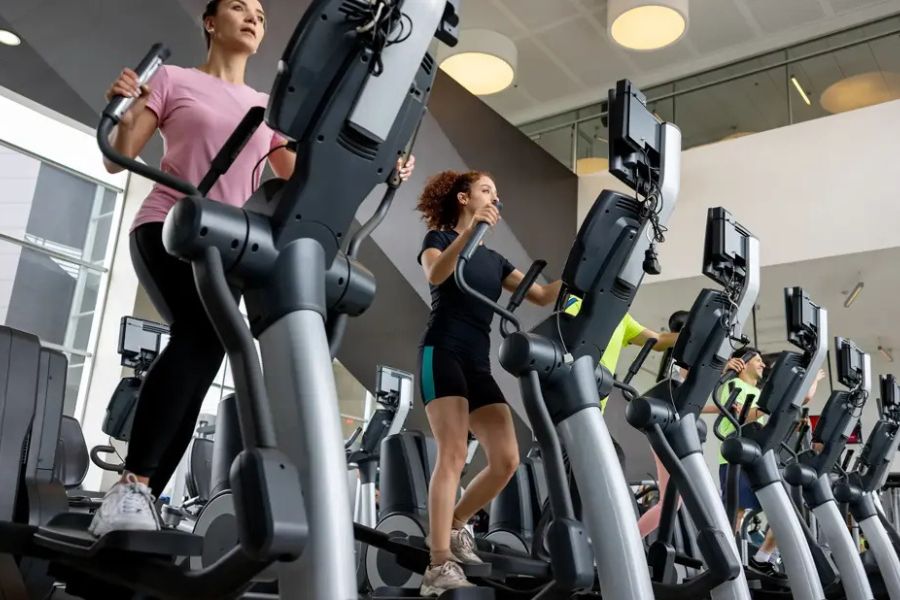
If you want to get fitter, lose weight, and protect your joints at the same time, elliptical workouts for beginners are a smart place to start. Elliptical machines deliver heart pumping cardio with less impact on your hips, knees, ankles, and feet because your feet never leave the pedals. That makes them especially helpful if you are new to exercise, carrying extra weight, or coming back from an injury (Garage Gym Reviews, Lose It!).
Unlike some cardio machines that mainly work your legs, an elliptical can train your upper and lower body at the same time when you use the moving handles. This full body effort helps you burn more calories in less time while building strength and endurance in your legs, glutes, arms, and core (Cleveland Clinic).
Understand the benefits for weight loss and health
Elliptical training supports several goals at once. As a beginner, this helps you feel like every workout is pulling its weight.
You can expect:
- Calorie burn that supports weight loss. Estimates vary by source, but research suggests roughly 170 calories for a 150 pound person in 30 minutes of moderate effort (Cleveland Clinic), and up to about 270 to 378 calories in 30 minutes at higher intensities depending on your body weight (Garage Gym Reviews). Another analysis notes that a 155 pound person may burn about 335 calories in 30 minutes on an elliptical at a vigorous pace (ProForm).
- Cardiovascular conditioning. Working at a moderate intensity, where you can still talk in full sentences, trains your heart and lungs in a safe, sustainable way (Cleveland Clinic).
- Joint friendly training. Because the pedals support your feet, your joints do not absorb the same pounding they would on a treadmill. That is why ellipticals are often recommended for people with joint issues or those in rehabilitation (Hospital for Special Surgery, Cleveland Clinic).
- Full body muscle engagement. When you push and pull the handles and drive through your legs, you use your quads, hamstrings, glutes, calves, arms, back, and chest. This combination supports fat loss, muscle endurance, and better everyday movement (Lose It!).
To actually lose weight, you will want to pair your elliptical workouts with consistent nutrition habits, since exercise alone is rarely enough to create a calorie deficit. The elliptical simply makes hitting your movement and calorie burn goals more manageable.
Set yourself up safely before you start
Before you jump into regular elliptical workouts, a few small choices will help you stay safe and feel better during and after each session.
If you have any medical conditions, injuries, or take medications that affect your heart rate, talk with your doctor before starting. This is especially important if you are returning to exercise after a long break or surgery (Verywell Fit).
Choose the right shoes and gear
Wear running shoes or cross trainers that fit well and provide arch support, stability, and cushioning. The pedals on ellipticals are flat and consistent, so you do not need special soles, but a supportive shoe will keep your feet comfortable and your ankles stable (Lose It!).
Clothing can be simple. Pick breathable, non restrictive layers so you can move freely and stay cool. Bring a water bottle so you can sip regularly during your workout. Staying hydrated supports joint health, circulation, and temperature regulation, and it helps prevent that drained feeling after you step off the machine (ProForm).
Dial in resistance, incline, and intensity
Most ellipticals let you change resistance and sometimes incline. As a beginner, think in terms of what feels challenging but controllable.
Many trainers recommend:
- Starting with shorter workouts around 10 to 20 minutes
- Using low to moderate resistance at first, generally under level 5
- Keeping incline low, usually between 1 and 8, until your legs feel stronger (Garage Gym Reviews)
You can also use a simple 1 to 10 scale of perceived exertion:
- Level 4 feels like an easy warm up.
- Level 6 feels slightly uncomfortable, but you can still hold a conversation in full sentences.
Staying mostly between 4 and 6 as you build your base helps you progress without overdoing it (Verywell Fit).
Learn proper form so you work the right muscles
Good form is what turns an easy glide on the elliptical into an effective workout. It also keeps you from walking away with sore knees or a tight back.
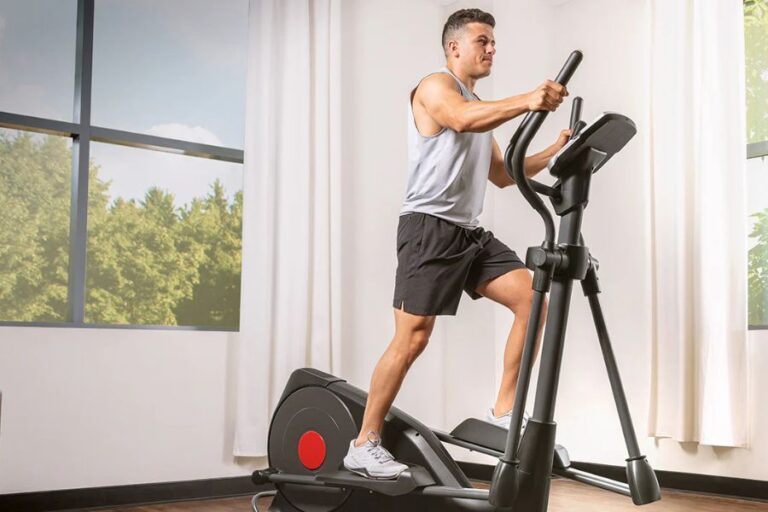
Stand tall, not hunched. Keep your shoulders back, your chest relaxed, and your gaze forward instead of looking down at your feet. Gently brace your abdominal muscles so your core supports your spine. Slouching or leaning heavily on the handles makes the workout less effective and can strain your lower back (ProForm).
Focus on a full leg motion. Rather than letting the machine do the work, push your legs down and back, then pull up and forward through the pedals. This pattern engages your quadriceps and glutes more completely and builds real strength for climbing stairs or getting up from chairs (Hospital for Special Surgery).
If you feel your toes going numb, shift your weight slightly into your heels instead of pressing hard on your toes. This helps your larger leg muscles carry more of the work and usually improves comfort for longer workouts (Prevention).
Use the handles with intention
If your elliptical has moving handles, use them actively. Push and pull with your arms instead of just resting your hands. This engages your arms, chest, and back along with your legs, which increases overall calorie burn and gives you a more balanced workout (ProForm).
You can also experiment with letting go of the handles for short intervals during your warm up or cool down. Lightly resting your fingertips or using the center handles for balance encourages your core to work and challenges your stability in a safe way (Lose It!).
If coordinating arms and legs feels awkward at first, focus only on your legs until the motion feels natural. You can add in the arm movement later, one change at a time (Hospital for Special Surgery).
Start with a simple beginner friendly routine
Your first few elliptical workouts should feel doable, not like a test. The goal is to get comfortable with the machine, build a habit, and avoid soreness that might discourage you.
Here is a straightforward 20 minute beginner elliptical workout you can try, inspired by expert guidelines (Verywell Fit, Garage Gym Reviews):
-
Warm up, 5 minutes
Set resistance very low, around level 1 to 3, and keep incline minimal. Move at an easy pace that feels like a brisk walk. You should be able to talk easily. -
Build up, 5 minutes
Slightly increase resistance so you feel some effort but still in control. Aim for perceived exertion around 4 to 5 out of 10. -
Main work, 7 minutes
Raise resistance again or pick up your pace until you feel just outside your comfort zone, about 6 out of 10. You should still manage short sentences, but holding a long conversation would feel tough. -
Cool down, 3 minutes
Lower resistance back down to your warm up setting. Gradually slow your pace until your breathing comes closer to normal.
Aim to repeat this workout 2 to 3 times per week at first. Once it starts to feel easier, add 2 to 3 minutes to the main work section each week until you are comfortably reaching 30 minutes. This aligns well with general recommendations for daily moderate to vigorous activity (Verywell Fit).
If you are brand new to exercise, you can cut each phase in half for a 10 minute workout and slowly progress from there.
Try interval workouts to burn more calories
When you feel steady with 20 to 30 minutes of continuous elliptical training, you can start adding intervals. Intervals are short bursts of higher intensity mixed with easier recovery periods. They are efficient for fat loss and fitness because they increase your calorie burn during and briefly after your workout (ProForm).
Here is a beginner friendly 20 minute interval routine:
- Warm up, 5 minutes at very easy resistance
- Interval block, 12 minutes
- 1 minute at a challenging pace or resistance, around 7 out of 10
- 2 minutes at an easy pace, around 4 out of 10
- Repeat this 1:2 pattern four times
- Cool down, 3 minutes at low resistance
This style is similar to the high intensity short interval and progressive interval workouts recommended for beginners, which typically run for 10 to 20 minutes in total (Garage Gym Reviews). Keep in mind that intervals should not feel like all out sprints. You still want controlled movement and stable breathing.
You can also use the elliptical on recovery days between harder workouts. Keeping resistance low and pace relaxed gives your joints a break from higher impact exercise while you still enjoy the cardiovascular benefits (Hospital for Special Surgery).
Use small tweaks to keep progressing
Once you have a few weeks of consistent workouts, you can gently increase the challenge so your body keeps adapting and you keep seeing results.
Consider adjusting:
- Duration. Add 2 to 5 minutes to your total time once your current length feels comfortable.
- Resistance and incline. Gradually raise one setting at a time so your muscles work a bit harder, but avoid cranking resistance so high that your form falls apart (Hospital for Special Surgery, ProForm).
- Direction and stride. Occasionally pedal backward to emphasize your hamstrings and glutes, or slightly adjust your pace and stride length to engage different muscles and reduce boredom (ProForm, Prevention).
- Handle use. Alternate between segments focusing on full body work with the moving handles and segments where you lightly rest your hands or use the center handles to challenge your balance (Lose It!).
Most machines also offer built in programs like hill climbs or rolling intervals. As your confidence grows, experimenting with these presets can keep your routine fresh while still providing a beginner suitable workout (Cleveland Clinic).
Key tips to remember
If you are just getting started with elliptical workouts for beginners, you do not need a perfect plan. You only need a safe, repeatable routine that fits your life.
Keep these points in mind:
- Check with your doctor if you have health conditions, injuries, or heart related concerns.
- Start with 10 to 20 minutes at low to moderate intensity and build up gradually.
- Focus on strong posture, controlled leg motion, and active use of the handles.
- Use resistance that makes you work, but does not break your form.
- Vary your workouts over time with intervals, direction changes, and program options.
- Pair your workouts with consistent nutrition for the best weight loss results.
Choose one simple routine from this guide, schedule it into your week, and give yourself a few sessions to get used to the motion. With a bit of consistency, the elliptical can become a reliable tool for building fitness, losing weight, and feeling more energetic in your everyday life.
About the Author