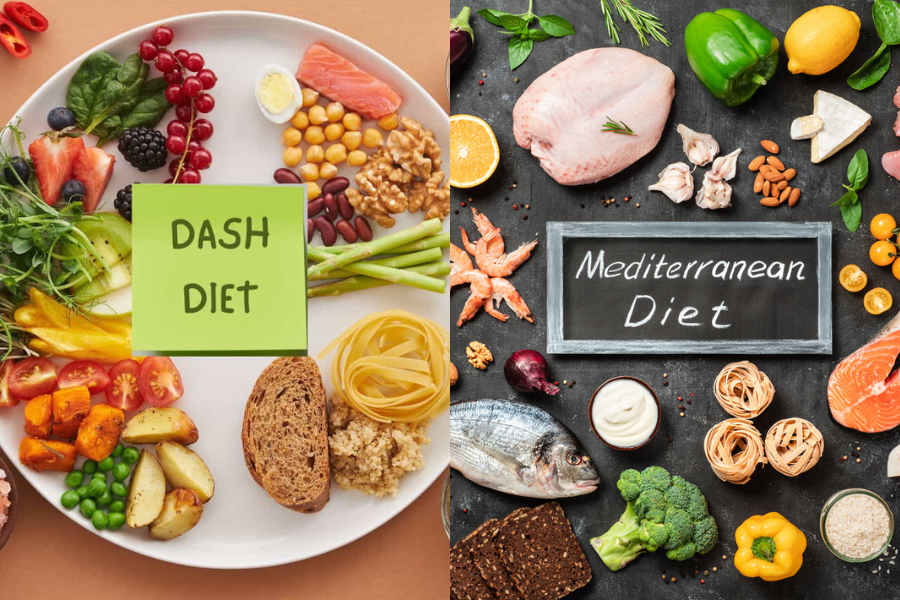
A side‑by‑side look at the DASH diet vs Mediterranean diet can help you choose an eating style that supports your heart, your weight, and your everyday life. Both are balanced, flexible, and based on real food instead of strict rules. The key difference is what each one focuses on and how that lines up with your health goals.
Below, you will see how each diet works, how they compare, and how to decide which one fits you best.
Get to know the Mediterranean diet
The Mediterranean diet is based on the traditional eating patterns of countries like Greece, Italy, and Spain. It centers on whole, plant based foods and healthy fats and treats meals as part of an overall lifestyle.
You eat plenty of fruits, vegetables, whole grains, legumes, nuts, and seeds, plus generous amounts of extra virgin olive oil. Fish and seafood show up often, while red meat, sweets, and highly processed foods stay in the background. Wine is often included in moderation with meals, although it is optional and not required for the benefits (Mayo Clinic Diet, Chefs for Seniors).
The Mediterranean pattern also emphasizes social eating and regular physical activity. That combination helps make it feel like a long term way of living instead of a short term plan (Mayo Clinic Diet).
Get to know the DASH diet
DASH stands for Dietary Approaches to Stop Hypertension. It was originally developed to lower blood pressure without medication and is now one of the top recommendations if you have, or are at risk for, hypertension (Mayo Clinic Diet, Chefs for Seniors).
You still focus on fruits, vegetables, whole grains, legumes, nuts, and lean proteins like fish and poultry, but the defining feature is its attention to sodium and specific minerals. The diet limits salt and encourages foods that are naturally rich in potassium, calcium, and magnesium, which work together to support healthy blood pressure (Mayo Clinic Diet).
There are two common sodium levels on DASH:
- Up to 2,300 mg of sodium per day, which fits general guidelines
- Up to 1,500 mg per day, which the American Heart Association recommends for adults over 51, African Americans, and people with high blood pressure, diabetes, or chronic kidney disease (Chefs for Seniors)
Compare DASH diet vs Mediterranean diet at a glance
To quickly see how the DASH diet vs Mediterranean diet stack up, it helps to look at the main features side by side.
| Feature | Mediterranean diet | DASH diet |
|---|---|---|
| Primary focus | Overall heart health and long term lifestyle | Lowering blood pressure and improving heart health |
| Main foods | Vegetables, fruits, whole grains, legumes, nuts, olive oil, fish and seafood | Vegetables, fruits, whole grains, low fat dairy, lean meats, nuts, legumes |
| Fats | Emphasis on olive oil, nuts, seeds, fish fats (omega 3s) (Mayo Clinic Diet) | Limits saturated fat, encourages healthier fats but olive oil is not as central |
| Sodium | No specific sodium target, but processed salty foods are limited | Clear sodium limits, 2,300 mg or 1,500 mg per day (Chefs for Seniors) |
| Fish and meat | Fish at least twice a week, daily nuts, red and processed meat kept occasional (Chefs for Seniors) | Whole grains, fruits, and vegetables emphasized, red and processed meat limited to two or fewer servings per week (Chefs for Seniors) |
| Alcohol | Moderate wine with meals is common but optional | Does not specifically encourage alcohol, some guidance suggests limiting it (Chefs for Seniors) |
| Weight loss | Can support gradual weight loss with calorie control (Mayo Clinic Diet) | Also effective for weight loss when combined with calorie control and sodium reduction (Chefs for Seniors) |
Both patterns center your meals on whole foods, fruits, vegetables, and whole grains, and both limit processed foods, added sugars, and saturated fat. The main differences are how each one handles fat, sodium, and alcohol, and how tightly structured the guidelines feel (Chefs for Seniors).
Understand the health benefits of each
When you are choosing between the DASH diet vs Mediterranean diet, it helps to know what the research says. Both are well studied and linked to better health, especially for your heart.
Heart health and blood pressure
Both diets are considered heart friendly. The Mediterranean diet provides plenty of monounsaturated fats from olive oil and omega 3s from fish, which support cardiovascular health. DASH lowers blood pressure by keeping sodium in check and increasing foods rich in potassium, calcium, and magnesium (Mayo Clinic Diet).
In a 10 year study conducted in Athens, people who stuck most closely to the Mediterranean diet had a significantly lower risk of both fatal and non fatal cardiovascular disease compared with those who followed it the least. Only 3.1 percent in the highest adherence group developed cardiovascular disease compared with about one third in the lowest group (PMC).
After researchers adjusted for other factors like age, lifestyle, and medical history, the highest adherence to the Mediterranean diet was associated with roughly a fourfold reduction in 10 year cardiovascular events. By contrast, high adherence to the DASH diet in this Mediterranean population did not show the same strong risk reduction, and there was no significant difference in 10 year cardiovascular incidence between low and high DASH adherence (PMC).
This does not mean DASH is ineffective. It still has strong evidence for lowering blood pressure, which is often why it is a first recommendation if you are managing hypertension (Mayo Clinic Diet, Chefs for Seniors). It does suggest that in Mediterranean regions, where people are already familiar with the Mediterranean style of eating, public health strategies might see more benefit by encouraging that pattern (PMC).
Type 2 diabetes and blood sugar
If you live with type 2 diabetes or prediabetes, both diets can help improve blood sugar control. Two systematic reviews found that Mediterranean, DASH, and vegetarian eating patterns all lowered A1C, a marker of long term blood sugar, by an average of about 0.8 percent. In individual studies, vegetarian and vegan diets reduced A1C by around 0.68 percent, the DASH diet by 1.7 percent in one trial, and the Mediterranean diet by 1.2 percent and 0.9 percent after 1 and 4 years, respectively (Diabetes Spectrum).
Several meta analyses also showed that the Mediterranean diet was linked with decreases in A1C in the range of 0.3 to 0.47 percent. In randomized trials, people with newly diagnosed type 2 diabetes who followed a low calorie Mediterranean pattern saw greater A1C reductions, higher diabetes remission rates, and delayed need for medication by about two years compared with a low fat diet (Diabetes Spectrum).
For DASH, data on blood sugar is more limited but promising. A small 8 week crossover trial found that DASH reduced A1C by 1.7 percent compared with a traditional American Diabetes Association diet, and another 4 week study showed moderate A1C improvements along with significant blood pressure reductions in people with type 2 diabetes (Diabetes Spectrum).
Overall, what these results have in common is that all three patterns, Mediterranean, DASH, and vegetarian or vegan, are built around nutrient dense foods like fruits, vegetables, whole grains, legumes, and healthy fats. That combination appears to support both better blood sugar and lower cardiovascular risk in type 2 diabetes (Diabetes Spectrum).
Weight loss and long term habits
Neither diet was originally created as a weight loss program. Even so, both can help you lose weight steadily when you pair them with appropriate calorie intake and active habits.
The Mayo Clinic Diet notes that both the Mediterranean and DASH patterns can support gradual weight loss as part of a structured plan that includes calorie guidelines and lifestyle changes, for example more movement and less sedentary time (Mayo Clinic Diet).
If your main goal is weight loss, what often matters most is which pattern you can follow without feeling deprived. The Mediterranean diet may feel more flexible to you if you enjoy olive oil, nuts, and fish and like cooking with herbs and spices. DASH may feel more structured and easier to track if you prefer clear limits on sodium and serving sizes of different food groups.
Decide which diet fits your goals
There is no single right answer in the DASH diet vs Mediterranean diet debate. The better choice is the one that supports your specific health needs and your personal preferences.
When DASH might serve you better
DASH can be a strong fit if:
- Your top priority is lowering blood pressure
- You have been told to reduce sodium and want a clear daily target
- You like the idea of including low fat dairy regularly
- You prefer a plan with more specific serving suggestions for each food group
Because it was specifically designed to address hypertension, DASH is often the first choice recommended for high blood pressure, especially when combined with lifestyle steps such as physical activity and stress management (Mayo Clinic Diet, Chefs for Seniors).
When the Mediterranean diet might be your match
The Mediterranean diet can be especially appealing if:
- You want a flexible, enjoyable pattern you can follow for life
- You love foods like olive oil, nuts, seeds, beans, and fish
- You are as interested in preventing long term cardiovascular events as you are in managing blood pressure right now
- You value social meals and a lifestyle approach that goes beyond what is on your plate
In the long term Greek study, higher adherence to the Mediterranean diet was strongly linked with better cardiovascular outcomes, which suggests it can be a powerful tool for overall heart protection, especially in communities where this way of eating aligns with local culture (PMC).
Questions to ask yourself
To narrow it down, you can ask yourself a few practical questions:
- Which foods do you genuinely enjoy and want to eat most days of the week?
- How much structure feels helpful versus restrictive to you?
- Are you currently focused more on blood pressure numbers, long term heart protection, blood sugar, or weight, or all of the above?
- What is realistic for your cooking skills, budget, and schedule?
You can also talk with your doctor or a registered dietitian, especially if you have existing conditions like diabetes, chronic kidney disease, or cardiovascular disease. They can help you personalize either pattern and adjust portions or sodium targets in a way that keeps you safe and supported (Chefs for Seniors).
Blend the best of both for everyday life
You do not actually have to stay inside one exact box. Since DASH and the Mediterranean diet share so many core features, you can combine elements of both to build an eating style that works for you.
For example, you might:
- Use olive oil as your main added fat, as in the Mediterranean diet, but still follow DASH style sodium limits
- Focus on whole grains, fruits, vegetables, legumes, nuts, and seeds as your base, which both diets recommend
- Limit red and processed meats to a few servings per week, in line with both sets of guidelines (Chefs for Seniors)
- Enjoy fish twice a week or more, and keep sweets and sugary drinks occasional
You can think of both diets as flexible frameworks rather than rigid rulebooks. Once you understand the key principles, it becomes easier to make everyday choices at the grocery store or in a restaurant that move you closer to your health goals.
If you are just getting started, you might pick one simple change today, such as swapping a processed snack for a handful of nuts and fruit, or cooking one dinner this week that is loaded with vegetables and uses olive oil instead of butter. Then you can build from there, step by step, toward the version of DASH, Mediterranean, or a blend of both that truly fits your life.
About the Author