Calf workouts for beginners are one of the simplest ways to build a strong, stable lower body without needing much equipment. Your calves support every step you take, help protect your knees and Achilles tendon, and play a big role in balance and posture. When you train them with intention from the start, you set yourself up for better performance in walking, running, and everyday life.
Below, you will learn why calf strength matters, how to perform key beginner exercises with safe technique, and how to turn them into an easy, repeatable routine.
Understand why calf strength matters
Your calf muscles are more than a cosmetic detail. They are key movers and shock absorbers every time your foot hits the ground.
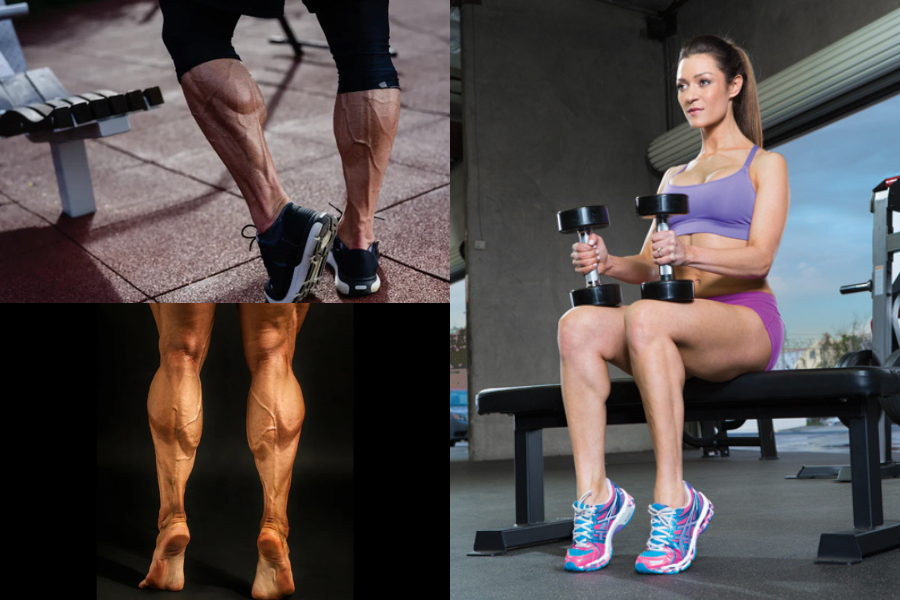
The calves are mainly two muscles: the gastrocnemius, which you see when you flex your calf, and the deeper soleus. Together they help you walk, run, jump, and maintain good posture. A 2023 overview on calf training notes that strong calves support balance and stability, and that weak calves can contribute to knee instability and Achilles strains.
During running, the soleus can absorb roughly 6.5 to 8 times your bodyweight and the gastrocnemius about 2 to 3 times, which shows how much force these muscles handle with each stride. If you build them up with beginner‑friendly calf workouts, you can:
- Improve ankle stability so uneven ground feels less risky
- Reduce stress on your Achilles tendon and plantar fascia
- Support your knees during squats, lunges, and daily activities
- Make walking and running feel lighter and more efficient
Think of calf training as building a strong base. Once your base is solid, everything above it moves more freely.
Learn the basics of safe technique
Before you add reps or weight to calf workouts for beginners, focus on form. Proper alignment and control will protect your joints and help your calves actually do the work.
Foot pressure and alignment
For any calf raise variation, you want pressure spread evenly across your forefoot. That means the area from the big toe joint to the little toe joint presses into the floor or platform. This balanced pressure helps load the calf evenly instead of letting your foot roll inward or outward, which can stress your ankle.
Try this simple setup:
- Stand with your feet hip width apart.
- Gently grip the floor with your toes, but do not curl or claw them.
- Keep weight through the ball of the foot, not just the big toe side.
If you tend to curl your toes, you can place them hanging slightly over the edge of a step or weight plate. This position makes it harder for the long toe flexors to take over and encourages your calf muscles to do more of the lifting.
Range of motion and tempo
To get results, you need both a full stretch and a full squeeze on every rep. Rushing through makes your Achilles and plantar fascia do more work than your muscles.
For each rep, aim for three stages:
-
Bottom stretch
Lower your heels slowly until you feel a comfortable stretch in your calves. If you are on a step, let your heels dip below the level of your toes. Pause briefly to feel that “sweet stretch” at the bottom. -
Controlled rise
Press through the balls of your feet to lift your heels as high as you can. Keep your knees straight for standing variations. Avoid bouncing or using momentum. -
Hard contraction at the top
At the top, imagine trying to point your toes to the floor behind you. Pause for one or two seconds so you feel a strong, deliberate contraction. This pause helps build a better mind muscle connection, which makes every rep more effective.
A slow, smooth tempo, such as two seconds up, brief pause, two seconds down, will challenge the muscles without overloading your joints.
Breathing and posture
You should feel this work in your calves, not in your lower back or neck.
- Keep your spine tall with your chest gently lifted.
- Engage your core by lightly bracing your abdomen.
- Breathe out as you rise up and in as you lower down.
If balance is an issue, lightly hold a wall, countertop, or chair. Stability support is not cheating, it lets you focus on your calves instead of worrying about falling.
Start with simple bodyweight calf raises
Bodyweight calf raises are one of the best calf workouts for beginners because you can do them anywhere and adjust the difficulty easily. They help you strengthen both gastrocnemius and soleus without needing a machine.
Double leg standing calf raise
This is your foundational move.
- Stand near a wall or chair for balance.
- Place your feet hip width apart, toes pointing straight ahead.
- Pull your abdomen in gently to keep your torso upright.
- Press down through the balls of both feet and rise onto your toes.
- Pause at the top for one or two seconds, feeling the calves tighten.
- Slowly lower your heels back to the floor until you feel a light stretch.
Start with 1 set of 12 to 15 repetitions. As Mayo Clinic notes, that is enough for most beginners to effectively work the calf muscles at first.
Single leg standing calf raise
Once double leg raises feel comfortable, switch to one leg at a time to increase the challenge and uncover strength imbalances.
- Stand on one leg with the other leg bent behind you.
- Lightly hold a wall or chair for balance.
- Press through the ball of your standing foot to rise up onto your toes.
- Pause at the top, then lower slowly into a stretch.
Start with 2 sets of 8 to 10 reps per leg. If this feels too hard, alternate: do one rep on the right, then one on the left, while keeping both feet on the floor.
Seated calf raise at home
Seated raises shift emphasis to the soleus, the deeper calf muscle that works hard in walking and running.
- Sit tall on a sturdy chair with your feet flat on the floor, hip width apart.
- Place your hands on your thighs or knees for light resistance.
- Keeping your toes down, lift your heels as high as you can.
- Pause and squeeze your calves, then lower slowly into a stretch.
You can place a heavy book or a backpack across your thighs for extra resistance as you get stronger.
Add resistance with weights or machines
When bodyweight calf raises feel easy, you can progress by using dumbbells or machines if you have access to a gym.
Standing calf raise with dumbbells
The basic movement stays the same, you just hold extra weight.
- Hold a dumbbell in each hand with your arms hanging straight at your sides.
- Stand with your feet shoulder width apart.
- Keep your back and knees straight, using a wall or pole for support if needed.
- Rise onto your toes, pause at the top, then lower slowly back down.
Mayo Clinic experts emphasize keeping your movements smooth and your knees straight to get the most benefit while protecting your joints.
Choose a weight that lets you perform 8 to 15 controlled reps with good form. If you cannot reach the top position or feel your toes clawing, the weight is too heavy. If you can do far more than 15 reps without fatigue, the weight is likely too light to challenge your muscles.
Seated calf raise machine
At the gym, the seated calf raise machine is an effective way to load the soleus.
- Adjust the thigh pad so it rests comfortably on your thighs above your knees.
- Place the balls of your feet on the platform with your heels hanging off.
- Start with your heels slightly below the platform in a gentle stretch.
- Press through your forefoot to lift the weight, rising onto your toes.
- Squeeze at the top, then lower until you feel a deep, but comfortable, stretch.
If you are new to the machine, ask gym staff to show you how to adjust the pad and set an appropriate starting weight.
Other beginner friendly options
If your gym has them, these exercises can also be part of a simple calf routine:
- Leg press calf raise, feet on the lower edge of the platform
- Donkey calf raise machine, which allows a large range of motion
For the Single Leg Calf Raise on the leg press, aim for 3 sets of 12 to 20 reps with a two second hold at the top and bottom. This focus on full range of motion at lighter loads is ideal for beginners.
Build a simple weekly calf routine
You do not need long or complicated sessions. A focused 10 to 15 minute block after your main workout is enough for most beginners if you are consistent.
Here is one sample routine you can follow three days per week on non consecutive days:
- Standing double leg calf raise
- 3 sets of 10 to 15 reps
- Pause at the top and bottom on every rep
- Seated calf raise (chair or machine)
- 3 sets of 10 to 15 reps
- Focus on a deep stretch and full squeeze
- Single leg standing calf raise
- 2 sets of 8 to 12 reps each leg
- Use support for balance and keep the movement slow
Rest 30 to 60 seconds between sets. As your calves adapt, you can:
- Add weight to standing or seated raises
- Increase reps into the 20 to 25 range for some sets
- Introduce occasional high rep sets of 30 or more, which many lifters find effective for calf growth
Training your calves about three times per week with this kind of focused effort helps stimulate progress. Every four to six weeks, it can be helpful to take a lighter week, sometimes called a deload, where you cut the volume in half to let your calves fully recover.
Warm up, stretch, and train safely
Because your calves work all day, they can be tight, especially if you sit a lot or wear shoes with a heel. Taking a few minutes to warm up and cool down can prevent cramping and help your range of motion.
Before your calf workout:
- Walk for 3 to 5 minutes or do light jumping jacks to increase blood flow.
- Perform a few easy bodyweight calf raises to rehearse the movement.
After your workout:
- Stretch your calves by placing your hands on a wall, stepping one foot back, and pressing the back heel toward the floor. Hold 20 to 30 seconds on each side.
- Try a bent knee version of the same stretch to target the soleus.
When you are just starting, follow a few simple safety rules:
- Train calves two to three times per week at first, not every day.
- Move slowly and avoid bouncing at the bottom of the movement.
- Stay hydrated, which can help reduce the risk of muscle cramps.
- Stop if you feel sharp pain, swelling, or intense discomfort that does not fade with rest.
If you are recovering from an injury or have ongoing foot, ankle, or knee issues, talk to a healthcare provider or physical therapist about how to tailor these exercises to your needs. Calf raises are commonly used in rehabilitation for foot and ankle pain because they work the calf muscles, plantar fascia, Achilles tendon, and support knee function, but the right progression matters.
Focus on quality over quantity. Ten slow, full range calf raises with a strong squeeze and stretch will do more for you than thirty rushed reps.
Put it into practice
To get started today, pick one standing and one seated variation from this guide and do a short, 10 minute session. Pay attention to how your calves feel at the bottom stretch and at the top contraction. Over the next few weeks, track small progress markers, such as more reps with the same weight or better balance on single leg raises.
With consistent calf workouts for beginners, you will build a stronger foundation that supports every step, jump, and squat you do.
About the Author