Why calf exercises matter
Calf exercises do much more than shape the back of your legs. Your calves help you walk, run, climb stairs, and stay balanced when you change direction or land from a jump. Each step you take relies on this small but powerful muscle group.
Your calf muscle is actually a team of three, the gastrocnemius, soleus, and plantaris, collectively called the triceps surae. Together they support posture, balance, and movements like walking, running, and jumping. Strong calves help stabilize your ankles, protect your Achilles tendon, and reduce your risk of lower leg injuries, as explained by Coast Sport in 2024.
If you sit a lot, run regularly, or play sports that involve quick changes of direction, calf work is not optional. It is a simple, portable part of your routine that you can do almost anywhere.
Know your calf muscles
You do not need to memorize anatomy charts, but understanding the basics helps you pick the right calf exercises.
The calf complex mainly includes:
- Gastrocnemius, the larger, visible muscle that sits high on the back of your lower leg. It has more fast twitch fibers and is important for explosive movements like sprinting and jumping.
- Soleus, a smaller, deeper muscle underneath the gastrocnemius. It has more slow twitch fibers and is essential for endurance and postural support.
- Plantaris, a thin muscle that assists the other two.
All three taper into the Achilles tendon, which connects to your heel bone. This setup lets you point your toes, push off the ground, and absorb impact when you land. According to Coast Sport in 2024, good calf strength improves ankle strength and stability, helps prevent ankle sprains, and boosts running and sprinting performance by providing that final push forward.
How to warm up your calves anywhere
Before you jump into calf raises, warm your muscles so they are ready to work. Stretching cold muscles can increase injury risk, so aim for 5 to 10 minutes of gentle movement first.
You can use dynamic movements that fit in your living room, hallway, or even next to your desk:
- Leg swings. Stand near a wall or chair for balance. Swing one leg forward and back in a smooth motion, then side to side.
- Walking lunges. Step forward into a lunge, then bring your back foot forward into the next lunge. This wakes up your calves and hamstrings together.
- High knees. March or jog in place, lifting your knees toward hip height.
Dynamic stretching like this improves flexibility and activates your calves and hamstrings before physical activity, which helps prevent strains and tightness later.
Once your muscles feel warm, you are ready to work on strength.
Simple calf exercises you can do anywhere
You do not need machines or a full gym to build strong calves. The following calf exercises use your body weight or simple equipment and can be done at home, in a hotel room, or at the park.
1. Standing calf raises
Standing calf raises are a classic move that targets both the gastrocnemius and soleus. They are easy to learn and very effective.
According to Edward R. Laskowski, M.D., from Mayo Clinic, the calf raise is done with dumbbells to strengthen the calf muscles at the back of your lower legs, which helps protect the Achilles tendon and calf from injury. Nicole L. Campbell from Mayo Clinic recommends standing with feet shoulder width apart, rising onto your toes, then slowly returning to the starting position for best results.
How to do it
- Stand tall with your feet hip to shoulder width apart.
- Keep your knees and back straight.
- Press through the balls of your feet and lift your heels as high as you comfortably can.
- Pause at the top for a second.
- Slowly lower your heels back to the floor.
For balance, you can place your fingertips on a wall, chair, or countertop. Mayo Clinic notes that keeping your knees straight and using smooth, controlled movement is important during calf raises.
You can do this exercise almost anywhere, from your kitchen to the office hallway during a quick break.
2. Double leg calf raises on a step
Using a step or sturdy platform increases your range of motion and challenges the muscles more. This variation still uses both legs at once, so it is a good place to start if you are new to calf work.
How to do it
- Stand on a step with the balls of your feet on the edge and your heels hanging off.
- Hold a railing or wall lightly for balance.
- Lower your heels slowly below the level of the step so you feel a stretch.
- Push up onto your toes as high as you can.
- Lower back down in a controlled 10 count, as recommended in some programs that focus on calf strength.
This option is especially useful if you spend long days seated. It gently stretches tight calves at the bottom and strengthens them through a full range at the top.
3. Single leg calf raises
Once double leg calf raises feel easy, move to single leg variations to increase intensity. These focus on one calf at a time and challenge your balance.
Single leg calf raises require good alignment of the ankle, knee, and hip, so pay attention to how your leg tracks as you move.
How to do it
- Stand on one foot near a wall or chair.
- Keep your supporting knee straight, but not locked.
- Rise up onto the ball of that foot, lifting your heel as high as you can.
- Pause briefly, then lower slowly.
- Switch sides and repeat.
This is a powerful option for runners and field sport athletes because it mimics the single leg loading that happens every time your foot hits the ground.
4. Seated calf raises
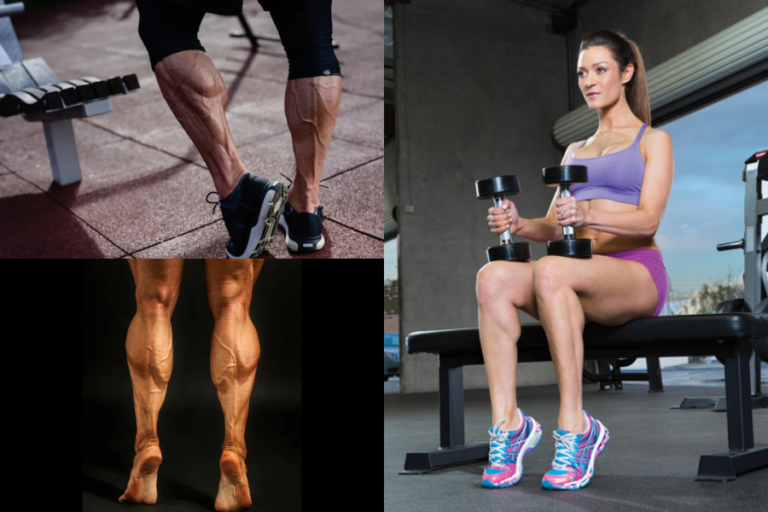
Seated calf raises place more emphasis on the soleus muscle, which is important for endurance activities like long distance running. They are convenient at home, at the gym, or even in a sturdy chair at work.
How to do it
- Sit tall in a chair with your feet flat on the floor, hip width apart.
- Place your hands on your thighs for light resistance, or rest a weight on your knees if you have one.
- Lift your heels as high as possible, keeping the balls of your feet on the floor.
- Pause at the top, then slowly lower your heels back down.
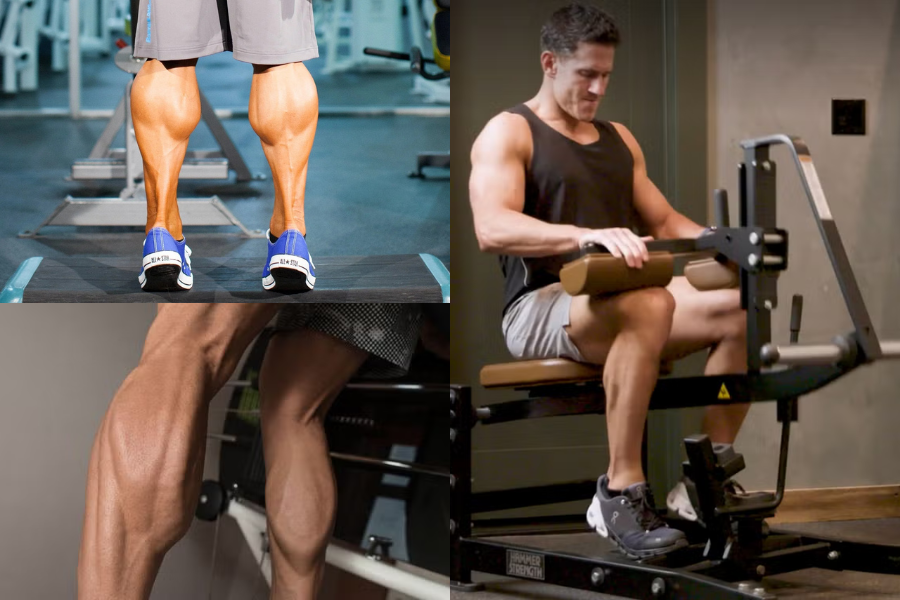
You can also use a seated calf machine at the gym for higher loads, but body weight versions still build useful strength and endurance.
5. Farmers’ walk on toes
The farmers’ walk on toes adds a functional twist by combining calf work with grip and core strength. It can be done in a hallway, driveway, or any open space.
According to some training recommendations, this exercise involves walking forward on your toes while holding heavy dumbbells for up to 60 seconds, repeated several times to strengthen the calf muscles.
How to do it
- Hold a dumbbell or heavy object in each hand, arms by your sides.
- Rise up onto your toes.
- Walk forward in small, controlled steps while staying on your toes the entire time.
- Lower your heels to rest, then repeat.
Start with shorter walks and lighter weight, then build up as your calves and balance improve.
6. Loaded toe walks
Loaded toe walks are similar to the farmers’ walk, but you can use any kind of load, such as a backpack, tote bag, or even grocery bags.
Loaded toe walks help improve both balance and calf strength, which is especially useful for runners and anyone who spends time on uneven ground.
How to do it
- Put on a backpack with some weight or carry bags in your hands.
- Rise onto your toes.
- Walk slowly for a set distance or time without letting your heels touch the ground.
- Rest and repeat.
This is a simple way to turn everyday items into effective training tools.
7. Hopping drills
Hopping drills mimic the demands of running and sprinting by creating several explosive calf raises in a row on one leg. You can do these outside, on a mat, or on a firm carpeted floor.
Hopping can be progressed by increasing speed, height, decreasing ground contact time, or adding small obstacles. These options help improve power for sports that involve jumping or quick takeoffs.
How to do it
- Stand on one leg with a slight bend in your knee.
- Hop up and down in place using your calf to push off.
- Aim for soft, quiet landings and quick rebounds.
- Switch legs after a set number of hops or time.
Keep the volume modest at first to avoid overloading your Achilles tendon, especially if you are new to impact work.
How often to do calf exercises
You do not need long, complicated workouts to see benefits. For many people, one set of 12 to 15 repetitions of calf raises is enough to gain strength benefits, according to Mayo Clinic recommendations. You can build from there as your legs adapt.
If you are a recreational exerciser, try this simple structure:
- 2 or 3 calf exercises per session
- 2 or 3 sets of 12 to 15 repetitions each
- 2 or 3 sessions per week, with rest days in between
Marathon runners and high mileage athletes are often advised to do 2 strength sessions per week with 2 or 3 calf exercises in each session, as part of a broader plan that also includes cardio, flexibility, and rest. This helps reduce the risk of problems like calf strains and Achilles tendon issues and supports endurance by improving how well your calves handle repeated loading.
Stretching and recovery for healthy calves
Strength is only part of the picture. To keep your calves comfortable and resilient, include regular stretching and simple recovery habits.
Experts recommend that stretching should not be done on cold muscles. Aim to stretch after exercise or following a 5 to 10 minute warm up. If you feel pain, stop and consult a professional.
Two easy options you can use almost anywhere are:
- Wall calf stretch. Stand facing a wall, step one foot back, and press your back heel into the ground while leaning forward slightly. You will feel the stretch in your calf.
- Foam rolling. Sit on the floor with your calf on a foam roller and gently roll back and forth to release tight spots.
Regular calf stretching, along with foam rolling, helps maintain supple muscles and reduces tightness that can lead to strains or injuries. This is especially important if you spend long periods sitting or in stiff shoes.
Common mistakes to avoid
Even simple calf exercises can be less effective or uncomfortable if your form slips. A few common mistakes include:
- Moving too quickly, which uses momentum instead of muscle strength
- Folding forward at the hips instead of standing tall, which affects balance
- Doing only a few rushed repetitions rather than controlled sets
- Skipping warm ups or stretching, which can increase the risk of tightness and strain
Good technique means slow, controlled movements, chest up, and keeping your knees straight when the exercise calls for it. If your balance is shaky, using a chair or wall for support is encouraged and not a sign of weakness.
If you have a recent lower body injury or persistent pain in your calf or Achilles tendon, check with a health care provider before starting new calf exercises.
Putting it all together
You can think of your calves as both your accelerator and your brakes. They help you run uphill, control your speed downhill, and keep you steady when you change direction, as Dallas foot specialists at Metroplex Foot & Ankle describe in 2026. Weak or tight calves make all those tasks harder and raise your chance of injury.
You can start small. Add a set of standing calf raises every time you brush your teeth, practice seated calf raises while you watch TV, or try a short loaded toe walk with a backpack during your next walk. Over time, these simple calf exercises will give you stronger, more stable lower legs that support everything else you love to do.
About the Author