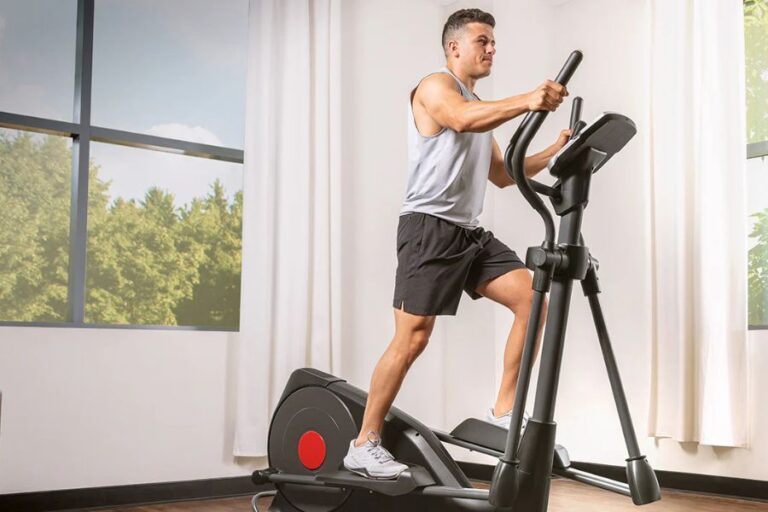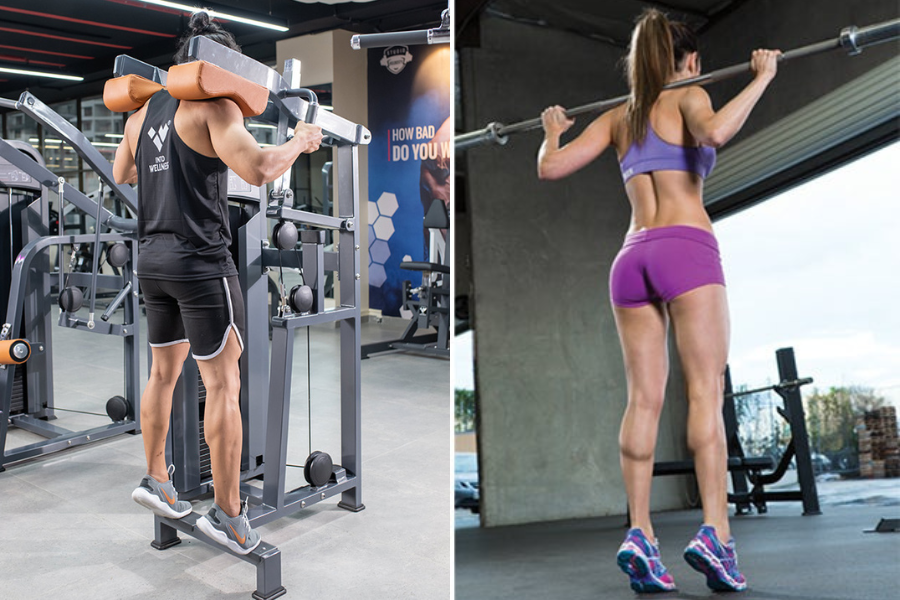
A simple bodyweight routine can be enough to build strong, defined calves if you are smart about how you train. The right bodyweight calf exercises help you do more than just fill out your socks. They improve your walking and running efficiency, support your knees and ankles, and lower your risk of nagging lower leg issues.
Below, you will find practical exercises you can do anywhere, plus clear guidance on how to combine them into a routine that actually works.
Understand your calf muscles
Your calves are not just one muscle that you hit with a few lazy heel raises. They are a small group of powerful muscles that work together every time you walk, run, or jump.
The two main ones are:
- Gastrocnemius: This is the visible, diamond-shaped muscle on the back of your lower leg. It kicks in when you lift your heels and when you sprint or jump.
- Soleus: This deeper muscle sits underneath the gastrocnemius. It helps stabilize your ankle and does a lot of work when your knee is bent, like when you walk up stairs or squat.
You also have smaller helpers like the peroneus longus and brevis on the side of your lower leg and the tibialis posterior along the inside. Even your core muscles, including your rectus abdominis and obliques, help stabilize you during quality calf work.
When you ignore these muscles, you set yourself up for trouble. Weak calves are linked with knee instability and a higher risk of Achilles problems. Trainer David Grey points out that people who skip calf raises and calf strength work often end up with Achilles issues later because the tendons are not ready for the forces you put through them.
Why bodyweight calf exercises matter
You may feel like your calves are already working hard because you walk thousands of steps a day. The reality is that walking is low intensity and uses a short range of motion. Your calves are very used to that kind of work, so it is not enough to trigger muscle growth or big strength gains.
Targeted bodyweight calf exercises give you:
- Better propulsion when you walk and run
- More power for jumping and quick changes of direction
- Stronger support for your ankles and knees
- Lower risk of strains and overuse injuries
Since your calves contain a mix of slow-twitch and fast-twitch muscle fibers, they respond best when you give them variety. This means some higher rep, slow and controlled sets for endurance and some more explosive or heavier-feeling work for strength and power.
Classic standing calf raises
If you choose only one bodyweight calf exercise, make it the standing calf raise. It is simple but effective and it directly targets the gastrocnemius.
How to do it
- Stand tall with your feet hip-width apart. Hold the back of a chair or wall for balance if needed.
- Press the balls of your feet into the floor and slowly lift your heels as high as you comfortably can.
- Pause briefly at the top, focusing on squeezing your calves.
- Lower your heels back down under control, not just dropping them.
You can do these on flat ground or on the edge of a stair or curb. An elevated surface lets your heels drop slightly below your toes so you can move through a larger range of motion.
Pointing your toes slightly outward or inward changes which parts of the calves work hardest. Outward toes shift more load toward the inner calf, while inward toes emphasize the outer portion.
Make them more effective
To get results, treat these like a real strength exercise, not a warm up you rush through. Move slowly, especially on the way down, and focus on feeling the muscle work. Since walking already gives your calves low-intensity work, use longer sets or slower reps to raise the challenge.
Single leg calf raises for extra challenge
Once two-leg calf raises feel easy, shift to single leg calf raises. Balancing on one foot instantly doubles the load on that calf and recruits more stabilizing muscles around your ankle and core.
To do them, stand on one leg, hold on lightly to a wall for balance, and follow the same heel raise pattern as the classic version. Keep your free leg slightly bent and relaxed so all the effort stays in the working calf.
You can also use a stair step for single leg raises. Let your heel drop gently below the step, then press up as high as possible. The deeper stretch creates more tension and can kick-start growth if your calves have adapted to regular standing raises.
Dynamic bodyweight calf raises
Dynamic bodyweight calf raises use movement and tempo to increase intensity and better mimic what your calves do in real life.
You still lift your heels and keep your toes planted, but you:
- Move at a slightly faster tempo
- Add a small bounce at the top or bottom
- Shift your body weight slightly forward and back
- Or flow through a range of motion without pausing as long
These variations train your calves to handle changing speeds, which is exactly what happens when you run, cut, or accelerate.
Dynamic raises also call your core into action. To keep your balance as you move more quickly, your rectus abdominis, obliques, and deeper core muscles like the transversus abdominis switch on to stabilize your spine.
If you are a runner or play sports, this style of calf raise fits your needs especially well. It builds lower leg strength and endurance in a way that is closer to your actual movements.
Outward and inward calf raises
Small foot position changes can help you hit different angles of the calf without any equipment.
For outward and inward calf raises:
- Toes out: Turn your toes outward slightly, like 10 to 30 degrees. This stance often emphasizes the inner calf.
- Toes in: Point your toes slightly inward to challenge the outer calf more.
Stand as you normally would for calf raises, then adjust your toes and run through your reps. Keep the movement slow and controlled so you are not rocking forward and back.
Rotating your toes is a simple way to get more complete development from basic bodyweight work. It also keeps your routine from getting stale without needing new exercises.
Tiptoe walking for strength and balance
Tiptoe walking looks almost too easy, but you will feel it quickly if you stay patient and use good form.
Start by rising onto your toes, then walk slowly across the room and back, keeping your heels off the floor the entire time. Focus on smooth, quiet steps and keep your torso tall rather than leaning forward.
This move builds calf endurance and ankle stability, and it lightly challenges your balance. It is also a good way to warm up your calves before harder sets, especially if you have stiff ankles.
Add plyometric moves for power
If your joints can handle impact and you already have a basic strength base, adding light jumping helps your calves get stronger and more explosive.
Examples include:
- Jump squats: Squat down then jump up powerfully, landing softly and using your calves to help absorb the landing.
- Jumping jacks: The repeated push off the ground trains your lower legs along with your hips and thighs.
- Butt kickers and fast feet: These quick ground contacts make your calves work at higher speeds, which is useful if you run or play field sports.
These are high-impact moves that put stress on your calves and Achilles tendon, so add them gradually and listen to your body. If you are new to exercise, start with the non-jumping raises first, then introduce short sets of jumps once your calves feel stronger.
Sneaky ways to work your calves harder
You do not always need separate calf exercises. Small tweaks to what you are already doing can boost calf activation.
Try:
- Lifting your heels during lunges or squats so you stay on the balls of your feet for part of the movement
- Walking or running on an incline instead of flat ground to shift more of the load into your calves
- Pausing for a second at the top of a step up or stair climb while you are on your toes
These little changes add up and help you build stronger calves during workouts you are doing anyway.
Why load and range of motion matter
If your main goal is calf growth, you need to understand two key ideas: load and range of motion.
Many people use too little resistance when they train calves. Your calves are used to carrying your body weight all day. For them to grow, they need a signal that is clearly harder than normal life. With bodyweight work, that means:
- Using single leg versions
- Moving slowly, especially in the bottom half of the rep
- Spending more time under tension on each set
There is also the issue of where you are strongest. Some coaches point out that focusing only on the full range of motion may not give you maximum strength gains, because your calves can be less effective at the very top when your ankle is fully pointed. Working the bottom half, where you are a bit stronger, can help you produce more force and build more strength and size.
If you eventually add equipment, heavy standing calf raises on something like a Smith machine can provide the progressive overload that bodyweight alone sometimes cannot.
Do not forget the soleus and tibialis
Most people think of calf training as just standing on their toes, but that mostly hits the gastrocnemius. To build a well-rounded lower leg and support your joints, you also need to pay attention to the soleus and the tibialis muscles.
You can bias the soleus by bending your knees more. Seated calf raises are a classic way to do this, since the bent knee position reduces the gastrocnemius contribution and shifts load into the soleus. You can mimic this with bodyweight by sitting on a sturdy chair, placing your feet flat on the floor, and lifting and lowering your heels while keeping your knees bent.
The tibialis muscles, especially the tibialis anterior on the front of your shin, help control your foot when it lands and lifts off. Tibialis raises, where you keep your heels on the ground and lift your toes toward your shins, train this area and can help with shin splint prevention and overall ankle stability.
Working these often-neglected muscles creates a more balanced lower leg and can reduce injury risk.
Use smart rep ranges and stretching
Because your calves have both endurance and power fibers, they respond well to a mix of rep ranges. For example, you can use:
- Higher reps, like 15 to 25, with slow tempo for standing raises
- Moderate reps, like 8 to 15, for single leg variations
- Shorter, explosive sets of jumps for power
Varying your reps keeps your calves guessing and can avoid the plateau that often happens when you only ever do 3 sets of 10.
Stretching also plays a part. Regular calf stretches done a couple of times per week help maintain flexibility and protect against tightness-related injuries. The American Academy of Orthopaedic Surgeons suggests holding calf stretches for around 30 seconds, repeating them a few times, to target both the gastrocnemius and the soleus.
Between sets, a brief stretch can improve how your calves feel and may help with muscle pump and recovery. After your workout, longer, more relaxed stretches support mobility.
Sample bodyweight calf routine
Here is a simple starting routine you can adjust based on your level. Aim to do it two or three times per week.
- Tiptoe walking, 2 rounds of 20 to 30 steps
- Standing calf raises, 3 sets of 15 to 20 reps
- Single leg calf raises, 2 sets of 10 to 15 reps per leg
- Outward and inward calf raises, 2 sets of 12 to 15 reps in each foot position
- Light plyometric move like jumping jacks or fast feet, 2 sets of 20 to 30 seconds if your joints tolerate impact
Finish with gentle calf stretching, holding each stretch for 30 seconds and repeating 2 or 3 times.
Stay safe and progress gradually
Bodyweight calf exercises are generally safe, but they still put stress on muscles, tendons, and joints. A sensible approach and common sense go a long way.
Increase your volume gradually, especially if you are new to calf training or have a history of Achilles or ankle problems. If you have ongoing pain, medical conditions, or concerns about your lower legs, check in with a healthcare professional before pushing hard. They can help you decide which movements are right for you and how to adjust them.
The key to strong calves is not fancy equipment. It is consistent, intentional training that challenges your muscles more than your daily step count does. Start with one or two of these bodyweight calf exercises today and build from there as your lower legs adapt and get stronger.
About the Author