Understand why posture starts in your back
If you want a back workout for posture that actually changes how you stand and sit every day, you need to know what is going on behind the scenes. Your upper and lower back muscles work with your core, hips, and shoulders to stack your spine, hold your ribcage, and keep your head from drifting forward.
When those muscles are weak or tight, you are more likely to:
- Round your shoulders while working at a computer
- Slouch on the couch
- Look down at your phone for long stretches
Over time, these habits overstretch and weaken the muscles along your upper back while the chest and front of your shoulders shorten and pull forward. This tug-of-war is what shows up as a hunched upper back, stiff neck, and achy shoulders.
The good news is that you can train your back to support better posture, even if you have slouched for years. A smart back workout for posture focuses on three things:
- Warming up and opening the front of your body
- Strengthening your upper and lower back plus your core and glutes
- Practicing daily “micro moments” of posture so your muscles learn a new default
The routine below combines all three in about 15 to 20 minutes.
Start with a posture friendly warmup
Before you load your back muscles, you want to release the tight areas that are working against you. Fitness coaches recommend warming up by releasing tension in the pecs and front of the shoulders so your upper back muscles can fire properly.
Chest and shoulder opener (doorway stretch)
This stretch helps undo the hunched, rounded position you get from keyboards and phones.
- Stand in a doorway and place your forearms on each side of the frame, elbows at shoulder height.
- Gently step one foot forward and lean your chest through the doorway.
- You should feel a stretch across your chest and the front of your shoulders.
- Hold for 20 to 30 seconds, breathing slowly.
- Repeat 2 to 3 times.
This stretch is similar to the chest-opening moves recommended in posture guides, which help counteract shortened chest muscles from sitting and slouching.
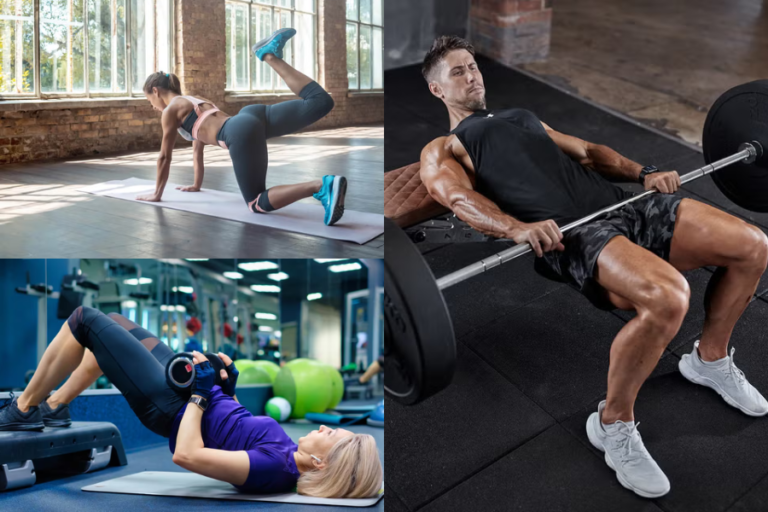
Easy spine mobilizer (cat stretch)
The cat stretch improves flexibility and support in your back, which is essential before you ask your muscles to work harder.
- Come to your hands and knees on the floor.
- As you exhale, gently arch your back up toward the ceiling, tucking your tailbone and letting your head drop.
- Inhale and slowly reverse the motion, letting your belly lower toward the floor while you lift your chest and tailbone.
- Move smoothly between the two positions.
- Repeat 3 to 5 times.
According to Mayo Clinic, repeating this type of move twice a day can help support the muscles that maintain good posture and help with back pain.
Build strength in your core and glutes
If your core and glutes are not doing their share of the work, your lower back has to pick up the slack. That often leads to discomfort and more slouching. Harvard Health highlights core strengthening exercises such as modified planks and abdominal tightening as crucial for keeping you upright and preventing that forward lean.
High plank (core and back support)
The high plank builds strength in your core, shoulders, and back so you can hold a tall posture when you are on your feet.
- Start on all fours, then step your feet back so your body forms a straight line from head to heels.
- Place your hands under your shoulders, fingers spread.
- Gently pull your belly button toward your spine, as if you are zipping up tight jeans.
- Keep your hips level, not sagging or piking.
- Hold for 10 to 20 seconds, rest, and repeat 2 to 3 times.
High planks help develop balance and strength in the core and back muscles, both key players in maintaining good posture.
Side plank (posture from the side view)
Side planks bring the glutes, obliques, and side of your body into the picture, which helps keep your hips and spine aligned.
- Lie on your side with your elbow directly under your shoulder and legs extended.
- Stack your feet or place the top foot in front for more balance.
- Press your elbow into the floor and lift your hips so your body forms a straight line from head to feet.
- Keep your head in line with your spine and avoid letting your hips sag.
- Hold for 10 to 20 seconds per side, 2 to 3 rounds.
Side planks help support your back and improve overall posture by strengthening the sides and glutes.
Glute bridge (hip and pelvic alignment)
The bridge is a simple move that ties your glutes, hamstrings, and lower back together, all essential for standing tall.
- Lie on your back with knees bent, feet flat on the floor, hip width apart.
- Tighten your belly and buttock muscles.
- Press through your heels and lift your hips until your body forms a straight line from knees to shoulders.
- Pause for 2 to 3 seconds at the top while you keep your ribs down and core engaged.
- Lower slowly and repeat.
Start with 5 repetitions a day and gradually work up to 20 to 30, as suggested in back strengthening routines from Mayo Clinic. This move not only strengthens and activates your glutes, it can also relieve lower back strain and improve the alignment of your hips and pelvis.
Target the upper back for better posture
Your upper back muscles, including your rhomboids, trapezius, rear deltoids, and the smaller stabilizers around your shoulder blades, are the quiet heroes of good posture. They keep your shoulders from rolling forward and support your neck and head as you sit and move. When these muscles are strong, you are less likely to slump or hunch over screens.
Research shows that strengthening the upper back can reduce shoulder, middle back, and lower back pain for people who sit a lot during the day.
Shoulder blade squeezes (anytime reset)
This is one of the simplest posture drills that you can do at your desk, on the couch, or standing in line.
- Sit or stand tall, with your arms relaxed at your sides.
- Gently pull your shoulder blades back and toward each other, as if you are trying to hold a pencil between them.
- Keep your shoulders down away from your ears.
- Hold for 5 seconds, then relax.
- Aim for 3 to 5 repetitions twice a day.
This move is similar to the scapula squeezes and shoulder blade exercises recommended in 2024 posture guidelines. It strengthens the muscles that hold your shoulders in a better position over time.
Resistance band row (back of the shoulders and mid back)
If you have a light to medium resistance band, rows are one of the most effective back exercises for posture.
- Anchor the band at chest height, such as around a sturdy pole or closed door.
- Hold one end of the band in each hand, arms extended in front of you.
- Stand tall with a slight bend in your knees and your core lightly engaged.
- Pull your elbows back, keeping them close to your sides, and squeeze your shoulder blades together.
- Pause briefly, then slowly return to the starting position.
Rows engage the muscles between and around your shoulder blades, which helps prevent slumping and encourages you to sit, stand, and walk taller.
Band pull-apart or T pull (open your chest, wake up your upper back)
Band pull-aparts are a small movement that make a big difference in how your upper back feels after a day at a desk.
- Stand tall and hold a resistance band at shoulder height with straight arms, hands slightly wider than your shoulders.
- Gently pull the band apart by moving your hands out to the sides, focusing on squeezing your shoulder blades together.
- Keep your ribs down and avoid arching your lower back.
- Slowly return to the start.
Variations like T pulls and Y pulls, where your arms move into different angles, encourage proper shoulder blade movement and core engagement, which is essential for better posture.
Add lower back strength without overdoing it
You might think a back workout for posture is all about heavy deadlifts. In reality, your lower back responds best to a mix of smart, controlled movements and support from your core and glutes. When done with good form, classic back exercises can be incredibly effective, but simply lifting weight without attention to technique may do more harm than good.
Bridge and superman combination (body weight first)
Body weight moves are a good place to start, especially if you are returning from a break or dealing with mild back discomfort.
- Begin with the bridge variation described earlier to fire up your glutes.
- Then try the superman:
- Lie face down with arms extended in front of you.
- Gently lift your chest, arms, and legs a few inches off the ground.
- Keep your neck long, gaze toward the floor.
- Hold for 2 to 5 seconds, then lower with control.
Harvard Health notes that body weight exercises such as the bridge and superman can improve back strength and posture when you start with modest repetitions and gradually add sets as you feel stronger.
Isometric pull (teach your back to “hold” you up)
Isometric pulls strengthen the muscles of the shoulders, arms, and back by having you resist without much visible movement, similar to how your back works all day to keep you upright.
Here is a simple version using a band or sturdy towel:
- Sit or stand tall and hold the band or towel in front of you at shoulder height.
- Gently pull as if you are trying to stretch it apart, without actually letting your hands move far.
- You should feel your upper back and the backs of your shoulders working.
- Hold the tension for 10 to 20 seconds, then relax.
- Repeat 3 to 5 times.
This kind of isometric work builds endurance in posture muscles, so holding yourself tall feels easier.
Practice daily posture habits that stick
A strong back supports your spine, disks, ligaments, and joints and lowers your risk of strain and sprain when you lift, bend, or twist. But you will see the fastest posture changes when your daily habits support your new strength.
Small changes you can make today
-
Reset your shoulders every hour
Do a quick round of shoulder blade squeezes while you refill your water or wait for your coffee. -
Raise your screen
Bring your laptop or monitor closer to eye level so your head is not constantly drifting forward. -
Break up sitting time
Stand or walk for a few minutes every 30 to 60 minutes to avoid getting locked into a rounded posture. -
Engage your core occasionally
Use the abdominal tightening cue from your plank, lightly drawing your navel toward your spine while you sit or stand. It trains your core to help out automatically. -
Stretch your chest after screen time
Finish long computer sessions with 1 or 2 rounds of the doorway stretch to keep your chest from tightening up.
Put it together into a 15 minute routine
Here is how you can turn these moves into a simple back workout for posture. Aim for this 3 times a week, with the lighter “micro” habits sprinkled through your day.
- Warmup, 3 minutes
- Doorway stretch, 2 rounds of 20 to 30 seconds
- Cat stretch, 3 to 5 slow repetitions
- Core and glutes, 5 minutes
- High plank, 2 sets of 10 to 20 second holds
- Side plank (each side), 2 sets of 10 to 20 second holds
- Glute bridge, 2 sets of 8 to 12 reps
- Upper and lower back, 5 to 7 minutes
- Shoulder blade squeezes, 2 sets of 5 reps
- Band row or band pull-apart, 2 sets of 8 to 12 reps
- Superman, 2 sets of 6 to 10 reps
- Optional: isometric pull, 3 holds of 10 to 20 seconds
Start at the low end of these ranges, especially if you are new to strength work. Gradually add time, repetitions, or an extra set as it begins to feel easier.
If you have had back pain or other health issues, check in with your doctor before you begin. A physical therapist or trainer can help you fine tune your form so every rep moves you closer to the tall, relaxed posture you want.
Try the warmup and one strength move today, then notice how your upper back and neck feel afterward. Those small, consistent sessions are what quietly transform how you sit, stand, and move through your day.
About the Author