Understand your lower chest muscles
If you want impressive results from lower chest exercises, it helps to know what you are actually training. Your chest is not just one flat slab of muscle. It has two main parts:
- The sternal head (middle and lower chest)
- The clavicular head (upper chest)
The lower chest, often called the sternocostal or abdominal head of the pectoralis major, sits along the bottom of your chest and attaches near your sternum. The muscle fibers run from the bottom of your chest up toward your upper arm, usually at a slight upward angle.
That fiber direction is important. To emphasize the lower chest, you want exercises where your arms move:
- Downward and slightly forward
- Across your body, toward the midline
This is why decline presses, dips, and high‑to‑low cable movements are such strong choices for lower chest workouts. You can never completely isolate the lower chest, since the pec is one big muscle, but you can absolutely shift more of the work there with smart exercise selection and body positioning.
Why lower chest exercises matter
Many people hammer standard bench presses and incline presses, then wonder why their chest looks flat or unbalanced. You might notice:
- A thick middle chest but softer tissue near the bottom
- A strong bench press but shaky stability on heavier lifts
- A lack of definition where the pec meets your ribcage
Lower chest exercises help you:
-
Balance your chest development
You avoid overemphasizing upper or mid chest and create a more symmetrical look. -
Increase pushing strength and power
A strong lower chest supports heavier pressing on bench, overhead press, and even helps with bracing on compound lifts. -
Support shoulder health
Balanced pec development improves shoulder stability and can reduce strain on the joints. -
Improve aesthetics
When body fat is under control, clear lower chest lines and fullness give your torso a more athletic, “finished” look.
Keep in mind that body fat levels matter. Even if you train the lower chest perfectly, higher overall body fat can blur definition and hide separation lines. If visible detail is your goal, you will want to pair these exercises with a nutrition plan that helps you reduce body fat.
Key principles for lower chest training
Before you jump into specific lower chest exercises, use these principles to get more out of every rep.
Focus on exercise angle and arm path
Because the lower chest fibers run upward and outward, you get maximum emphasis when your pressing or pulling path:
- Starts high and finishes low and in near your ribcage or hip
- Keeps elbows slightly flared instead of tucked tightly to your sides
- Adds a gentle forward lean on bodyweight moves like dips
Decline angles in the 15 to 30 degree range tend to line up well with the fiber direction and reduce overuse of the front delts, which encourages more work from the lower pecs.
Use a full range of motion
Partial reps near lockout do very little for the lower chest. You get the most benefit when you:
- Lower the weight under control until you feel a deep stretch across the chest
- Pause briefly without bouncing
- Press or squeeze back up, finishing with the chest contracted, not with your elbows snapping straight
This full stretch and contraction pattern helps target those hard‑to‑hit lower fibers and encourages hypertrophy.
Slow down your tempo
Rushing reps with momentum shifts the stress to your joints and support muscles. Instead, try:
- 2–3 seconds down on presses and flyes
- A controlled pause at the bottom
- 1–2 seconds up, focusing on squeezing the pecs
That controlled eccentric phase (the lowering part) is especially valuable for muscle growth and better mind‑muscle connection.
Build a mind‑muscle connection
If you constantly feel exercises in your shoulders or triceps instead of your chest, you are not alone. To refocus on your lower chest:
- Think about bringing your biceps toward the midline of your chest, not just moving your hands
- Visualize your lower chest fibers shortening as your arms move down and across
- Lighten the weight until you can clearly feel the chest doing the work
This is particularly important for cable fly variations and dips, where momentum can easily take over.
Combine heavy and lighter work
Research suggests that using a mix of high‑load and low‑load training is effective for muscle hypertrophy. In practice, that means your lower chest routine should include:
- Heavier sets of 6–8 reps on compound presses or dips
- Moderate to higher rep sets of 10–15 on isolation work like cable flyes and pushup variations
This combination lets you build strength and size while managing joint stress and improving muscular endurance.
Best lower chest exercises with weights
If you have access to a gym or basic equipment at home, these weighted lower chest exercises deserve a place in your routine.
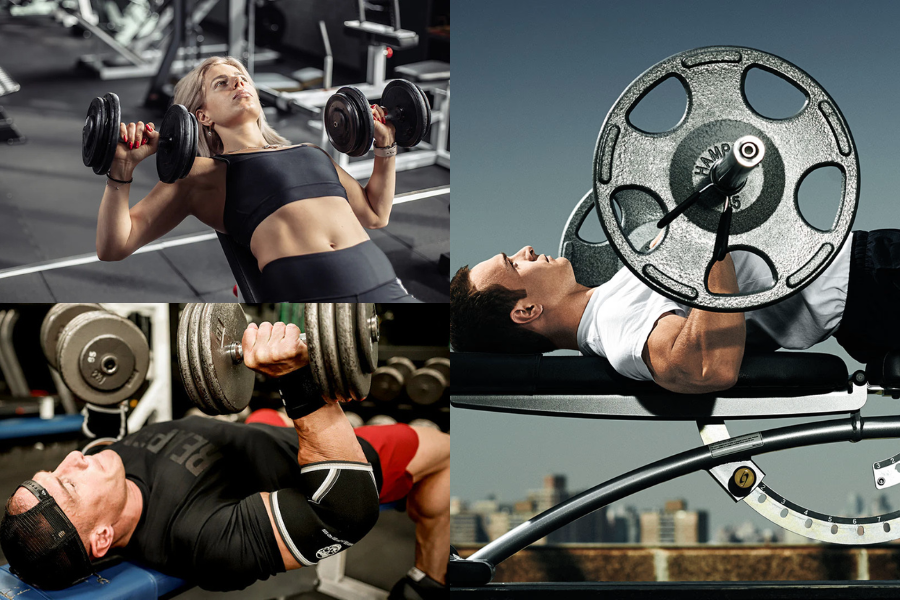
Decline dumbbell bench press
The decline dumbbell bench press is one of the best lower chest exercises you can do. The slight decline angle, typically 15 to 30 degrees, lines up the pressing path with your lower pec fibers and takes some emphasis off your shoulders. Using dumbbells instead of a barbell lets you:
- Increase your range of motion
- Adjust arm path to what feels natural for your shoulders
- Address left‑right imbalances by making each side work independently
How to do it
- Set a bench to a low decline.
- Lie back with dumbbells held above your chest, palms facing forward.
- Lower the weights in a controlled arc until they are level with or slightly below your chest.
- Press the dumbbells back up, focusing on squeezing your lower chest and bringing the weights together over your sternum.
Tips
- Do not bounce the dumbbells off your chest.
- Avoid flaring your elbows excessively. A moderate flare is ideal.
- Keep your feet secure so you feel stable throughout the set.
Decline barbell bench press
The decline barbell press is another powerful option for loading the lower chest with heavier weights. The movement pattern is similar to the flat bench, but the decline angle shifts more work down toward the base of the pecs.
How to do it
- Secure your feet under the decline bench pads.
- Grip the bar slightly wider than shoulder width.
- Unrack and bring the bar over your lower chest.
- Lower to just below nipple level, then press back up along the same path.
This variation is useful if you want to push heavier loads, but you will need a spotter or proper safety setup.
High‑to‑low cable fly
The high‑to‑low cable fly is a go‑to isolation move for lower chest fibers. It starts with a stretch at the top position and finishes with peak tension as your hands meet near hip height. Cables keep constant tension on the chest and reduce shoulder involvement when performed correctly.
How to do it
- Set both cable pulleys at or above head height.
- Stand in the center with one handle in each hand, then step forward into a staggered stance.
- Start with your arms slightly bent and out to your sides. You should feel a gentle stretch across your chest.
- Sweep your hands down and in, aiming to meet them just in front of your lower chest or slightly above your hips.
- Squeeze your chest at the bottom, then return slowly to the start.
Tips
- Keep a soft bend in your elbows throughout.
- Do not let the weights slam back. Control the negative.
- Think about your lower chest pulling your arms down and together.
Machine chest press with low grip
If your gym has a plate‑loaded or cable chest press machine, you can adjust it to emphasize your lower chest. Using a low grip position (handles set lower relative to your torso) and pressing slightly downward helps mimic a decline press.
How to do it
- Set the seat height so the handles are at or just below mid‑chest level.
- Grip the handles and press out and slightly down.
- Avoid locking out hard at the elbows to keep tension on the chest.
This variation is especially useful at the end of a session when you are fatigued and want extra lower chest volume with more stability.
Weighted dips (parallel bars or straight bar)
Dips are a classic bodyweight exercise, and with the right technique they become a standout lower chest move. Performing them on parallel bars or a straight bar with the correct body angle shifts work from your triceps and shoulders to your lower pecs.
How to do dips for lower chest
- Grab the bars and lift yourself to the top position.
- Lean your torso slightly forward, not straight up and down.
- Let your elbows flare out just a bit instead of pinning them tight.
- Lower slowly until you feel a deep stretch across the chest.
- Press back up by driving your hands into the bars and focusing on your chest doing the work.
As you get stronger, you can add a dip belt or hold a dumbbell between your feet for extra resistance.
Straight bar dips increase lower chest involvement further by changing your shoulder rotation and elbow path. In this variation you support yourself on a single bar behind you or underneath you and dip with your hands behind your body.
Jackhammer pushdown
The jackhammer pushdown looks like a triceps pushdown at first glance, but the way you angle your body turns it into a hybrid exercise that heavily involves the lower chest. By leaning forward, you move from a straight vertical push into a pattern similar to a decline press.
How to do it
- Attach a straight bar or rope to a high cable.
- Step back and lean your torso forward about 30 to 45 degrees.
- Start with elbows slightly in front of you, hands at about chest height.
- Push the handle down and slightly forward, finishing near your mid‑thighs.
- Focus on squeezing your lower chest at the bottom, then return in a controlled arc.
Use a weight that lets you keep form tight. The goal is not just to hammer the triceps, but to drive that down‑and‑in pattern that lights up your lower pecs.
Effective lower chest exercises at home
No gym membership does not mean your lower chest cannot grow. With some adjustments to hand placement and body angle, basic pushups become excellent lower chest exercises.
Incline pushup
The incline pushup is one of the simplest ways to shift emphasis toward your lower chest using only your body weight. When your hands are elevated, you press a smaller percentage of your body weight and adjust your arm angle to better match lower chest fibers.
How to do it
- Place your hands on a stable elevated surface such as a bench, sturdy chair, or countertop.
- Walk your feet back until your body forms a straight line from head to heels.
- Lower your chest toward the edge while keeping your elbows at about a 45 degree angle to your torso.
- Press back up, focusing on driving your body away from the surface using your chest.
As you progress, you can lower the height of the surface to increase the load.
Incline twisting pushup
An incline twisting pushup increases the challenge by adding rotation, which encourages more contraction across the lower chest fibers.
How to do it
- Set up as you would for an incline pushup.
- As you push up, slightly rotate your torso so one side of your chest leads and one hand finishes a bit closer to the midline.
- Alternate sides with each rep.
This twisting motion adds an “across the body” element that can further engage your lower chest.
Pseudo pushup or planche‑style pushup
Pseudo pushups (or planche‑lean pushups) significantly increase lower chest and front shoulder involvement by bringing your hands closer to your hips.
How to do it
- Start in a pushup position, but place your hands slightly behind your shoulders, closer to your ribcage.
- Rotate your hands outward to a comfortable angle.
- Lean your body forward so your shoulders move ahead of your hands.
- Bend your elbows to lower your body, then press back up while maintaining that forward lean.
These are challenging. Begin with small ranges of motion and keep your core tight to protect your shoulders.
Chair or bar dips at home
If you do not have dip bars, you can improvise with two sturdy chairs, the edges of a countertop, or a stable single bar. The key is to:
- Keep a slight forward lean
- Lower to a comfortable depth for your shoulders
- Drive back up by thinking of your chest pushing the world away
Several home workout guides, such as those from Madbarz, emphasize that careful setup and body angle let you effectively target your lower chest with bodyweight alone.
How often to train your lower chest
For most people, training the lower chest twice per week works well. Research and expert recommendations suggest that:
- Around 4 to 12 total sets per week of direct lower chest work is effective for hypertrophy
- Spreading those sets over 2 sessions can improve recovery and strength gains
You can hit this by adding:
- 2 or 3 lower chest exercises to one chest day
- 1 or 2 focused lower chest moves to a second upper body or push day
This volume does not need to be separate from your regular chest training. Many decline presses and dips also contribute to overall chest strength.
Sample lower chest workout plans
Use these templates as a starting point and adjust based on your experience level and equipment.
Gym‑based lower chest emphasis day
Workout A (strength focus)
- Decline barbell bench press
- 4 sets of 6–8 reps
- Weighted dips (parallel or straight bar)
- 4 sets of 8–10 reps
- Machine chest press with low grip
- 3–4 sets of 10–12 reps
- High‑to‑low cable fly
- 3 sets of 12–15 reps
This session blends heavier compound work with moderate and higher rep isolation to fully fatigue the lower chest.
Workout B (hypertrophy and control)
- Decline dumbbell bench press
- 4 sets of 8–12 reps
- High‑to‑low cable fly
- 4 sets of 12–15 reps
- Jackhammer pushdown
- 3–4 sets of 10–12 reps
- Bodyweight or assisted dips
- 3 sets of 12–15 reps
In this version you focus on constant tension, smooth tempo, and strong mind‑muscle connection.
Aim to keep 1–2 reps in reserve on most sets, and occasionally train near failure on your final set of an exercise to push hypertrophy.
Home lower chest routine
If you train at home, here is a simple structure that still respects the same principles.
Home Workout (2 times per week)
- Incline pushup
- 4 sets of 10–15 reps
- Pseudo pushup or planche‑lean pushup
- 3 sets of 6–10 reps
- Incline twisting pushup
- 3 sets of 8–12 reps per side
- Chair or bar dips
- 3 sets to near technical failure
You can make these harder by:
- Raising your feet on a step
- Slowing the negative part of each rep
- Pausing at the bottom of each pushup or dip
Common mistakes that limit lower chest progress
As you adopt more lower chest exercises, watch for these frequent errors that can stall results or raise injury risk.
Letting shoulders take over
If you feel presses and flyes mainly in your front delts, you are probably:
- Setting the bench angle too steeply
- Flaring your elbows too wide or too narrow
- Shrugging your shoulders toward your ears
Try lowering the angle on decline presses, keeping your shoulder blades pulled back and down, and adjusting your grip width slightly.
Using too much weight
Sloppy form with heavy loads often means:
- Bouncing the bar or dumbbells off your chest
- Cutting the range of motion short
- Relying on momentum instead of muscle
Reduce the weight until you can control each rep from full stretch to full contraction without losing tension. This tends to grow your lower chest faster than ego lifting.
Overemphasizing one area of the chest
Focusing only on decline presses or dips can create the opposite problem: an overdeveloped lower chest with a lagging upper region. That can throw off your physique and may stress your shoulders and elbows.
A balanced chest program includes:
- Flat or slight incline presses
- Some form of upper chest work (incline presses or flyes)
- Lower chest‑biased moves like declines and dips
You are shaping an entire muscle, not just a single strip.
Ignoring body fat and recovery
If you are training hard but not seeing definition, it is worth stepping back to check:
- Nutrition
Are you eating in a way that supports your body composition goals? High body fat can hide even well‑developed lower pecs. - Sleep and rest
Are you giving yourself time to recover between intense chest sessions? Muscles need time to repair and grow.
Dialing in these basics makes every set of lower chest work more productive.
Putting it all together
To get impressive results from lower chest exercises, you do not need a complicated program. You need:
- A basic understanding of how your lower chest fibers run
- Smart exercise selection that moves your arms down and across
- A mix of heavy and moderate loads with full range of motion
- Solid technique with controlled tempo and a strong mind‑muscle connection
- Consistent training two times per week, supported by good nutrition and recovery
Start by adding one or two of the exercises above to your next chest session, such as a decline dumbbell press and a high‑to‑low cable fly. Pay attention to where you feel the movement. With a few weeks of focused practice, you should notice better fullness along the bottom of your chest and a more balanced, powerful upper body overall.
About the Author