Why a 20 minute HIIT workout works
If you feel too busy for long gym sessions, a simple 20 minute HIIT workout can give you real results in far less time. High intensity interval training uses short bursts of near‑maximum effort followed by brief rest, which pushes your heart, lungs, and muscles to work harder than they would during steady cardio.
Research shows that HIIT can:
- Reduce body fat and waist circumference in people with overweight or obesity
- Lower resting heart rate and blood pressure
- Improve blood sugar levels and insulin sensitivity
- Boost VO₂max, a key measure of cardiovascular fitness, faster than continuous cardio
In other words, you can build fitness, support weight loss, and strengthen your heart without spending an hour on a treadmill.
Key benefits of 20 minute HIIT
Burn more in less time
Several studies have found that HIIT burns more calories per minute than steady state cardio. A 2015 study in the Journal of Strength and Conditioning Research reported that HIIT workouts burned about 25 to 30 percent more calories than moderate running or cycling done for the same duration.
In 20 minutes of HIIT, you might burn roughly 150 to 400 calories. The exact number depends on factors like:
- Your body weight
- Your current fitness level
- The specific exercises you choose
- How intensely you work during the “hard” intervals
Keep burning calories after you stop
HIIT creates what is often called an “oxygen debt.” You work so hard that your body needs extra oxygen afterward to recover. This process, known as excess post‑exercise oxygen consumption (EPOC), raises your metabolism for hours.
That means a 20 minute HIIT workout helps you:
- Burn calories during the session
- Continue burning more calories for several hours as your body restores balance
Some research suggests that this afterburn effect can be significantly higher than what you get from steady, moderate aerobic exercise of the same length.
Build heart and lung power faster
For heart health and endurance, you want to improve how efficiently your body uses oxygen. A 2013 study found that HIIT improves VO₂max more quickly than traditional continuous cardio. Training at roughly 85 to 90 percent of your maximum heart rate in short bursts challenges your cardiovascular system in a powerful way.
A regular 20 minute HIIT workout can help you:
- Climb stairs and hills with less effort
- Recover more quickly after exertion
- Feel less winded during everyday activities
Support weight loss and body composition
If your goal is fat loss, shorter but intense workouts can be surprisingly effective. Research shows that multiple short sessions per week, like 20 minute HIIT workouts, can be more effective for reducing body fat and waist circumference than longer workouts performed at the same overall volume and intensity.
HIIT helps you:
- Maintain a calorie deficit more easily by increasing overall energy expenditure
- Preserve or build lean muscle mass, which supports a higher resting metabolism
- Tackle stubborn abdominal fat over time as part of a consistent routine and balanced diet
How often to do 20 minute HIIT
You might be tempted to do HIIT every day, especially when you see fast progress, but your body needs recovery time.
General guidance from the research:
- Aim for up to three 20 minute HIIT workouts per week
- Leave at least 48 hours between HIIT sessions
- Fill other days with light movement or moderate, steady activity like walking or easy cycling
This spacing:
- Reduces your risk of overuse injuries
- Helps prevent prolonged high cortisol levels, which can lead to fatigue and anxiety
- Gives muscles and joints time to rebuild and adapt
If you want more movement, think “easy and often” between HIIT days: walks, stretching, or a short mobility routine.
Get ready: Warm up in 3 to 5 minutes
Before you dive into any 20 minute HIIT workout, a brief warm‑up prepares your muscles and joints and helps reduce injury risk. You can follow a simple sequence similar to those used in beginner HIIT programs:
- Arm circles
- 20 seconds forward, 20 seconds backward
- Keep your shoulders relaxed and movements smooth
- Inchworms (5 reps)
- Stand tall, hinge at the hips, touch the floor, and walk your hands into a plank
- Hold briefly, then walk your hands back and stand up
- Slow mountain climbers (20 seconds)
- From a high plank, draw one knee toward your chest, then switch slowly
- Focus on control rather than speed
Repeat this mini warm‑up once if you feel stiff or you are new to exercise.
Try this beginner‑friendly 20 minute HIIT workout
This simple routine uses only your body weight and a timer. It is inspired by beginner HIIT structures used in living‑room friendly workouts.
You will do:
- A short warm‑up
- Four rounds of three basic moves with decreasing reps
- Light marching for recovery between rounds
- A core‑focused plank sequence to finish
Main circuit: 4 rounds
Exercises:
- Squats
- Push‑ups
- Tricep dips (using a stable chair or low table)
Format:
- Round 1: 20 squats, 20 push‑ups, 20 tricep dips
- Round 2: 15 squats, 15 push‑ups, 15 tricep dips
- Round 3: 10 squats, 10 push‑ups, 10 tricep dips
- Round 4: 5 squats, 5 push‑ups, 5 tricep dips
After each full round, march in place for 30 seconds to let your heart rate come down slightly before starting the next one.
How to perform each move
Squats
- Stand with feet about hip or shoulder width apart
- Push your hips back as if sitting in a chair
- Keep your chest lifted and knees tracking over your toes
- Squat to a comfortable depth, then press through your heels to stand
Make it easier: Do half‑squats and hold onto a counter or chair for balance.
Make it harder: Pause at the bottom for 2 seconds or add a small jump as you come up if your joints tolerate impact.
Push‑ups
- Start in a plank position with hands under shoulders and body in a straight line
- Bend your elbows, lowering your chest toward the floor
- Press back up to the starting position
Make it easier:
- Place your hands on a wall for wall push‑ups
- Or use a sturdy table or countertop for incline push‑ups
Make it harder: Slow the lowering phase to 3 seconds, then press up quickly.
Tricep dips
- Sit on the edge of a sturdy chair or bench with hands next to your hips
- Walk your feet forward and slide your hips slightly off the edge
- Bend your elbows to lower your body straight down
- Press through your palms to lift back up
Make it easier: Keep your feet closer in and bend your knees more.
Make it harder: Straighten your legs or place your feet farther from the chair.
Core finisher: 90‑second plank sequence
After your four main rounds, finish with a focused plank block to challenge your core.
Do each variation for 30 seconds, back to back if you can:
- Standard plank
- On your forearms or hands, body in a straight line from head to heels
- Engage your core and glutes, avoid sagging or piking your hips
- Plank with knee taps
- From a standard plank, gently tap both knees to the floor and lift them back up
- Keep the movement controlled and your core braced
- Plank rocks
- In plank position, shift your body slightly forward and backward
- Move from your ankles, keeping your torso steady
Modify as needed: Drop to your knees for any of these or shorten each interval to 15 or 20 seconds.
Sample 6‑week HIIT plan
If you like structure, you can follow a simple progression inspired by common 20 minute HIIT program designs.
Weeks 1 to 2: Build consistency
- Schedule: 3 HIIT sessions per week
- Structure: Use the beginner circuit above
- Goal: Complete all rounds with good form, even if you slow down
On non‑HIIT days, take walks or do gentle stretching.
Weeks 3 to 4: Increase challenge
You can adjust work and rest to keep your body adapting. One typical structure for 20 minute HIIT uses 40 seconds of work and 20 seconds of rest across different exercises:
-
Choose 6 to 9 bodyweight moves, for example:
-
Forward lunges
-
Bodyweight squats
-
Mountain climbers
-
Running in place
-
Burpees
-
High kicks
-
Sit‑ups
-
Bicycles
-
Perform:
-
40 seconds of work, 20 seconds of rest for each exercise
-
Complete one full circuit, rest 1 minute, then repeat
Modify: Shorten work intervals to 30 seconds if 40 is too demanding at first.
Weeks 5 to 6: Add variety and intensity
Once you are comfortable:
- Shorten rest periods slightly, for example from 20 seconds to 15 seconds
- Or include one more challenging move, such as burpees or jump squats, in place of an easier exercise
- Consider a third type of session, like a stationary bike or treadmill HIIT workout, for variety
At this stage you can continue to train 3 to 4 times per week, as some programs suggest, but still respect at least one rest day between hard sessions.
Other 20 minute HIIT options you can try
If you enjoy mixing things up, there are several ways to structure your 20 minute HIIT workout.
HIIT with dumbbells
If you have light to moderate weights, you can build a quick circuit such as:
- Squat to press
- Bent‑over rows
- Romanian deadlifts
- Alternating reverse lunges with biceps curls
Work for 30 to 40 seconds, rest 20 seconds, and repeat for 3 to 4 rounds.
Treadmill HIIT
A basic treadmill structure might look like:
- 2 to 3 minutes easy walking or jogging (warm‑up)
- 30 seconds fast run or brisk uphill walk
- 60 to 90 seconds easy walk
- Repeat the hard and easy intervals for 15 minutes
- Finish with 2 minutes of gentle walking to cool down
Adjust speed and incline so that the “hard” intervals feel challenging but safe.
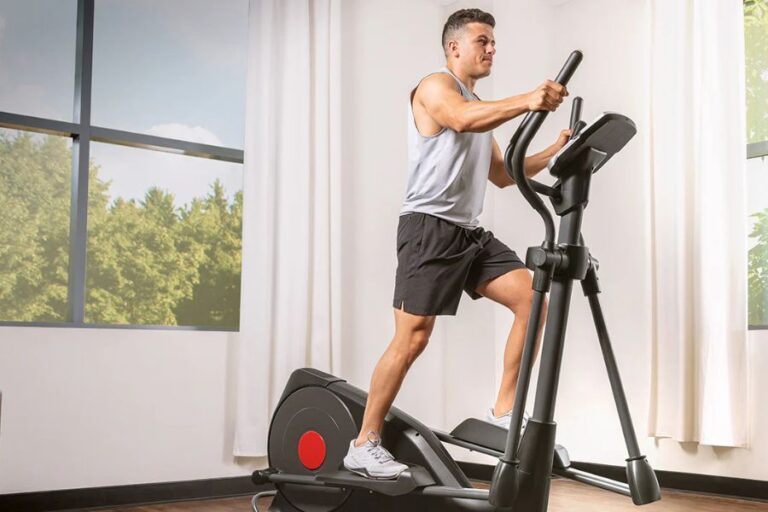
Stationary bike HIIT
Cycling is gentler on the joints and can still deliver a strong interval workout. Short rides like the Fat Burn Ride, which lasts about 17 to 25 minutes, are designed to maximize the post‑exercise calorie burn. One 2021 study found that this style of ride produced more than 2.5 times the post‑exercise calorie burn of a 20 minute vigorous treadmill workout.
A simple bike session might alternate:
- 20 to 30 seconds of hard pedaling at high resistance
- 40 to 60 seconds of light pedaling at low resistance
Repeat for about 15 minutes after a warm‑up, then cool down for a few minutes at an easy pace.
How to modify HIIT safely
HIIT is designed to be intense, but it should never feel unsafe or painful. You can adapt every move.
Common modifications
- Push‑ups: Use a wall or countertop instead of the floor
- Planks: Drop to your knees or rest on forearms instead of hands, especially if you have wrist issues
- Lunges and squats: Reduce your range of motion, go slower, or hold onto a chair for balance
- High impact moves: Swap jumps for step‑back or step‑out versions
You can still follow the structure of your 20 minute HIIT workout, just adjust the depth, speed, or impact level to suit you.
When to be cautious or avoid HIIT
Talk to a healthcare professional before starting HIIT if you:
- Have heart disease or a history of heart problems
- Live with uncontrolled high blood pressure or diabetes
- Are recovering from injury or surgery
- Are pregnant and new to vigorous exercise
Even if you are cleared for activity, listen to your body. Sharp pain, chest discomfort, or dizziness are signs to stop and rest.
Simple tips to make HIIT stick
A 20 minute HIIT workout only helps if you actually do it consistently. A few small habits make that more likely.
- Schedule it like an appointment. Pick your three HIIT days in advance.
- Set up your space. Keep a mat, water, and timer ready so you can start with minimal friction.
- Use a timer app. Interval timers let you focus on effort rather than counting seconds.
- Track your wins. Note the rounds you complete or how your rest times shrink over weeks.
- Stay flexible. If you feel overly tired, swap a HIIT day for a walk, then get back on track the next session.
Bringing it all together
A 20 minute HIIT workout is enough to:
- Burn a meaningful number of calories in a short window
- Keep your metabolism elevated for hours after you finish
- Improve heart health, endurance, and oxygen use
- Support fat loss and better body composition over time
You do not need equipment, a gym membership, or a huge block of free time. Start with the simple bodyweight routine, adjust intensity to match your fitness level, and build up gradually. With three focused sessions a week and plenty of recovery between them, you can transform how fit and energized you feel using just 20 minutes at a time.
About the Author