Understand your rear delts
If you want stronger, more stable shoulders, rear delt exercises deserve a regular place in your workouts. Your rear delts, or posterior deltoids, sit at the back of your shoulders and make up one third of the overall shoulder muscle group. They help extend your arm behind you and rotate your shoulders outward, working together with your upper back to pull your shoulders back and support good posture.
When your rear delts are weak or neglected, a few problems usually show up:
- Rounded, slouched shoulders from sitting and scrolling all day
- Shoulder discomfort during pressing movements
- Imbalanced shoulder development that looks front heavy and flat from the side
By training your rear delts on purpose, you build a stronger upper back, improve your posture, and create that “3D” shoulder look many people are after.
Why rear delt exercises matter
Rear delt exercises do more than just add size to the back of your shoulders. When you train them consistently, you:
- Improve posture by pulling your shoulders back and opening your chest
- Increase shoulder stability for pressing, pulling, and overhead lifts
- Reduce the chance of shoulder strain during heavy or repetitive movements
- Support better performance in rows, pull ups, and even bench press
Guides from brands like Gymshark highlight rear delts as essential for balanced shoulder development and pressing strength, especially for lifters and athletes in sports such as powerlifting and CrossFit, where strong pulling and pressing patterns are key.
Avoid common rear delt mistakes
Rear delt exercises are simple on paper, but a few small form errors can turn an effective move into neck or shoulder frustration. Watch for these pitfalls and adjust your technique as needed.
Shrugging your shoulders
If your shoulders creep up toward your ears while you lift, you shift work from your rear delts to your upper traps. Over time this can lead to neck tightness.
Try this instead:
- Before each set, pull your shoulder blades slightly down and back
- Keep that position as you raise and lower the weights
- Stop a set if you feel your neck taking over
Rounding your lower back
When you hinge forward for bent over movements, it is easy to round at the lower back, especially near the end of a tough set. This increases your risk of back irritation.
To protect your back:
- Hinge at your hips and keep your spine long and neutral
- Brace your core like you are about to cough
- Use a seated or chest supported variation if you struggle to hold position
Hyperextending your wrists
Bending your wrists sharply backward while you lift can lead to discomfort and reduce how much your rear delts are doing.
Aim for:
- Neutral wrists with your knuckles in line with your forearms
- Palms facing down or slightly toward each other
- A firm, but not overly tight, grip on the weight
Locking or over bending your elbows
Your elbows should not be locked straight or pulled in so tight that the movement turns into a row.
Use a soft bend in your elbows:
- About 10 to 15 degrees is ideal
- Lock that angle in and keep it consistent throughout the lift
Relying on momentum
Swinging the weights up quickly reduces rear delt activation because momentum does the work.
To fix this:
- Lift the weight in 1 to 2 seconds
- Pause briefly at the top
- Lower in 2 to 3 seconds with control
This “time under tension” is one of the simplest ways to get more muscle growth from the same exercise.
Core isolation rear delt exercises
Isolation exercises let you put most of the work directly into your rear delts. EMG research shows that reverse fly movements, especially on a dedicated machine, activate the rear delts much more than many traditional pulling exercises such as lat pulldowns and seated rows. That makes them a smart choice if you want to see progress sooner.
Seated dumbbell rear delt fly
This is a classic rear delt exercise that you can do in almost any gym or at home.
How to do it:
- Sit on a bench, feet flat, with a dumbbell in each hand, arms hanging down.
- Hinge forward from your hips until your chest is close to your thighs. Keep your back flat.
- Turn your palms so they face each other and keep a slight bend in your elbows.
- Raise the dumbbells out to the sides until they are in line with your shoulders. Avoid shrugging.
- Pause briefly at the top, then lower slowly back to the start.
Form cues:
- Think about spreading your shoulder blades apart at the bottom and squeezing them together at the top.
- Use lighter weights than you would for a shoulder press so you can keep strict control.
Lying rear delt fly
Lying on an incline or flat bench adds support so you can focus on the mind muscle connection.
How to do it:
- Lie face down on a bench, holding dumbbells just below your chest, palms facing each other.
- Keep a small bend in your elbows.
- Raise the dumbbells out to your sides until they reach shoulder height.
- Hold for a count, then lower with control.
Why it helps:
- The bench supports your torso, which makes it easier to keep your back neutral.
- Because you remove momentum, your rear delts have to work harder.
Machine rear delt fly (pec deck reverse)
If your gym has a rear delt machine or a pec deck that can be adjusted for reverse flies, this is one of the most direct ways to hit the muscle.
How to do it:
- Adjust the seat so the handles are at shoulder height.
- Sit with your chest firmly against the pad, feet flat.
- Grab the handles with palms facing inward or slightly down.
- With a small elbow bend, open your arms in a wide arc until your hands move in line with your shoulders.
- Pause, then return slowly to the starting position.
Benefits:
- Fixed path makes it easier to learn and maintain solid form.
- High rear delt activation with a lower need for stabilization.
Band pull apart
Resistance band work is useful for warm ups, home workouts, or finishers.
How to do it:
- Stand tall and hold a resistance band in front of you at shoulder height, arms straight but not locked, hands shoulder width apart.
- Pull the band apart by driving your hands out to your sides, focusing on moving from your shoulders.
- Squeeze your shoulder blades together.
- Slowly let the band return to the start.
Tips:
- Keep your ribs down and avoid arching your lower back.
- If the band is too easy, move your hands closer together.
Face pull
Face pulls are well known for building rear delts and the small stabilizer muscles of your upper back. Many lifters credit this exercise with long term shoulder health and growth.
How to do it:
- Attach a rope handle to a cable machine at about eye level.
- Grab the ends with an overhand grip and step back until the cable is tight.
- With your elbows high, pull the rope toward your face, aiming your hands toward your temples.
- Rotate your hands slightly outward at the end of the movement.
- Pause, then return slowly.
What to feel:
- The back of your shoulders and the muscles between your shoulder blades should do most of the work.
- Your neck should stay relaxed throughout.
Compound rear delt exercises
Compound movements use more than one joint and muscle group. They are efficient and help you build strength and muscle across the upper back, while still giving your rear delts plenty of work.
Guides from Gymshark and Healthline highlight rows and pulls as effective ways to train the posterior deltoids along with the lats, traps, and rhomboids.
Single arm dumbbell row
This move targets your lats, but your rear delt helps control and finish the pull.
How to do it:
- Place one knee and the same side hand on a bench for support.
- Hold a dumbbell in your free hand, arm straight down, palm facing in.
- Pull your elbow up and slightly back, keeping it close to your body.
- Squeeze at the top, then lower under control.
To increase rear delt focus:
- Think about driving your elbow toward your hip while also allowing a slight flare away from your ribs.
- Avoid twisting your torso to get the weight up.
Chest supported row
A chest supported row, done on an incline bench, takes stress off your lower back and makes it easier to focus on your upper back and rear delts.
How to do it:
- Lie face down on a 30 to 45 degree incline bench, chest supported.
- Hold dumbbells below your shoulders, palms facing each other.
- Row the weights up toward your lower ribs or mid chest.
- Pause, then lower slowly.
Why it works:
- Stable position encourages strict form.
- With a slight elbow flare, your rear delts get more involvement.
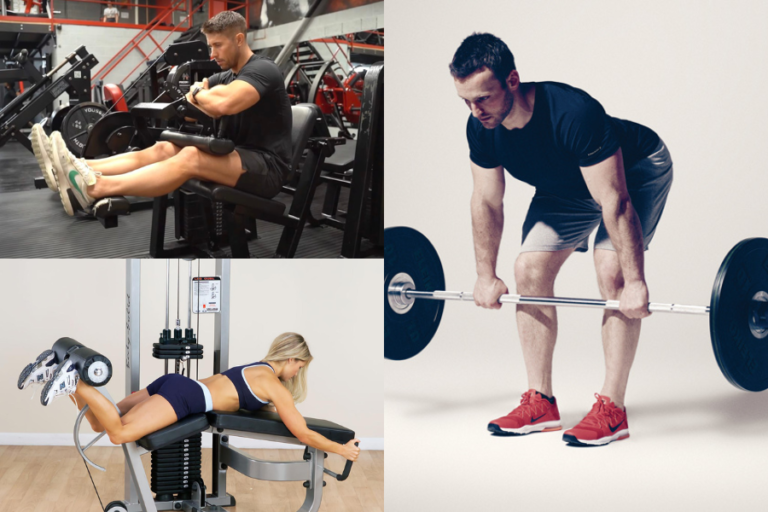
Barbell or dumbbell row
Barbell rows are a staple for upper back development and contribute significantly to rear delt strength when your elbow path is adjusted slightly outward.
Basic setup:
- Stand with feet hip width apart, barbell or dumbbells in hand.
- Hinge at your hips so your torso is roughly 45 degrees to the floor, back flat.
- Row the weight toward your lower chest or upper stomach.
- Lower slowly, keeping your core braced.
Rear delt emphasis:
- Use a medium grip and allow your elbows to travel out at about a 45 degree angle from your body.
- Do not load too heavy at first, focus on feeling the rear of your shoulders at the top.
Inverted row
Bodyweight inverted rows are an effective way to train your upper back and rear delts without machines.
How to do it:
- Set a bar in a rack or use suspension straps around waist height.
- Lie under the bar and grab it with an overhand, shoulder width grip.
- Keep your body straight from head to heels, heels on the floor.
- Pull your chest toward the bar, squeezing your shoulder blades.
- Lower slowly.
Easier and harder options:
- Bend your knees or raise the bar higher to make it easier.
- Elevate your feet to increase difficulty.
Bodyweight and minimal equipment options
You do not need a full gym to train your rear delts effectively. With a suspension trainer, a band, or a light dumbbell, you can build strength and stability.
Y raise (suspension or floor)
The Y raise targets your rear delts and upper traps in a long lever position.
Suspension version:
- Hold the handles and lean back, arms straight.
- With palms facing each other, raise your arms overhead into a “Y” shape.
- Keep your ribs down and core tight.
- Lower under control.
Floor version:
- Lie face down on a mat with arms overhead in a “Y” shape, thumbs up.
- Lift your hands and chest slightly off the floor, squeezing the back of your shoulders.
- Hold briefly, then lower.
Side lying external rotation
This movement targets the rear delts and key rotator cuff muscles such as the infraspinatus and teres minor, as highlighted in Healthline’s rear delt exercise guide.
How to do it:
- Lie on your side with a light dumbbell in your top hand.
- Bend your top elbow to 90 degrees and rest it on your side.
- Start with the dumbbell resting across your stomach.
- Rotate your forearm upward, keeping your elbow tucked, until your hand is roughly in line with your shoulder.
- Lower slowly.
Tips:
- Place a small towel roll between your elbow and ribs to keep the right angle.
- Use light weight and higher reps. This is about control, not heavy lifting.
Sample rear delt focused workout
To get consistent results from rear delt exercises, you need enough weekly volume without overloading your shoulders. A common recommendation is to train your rear delts at least twice per week and use both isolation and compound lifts for best results.
Here is a simple routine you can plug into your upper body day. Adjust sets and reps based on your experience.
Option 1: Dumbbell and band workout
- Seated dumbbell rear delt fly: 3 sets of 10 to 15 reps
- Single arm dumbbell row: 3 sets of 8 to 12 reps each side
- Band pull apart: 2 to 3 sets of 15 to 20 reps
- Face pull (if you have a cable): 3 sets of 10 to 15 reps
Rest 45 to 75 seconds between sets. Focus on controlled, smooth reps, not rushing.
Option 2: Mechanical drop set finisher
A mechanical drop set uses several variations back to back, moving from harder to easier positions without changing weight. This is an efficient way to build rear delt size when you are short on time.
Try this sequence for 3 to 4 rounds:
- Lying rear delt flyes: 8 to 12 reps
- Bent over rear delt fly: 8 to 12 reps
- Dumbbell row: 10 to 15 reps
Take minimal rest between exercises, then rest 1 to 2 minutes between rounds. Keep the weights moderate so you can maintain form through the entire series.
How often to train your rear delts
Rear delts respond well to regular, moderate volume. Many lifters under train them by relying only on big compound moves, or over train them with lots of junk volume at the end of every workout.
A balanced approach looks like this:
- Frequency: 2 times per week
- Sets per session: 6 to 10 total sets that meaningfully hit the rear delts
- Reps: Mostly in the 8 to 15 range, with some higher rep band or bodyweight work
- Load: Light enough to control, heavy enough that the last 2 to 3 reps feel challenging without form breakdown
If your shoulders are a current weak point, you can dedicate about half of your shoulder training to rear delt isolation work to help them catch up to your front and side delts. Over time, this supports more symmetrical development and improves the “3D” look of your shoulders.
Putting it all together
Rear delt exercises do not need to be complicated. What matters most is:
- Choosing a mix of isolation and compound movements
- Using form that keeps the work in your rear delts rather than your neck or lower back
- Training them consistently a couple of times each week
Start by adding one or two of the isolation moves above to your next upper body session. As they become comfortable, layer in rows, face pulls, and mechanical drop sets. Pay attention to your posture outside the gym as well, since strong rear delts work best when you give them a chance to hold your shoulders back instead of rounding over a screen all day.
With a bit of focused practice, you will notice stronger, more stable shoulders, better posture, and a more balanced upper body.
About the Author