Why a dumbbell shoulder workout works
If you want bigger, stronger, and more defined shoulders without complicated machines, a simple dumbbell shoulder workout is one of your best options. Dumbbells let your shoulders move more naturally, give you a greater range of motion, and help you correct left–right imbalances through unilateral lifting, as supported by multiple research-based guides on shoulder training.
Compared with barbells and many machines, dumbbells:
- Allow a fuller range of motion for presses and raises
- Reduce awkward joint stress by letting your wrists and shoulders find a comfortable path
- Make it easier to spot and fix strength differences between sides
- Encourage better stabilizer muscle activation in your shoulders and upper back
The result is a shoulder workout that can build size and strength while also improving control and joint health when you use proper form.
Understand your shoulder muscles
Before you press a single dumbbell, it helps to know what you are training. Your dumbbell shoulder workout should target all three heads of the deltoid so you build balanced, stable shoulders.
The three heads of the deltoid
-
Front (anterior) deltoid
Helps raise your arm in front of you and is heavily used in overhead presses and front raises. -
Side (lateral) deltoid
Abducts the arm, or lifts it out to the side, and gives your shoulders that “capped” look. Lateral raises and many press variations hit this area. -
Rear (posterior) deltoid
Helps pull your arm backward and supports posture. Bent-over raises, rear delt rows, and face pulls target this part of your shoulder.
Your traps, rotator cuff, and upper back muscles also play a supporting role in almost every shoulder exercise. A smart dumbbell shoulder workout makes sure each area gets attention so you do not end up strong in front and weak in back.
Safety first: Shoulder-friendly technique
Your shoulders are powerful but also easy to irritate if you rush or use poor form. Experts from the Jacksonville Orthopaedic Institute highlight that certain positions, like extreme rotation or “thumbs down” raises, can pinch the rotator cuff and cause injury in the long run.
Use these guidelines every time you train shoulders.
General safety guidelines
-
Warm up thoroughly
Spend 5 to 10 minutes on light cardio and dynamic arm circles, band pull-aparts, or very light dumbbell raises. -
Use a “thumbs up” hand position when possible
For lateral raises and overhead presses, keeping your thumbs slightly up instead of pointing down helps minimize rotator cuff compression and reduces the risk of shoulder tendonitis, as emphasized by Jacksonville Orthopaedic Institute specialists in 2025. -
Avoid behind-the-neck presses
JOI experts recommend dumbbell shoulder presses in front of the body instead of barbell presses behind the neck, since dumbbells allow more natural motion and avoid abnormal forces on the joint. -
Be careful if you have a rotator cuff history
Overhead press exercises, including dumbbell shoulder presses, are generally not recommended for people with current or previous rotator cuff repairs, because they can aggravate the area. If that is you, clear your plan with a medical professional first. -
Control the movement
Swinging weights or bouncing at the bottom shifts stress to your joints instead of your muscles. Slow, steady reps are safer and more effective.
Ideal sets and reps for growth
A 2015 study cited in a 2023 research-based shoulder training guide suggests that performing 3 to 5 sets of 8 to 12 reps per exercise is an effective range to build strength, muscular endurance, and hypertrophy in upper body muscles.
For most of the exercises in this dumbbell shoulder workout, you will stay in that 8 to 12 rep range with controlled form.
Your complete dumbbell shoulder workout
This routine trains all three heads of the deltoid plus key supporting muscles. You can perform it 1 to 2 times per week, leaving at least 48 hours between sessions for recovery.
If you are a beginner, start at the lower end of the sets and use lighter dumbbells. If you are more experienced, use the higher end and gradually increase load.
Exercise 1: Dumbbell shoulder press
The dumbbell shoulder press is one of the best moves to increase shoulder size and strength. It mainly targets your front delts and triceps, and also engages your upper traps and core.
You can perform this exercise seated or standing:
- Standing press
Activates the front deltoid 8% more, the lateral deltoid 15% more, and the rear deltoid 24% more than the seated version. It demands more core and glute engagement. - Seated press
Lets you typically lift about 10% heavier and better isolates the shoulders since your legs and lower back cannot help as much.
Choose the version that fits your goals and your back health.
How to do it
- Sit on a bench with back support or stand with your feet shoulder-width apart.
- Hold two dumbbells at shoulder height with a neutral or slightly pronated grip. Keep your elbows about 45 degrees in front of your body, not flared straight out to your sides.
- Brace your core by gently pushing your stomach out as if bracing for a light impact, and squeeze your glutes to protect your lower back.
- Press the dumbbells overhead in a smooth arc until your arms are almost straight, but do not lock out your elbows fully.
- Lower the dumbbells under control over 1 to 3 seconds until they are back at shoulder height.
- Repeat for 3 to 5 sets of 8 to 12 reps.
Key form tips
- Keep your shoulders down and away from your ears.
- Avoid using your legs to “push press” the weight unless you are intentionally doing that variation.
- Move both sides evenly so one arm does not press higher than the other.
Exercise 2: Dumbbell Arnold press
The Arnold press is a more advanced dumbbell shoulder exercise that challenges all three heads of the deltoid through a large range of motion. As you press, your palms rotate from facing you at the bottom to facing forward at the top. This increases time under tension and provides a demanding shoulder workout, especially with higher reps.
How to do it
- Sit on a bench with back support or stand tall with your core braced.
- Start with the dumbbells held in front of your upper chest, palms facing you, elbows bent and close to your torso.
- Begin the press by rotating your palms outward as you lift the weights.
- Finish with your palms facing forward at the top, arms nearly straight overhead.
- Reverse the motion as you lower, rotating your palms back toward you on the way down.
- Perform 3 to 4 sets of 8 to 12 reps.
Common mistakes to avoid
- Using momentum and bouncing at the bottom instead of staying controlled.
- Arching your lower back excessively to get the weights up.
- Letting one side dominate the movement.
Exercise 3: Dumbbell lateral raise
The lateral raise is a classic move for building width, and it mainly targets your side delts. Because the leverage is challenging, you usually need lighter weights and higher reps.
Experts note that doing raises with your palms or thumbs turned down can increase compression on the rotator cuff against the bony shoulder surface, which may lead to injury. A slight “thumbs up” position is safer.
How to do it
- Stand with a dumbbell in each hand at your sides, palms facing in.
- Slightly bend your elbows and maintain that bend throughout the set.
- Lean forward just a little from the hips and keep your shoulders relaxed.
- Raise the dumbbells out to your sides until your hands reach about shoulder height. Think about pouring water out of a jug only very slightly, with your thumbs just a bit higher than your pinkies.
- Pause briefly, then lower the weights slowly and under control.
- Perform 3 to 4 sets of 10 to 15 reps.
Form and safety cues
- Do not jerk or swing the dumbbells. If you need to swing, the weight is too heavy.
- Keep your core braced so you do not lean heavily to one side.
- Use the “thumbs up” or neutral hand position instead of turning the thumbs down.
Exercise 4: Dumbbell front raise
Front raises isolate the anterior delt, which is already involved in most pressing. You do not need heavy weights for this exercise. Focus on feeling the front of your shoulder working.
How to do it
- Stand tall with a dumbbell in each hand in front of your thighs, palms facing your legs.
- With a small bend in your elbows, raise both dumbbells in front of you to shoulder height.
- Keep your shoulders down and avoid shrugging.
- Lower the weights under control for 1 to 3 seconds.
- Perform 2 to 3 sets of 10 to 15 reps.
Helpful tips
- If your front delts already get plenty of work from presses, you can use fewer sets or save front raises for phases where you want extra emphasis.
- Do not swing the weights or lean back to get them up.
Exercise 5: Bent-over dumbbell raise or rear delt row
Your rear delts are often undertrained, which can contribute to rounded shoulders and imbalances. Bent-over exercises are ideal for targeting this area.
You can choose between two versions:
- Bent-over reverse fly (rear delt raise)
Isolates the rear delt with lighter weight and higher reps. - Rear delt row
Lets you use heavier weight while still emphasizing the rear delt when your elbows move wide, away from your body.
Research-based recommendations highlight that rear delt rows performed with elbows away from the sides increase rear delt activation and decrease lat involvement, which makes them effective for adding mass to the back of the shoulders.
How to do the rear delt row
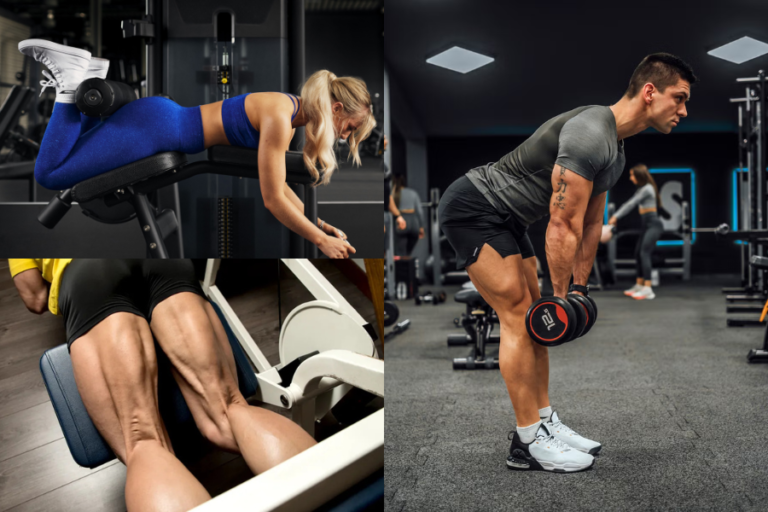
- Hold a pair of dumbbells and hinge forward at the hips until your torso is nearly parallel to the floor. Keep a slight bend in your knees and a flat back.
- Let the dumbbells hang straight down under your shoulders with your palms facing each other.
- Row the dumbbells up and out by driving your elbows wide, so they move out away from your ribs rather than straight backward.
- Squeeze the back of your shoulders and upper back at the top.
- Lower the weights slowly to the starting position.
- Perform 3 to 4 sets of 8 to 12 reps.
How to do the reverse fly
- Set up in the same bent-over position.
- With a light pair of dumbbells, raise your arms out to the sides in a wide arc until they are in line with your shoulders.
- Focus on moving from the rear delts, not from your traps.
- Lower under control and repeat for 3 to 4 sets of 10 to 15 reps.
Optional: Dumbbell face pulls on an incline
If you have an adjustable bench, dumbbell face pulls on an incline can strengthen your rear delts, rotator cuff, and mid to lower traps.
Experts recommend using light weights, maintaining good form, and aiming for 10 to 15 reps per set for best effect.
How to do it
- Set a bench to a low incline and lie chest-down holding a dumbbell in each hand.
- Start with your arms hanging straight down, palms facing each other.
- Pull the dumbbells toward your face while externally rotating your shoulders, so your thumbs move toward your ears and your elbows flare out slightly.
- Pause briefly, focusing on the back of your shoulders and your upper back.
- Lower under control for 3 to 4 sets of 10 to 15 reps.
Sample dumbbell shoulder workout plan
Here is how you might put these moves together into one balanced session.
| Order | Exercise | Sets | Reps | Notes |
|---|---|---|---|---|
| 1 | Dumbbell shoulder press | 3-5 | 8-12 | Seated or standing |
| 2 | Dumbbell Arnold press | 3-4 | 8-12 | Use slightly lighter weights |
| 3 | Dumbbell lateral raise | 3-4 | 10-15 | Keep thumbs slightly up |
| 4 | Dumbbell front raise | 2-3 | 10-15 | Light to moderate weight |
| 5 | Rear delt row or reverse fly | 3-4 | 8-12 or 10-15 | Choose one version |
| 6* | Incline dumbbell face pull | 3-4 | 10-15 | Optional finisher |
Start with the presses when you are fresh, then move to isolation work. As you progress, aim to increase weight slightly or add an extra rep or set while keeping your form strict.
Common dumbbell shoulder mistakes to avoid
Even a great dumbbell shoulder workout can backfire if your technique slips. Watch out for these frequent errors.
Going too heavy too soon
Your goal is controlled tension, not ego lifting. Signs the weight is too heavy:
- You need to swing your body to raise the dumbbells
- Your elbows drop drastically between reps
- One arm finishes the rep much higher than the other
Scale back the weight until you can move smoothly through the entire set.
Poor shoulder and wrist alignment
Pressing with your elbows flared directly to the sides or letting your wrists bend backward places extra strain on the joint. Instead:
- Keep elbows slightly in front of your body at about 45 degrees on presses
- Maintain straight, neutral wrists on all exercises
- Keep shoulders relaxed away from your ears
Ignoring the rear delts
If you only press and raise in front and to the side, your rear delts get ignored and posture can suffer. Make sure at least one rear-delt-focused move appears in every dumbbell shoulder workout you do.
How to progress your shoulder training
Once your form feels consistent and you can complete all sets without grinding, you are ready to make your dumbbell shoulder workout more challenging.
You can progress by:
-
Adding weight
Increase dumbbells in small jumps while staying in the 8 to 12 rep range for presses and 10 to 15 for raises. -
Adding sets or reps
Move from 3 sets to 4 or from 8 reps to 10 or 12. -
Slowing the eccentric
Lower the weight over 3 to 4 seconds instead of 1 to 2 to increase time under tension. This is especially effective for presses and the dumbbell push press, where a slow lowering phase boosts muscle-building potential. -
Improving symmetry
Use unilateral variations, such as single-arm presses and raises, to correct left–right differences. Research highlighted in Medicine & Science in Sport & Exercise notes that unilateral dumbbell training gives immediate feedback on limb symmetry, which is valuable for managing imbalances.
Putting it all together
With a pair of dumbbells and a bit of floor space, you can build bigger, stronger, and more balanced shoulders using this simple dumbbell shoulder workout. By:
- Training all three heads of the deltoid
- Choosing shoulder-friendly hand positions and pressing paths
- Staying in proven set and rep ranges
- Progressing gradually instead of rushing load
you set yourself up for steady progress without constantly battling aches and pains.
Start by picking two or three of the exercises that feel most comfortable for your shoulders, then build up to the full routine as your strength and confidence grow. Your future presses, pulls, and everyday movements will feel stronger and more stable as a result.
About the Author