Why single arm tricep exercises matter
If you want stronger, more defined arms, single arm tricep exercises deserve a spot in your routine. These unilateral moves help you build size and strength, fix muscle imbalances, and train your core to stabilize while your arm works.
Your triceps make up a large portion of your upper arm. When you target them effectively, your arms look fuller and your pressing movements feel stronger. The key is choosing the right exercises, using proper form, and placing them smartly in your workouts so you get results without overtraining.
Below, you will learn how single arm tricep exercises work, how to perform them safely, and how to build them into a simple, effective routine.
Understand your triceps
Your triceps have three heads that all need attention if you want balanced growth:
- Long head
- Lateral head
- Medial head
The long head crosses your shoulder joint, so it responds well to overhead movements like one arm overhead extensions. The other two heads are targeted with movements where your arm stays closer to your body, for example kickbacks or pushdowns.
Single arm tricep exercises make it easier to feel each head working, notice weak spots, and correct them over time.
Benefits of single arm tricep work
When you focus on one arm at a time, you get several advantages over standard two arm exercises.
Improve muscle balance
You probably have one arm that is a little stronger. With unilateral (single arm) training, each side does its own work. You cannot let your dominant arm take over, which helps you:
- Spot strength differences
- Correct size imbalances
- Build a more symmetrical look
Boost core and shoulder stability
In moves like the one arm dumbbell tricep extension, your shoulders and core have to stabilize your body while the working arm moves. This teaches you to:
- Keep your torso steady
- Control the weight through the full range of motion
- Support your shoulders in pressing and overhead work
Over time, that stability carries over into other lifts and everyday tasks.
Target the long head effectively
To hit the long head of your triceps, you need overhead work. Single arm overhead extensions are one of the most direct ways to do that. When you place your arm overhead, the long head stretches and then contracts, which can encourage growth and better definition along the back of your arm.
One arm dumbbell tricep extension
The one arm dumbbell tricep extension is a beginner friendly exercise that can be done at home or in the gym with just one dumbbell. It hits all three tricep heads, with extra focus on the long head.
How to do it step by step
You can perform this standing or seated. If you are new, start seated for more control.
- Sit tall on a bench or chair, feet flat on the floor.
- Hold a dumbbell in one hand and raise it straight overhead so your arm is vertical.
- Keep your elbow close to your head and your upper arm still.
- Inhale and slowly bend your elbow to lower the dumbbell behind your head. Go until you feel a stretch in your triceps.
- Exhale and extend your arm back up, squeezing your triceps at the top.
- Repeat for your target reps, then switch arms.
Muscles worked
- Primary: Triceps, especially the long head that crosses the shoulder joint
- Secondary: Shoulders and core, which stabilize your arm and torso, especially in the standing version
Common mistakes to avoid
To get the most from this single arm tricep exercise and stay safe, watch out for these habits:
- Using too much weight, which shortens your range of motion and turns the movement into a partial rep
- Letting your elbow flare away from your head, which shifts tension off your triceps
- Arching your lower back excessively, which stresses your spine
You can avoid these by:
- Choosing a weight that you can control for a full stretch and lockout
- Anchoring your elbow next to your head and keeping your upper arm vertical
- Engaging your core, especially if you work in a standing position
Try simple variations
Once you are comfortable with the basic version, you can change the equipment or tempo:
- Use a kettlebell instead of a dumbbell for a slightly different feel
- Use a cable or resistance band for constant tension through the full range of motion
- Use slow negatives by lowering the weight over 3 to 4 seconds to increase muscle activation and time under tension
You can also switch to a two arm overhead extension if you want to handle heavier weight and save time. Just remember that bilateral work does not address left and right imbalances as directly as single arm training.
Dumbbell tricep kickbacks
Dumbbell tricep kickbacks are another useful single arm tricep exercise, especially for beginners.
How to do kickbacks
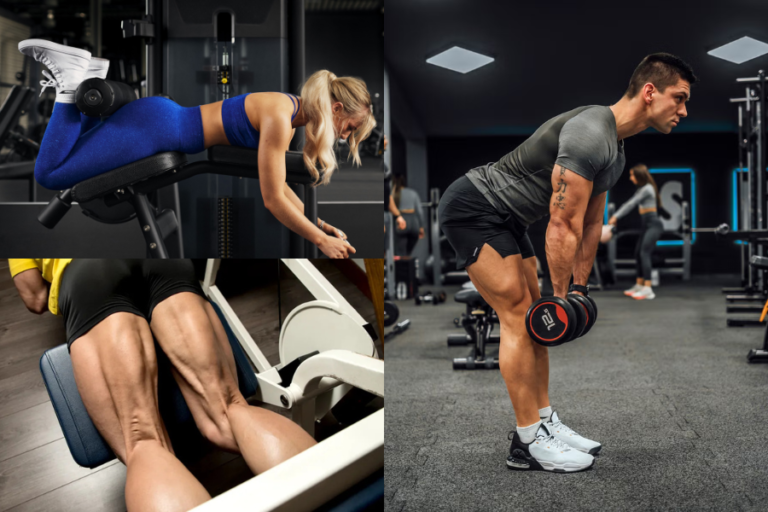
- Stand with your feet hip width apart and hinge forward at the hips so your torso is slightly above parallel to the floor.
- Place one hand on a bench or your thigh for support if you like.
- Hold a dumbbell in the working hand, palm facing your body, and bend your elbow to about 90 degrees. Your upper arm should be parallel to the ground.
- Keeping your upper arm fixed, extend your elbow and straighten your arm behind you until it is in line with your torso.
- Squeeze your triceps at the top, then slowly return to the starting position.
- Repeat for reps, then switch arms.
Why kickbacks work
Kickbacks emphasize the peak contraction of the triceps at the top of the movement. When your upper arm stays parallel to the ground and does not swing, your triceps stay under tension for more of the rep, which can help with muscle tone and definition.
Standing or seated dumbbell tricep extensions
In addition to the one arm version, you can use dumbbell tricep extensions with both arms together. This is not a single arm tricep exercise, but it complements your unilateral training.
How to perform the two arm version
- Sit or stand tall, holding a dumbbell with both hands.
- Raise the dumbbell overhead with your arms nearly straight and a slight bend in your elbows.
- Keep your upper arms close to your head and stationary.
- Lower the dumbbell behind your head under control, feeling a stretch in your triceps.
- Extend your arms back to the starting position while keeping a small bend at the top to protect your elbows.
This variation allows you to use heavier weight and can be a good main strength movement, while you use single arm work to clean up imbalances.
Form tips for better results
Your form can make or break your tricep workouts. A few simple habits will help you get more from every rep:
- Maintain good posture, chest up, shoulders relaxed, spine neutral
- Move with control, avoid swinging or using momentum
- Use a full but comfortable range of motion that allows a stretch and a strong contraction
- Breathe steadily, inhale as you lower the weight and exhale as you extend
These principles apply across your single arm tricep exercises and help you build strength safely.
Avoid overtraining your triceps
Your triceps are involved in many pushing and pressing movements, for example bench press and shoulder press. If you train single arm tricep exercises right after heavy chest or shoulder sessions, you risk overtraining.
To keep your joints happy and your muscles growing:
- Allow at least 24 to 48 hours of recovery between intense tricep sessions
- Watch for ongoing fatigue, pain, or a drop in performance, signs that you need more rest
- Limit the total number of high intensity tricep exercises in a single workout
You do not need a long list of movements to see progress. A couple of well chosen single arm tricep exercises done with focus are often enough.
Simple single arm tricep workout example
Here is an easy way to build these exercises into your week. You can start with two tricep focused sessions.
Workout A
- One arm dumbbell tricep extension, 3 sets of 8 to 12 reps per arm
- Dumbbell tricep kickbacks, 3 sets of 10 to 15 reps per arm
Workout B
- Two arm dumbbell tricep extension, 3 sets of 8 to 12 reps
- One arm dumbbell tricep extension with slow negatives, 2 sets of 8 to 10 reps per arm
Guidelines:
- Start with lighter weights to dial in your form
- Gradually increase weight or reps as the exercises feel easier
- Stop each set with 1 to 2 good reps left in the tank to reduce injury risk
Progress safely as a beginner
If you are new to tricep training, you do not need to push to your limits right away. Start with:
- Two sessions per week that include single arm tricep exercises
- A focus on form before adding weight
- Small increases in weight or reps over time
This gradual approach helps you build muscle and strength while protecting your elbows, shoulders, and lower back from unnecessary strain.
Key takeaways
- Single arm tricep exercises help you correct imbalances, improve stability, and target all three tricep heads effectively.
- The one arm dumbbell tricep extension is a beginner friendly, long head focused movement that only requires one dumbbell.
- Dumbbell tricep kickbacks and overhead extensions are simple additions to any routine and can be adjusted using cables, bands, or tempo changes.
- Good form, smart exercise order, and enough recovery time are essential to avoid overtraining and joint stress.
Start by adding just one single arm tricep exercise to your next workout, pay attention to how each arm feels, and build from there as your control and confidence grow.
About the Author