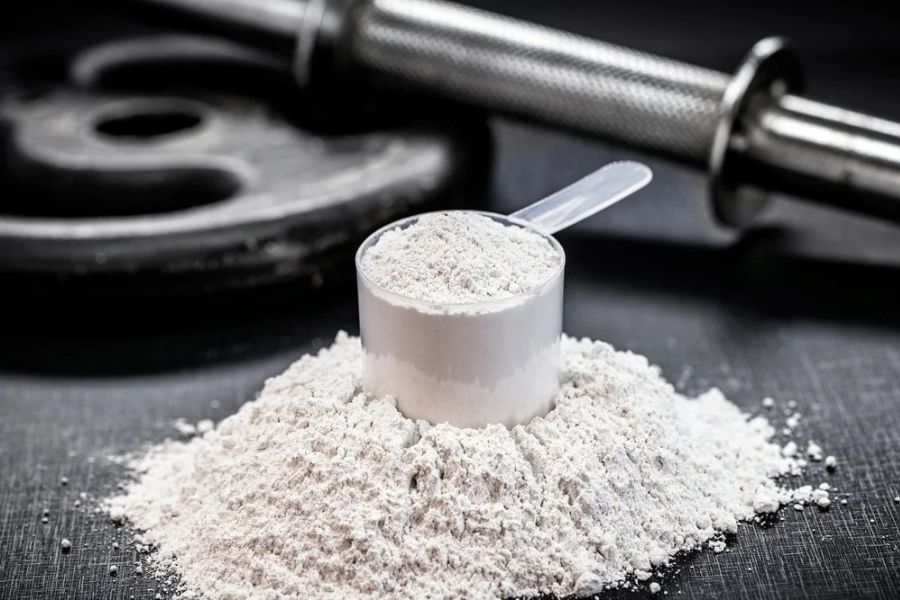
A scoop of protein powder and a scoop of creatine might look similar, but they work very differently in your body. If you are trying to decide between creatine vs whey protein, it helps to understand what each one does, how they support your goals, and whether you actually need both.
Both supplements can support muscle mass and performance when combined with resistance training, but they are not interchangeable. Creatine mainly boosts short burst energy and strength, while whey protein focuses on muscle repair and growth through amino acids (Healthline).
What creatine actually does in your body
Creatine is a natural compound stored mostly in your muscles. Your body makes some creatine on its own and you also get about 1 to 2 grams per day from protein rich foods like meat and fish (Cleveland Clinic).
Once stored in your muscles, creatine helps regenerate ATP, which is the main energy currency your muscles use for quick, intense efforts. Think heavy squats, short sprints, or explosive jumps.
According to research summarized by Healthline, supplementing creatine can:
- Increase muscle mass
- Improve strength
- Enhance performance in short duration, high intensity exercise (Healthline)
Cleveland Clinic notes that creatine monohydrate is the most common form used to enhance high intensity activities such as weightlifting, sprinting, and cycling, and that it improves performance without harming aerobic endurance (Cleveland Clinic).
In younger adults who combine creatine with weight training, studies show you can gain roughly 2 to 4 extra pounds of muscle over 4 to 12 weeks compared with training alone (Cleveland Clinic). Early research also suggests creatine might support brain function in older adults by increasing phosphocreatine levels in the brain, although more studies are needed (Cleveland Clinic).
What whey protein does differently
Whey protein has a completely different job. It is a food, not an energy booster.
Whey is a high quality dairy protein that is separated out as part of the cheese making process. When you drink a whey shake, you give your body a concentrated dose of essential amino acids, especially leucine, which drives muscle protein synthesis.
Healthline describes whey protein powder as a supplement that:
- Enhances muscle recovery
- Promotes muscle protein synthesis
- Helps increase muscle mass and strength when combined with resistance exercise (Healthline)
A typical recommendation is about 20 to 25 grams of whey protein after resistance training to support muscle repair and growth (Healthline).
In simple terms, creatine helps you do more hard work in the gym, while whey protein provides the building blocks that repair and grow your muscles afterward.
Creatine vs whey protein: how they compare
Although both can help you build muscle over time, they operate through different mechanisms.
According to Healthline, the key differences look like this (Healthline):
- Creatine increases phosphocreatine stores in your muscles, which boosts energy production during short, intense exercise or heavy lifting
- Whey protein raises the availability of amino acids, which directly stimulates muscle protein synthesis and recovery
Here is a quick summary to keep the roles straight:
| Feature | Creatine | Whey protein |
|---|---|---|
| Main function | Boosts rapid energy for intense efforts | Provides amino acids for muscle repair and growth |
| Primary benefit | More strength and power in short bursts | Better recovery and muscle building after workouts |
| Works best with | High intensity, resistance style training | Any exercise that challenges your muscles |
| Natural sources | Meat, fish, produced in liver, kidneys, pancreas | Dairy products like milk, yogurt, cheese |
| Typical dose | Around 3–5 g per day | Around 20–25 g post workout (Healthline) |
You do not have to pick a “winner” overall. Instead, you match the supplement to your goal.
Can you take creatine and whey protein together?
You might wonder if combining creatine and whey protein gives you extra benefits. Several studies have looked at this, including in middle aged men and resistance trained women.
Healthline reports that both creatine and whey protein increase muscle mass when combined with resistance exercise, but taking them together does not seem to produce more muscle or strength than taking either one alone (Healthline).
One detailed 14 week double blind study followed 42 men aged 48 to 72 years who trained three times per week. After each workout they consumed one of four options:
- 5 grams of creatine
- 35 grams of whey protein
- Creatine plus whey together
- A placebo drink (Gatorade)
Researchers measured body composition with DXA scans and monitored diet over repeated 3 day food records. All groups improved with training, including more lean mass and reduced fat in certain areas, but there were no extra body composition benefits in the creatine group, the whey group, or the combination group, compared with resistance training alone (PubMed).
Other studies in 2024 found similar results in different populations. There was no additional muscle mass or strength advantage from combining creatine and whey versus using just one or the other (Healthline).
That said, taking creatine and whey at the same time is considered safe and has not shown negative effects in the research (Healthline). Some people simply like the convenience of mixing their daily creatine into a post workout protein shake.
When timing might matter for results
If you decide to use creatine or whey, timing can help you get the most from each scoop.
Performance Lab highlights research suggesting that:
- Creatine taken immediately after exercise may be more effective than taking it before for improving body composition and strength
- Creatine combined with protein and carbohydrates around your workout, either shortly before or after, can further enhance lean body mass and strength gains (Performance Lab)
Their review also notes that stacking creatine and protein is safe and may improve creatine retention and muscle power during resistance training (Performance Lab).
For whey protein specifically, Healthline recommends about 20 to 25 grams soon after resistance exercise to stimulate muscle protein synthesis and support recovery (Healthline).
So if you want a simple routine, you could:
- Train with a focus on challenging your muscles
- After your workout, have a shake that includes your usual whey dose plus 3 to 5 grams of creatine
- On rest days, take creatine at any convenient time, ideally with a meal
How to decide which supplement you need
To choose between creatine vs whey protein, start with your main goal and your current diet.
If your priority is:
- More strength and power, especially for short, intense activities like heavy lifting or sprints, creatine can make a noticeable difference by supporting ATP energy production during those efforts (Cleveland Clinic).
- Better recovery and hitting your daily protein target, whey protein may be more practical, especially if you struggle to get enough protein from whole foods.
It can also help to look at your day as a whole. If you already eat plenty of protein rich foods and rarely miss your protein goal, but your training is very strength focused, creatine might give you more benefit per scoop. If your workouts are moderate intensity and your protein intake is low, whey could be your first step.
Remember that supplements are add ons. The foundation of progress will always be:
- Consistent resistance training
- A balanced diet with enough calories and protein
- Good sleep and stress management
Creatine and whey protein can support those basics, but they cannot replace them.
Safety considerations and who should be cautious
Both creatine and whey protein are generally considered safe for healthy adults when used as directed.
Healthline notes that taking creatine and whey together has not been linked to negative effects in the available research (Healthline). Cleveland Clinic also highlights widespread, long term use of creatine among athletes without evidence that it harms aerobic endurance or general health in healthy individuals (Cleveland Clinic).
Even so, you should talk with your healthcare provider before starting any supplement if you:
- Have kidney or liver issues
- Take medications that affect these organs
- Are pregnant, breastfeeding, or managing a chronic medical condition
If you are sensitive to dairy or lactose, whey may cause digestive discomfort. In that case you could consider lactose free whey isolate or non dairy protein sources instead.
Putting it all together
If you take one idea away, let it be this:
Creatine and whey protein are not rivals. They are tools that support different parts of the same process: training hard, then recovering and growing stronger.
Creatine mainly helps you push harder during high intensity exercise by fueling rapid energy production in your muscles. Whey protein helps you rebuild those muscles afterward by supplying essential amino acids and stimulating muscle protein synthesis (Healthline, Cleveland Clinic).
You can use either one on its own, or both together if that suits your routine and your goals. Start from your current diet and training style, add one supplement at a time, and pay attention to how your body responds over several weeks. That way you can decide what truly moves the needle for you rather than guessing based on the label.
About the Author