A high intensity rowing workout might look simple from the outside, but a few powerful intervals on a rowing machine can leave your legs shaking, your heart pounding, and your whole body spent in the best way. When you train this way consistently, high intensity rowing workouts can transform your body shape, your cardiovascular fitness, and even your daily energy levels.
Below, you will see how and why these workouts work, what actually happens in your body, and how to start safely if you are new to rowing.
Understand what high intensity rowing workouts are
High intensity rowing workouts are usually structured as HIIT sessions, where you alternate short bursts of near‑max effort with periods of easier rowing or full rest. This style of training lets you burn a large number of calories in a short time and keeps your metabolism elevated even after you step off the machine.
On a rowing machine, a typical HIIT session might last 10 to 30 minutes and include intervals like 30 seconds hard, 90 seconds easy, repeated several times. You can adjust resistance or speed to match your fitness level and still get a challenging workout that fits into a busy day (PureGym).
See how rowing works your whole body
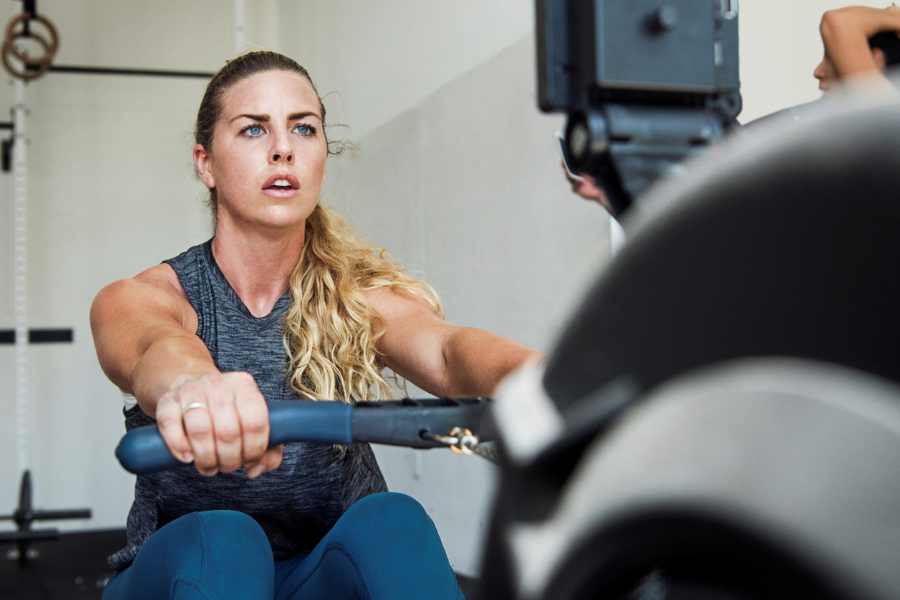
With each stroke, you are engaging almost your entire body. Rowing uses your legs, glutes, core, back, and arms in one smooth motion, and estimates suggest that nearly 85% of your muscles are involved in a single stroke (NordicTrack).
Most of the power should come from your lower body. About 65 to 75% of the effort is from your legs and 25 to 35% from your upper body, which helps you build strong legs while also toning your back, shoulders, and arms (Healthline). When you add intensity, this full body engagement turns into a very efficient stimulus for both muscle and cardio improvements.
Why your muscles start to change
During high intensity intervals, your muscles fire harder and faster than they do at an easy pace. Your legs drive against the footplates, your hips and core stabilize your spine, and your upper body finishes the pull. Over time, this repeated effort can:
- Increase strength and power in your quads, hamstrings, and glutes
- Improve endurance in your back and shoulders
- Tighten and strengthen your core muscles
Rowers often describe the “heavy leg” feeling after a hard session. That is because the leg drive phase fully extends the legs and heavily recruits your lower body, similar to high volume squats or lunges (Garage Gym Reviews).
Boost your calorie burn and weight loss
If your main goal is weight loss, high intensity rowing workouts are one of the most time efficient tools you can use. High intensity interval training on a rowing machine can burn more calories in a shorter time than steady state rowing, and your body continues to burn extra calories after your workout as it recovers (PureGym).
A 155 pound person can burn around 369 calories in 30 minutes of vigorous rowing (Healthline). When you push into higher intensities in intervals, that total can climb further. Research also suggests that low volume HIIT sessions of less than 15 minutes on a rowing machine can improve fitness, glucose control, blood pressure, and heart function as much as or more than longer moderate sessions (Healthline).
Rowing is not quite as efficient as treadmill running for fat oxidation, based on lab measurements, but it still offers a strong metabolic effect with far less joint impact (NordicTrack). If you want to protect your knees or ankles while losing weight, this tradeoff often works in your favor.
Improve your cardiovascular fitness
High intensity rowing workouts challenge your heart and lungs just as much as your muscles. During intense intervals, you work close to your maximum capacity, then allow your body partial recovery before going again. This style of training raises your cardiovascular threshold more effectively than gentle, steady rowing.
HIIT rowing sessions push your heart and lungs to maximum effort, which can significantly improve cardiovascular fitness over time (PureGym). Your body learns to deliver oxygen to your muscles more efficiently, and your heart becomes stronger and more resilient.
Rowing ergometer workouts have been shown to produce similar peak oxygen uptake values to treadmill or elliptical training, with less joint impact, which makes them a sustainable option if you plan to train hard several times per week (NordicTrack).
Protect your joints while training hard
One of the biggest advantages of high intensity rowing workouts is that they are low impact. The sliding seat and smooth resistance reduce the pounding your joints would otherwise experience during running or plyometric moves.
Rowing workouts are considered joint friendly, because you avoid the repeated impact of your feet hitting the ground, which is common with running and jumping exercises (Healthline). HIIT rowing, in particular, lets you enjoy high energy, high intensity training without the same stress on your knees and hips, which is especially helpful if you already deal with joint discomfort (PureGym).
If you struggle with knee pain but still want a serious cardio workout, swapping some treadmill or step workouts for rowing intervals can keep you moving while you strengthen the muscles that support your joints.
Master technique to avoid injury
Good technique is what makes high intensity rowing workouts both effective and safe. When you are tired, it becomes easier to lose form, which is why it helps to build solid habits early.
You can think of each stroke in four stages: catch, drive, finish, and recovery. Focusing on these phases helps you maintain posture and power, even when you push your pace (Garage Gym Reviews).
Use the right stroke sequence
To generate power and protect your back, follow the sequence “legs, back, arms” on the drive, then “arms, back, legs” on the recovery. This pattern avoids wasting energy and reduces unnecessary strain on your spine (RP3 Rowing).
Aim for a 1 to 2 ratio between drive and recovery. In practice, that means the recovery takes about twice as long as the powerful part of the stroke. This rhythm lets your muscles reset and positions you well for the next stroke, which improves your performance and lowers the chance of lower back discomfort (RP3 Rowing).
Protect your back and wrists
Low back pain on the rower often comes from poor technique, such as leaning back too early or failing to engage your core properly. You should push with your legs first, then swing your torso back, then pull with your arms, instead of doing everything at once (Healthline).
Your grip matters too. Hold the handle with your fingers, keep your wrists flat, and avoid clenching too hard. This setup helps prevent hand and wrist pain and also reduces tension in your forearms, which makes longer and harder intervals easier to sustain (RP3 Rowing).
Set the damper correctly
If your machine has a damper or resistance lever, try starting between 3 and 5 rather than cranking it up to the maximum. Moderate settings encourage better technique, reduce back strain, and still allow you to achieve a very intense workout. The quality of your form and your effort level matter more than a high resistance number (RP3 Rowing).
For high intensity rowing, think “smooth and strong” instead of “heavy and jerky.” Clean technique at a moderate damper will almost always beat sloppy strokes at a high setting.
Warm up and track intensity
Before you dive into high intensity rowing workouts, a short, specific warm up will prepare your muscles and joints, and it can actually improve your performance during the main set.
Spending 2 to 3 minutes on joint mobility, like gentle hip circles and arm swings, followed by 3 to 5 minutes of easy, technique focused rowing is enough to get you ready. During this warm up, focus on rhythm, breathing, and clean strokes (RP3 Rowing).
To monitor how hard you are working, you can use stroke rate or a simple “talk test.” Stroke rate counts how many full strokes you take per minute, and it usually climbs during intense efforts. If you can speak in full sentences, you are probably under 55% effort, and if you struggle to say more than a few words, you are probably above 80% effort (Garage Gym Reviews).
Try beginner friendly high intensity rowing workouts
You do not need to start with brutal sprints to benefit from high intensity rowing. Short, structured sessions work very well, especially at the beginning.
One beginner friendly 20 minute HIIT rowing workout is 30 seconds of hard rowing followed by 90 seconds of light rowing or rest, repeated several times. As your fitness improves, you can shorten the rest periods or lengthen the hard segments (NordicTrack).
Another option is a 15 minute pyramidal session:
- Row 5 minutes at an easy pace to warm up.
- Do 30 seconds at about 60% effort, then 60 seconds moderate.
- Do 30 seconds at 70% effort, then 60 seconds moderate.
- Do 30 seconds at 80% effort, then 60 seconds moderate.
You can repeat this cycle, or adjust the efforts as you gain confidence. This type of progression helps you build tolerance for higher intensities without overwhelming your body on day one (Garage Gym Reviews).
Watch how your body transforms over time
If you commit to high intensity rowing workouts two to three times per week and maintain a balanced diet, you can expect changes in several areas:
- Lower body: firmer thighs and glutes from repeated leg drives
- Upper body: more definition in your back and shoulders from strong pulls
- Core: improved stability and posture both on and off the machine
- Cardio: less breathlessness during everyday activities and other workouts
- Metabolism: better blood sugar control and heart health markers linked to HIIT rowing (Healthline)
Rowing also mimics the energy system demands of competitive racing, where elite rowers can sustain power outputs close to 590 watts during intense efforts (NordicTrack). You do not need to reach those numbers, but knowing what the sport demands can inspire you to challenge yourself a bit more each session.
If you want a workout that targets almost your entire body, supports weight loss goals, strengthens your heart, and goes easier on your joints, high intensity rowing workouts are worth a place in your weekly routine. Start with one simple interval session this week, pay attention to your technique, and adjust the pace so it feels challenging but manageable. Over the next few months, you are likely to see and feel clear changes whenever you catch your reflection or climb a flight of stairs.
About the Author